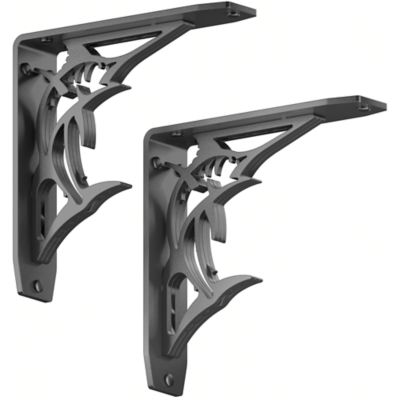
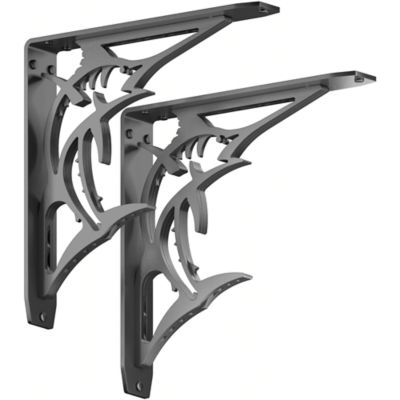
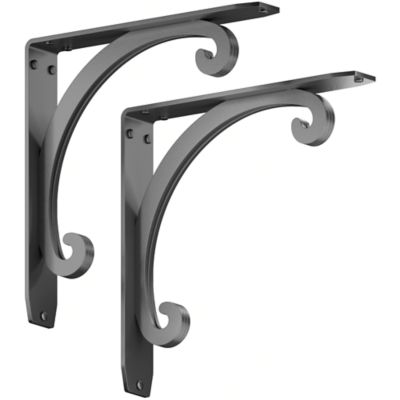
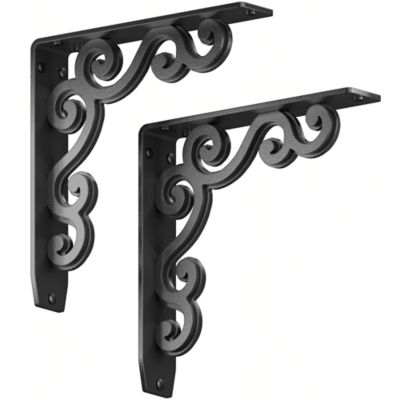
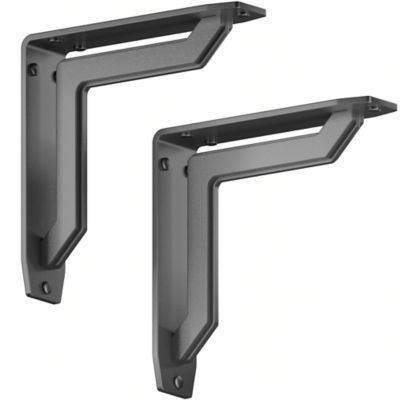
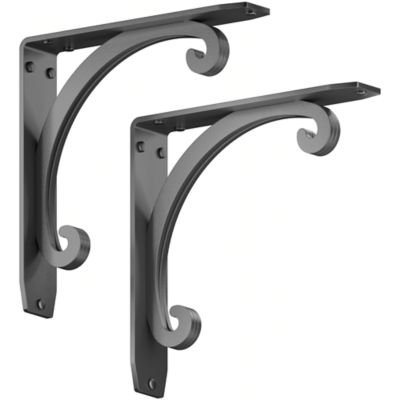
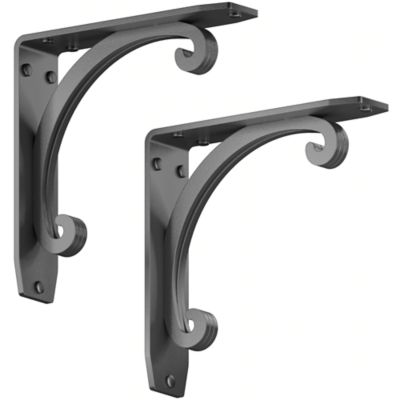
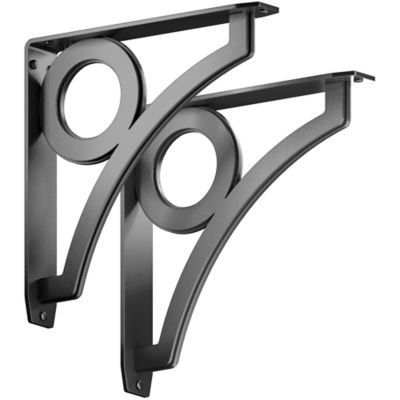
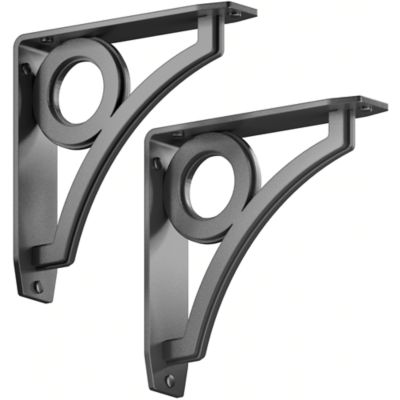
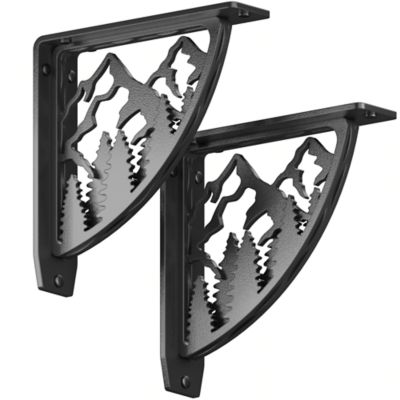
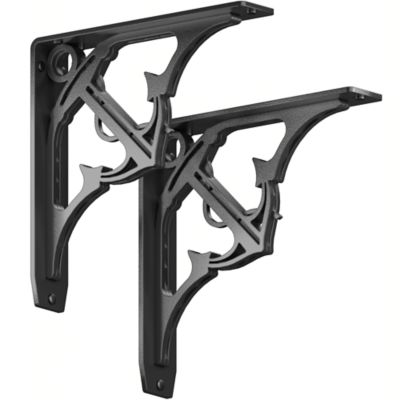
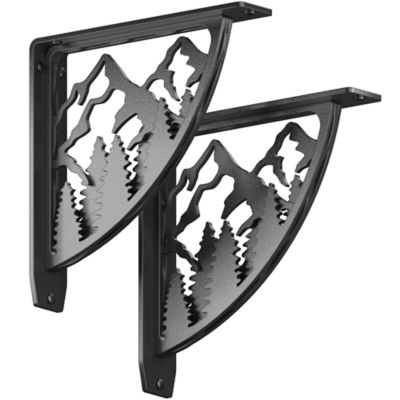
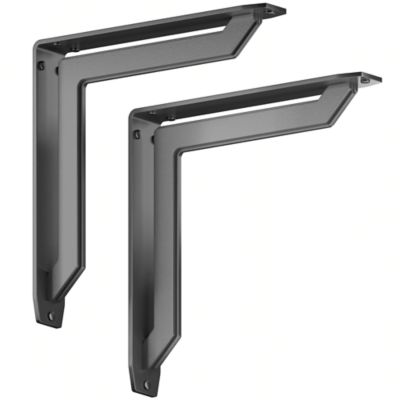
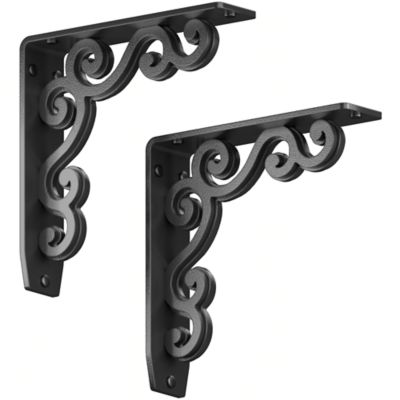
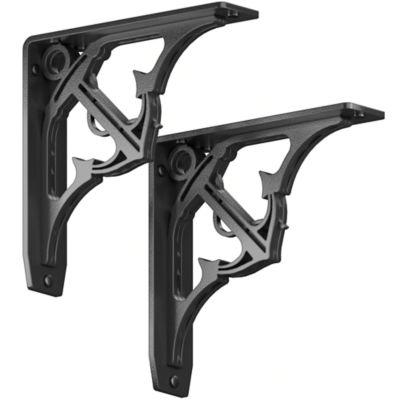
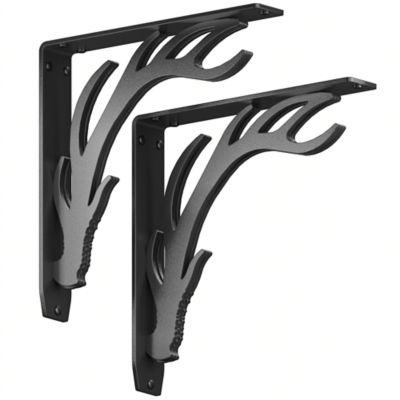
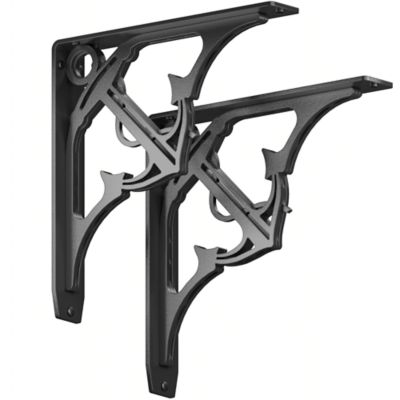
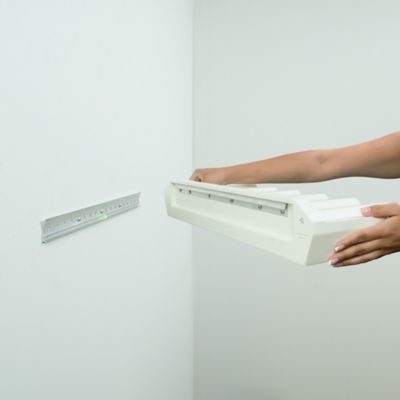
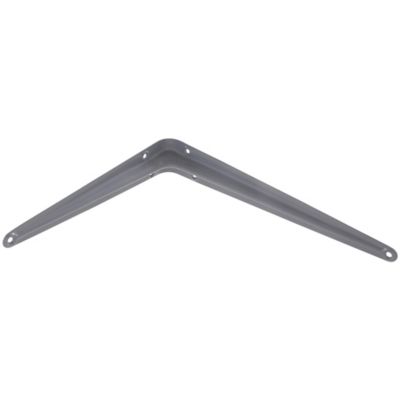
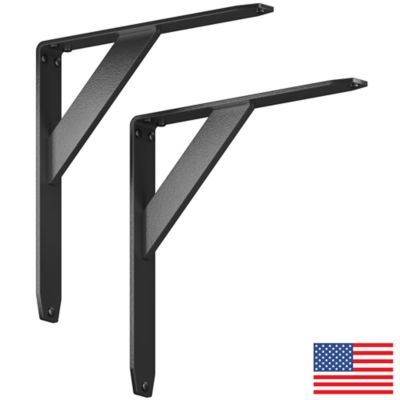
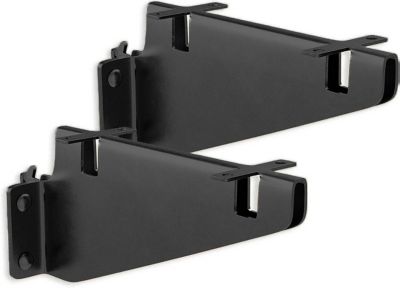
Brackets for open shelving support shelf boards while leaving stored goods in plain sight and within easy reach. They make sense anywhere a closed cabinet would feel bulky or get in the way, from a farmhouse kitchen and laundry room to a workshop, pantry or tack room. A shelf above a workbench can keep supplies off the work surface, while a narrow shelf near an entry gives everyday essentials a place to land. The bracket style affects both the look of that setup and how much room remains underneath it. Straight L-shaped brackets have a simple profile, while triangular brackets add a brace between the wall plate and support arm. That diagonal brace can provide reinforcement, though its shape may limit clearance for tall objects below. Concealed supports sit inside a compatible shelf board, creating a floating appearance with little or no visible hardware. They need the right board thickness, drilling pattern and wall connection, so they are not interchangeable with ordinary exposed brackets. Comparing
Shelf Brackets by mounting style, arm shape and finish helps narrow the choice without letting appearance do all the deciding. Steel is a common material for open-shelf supports, with performance depending on its thickness, construction and mounting design. Cast iron brings a substantial appearance and often more detailed shapes, while wood brackets can blend with painted trim or natural wood shelving. Aluminum offers a lighter material option, but its suitability still comes down to the stated load rating and installation requirements. Black, white and metal-toned finishes can either stand out against the wall or blend into the background. A dark bracket beneath a thick wood board suits a hard-working shop just as well as a kitchen shelf, while a lighter finish can keep a small laundry area from feeling crowded. For open storage, the best match balances the shelf’s everyday job with a shape that leaves enough working room around it.
Fit involves more than matching a bracket to the length of a board. Shelf depth, board thickness, mounting-hole placement and the wall behind the shelf all matter. For conventional brackets with horizontal support arms, an arm reaching at least two-thirds of the shelf depth is a common starting point, not a substitute for the manufacturer’s specified shelf dimensions. Some designs call for support closer to the front edge, especially when a shelf carries substantial weight. A front lip can help locate a board, but the board must fit between that lip and the wall, and any required shelf fasteners still matter. Concealed brackets have their own limits for shelf depth and thickness, including the amount of material surrounding the support rods. Load ratings deserve the same attention as dimensions. A rating may apply to one bracket, a pair or a complete assembly under particular mounting conditions; those numbers are not interchangeable. The load includes the shelf board itself along with everything placed on it. A row of cookbooks, stacked dishes or filled storage containers can weigh much more than a few folded towels. Weight concentrated near the front edge also puts different demands on a bracket than weight kept close to the wall. The number of supports depends on the shelf material, span, intended load and the bracket maker’s spacing requirements. Two supports may suit a short shelf, while longer runs or heavier loads can call for intermediate support to limit sagging. In many wood-framed walls, studs are spaced 16 or 24 inches on center, but actual framing can vary. Mounting into suitable structural backing, such as wood studs or properly assessed masonry, gives the bracket a sound connection. Drywall alone should not be assumed to carry a loaded shelf. Fastener type, length and diameter need to match both the bracket and the wall material, and the lowest-rated part of the installed assembly limits what it can hold.
Everyday use helps sort out which details matter most. Above a workbench, brackets need enough clearance for tools and materials below, and the shelf should not project so far that it crowds the work area. In a pantry, a deeper shelf creates room for larger containers but can make it harder to see what is tucked in back. A shallow shelf keeps smaller supplies visible without taking up much space. Over a laundry counter, smooth surfaces are easier to wipe down, and the shelf’s position should leave room to fold clothes without bumping an exposed brace. In a tack room or utility space, shelf depth and support spacing should reflect the actual supplies being stored rather than the empty board’s appearance. Adjustable shelving systems can help when storage needs change, provided the brackets match the wall standards and remain within the system’s load limits. Fixed brackets suit layouts where the shelf height and purpose are unlikely to change. Open shelving also leaves the hardware exposed to dust, splashes and handling, making finish and care worth considering. Painted and powder-coated metal surfaces generally benefit from a soft cloth and mild cleaner rather than harsh abrasives that can scratch the coating. Bare or worn metal may need additional protection according to the maker’s care directions, particularly near sinks or other sources of moisture. Wood supports and shelf boards should be kept free of standing water, and cleaning methods should suit their finish. Occasional checks for loose fasteners, cracked boards, corrosion or a developing sag can catch trouble before the shelf takes on more weight. A level shelf with secure connections is easier to live with than one that shifts whenever something is moved. Whether the goal is a tidy kitchen wall or a clear workbench, brackets for open shelving earn their place by supporting the right board, carrying the intended load and keeping everyday supplies close at hand.