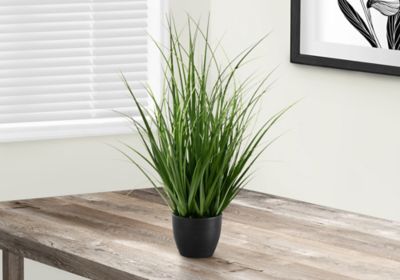
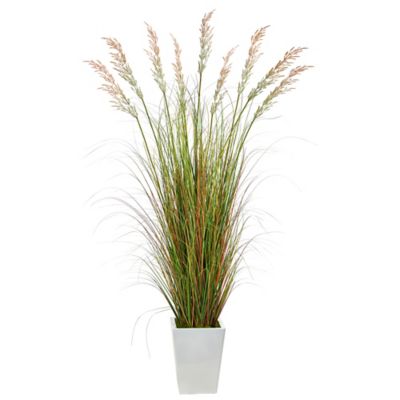
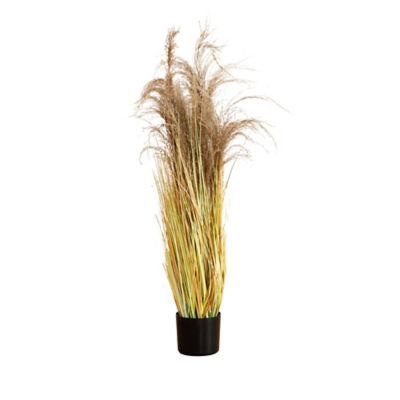
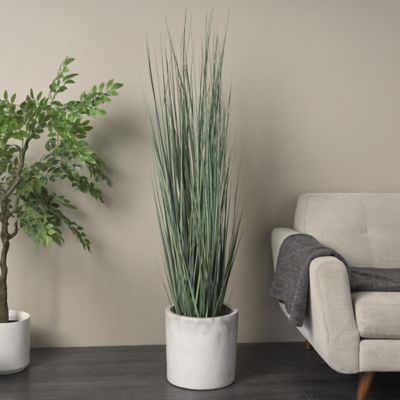
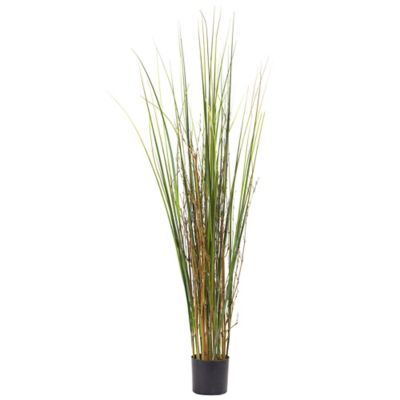
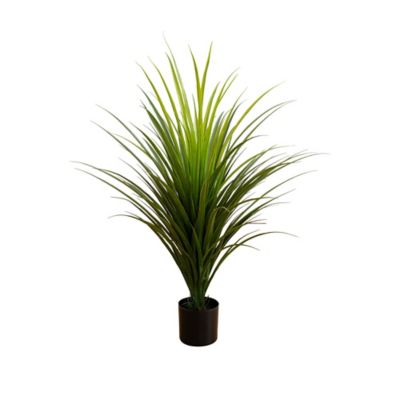
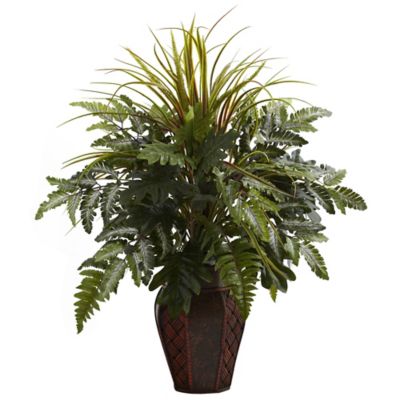
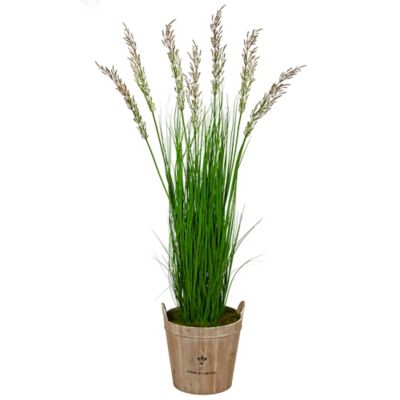
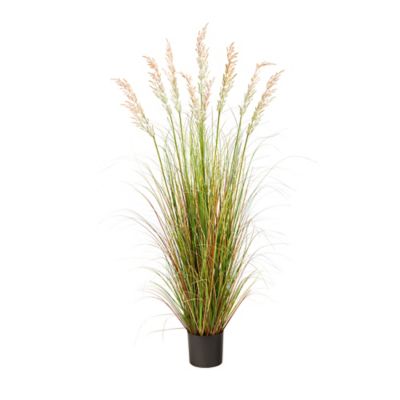
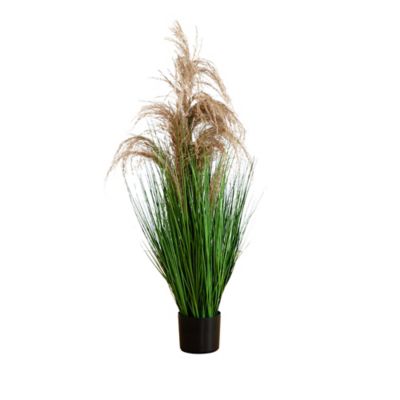
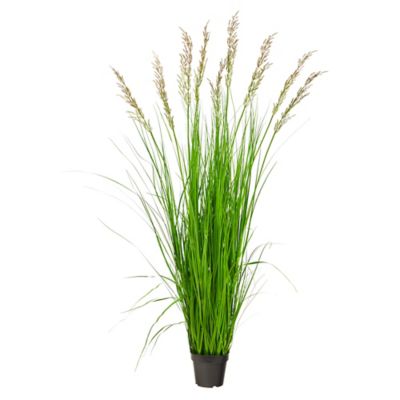
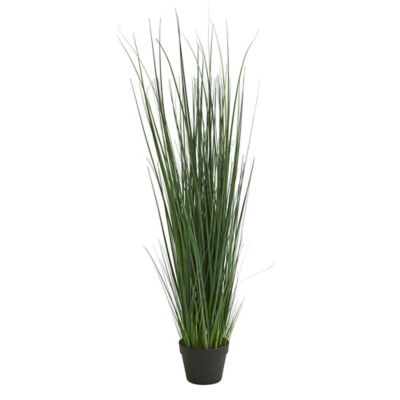
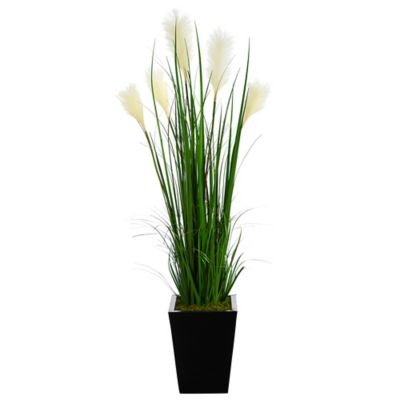
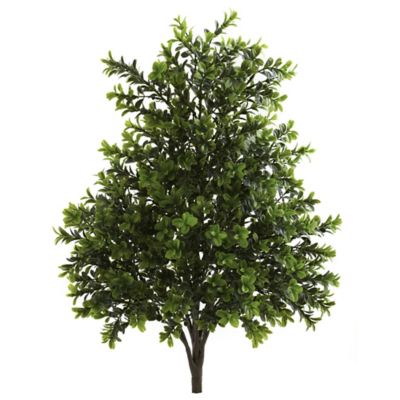
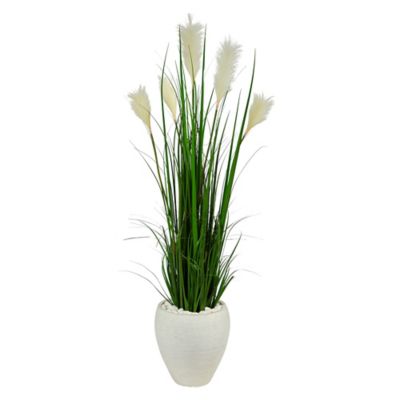
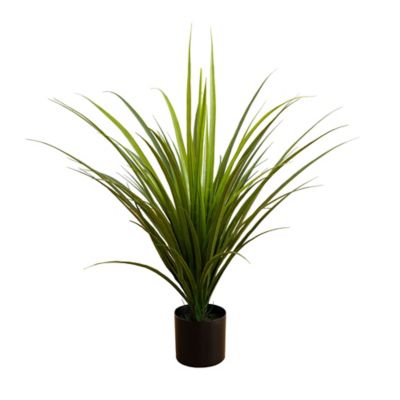
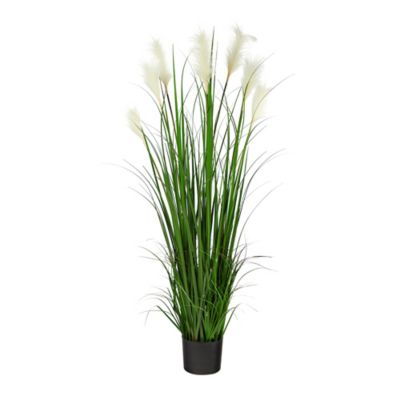
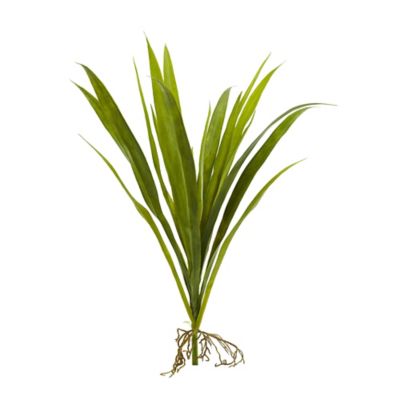
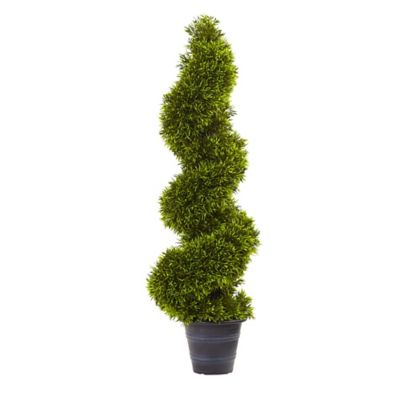
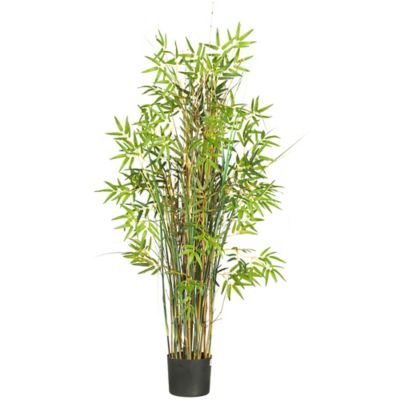
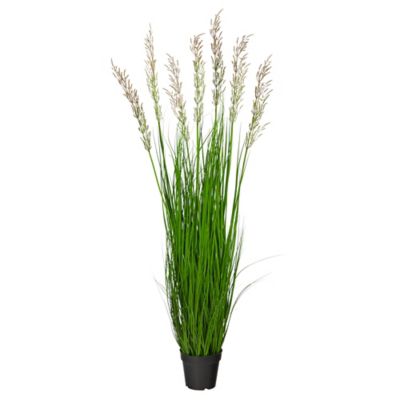
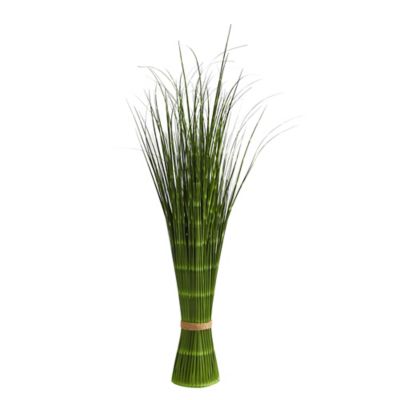
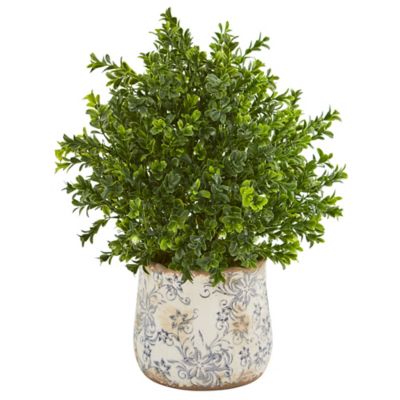
Tall artificial grass plants bring the upright shape and easygoing look of field grasses into a room without watering, feeding, or finding enough light for growth. Their long blades add height without the broad canopy of an artificial tree, making them a good fit beside an armchair, at the end of a console, or in a bare corner near the entryway. Many floor-standing styles measure roughly 3 to 5 feet tall, though sizes vary, and the listed height may include the pot. Overall width matters just as much: a narrow clump can tuck beside a bookcase, while a spreading arrangement needs room for its blades to arch without brushing everyone who walks past. Green, reed-like foliage brings a fresh, planted look, while tan stems and feathery, pampas-style plumes create a softer outline. Some arrangements combine several shades of green with brown accents near the base, echoing the variation found in living grasses. Others have a more even color and straighter silhouette that suits a simple, uncluttered room. Against a pale wall, slender blades stand out clearly; against dark wood or stone, lighter tips and plumes are easier to see. In a farmhouse living room, a tall grass arrangement can soften the square edges of a sturdy cabinet or balance a wide sofa without taking over the space. Near a desk, it can fill an empty corner without putting foliage across the work surface. A pair can frame a doorway, provided both containers stay clear of the walking path. For an open room, foliage that looks finished from several sides matters more than it does for a plant tucked against a wall. The fullest-looking choice is not always the best fit, either. An airy arrangement leaves more of the background visible, while closely spaced blades give a fuller outline. Looking at the height, spread, and shape together gives a better sense of how the grass will sit among the furniture already in place.
Materials and construction affect both the appearance and the care of artificial grass. Polyethylene, PVC, and polyester are common materials, sometimes combined within one arrangement to create different blade textures or plume effects. Molded plastic blades can hold a defined shape, while fabric foliage and plumes may have a softer surface. Neither material alone tells the whole story; blade thickness, color variation, stem placement, and how the foliage meets the base all contribute to a convincing look. Some stems contain wire that allows gentle shaping, while others are meant to keep their original position. Product care directions should settle that point before any bending. Indoor and outdoor ratings also deserve attention. A plant intended for indoor placement is not automatically suitable for a covered porch, and a UV-resistant label does not mean that color can never fade. For outdoor use, both the foliage and the container need an appropriate rating. Even indoors, prolonged direct sunlight can affect some materials, so placement near a bright window calls for checking the maker’s recommendations. The container adds another practical consideration. Tall grass may come anchored in a small starter pot or set into a finished planter, and those two arrangements can have quite different proportions. With
Artificial Plants With Planters, the base is part of the overall look, whether it blends into the room or provides a little contrast. A substantial ceramic or stone-look container can visually ground a tall, narrow plant, while a woven basket brings texture alongside smooth walls and wood furniture. When a starter pot sits inside a separate container, the opening must allow room for the inner pot without forcing it into place. Any support beneath it should keep the plant level and steady. A taller outer planter can also raise the finished arrangement, so its added height belongs in the room measurements. A broad, stable base is especially important where passing feet, a swinging door, or a curious pet might bump the foliage.
Everyday care is mostly about keeping dust from settling into the blades and preserving the intended shape. Unlike living grass, artificial foliage does not need soil moisture checks, fertilizer, or trimming to control growth, but it still benefits from occasional attention. A soft, dry cloth or a gentle duster often works for routine cleaning when the care label allows it. Narrow blades may need to be separated lightly so dust does not remain hidden near the center. Fabric plumes call for a gentler touch than smooth plastic leaves, and soaking an entire arrangement can damage adhesives, internal wire, or the material anchoring the stems. Cleaning sprays, polish, and strong household cleaners should stay off the foliage unless the manufacturer specifically approves them. After unpacking, compressed blades may need careful spreading to regain their intended outline. Working gradually from the lower foliage upward can help create an even shape without pulling at the anchored stems. Some variation looks more natural than bending every blade to the same angle, especially with grass meant to resemble a loose clump. Once arranged, a spot clear of busy door swings and narrow walkways helps prevent repeated snagging and bending. Tall artificial grass plants suit households that want greenery without adding another plant-care chore, as well as rooms where growing a live plant would be difficult. They can work well in a home office, a guest room, or a sitting area that needs a little height beside low furniture. For a housewarming gift, the recipient’s floor space and preferred container style matter more than simply choosing the tallest arrangement. Homes with young children or pets also need thoughtful placement: artificial foliage is not food or a chew toy, and loose filler should remain out of reach. With a balanced container, enough room for the blades, and care suited to the materials, tall grass offers an easy way to make an overlooked corner feel more settled without crowding everyday life.