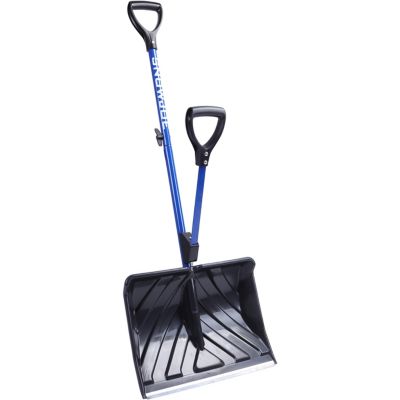
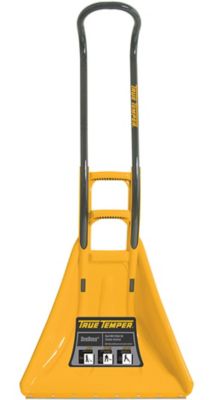
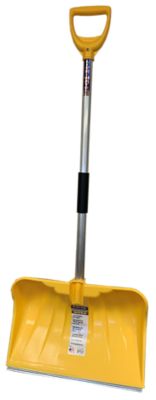
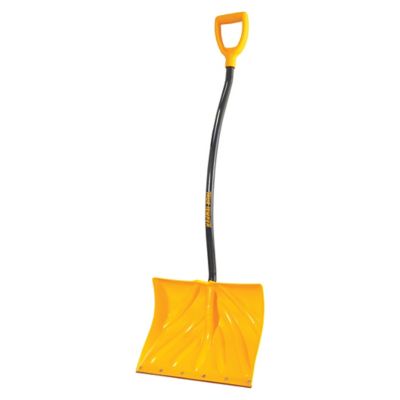
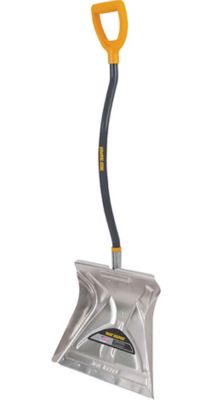
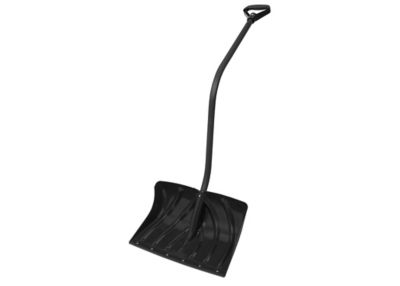
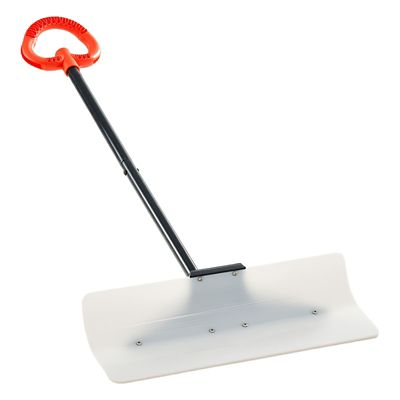
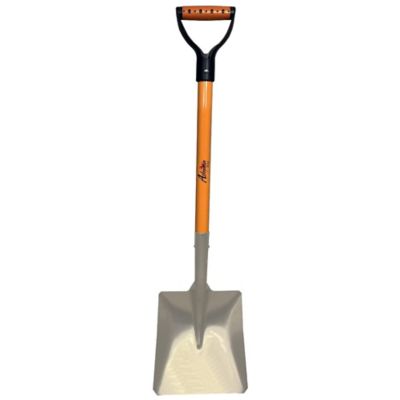
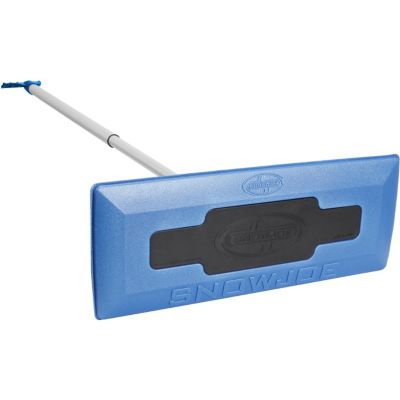
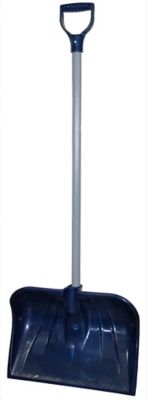
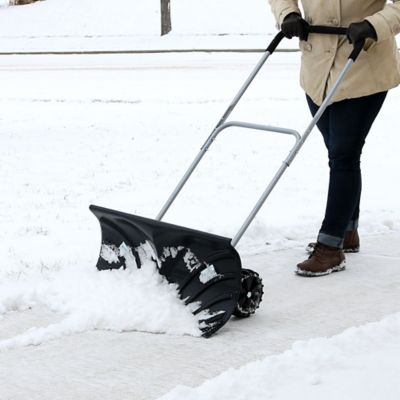
An ergonomic snow shovel is built to make snow clearing more comfortable by helping you stand taller, keep a steadier grip, and use your legs and upper body instead of relying so heavily on your lower back. These shovels commonly have a curved or bent shaft, a secondary handle, or a dual-grip design that changes the way you lift and move snow. Rather than bending deeply over the blade with each scoop, you can keep your hands in a more natural position and use better leverage as you push, lift, or toss snow aside. That difference can be especially helpful when a short driveway, porch, sidewalk, livestock walkway, or set of steps needs attention after a wet, heavy snowfall. Look for a handle length that suits your height, since a shaft that is too short may still leave you hunched over, while one that is too long can feel awkward to control. A padded or comfortably shaped grip is useful when you are working in cold weather gloves, and a sturdy metal or reinforced shaft can provide dependable control when snow becomes packed or crusted. Blade shape matters, too. A wide pusher-style blade can clear a light layer across a driveway or sidewalk with fewer passes, while a deeper scoop-style blade is better suited to lifting and moving heavier snow from tight spots. Some households keep more than one snow shovel on hand for that reason: a pusher for fresh, powdery accumulation and a scoop for banks, steps, and dense snow left by a plow. Blade width, edge construction, and overall weight are worth considering together. A broad blade clears more ground but may feel tiring when loaded, while a smaller blade is easier to manage when snow is wet or deep. Choosing a shovel that feels balanced in your hands can make a long morning of clearing feel more controlled from the first pass to the last.
Ergonomic snow shovels can be a practical choice for homeowners, renters, older adults, and anyone who wants to reduce unnecessary bending during winter chores. They may also suit people recovering from everyday aches, workers who need to clear an entrance before opening, or rural property owners who regularly maintain paths between the house, barn, garage, mailbox, and woodpile. A secondary spring-assist handle or rigid dual-handle setup may shift more of the lifting effort toward the arms and upper body, while a bent shaft can reduce the need to flex deeply at the waist. These features do not remove the physical demands of shoveling, and good technique still matters. Push snow when conditions allow instead of lifting every load, keep the blade close to the ground, take smaller scoops when snow is heavy, and turn your whole body rather than twisting at the waist. Clearing in stages can also be easier than waiting for a deep accumulation to harden. Before buying, think about the type of snow common around your home, the surfaces you will clear, and where the shovel will be stored. A lighter design is easy to carry to the porch or shed, while a stronger construction may be preferable for packed snow and rougher outdoor work. Check that the grip is comfortable with gloves, the shaft feels secure, and the blade is sized for the person who will use it. For homes with more than one person handling winter chores, a second shovel with a different blade style can help match the tool to the job. People in areas with only occasional snowfall may appreciate a compact, easy-to-store design, while those in the snow belt may want a durable everyday shovel that can handle repeated use through the cooler months. If lifting weight is a concern, browsing
Lightweight Snow Shovels can help narrow the choices toward easier-to-carry designs without giving up the reach needed for normal snow removal.
An ergonomic snow shovel also makes a thoughtful, useful gift for someone settling into a new home, caring for a larger property, or preparing a cabin, farmstead, or rural driveway for winter weather. It is the kind of gift that may spend much of the year tucked beside a garage wall, then earn its keep when the first storm covers the walkway and the gate with a clean white layer. Families may keep one near the front door for steps and sidewalks and another in the vehicle for work, travel, or emergency use. A good shovel can be especially welcome for a neighbor, college student renting a house, older family member, or friend who has recently moved to a region with more snow than they are used to. When selecting one as a gift, consider the recipient’s height, strength, storage space, and the surfaces they are likely to clear. A person with a long driveway may value a wide pusher, while someone in a townhome or apartment may need a compact scoop for a small entryway. For a homestead or property with outbuildings, handle comfort and durable construction may matter more than a minimal storage footprint. No matter the setting, an ergonomic design can make routine snow removal feel less punishing by improving leverage, encouraging a more upright posture, and spreading the load between both hands. Keep the shovel stored where it stays easy to reach, clear snow before it becomes packed whenever possible, and wipe away moisture and road salt after use. With the right fit and a little care, an ergonomic snow shovel can become one of those dependable winter tools that is always ready beside the door when the weather turns cold.