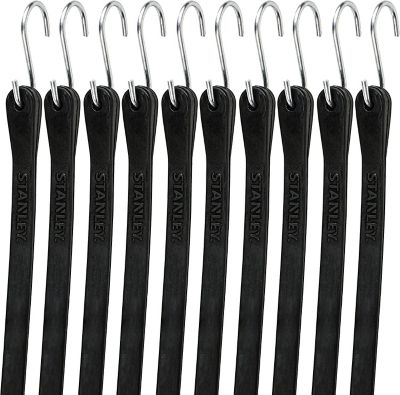
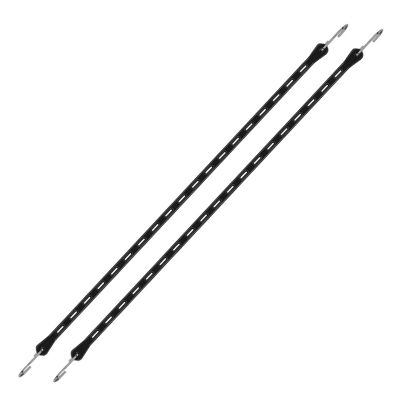
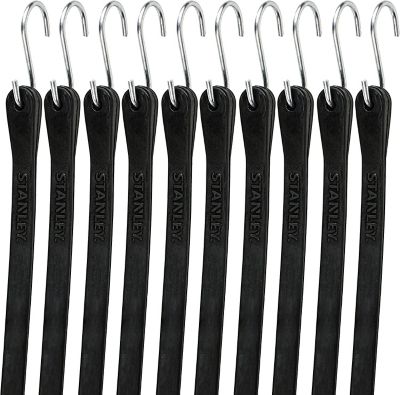
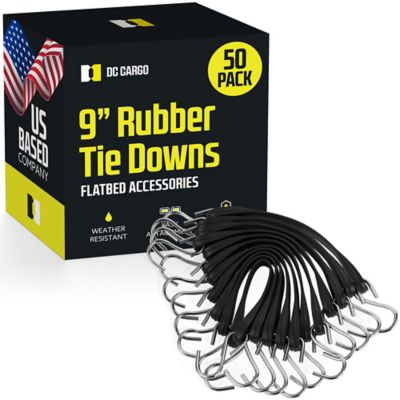
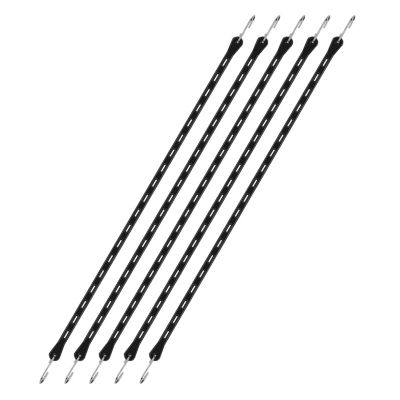
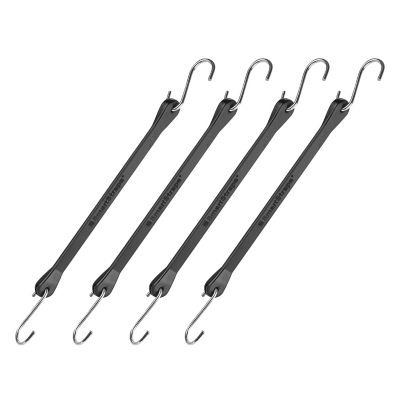
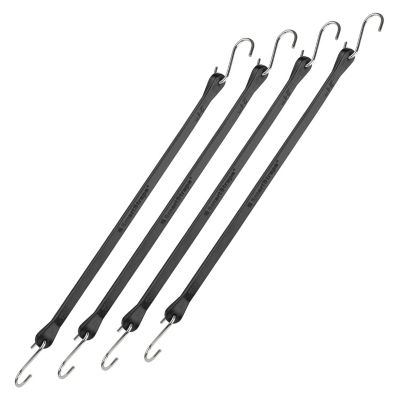
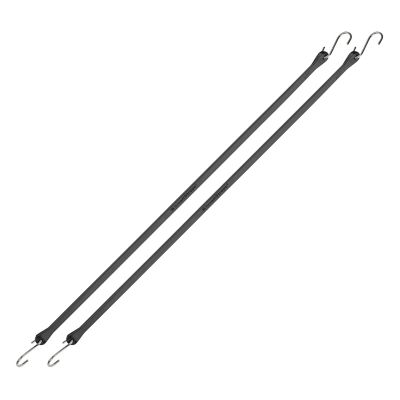
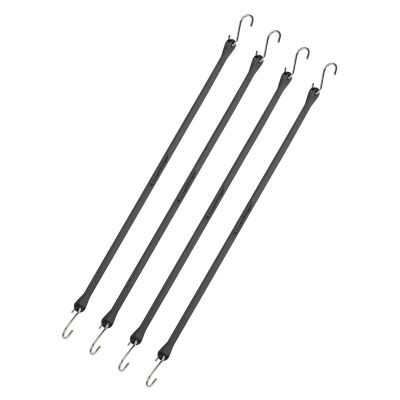
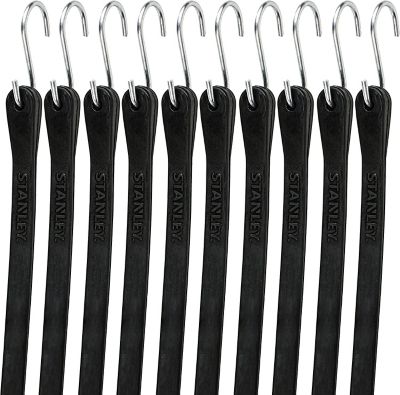
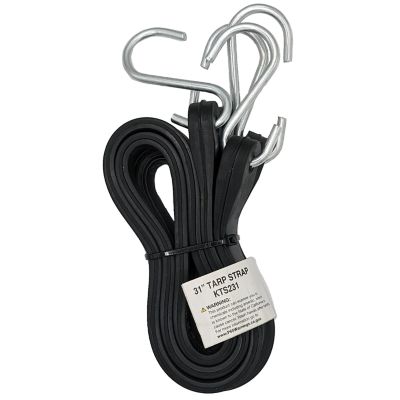
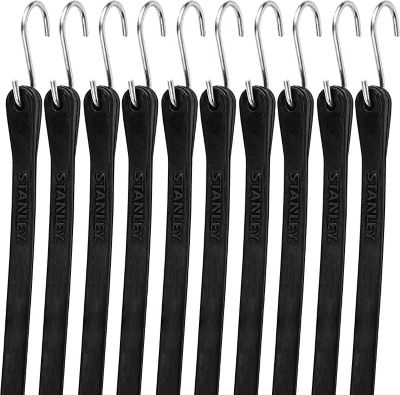
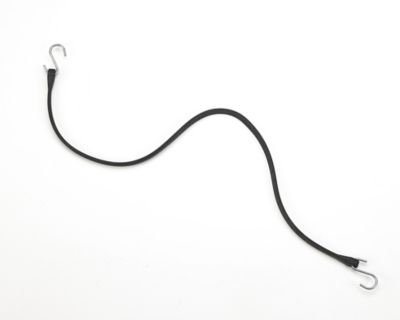
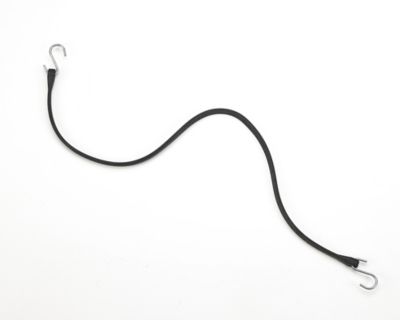
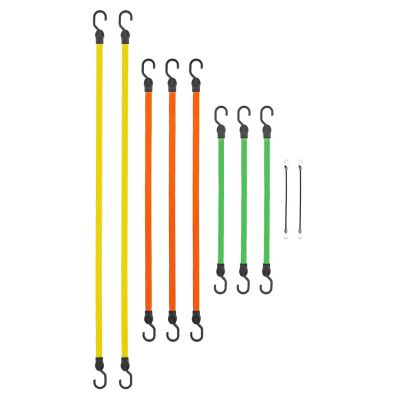
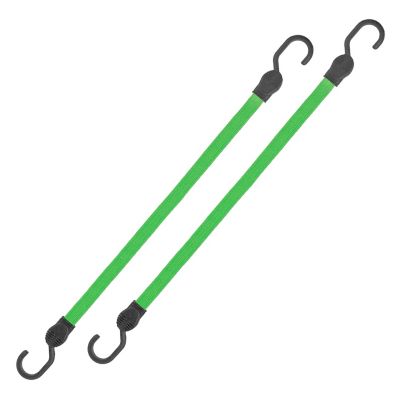
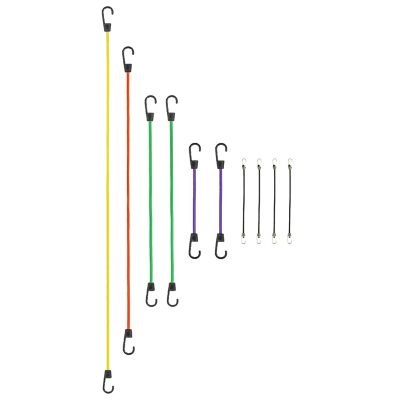
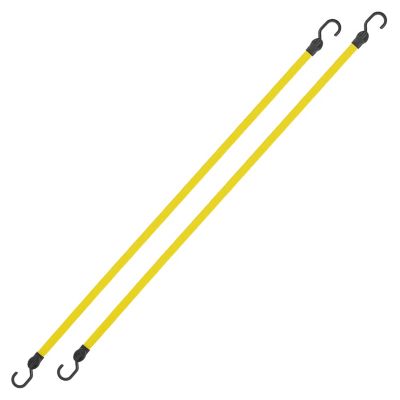
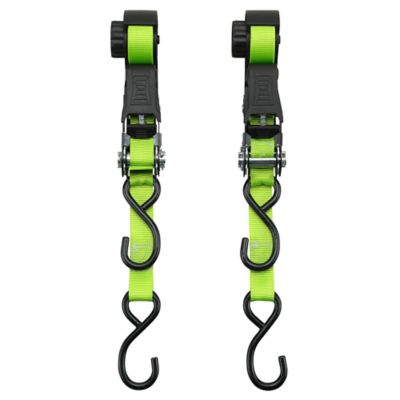
EPDM rubber tarp straps are a practical way to hold covers in place around the farm, shop, yard, garage, and worksite. Made from ethylene propylene diene monomer synthetic rubber, these straps are built to stretch around loads and return toward their original shape without taking up much room in a toolbox or truck bed. Their material stands up well to sunlight, ozone, heat, and the dry conditions that can cause natural rubber to crack over time. That makes EPDM a handy choice for securing tarps over firewood, hay, brush, soil, tools, outdoor furniture, equipment, and other loads that need a little extra protection from wind and weather. Many styles include steel S-hooks, with galvanized or zinc-plated finishes that help slow rust when the straps are kept outdoors or exposed to damp conditions. Crimped hook ends can also help keep the metal connection from pulling free of the rubber when a cover is being stretched across a load. A good strap should sit under tension without being pulled far beyond its working length, and the hooks should have a solid place to catch, such as a tarp grommet, trailer rail, stake pocket, or other suitable anchor point.
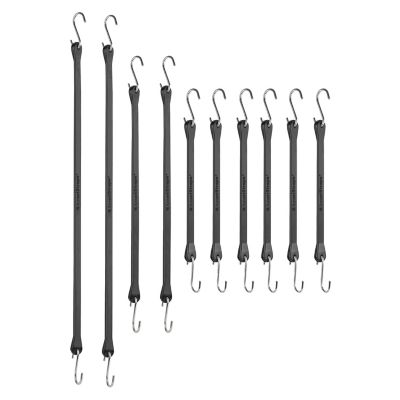
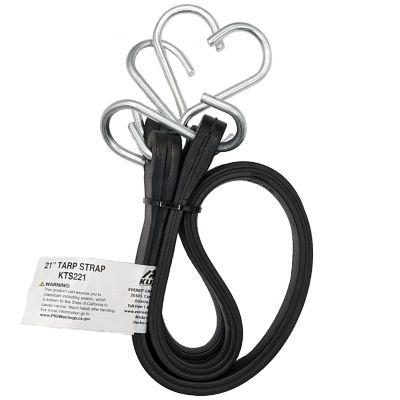
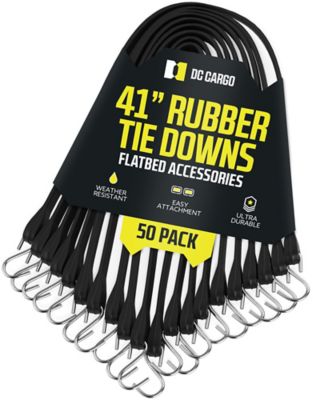
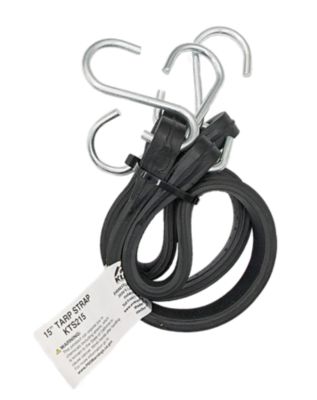
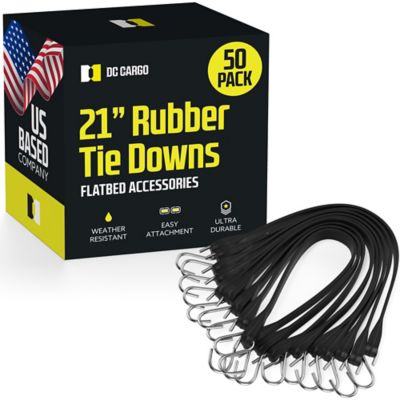
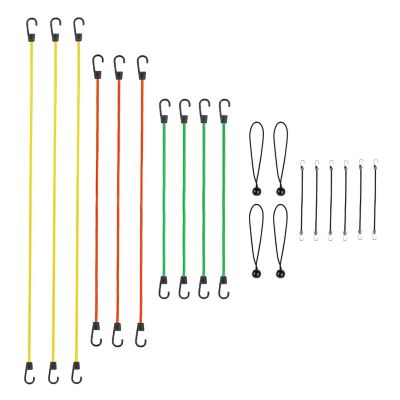
Length is one of the main details to compare when shopping for EPDM rubber tarp straps. Shorter straps, such as 9-inch lengths, can help close a small gap, gather a loose edge, or hold a cover around a compact load. Mid-size options around 15 inches often fit everyday jobs on utility trailers, pickup beds, lawn equipment, and stacked materials. Longer straps, including 21-inch lengths, offer more reach when a tarp must cross a wider space or connect to anchor points set farther apart. Measure the path between the connection points and leave enough room for a firm stretch without forcing the strap to its limit. It is usually more useful to have several lengths on hand than to rely on one strap for every job, especially when loads change from a small bundle of limbs to a full trailer of firewood. Pack size matters, too. A small pack can suit occasional chores or a truck emergency kit, while a larger count can make sense for a farm shop, landscaping crew, trailer owner, or anyone who regularly hauls materials. Before buying, check the strap length, hook style, rubber construction, connection method, and the condition of every piece. Do not rely on a tarp strap to replace a properly rated tie-down system for heavy, shifting, or safety-critical loads. For the cover itself, browse
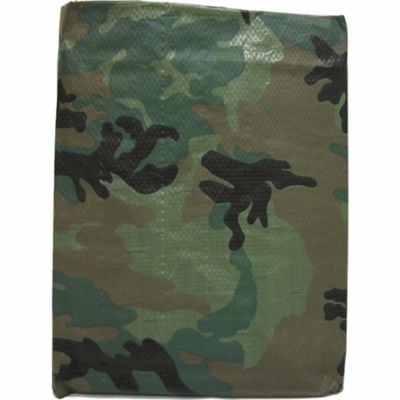
Tarp With Grommets to find a tarp with reinforced connection points that pair naturally with S-hooks.
EPDM tarp straps fit into all sorts of routines. A farmer may stretch them over a load of feed bags before heading down a gravel road, while a homeowner may keep a few in the shed for covering a mower, bundling branches, or holding a tarp over split wood as the cooler season settles in. They can help keep a cover from flapping against a trailer, catching wind around a stack of lumber, or pooling water over an uneven load. Campers, hunters, landscapers, roofers, small contractors, and folks who haul equipment can all appreciate having straps within easy reach when a tarp needs to stay put. They also make a thoughtful addition to a farm gift basket, new trailer setup, roadside emergency kit, or housewarming package for someone with a truck, homestead, workshop, or outdoor storage area. Store them out of direct sunlight when they are not in service, keep them away from sharp edges, and inspect the rubber and hooks before each trip. Look for cuts, deep nicks, stretched sections, splits, rust, or bent hooks, and set aside any strap that shows signs of damage. EPDM performs well in sun and heat, but extreme freezing temperatures can make the rubber stiffer and more prone to tearing, so take extra care during bitter cold weather and avoid sudden, forceful stretching. With the right length, a sound anchor point, and sensible tension, these straps help keep tarps close to the load through changing conditions from early fall into winter.