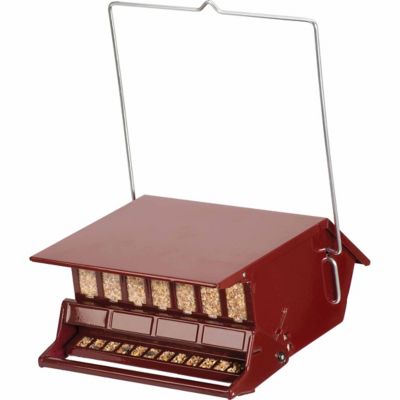
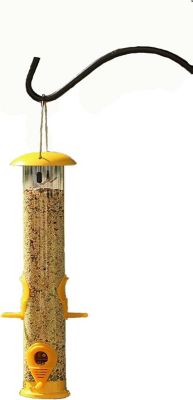
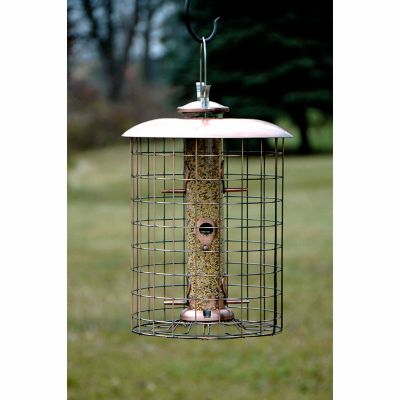
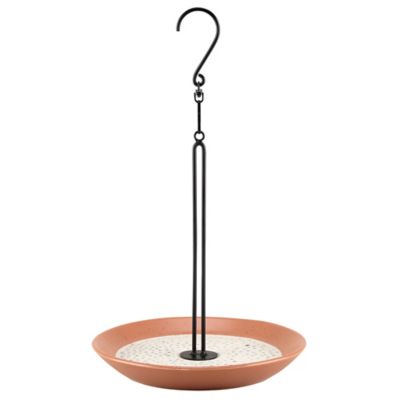
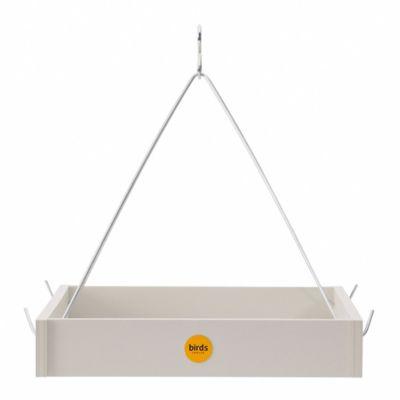
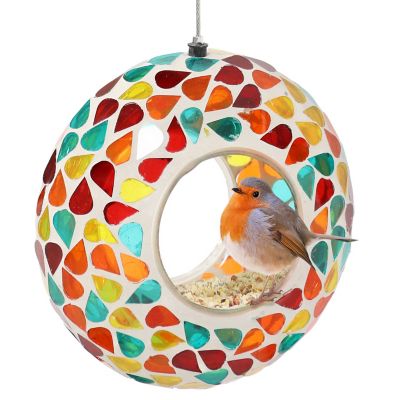
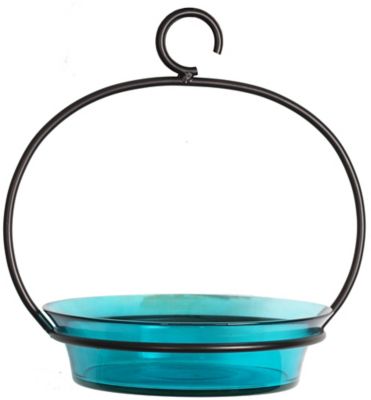
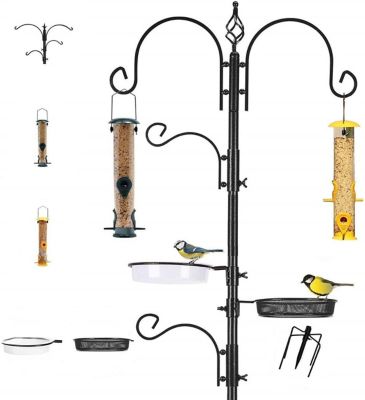
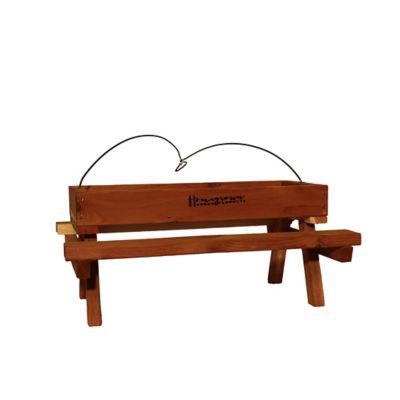
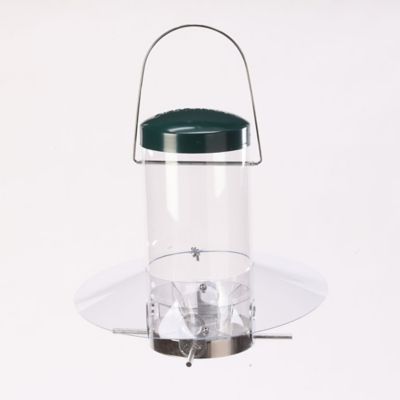
Easy fill bird feeders make it simpler to keep seed or suet within reach of backyard birds without wrestling with a narrow opening or a hard-to-hold lid. The main feature is straightforward access to the feeding compartment, whether that means an open tray, a wide hopper opening, a lift-up tube lid, or a wire suet cage with an easy-release latch. Platform and tray feeders accept seed across an open surface, giving a scoop plenty of room and letting birds approach from several sides. Hopper feeders hold seed in a reservoir that feeds into a tray below; some designs have hinged roofs or push-button tops that make refilling less of a chore. Tube feeders with broad openings can also be easy to fill, especially when the lid stays attached instead of needing a spot on the porch rail while you pour. Suet cages take a different approach, with a swinging panel that opens to accept a cake rather than loose seed. The right setup depends on both the food and the birds visiting your place. Black oil sunflower seed works in many feeders built for larger seeds, while tiny nyjer seed needs a feeder with openings meant to contain it. Finches often visit tube feeders, chickadees readily take sunflower seed, and woodpeckers may stop at suet cages. Cardinals generally appreciate enough perch or tray space to settle in comfortably. Bird visits still depend on local habitat, nearby cover, and the season, so a feeder supports the birds already moving through the area rather than promising a particular visitor. For a yard beside a hayfield, a small garden, or a quiet back porch, an easy-access feeder can turn a quick refill into a manageable part of the daily rounds. It also suits anyone who would rather watch a nuthatch work its way toward the seed than spend that time lining up a scoop with a tiny hole.
The parts you handle every time matter as much as the overall feeder shape. A broad opening is helpful, but so are a lid that stays out of the way, a latch that closes firmly, and a reservoir that can sit level while it is being filled. Someone carrying seed out in work gloves may prefer a generous handle or an uncomplicated roof release over small fittings that take bare fingertips to operate. For hanging bird feeders, consider the filled weight along with the strength of the hanger, branch, bracket, or hook supporting it. A large seed chamber can stretch the time between refills, but it also adds weight and may hold more food than a lightly visited yard needs. Smaller feeders can be easier to lift and bring indoors for cleaning, though busy feeding spots may empty them quickly. Pole-mounted feeders need a compatible mounting connection and a steady support, while a feeder attached near a deck needs enough clearance for its lid to open fully. Materials affect both handling and exposure to the weather. Metal roofs and frames provide firm structure, though protective finishes need attention if they chip or show rust. Clear plastic reservoirs let you see the seed level from a distance; resistance to sunlight and cracking matters when a feeder stays outdoors through changing temperatures. Wood offers a natural look beside a fence or garden, but its surfaces and joints need regular checks for moisture damage. Mesh and wire feeding areas let birds cling directly to the feeder, with opening size determining which foods they can hold. Roof overhangs help shield feeding ports, and drainage holes give water a way out of trays. Neither feature makes a feeder weatherproof, especially where wind drives rain sideways across an open yard. Appearance has a place, too:
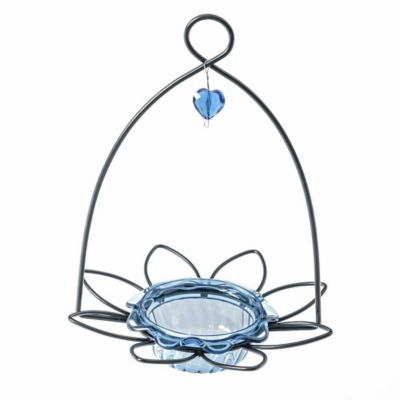
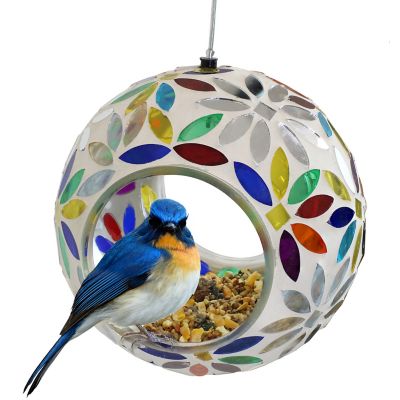
bird feeders with distinctive designs can bring another point of interest to a feeding spot, while refill access, drainage, and room for birds remain practical considerations.
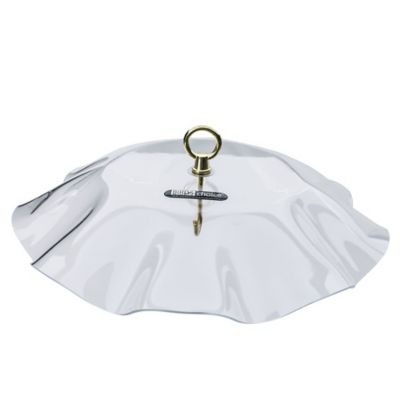
Easy filling pays off most when it goes hand in hand with easy cleaning and sensible placement. Removable bases, accessible corners, and feeding parts that separate without a struggle make it easier to clear away husks and damp seed. A feeder that pours neatly but traps wet food behind a fixed panel can create extra work down the road. Fresh seed should go into a clean, dry compartment rather than on top of clumped leftovers, and feeders need regular washing and disinfection following their care directions and local wildlife guidance. Thorough rinsing and drying help keep cleaning residue and moisture out of the next fill. During the cooler months, rain, wet leaves, and blowing snow can collect around trays, so drainage paths and feeding openings deserve a look during regular refills. Seed stored in a dry, tightly closed container is easier to keep free of moisture and pests, and a manageable scoop or pouring container helps limit spills beneath the feeder. Those fallen seeds and hulls need attention as well, particularly around a porch or walkway where they can gather underfoot or draw rodents. A reachable feeding station makes these chores more practical than a feeder hung so high that every refill calls for a ladder. Placement should also account for bird safety, with room to watch for predators and no nearby hiding spot where a cat can wait directly beneath the feeding area. Where squirrels are frequent visitors, secure lids, suitable baffles, and spacing away from jumping points can help, although easy-fill construction alone does not mean a feeder resists squirrels. For households with several feeding stations, matching feeder size to how quickly birds finish the food can make the whole routine easier to manage. These features also make easy fill bird feeders a thoughtful gift for a backyard birdwatcher, a neighbor who enjoys mornings on the porch, or a family getting acquainted with local birds. A comfortable refill height, food suited to nearby species, and parts that are simple to maintain give that gift a useful place in everyday life, well beyond the first afternoon it hangs outside.