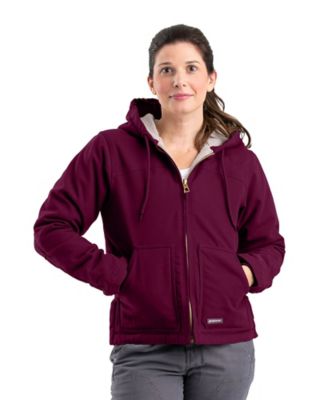
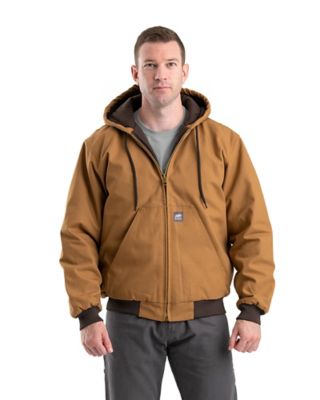
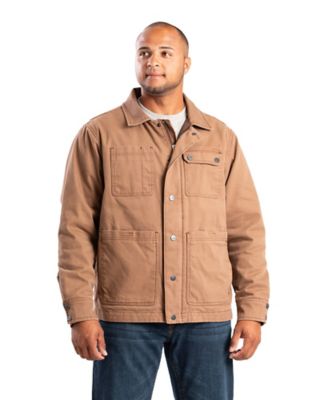
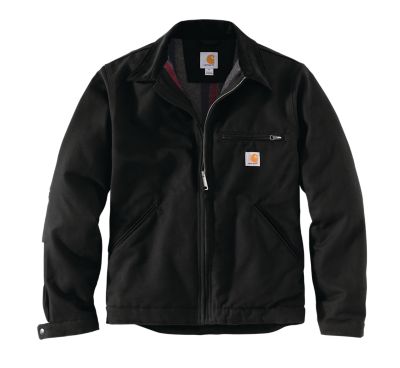
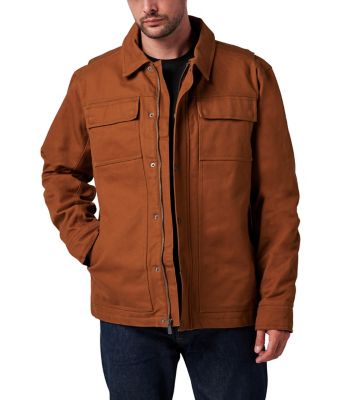
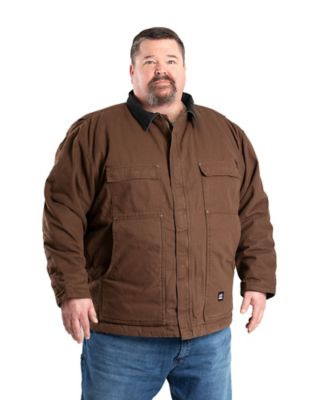
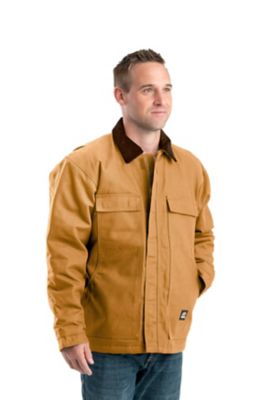
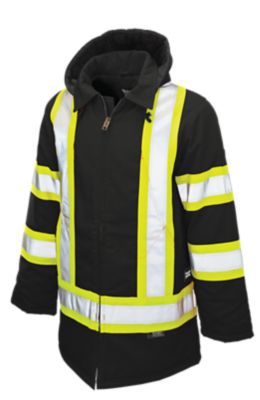
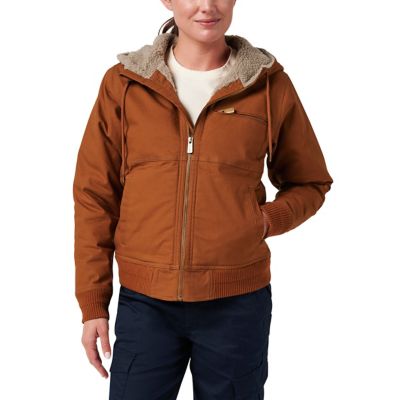
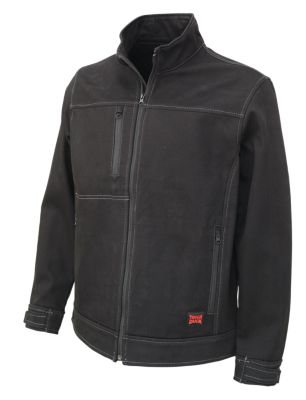
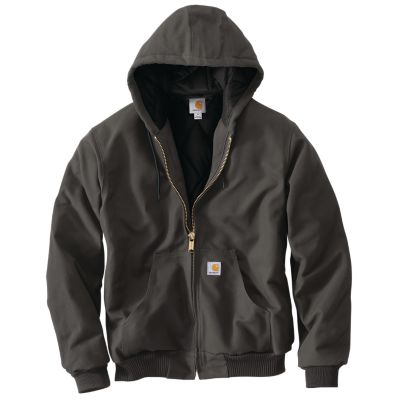
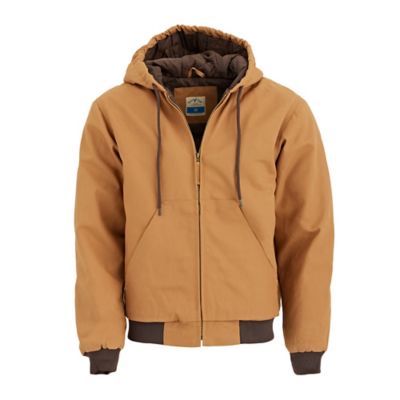
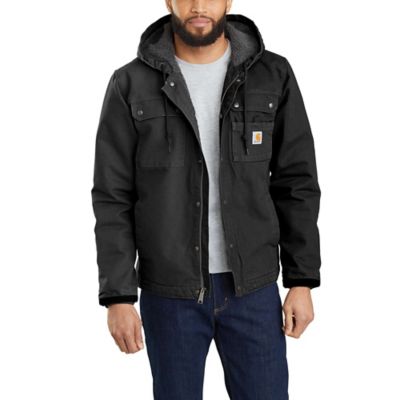
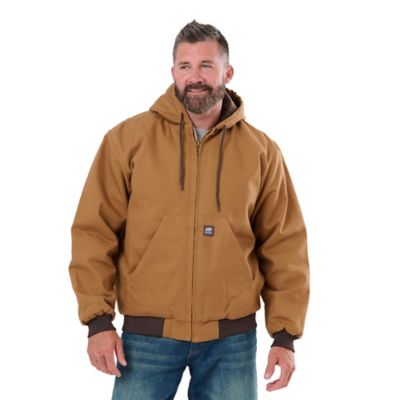
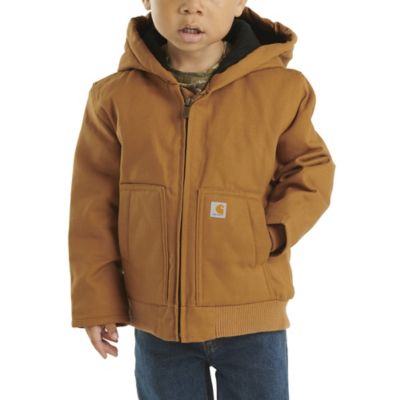
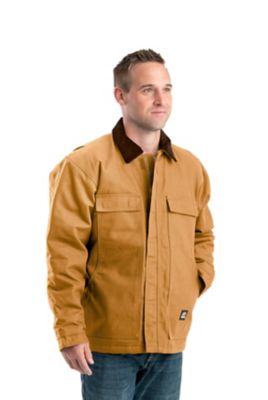
Duck chore jackets are work coats made with tightly woven duck canvas, most often cotton, that stands up to repeated rubbing and everyday wear around the farm, shop and yard. The name refers to the fabric, not feathers or down insulation. Duck cloth has a close, plain weave and a substantial feel, making it a practical outer layer for carrying split firewood, stacking feed sacks or leaning against a rough fence rail. Heavier shells often fall around 10 to 12 ounces in fabric weight, though construction varies, and fabric weight alone does not tell the whole story about warmth or strength. A firm cotton duck shell can feel stiff at first, then soften and develop creases at the elbows and shoulders with regular wear. Washed duck starts with a softer feel, while blends that include stretch fibers can offer extra give when reaching across a workbench or climbing into a truck. Reinforced pocket openings, sturdy closures and multiple rows of stitching at high-stress seams help a jacket handle the pull and friction that come with daily chores. The familiar chore-coat shape generally favors useful coverage, accessible pockets and enough room to move rather than a close, tailored fit. Some cuts reach below the waist for coverage when bending, while shorter jackets may feel less restrictive in a tractor seat. That balance makes duck work jackets a natural fit for livestock owners, grounds crews, gardeners, tradespeople and anyone whose day includes a fair amount of time outside. They also make a practical gift for someone who would rather have another working layer than something that stays in the closet, provided the size and preferred lining are known. Across different cuts and fabric finishes, the appeal stays straightforward: a substantial canvas shell, practical storage and a shape that works over everyday chore clothes. For someone moving between the barn, the driveway and an unheated shed, those details can matter more than a long list of extras.
Lining is one of the biggest differences among duck chore jackets, especially during the cooler months. An unlined coat supplies a tough outer layer without much added insulation, leaving room to adjust warmth with a flannel shirt, sweatshirt or fleece underneath. That can suit active work such as unloading bedding or gathering brush, when a heavily insulated coat may feel too warm once the job gets going. Blanket-style, fleece and quilted insulated linings offer different combinations of warmth, weight and feel. Smooth sleeve linings can make it easier to slide a jacket over a thick shirt without bunching the cuffs, while a softer body lining adds comfort during slower chores. A cotton duck shell helps limit airflow, but duck canvas by itself is neither waterproof nor a promise of protection in severe cold. Water-repellent finishes can help shed light moisture; steady rain, wet snow and prolonged exposure call for weather protection suited to those conditions. Likewise, the right amount of insulation depends on wind, temperature, activity level and the layers worn underneath. Walking fence lines generates more body heat than standing beside a gate waiting for a delivery, even on the same morning. A collar that closes comfortably at the neck, an adjustable cuff and a covered front closure can help reduce drafts without requiring a heavier shell. Hoods add coverage around the head and ears, while a hoodless cut can sit more comfortably beneath separate rain gear or work with a knit cap. For a broader look at cold-weather outerwear,
Winter Farm Jackets brings together another related category for farm routines. A duck chore coat still has its own place: it offers a canvas work layer that can suit a brisk start, an afternoon of steady movement or a colder stretch with the appropriate insulation. The most useful choice matches the actual pace of the day, not just the temperature before heading out the door. Breathability and manageable weight deserve attention alongside warmth when chores alternate between hard work and standing still.
Fit and everyday details determine how well a duck chore jacket works after that first trip outside. Enough space through the chest and shoulders allows for layers, but excess fabric can bunch beneath the arms or get in the way around equipment. An action back, shoulder pleats, shaped elbows or stretch fabric can improve reach without making the whole coat oversized. With arms extended as if holding a wheelbarrow handle, sleeves should still cover the wrists comfortably; when seated, the hem should not push the jacket up toward the neck. Room through the upper arms matters when a sweatshirt is part of the usual outfit, and sleeve length deserves a second look before choosing a larger size solely for layering. Pocket placement is just as practical. Lower pockets offer a place to warm hands between tasks, chest pockets keep small essentials within reach, and secure closures help keep keys from slipping out when bending over. A phone pocket needs dimensions that suit the phone and its case, not just a convenient-looking opening. Glove-friendly zipper pulls, generous pocket entrances and cuffs that adjust over work gloves can make cold mornings less fiddly. Care also plays a part in how the jacket wears over time. The care label governs washing temperature, drying and any treatment for a water-repellent finish, since cotton shells, stretch blends and insulated linings do not all need the same handling. Brushing away dry dirt and spot-cleaning small marks can reduce unnecessary full washes. Excessive dryer heat may shrink cotton or affect certain finishes, and a damp coat needs to dry fully before storage. Small seam openings and loose fasteners are easier to address before they turn into bigger repairs. Even a heavy canvas shell is everyday workwear rather than certified protection from flames, chemicals or machinery hazards unless specifically labeled for that purpose. With the right fit, sensible care and features that match the job, a duck chore jacket can settle into the daily routine as naturally as the boots waiting by the back door.