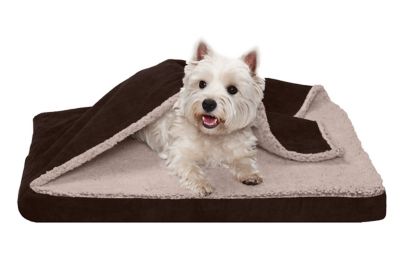
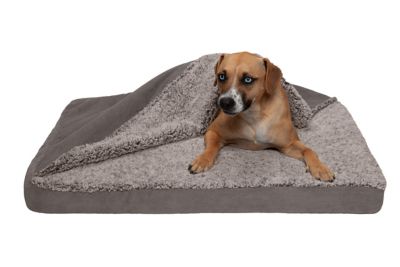
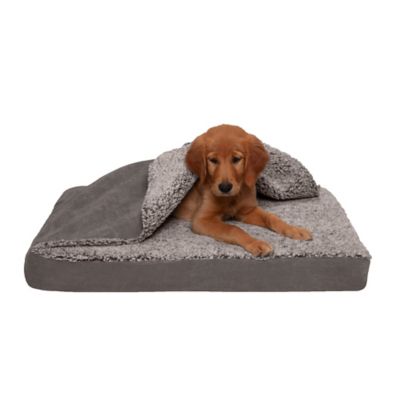
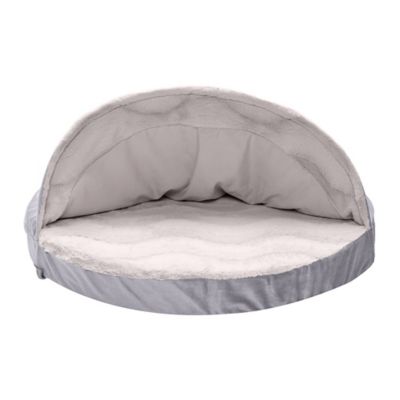
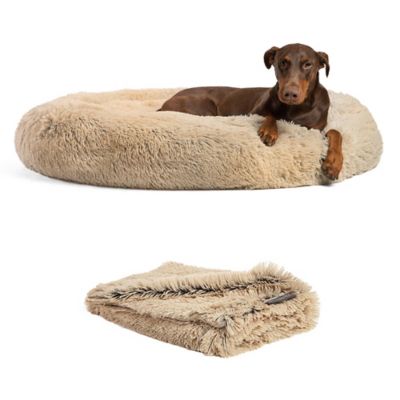
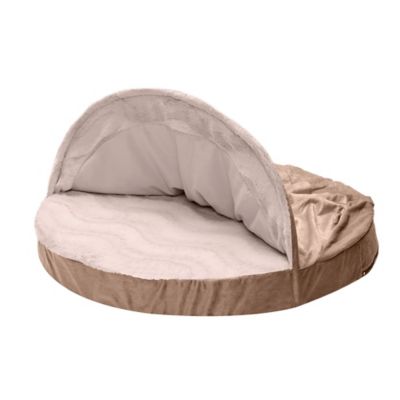
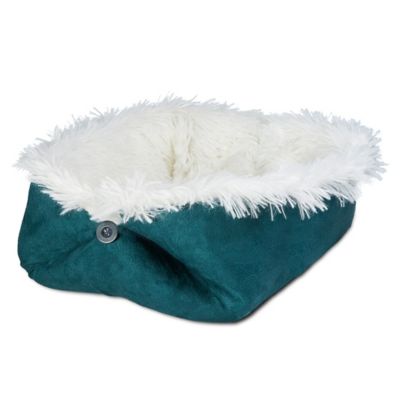
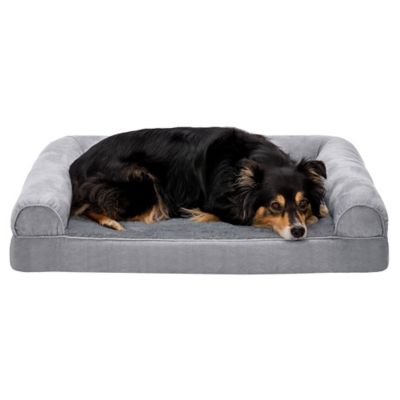
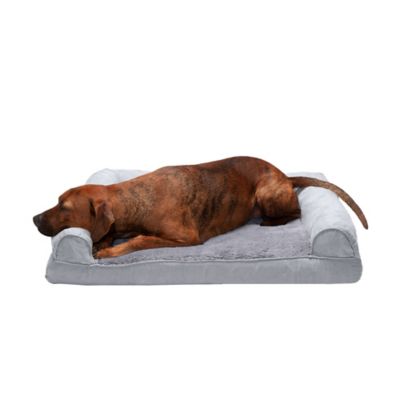
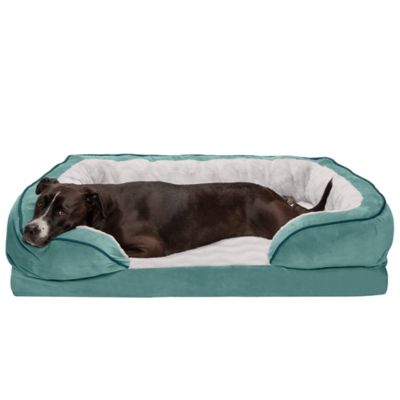
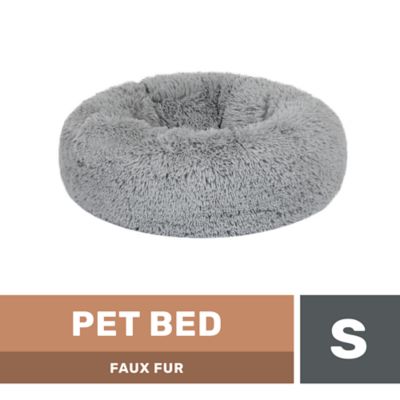
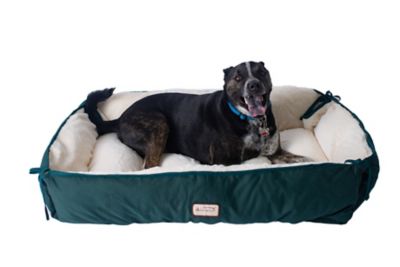
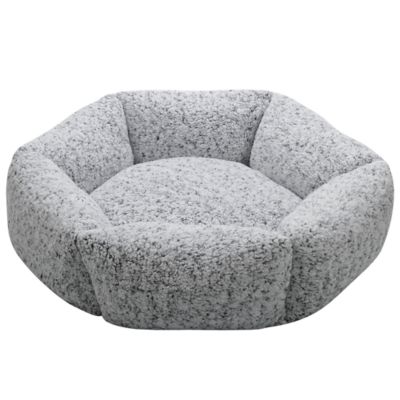
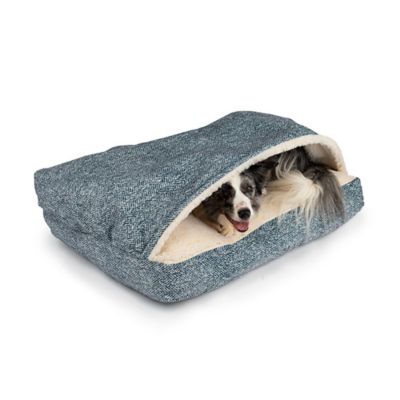
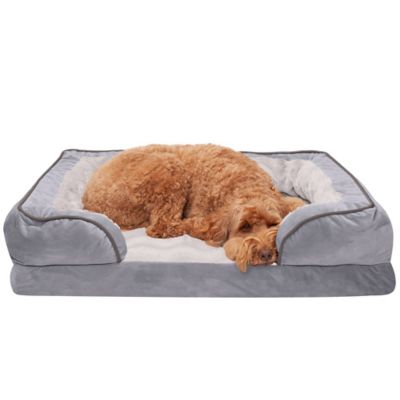
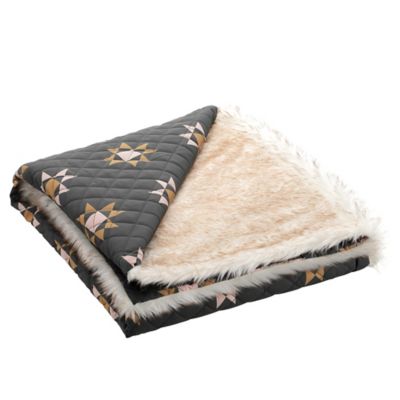
Dog beds with built-in blankets combine a cushioned sleeping surface with an attached cover, giving dogs a place to curl up, tuck their noses, or burrow beneath a soft layer. The blanket stays connected to the bed instead of sliding away every time a dog circles and settles down. Depending on the design, that cover may lie loosely across the cushion, form a pocket, or rise into a cave-style opening. A loose blanket top lets a dog nose underneath and arrange the fabric, while a supported opening leaves a more defined entrance. These styles suit different sleeping habits, from the little terrier that disappears beneath a throw to the hound that likes its body covered but keeps its head out. Not every dog wants an enclosed sleeping spot, so the amount of coverage matters as much as the softness. An open-front design leaves a clearer view of the room, while deeper coverage creates a more tucked-away resting place. Raised sides can give a curled-up sleeper somewhere to lean, and a flatter mattress leaves more room for long legs. For a dog that alternates between burrowing and sprawling, a blanket that folds back easily allows both without moving to another bed. The best fit follows how the dog already rests rather than asking it to learn a different sleeping position. These beds generally make sense as indoor resting spots beside the couch, near a home office, or in a quiet bedroom corner. A dog can stay close to its people while having a space of its own, whether the household is settling in after chores or getting supper on the table. The attached blanket also keeps the sleeping setup together, which can be handy for dogs that otherwise drag a separate throw from room to room. Some dogs sleep beneath the cover, some bunch it into a pillow, and others simply lie on top. A bed with enough flexibility accommodates those everyday habits without much fuss.
Materials and construction shape how a blanket-top dog bed feels under a resting dog and how it holds up to daily nesting. Fleece, plush fabric, and sherpa-style surfaces offer different textures, while smoother woven fabrics may release loose hair more readily, depending on the weave. Deep pile gives paws something soft to knead, but it can also collect hair and tracked-in debris. A dog coming in from a gravel drive or a romp around the yard may do better with bedding that has straightforward cleaning instructions and easy-to-reach seams. Inside the base, loose fiber fill creates a cushion that can shift as the dog settles, while foam generally gives the sleeping surface a more consistent shape. Beds described as orthopedic may have supportive foam layers, but the thickness, firmness, and construction deserve a closer look than the label alone. A heavier dog needs enough cushioning to avoid sinking straight through to the floor. An older dog or one with limited mobility may find a low entrance easier to step across than a tall bolster. Size includes more than the outside measurements, too. Raised edges and blanket attachment points can reduce the space a dog actually has for sleeping. Measuring the dog in its usual resting position helps put those dimensions in perspective: a tight curl takes up less room than a full side stretch with paws extended. The blanket should provide coverage without making it difficult to turn around or step out. For cave-style beds, entrance height matters alongside length and width, especially for broad-shouldered dogs. A covered bed that works for a small adult dog may not leave enough room for a growing puppy for long. Bottom fabric is worth considering as well. A nonslip surface can help limit movement on smooth floors, although the bed still needs a level spot away from stairs and busy doorways. Well-finished seams, securely attached blanket edges, and a base that keeps its shape all contribute to a bed that stands up to repeated settling, pawing, and washing.
Care details make a real difference once a dog bed becomes part of the daily routine. An attached blanket is not necessarily removable, and a removable outer cover does not always mean the inner cushion can go in the washer. The care label should spell out which pieces can be washed, how they should dry, and whether the complete bed will fit the household machine. Thorough drying matters, especially around thick bolsters, folded blanket edges, and foam inserts that can hold moisture. A washable cover can simplify cleanup after muddy paws or an occasional accident, but it should not be mistaken for a waterproof barrier unless the product information says so. Routine shaking, vacuuming, or brushing helps keep loose fur from working farther into the fabric. For dogs that scratch several circles before lying down, attention to the blanket attachment and stitching is worthwhile; loose threads or torn fabric are signs the bed needs attention. Dogs that chew bedding or swallow fabric need closer supervision, and an attached cover may not suit those habits. Placement can help a dog take to the bed without a fuss. A familiar resting corner, enough clearance around the entrance, and the option to climb in or lie on top give the dog room to choose. The blanket should never be tucked around the dog so tightly that it cannot leave freely. For shoppers comparing covered sleeping spaces with other cushioned options,
Warm Dog Beds offers another place to explore beds centered on snug comfort. A blanket-top bed can also make a thoughtful gift for a pet-owning friend or family member when the dog's size, sleeping habits, and laundry needs are known. From a small burrower beside an armchair to a long-legged sleeper stretched across a mattress-style base, the right match comes down to usable space, comfortable support, manageable care, and a cover the dog enjoys settling beneath.