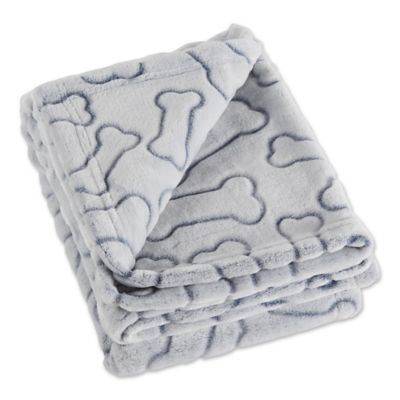
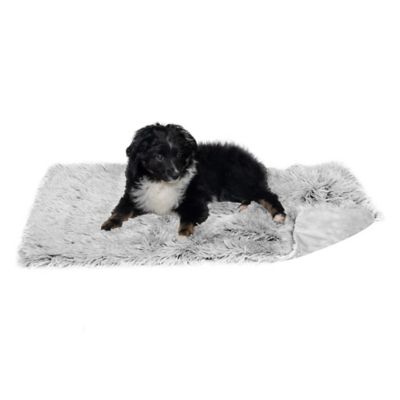
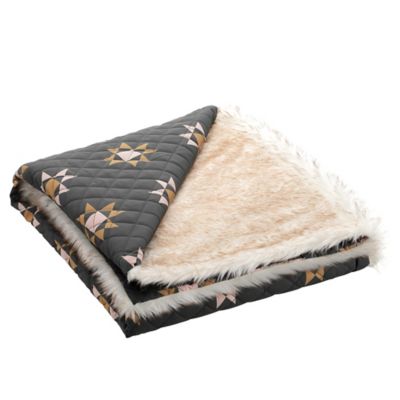
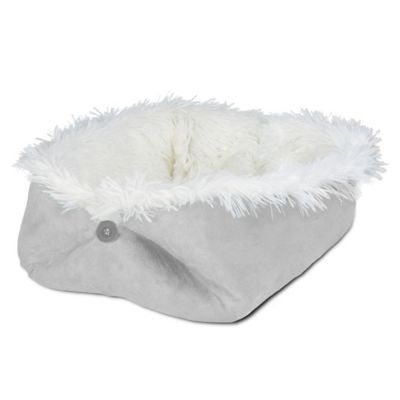
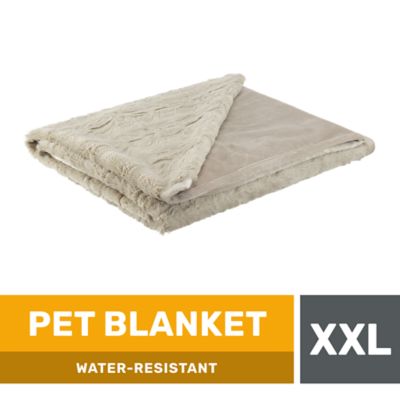
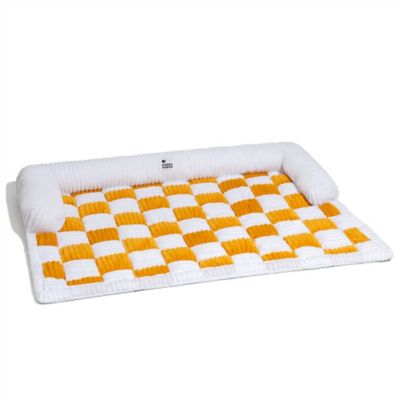
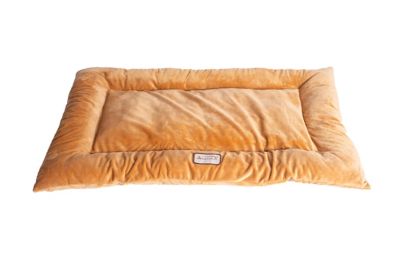
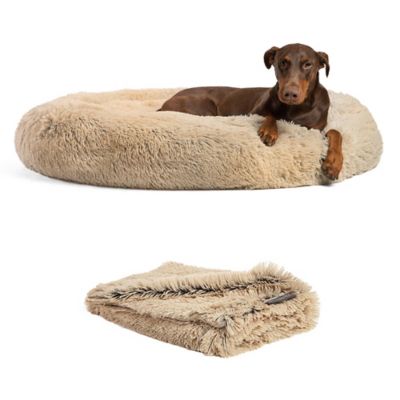
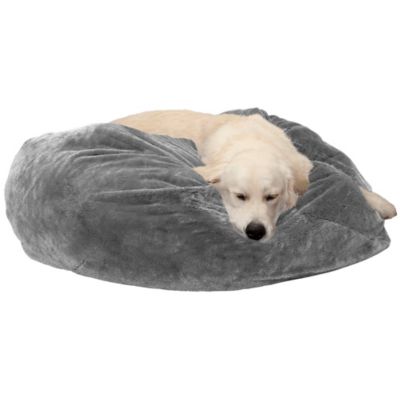
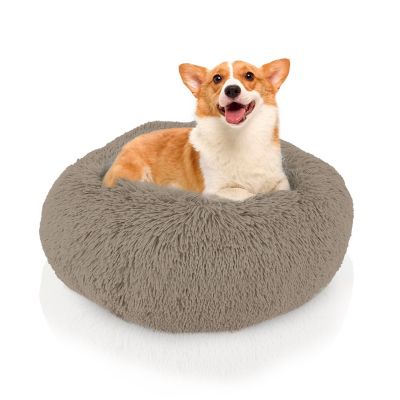
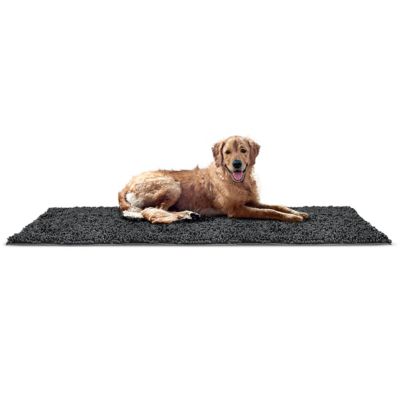
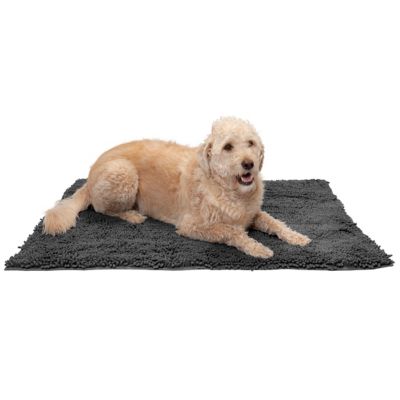
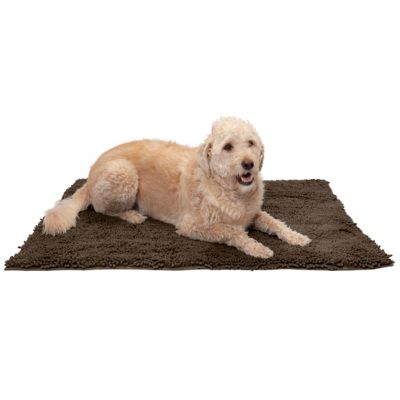
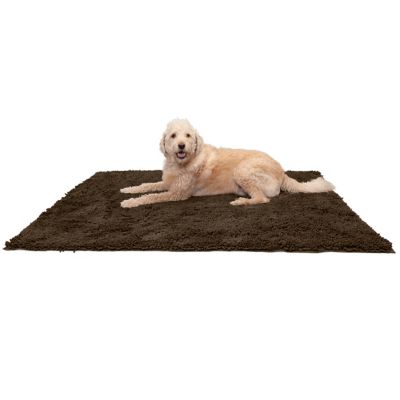
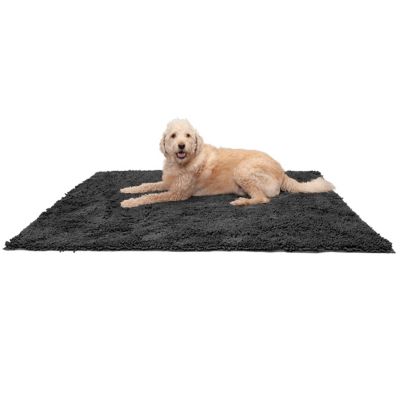
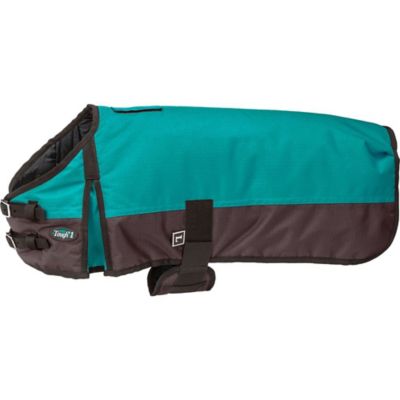
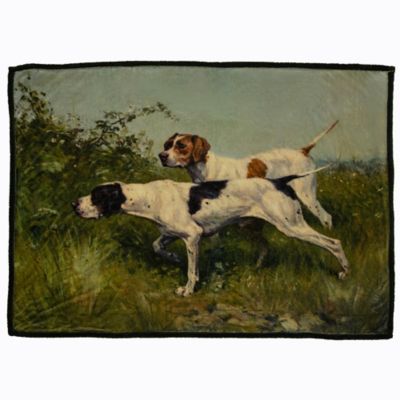
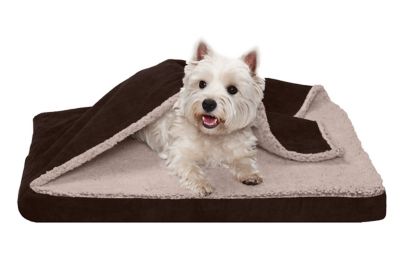
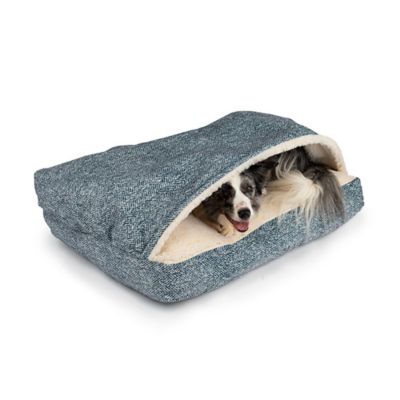
Fluffy dog blankets give dogs a soft place to settle while adding a washable layer between paws and the places they love to nap. Draped across a dog bed, spread over a favorite couch cushion, or tucked into a travel bag, a plush blanket can make an everyday resting spot feel more familiar. Unlike a filled dog bed, a blanket is a flexible layer that can lie flat or gather into folds for a dog that likes to nest. The feel comes largely from the fabric and its surface texture. Fleece generally has a soft, brushed finish and folds easily, while sherpa-style fleece has a curly, wool-like texture. Faux fur offers a longer pile that some dogs enjoy nosing into before settling down. Many fluffy fabrics contain polyester, though fiber content, backing, and construction vary, so the material label tells more than appearance alone. Microfiber refers to fine fibers, not one particular blanket texture, and a fluffy surface does not automatically mean a thick or heavily padded blanket. Reversible designs may pair two textures, giving a dog a smoother side for stretching out and a deeper pile for curling up. That choice can matter for a hound that sprawls across the couch just as much as a little terrier that paws its bedding into a mound. Softness is only part of the picture, though. Long pile can hold bits of grass, loose hair, and crumbs, while a shorter plush surface may be simpler to brush off between washes. A familiar blanket can also help mark out a resting place when visiting family or riding along on an overnight trip. It is a comfort item rather than a treatment for anxiety, and a dog's own preferences matter more than claims about a certain texture. Some dogs favor a fluffy nest; others prefer a thin layer with room to stretch. Either way, a blanket works best when the dog can move freely and choose how to settle.
Size and intended use shape how well a fluffy dog blanket fits into daily life. A blanket meant to cover a dog bed needs enough fabric for the sleeping surface, while one meant for a couch may need extra width to cover the cushion edges where paws land. Measuring the resting area gives a better starting point than judging by a dog's weight alone. A tall, lean dog that sleeps stretched out can need more coverage than a heavier dog that curls into a tight circle. For broader sleeping spaces or long-legged companions, the
Large Dog Blanket page offers a related place to explore generous coverage. Extra fabric is handy for nesting, but too much can bunch beneath a dog or slide off a narrow seat. In a crate, a manageable fit leaves room for comfortable movement without crowding the doorway or getting tangled around bowls. A loose blanket is not a vehicle restraint, so car travel still calls for an appropriate harness or secured carrier. For furniture and vehicle seats, the difference between a soft throw and a protective blanket is worth noting. Plush fabric may catch shed hair and ordinary dirt, but fluff alone does not block moisture. Water-resistant fabric can resist some moisture without providing the same barrier as a blanket labeled waterproof. Waterproof construction may include an inner layer, and edge seams, backing, and care requirements all affect its intended use. That distinction matters with a puppy still learning household routines, an older companion with occasional accidents, or a dog coming in with damp paws after a romp around the property. A blanket can help keep the resting area easier to clean, but spills still need prompt attention. On smooth furniture, a backing designed to limit slipping may be helpful; on a dog bed, a flexible blanket that settles into the bed's shape may matter more.
Everyday care has a lot to do with whether a fluffy dog blanket stays pleasant to reach for. Machine-washable construction can make regular cleanup simpler, but the care label should confirm the wash cycle, drying method, and any limits for special backing or inner layers. A large blanket also needs enough room in the washer to move freely and rinse thoroughly. Shaking off loose debris outside and lifting away excess hair before washing can keep some of that mess out of the laundry. Detergent should rinse clean, and fragrance-free choices may suit households with sensitive noses. Fabric softener and high dryer heat are not right for every material, especially when a blanket includes a moisture barrier, so the fabric's own care directions take priority. Thorough drying matters before the blanket goes back on a bed or into a travel bag. Construction deserves a close look, too: neat edge binding, secure stitching, and fabric that holds together through regular washing are useful traits for a blanket that moves between the sofa, the truck, and the dog's bed. No plush blanket is chew-proof. Dogs that pull at seams, tear fabric, or swallow loose fibers need supervision, and damaged blankets should come out of reach. For an older dog, a fluffy layer can add surface comfort, but it does not replace a supportive bed when cushioning is needed. For a busy household, having a separate blanket for the couch and another for travel can keep routines simpler without hauling one blanket from place to place. Fluffy dog blankets also make practical gifts for new pet owners, folks welcoming an adopted dog, or anyone whose companion has claimed a favorite chair. A sensible size, an easy-care fabric, and a texture the dog already enjoys make the gift more personal than appearance alone. Whether the resting spot is beside a recliner or at the foot of a bed, the appeal is straightforward: a soft, familiar layer that fits the dog and the household's daily routine.