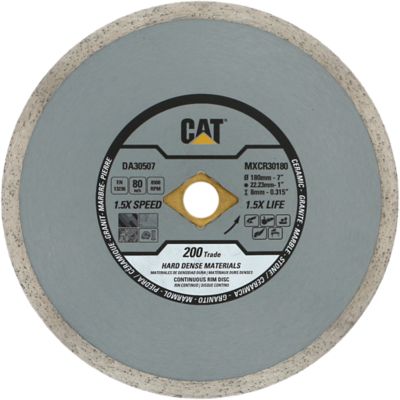
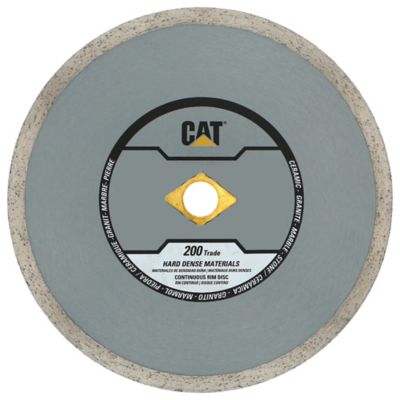
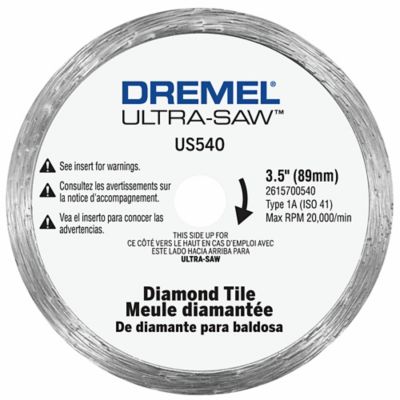
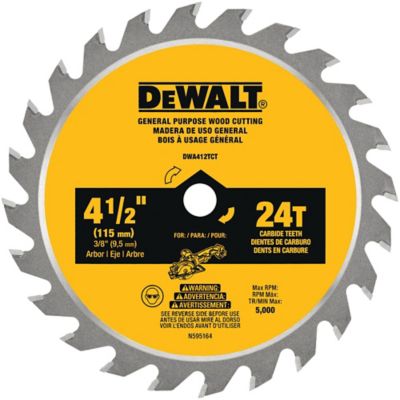
Diamond blades for circular saws give you a practical way to cut through hard building materials that would quickly wear down a standard wood-cutting blade. Depending on the blade style and the job, they can be used on concrete, brick, block, pavers, masonry, stone, tile, porcelain, granite, marble and fiber-cement products. They are a handy addition to the tool collection for homeowners tackling a patio repair, farm and ranch owners setting posts or replacing sections of walkway, and contractors working on driveways, siding, flooring or light masonry work. A diamond blade does not cut in quite the same way as a toothed wood blade. Its diamond-embedded rim grinds through dense material, which helps it handle tough surfaces without relying on sharp teeth that can snag or dull quickly. Before ordering, check the blade diameter your saw accepts, the arbor size and the saw’s maximum RPM rating. Many standard circular saws use a 5/8-inch arbor, but that measurement should be confirmed against the saw and blade specifications rather than assumed. The blade should fit securely, run at a compatible speed and have enough cutting depth for the material. A 7-1/4-inch blade is a common size for standard circular saws, but other sizes are available for different saws and cutting depths. It is also worth checking whether the blade is intended for dry cutting, wet cutting or both. A blade designed for the job at hand will generally provide a steadier cut, longer service life and less frustration when you are working through a stack of pavers or trimming a row of fiber-cement siding.
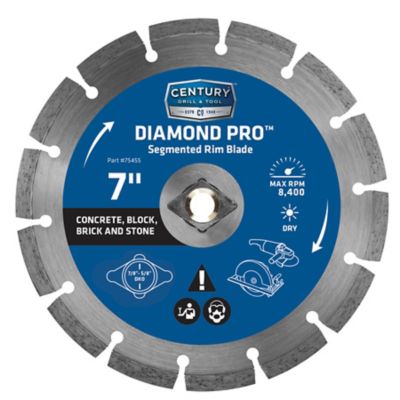
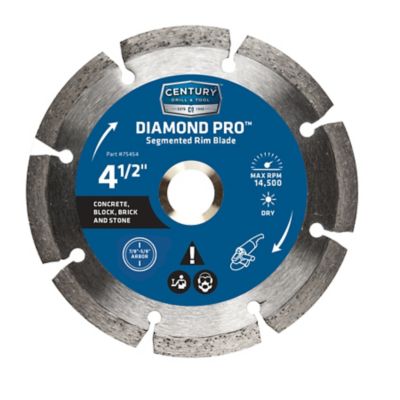
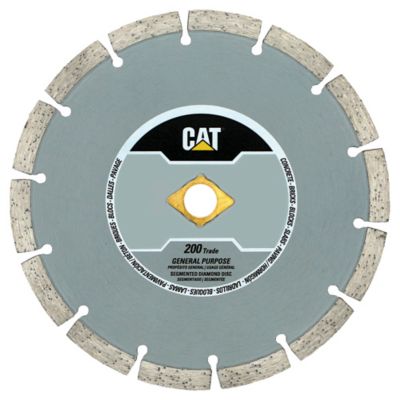
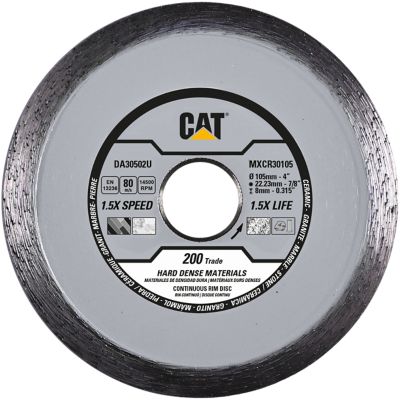
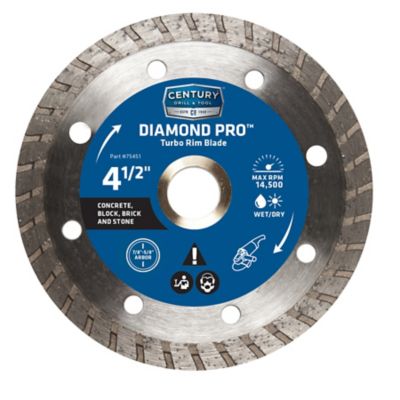
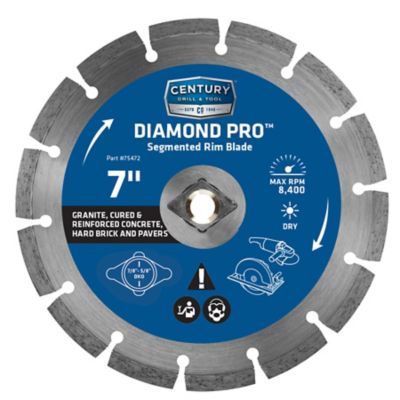
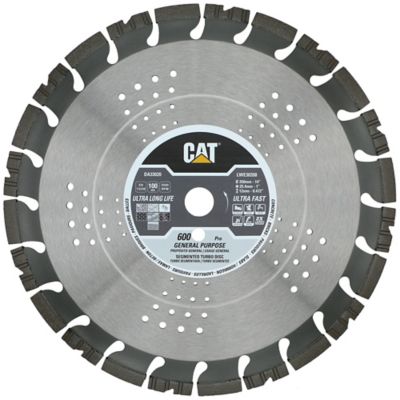
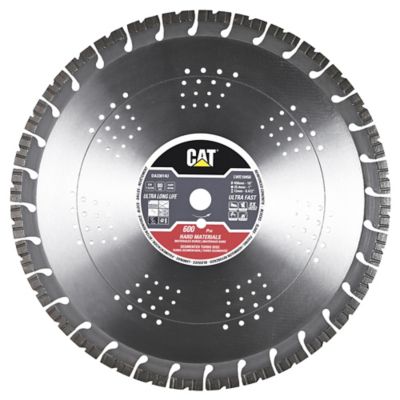
Blade style makes a noticeable difference in the finish, speed and dust produced during a cut. Segmented diamond blades have gullets, or open spaces, around the cutting edge. Those gaps help move dust and debris out of the cut while allowing air to circulate around the rim, making this style a solid choice for dry cutting concrete, brick, block and other general masonry. Turbo diamond blades have a wavy or serrated rim that balances cutting speed with a smoother finish, making them useful for stone, granite, marble and other materials where you want a clean result without giving up too much pace. Continuous-rim blades have a smooth, unbroken edge and are commonly selected for tile, porcelain, ceramic and other finish materials where chipped edges can spoil an otherwise good installation. They are often used with water to cool the rim and control dust, but always follow the instructions for the specific blade and saw. Some specialized blades use polycrystalline diamond teeth rather than a continuous diamond rim. These are often suited to abrasive sheet goods such as fiber-cement siding and laminate flooring. Match the blade to the material, not just the saw. A blade that performs well on a concrete block may be too aggressive for delicate tile, while a smooth tile blade may be a poor choice for a long dry cut through thick masonry. For projects involving concrete slabs, masonry walls, curbs or pavers, our selection of
Diamond Blades For Concrete Cutting can help you find a blade suited to that type of work. Keeping separate blades for rough masonry and finish cutting is often a smart move, especially if you regularly switch between outdoor repairs and indoor remodeling.
Safe setup and steady technique matter just as much as blade selection. Dry cutting concrete, brick and block can create a heavy cloud of fine silica dust, so work outdoors or in a well-ventilated area when possible, keep bystanders and animals clear, and wear safety glasses or a face shield, hearing protection, gloves that allow a firm grip and a properly fitted N95 or other suitable respirator. Wet cutting can help cool the blade and reduce airborne dust, but water and power tools require extra care; use only equipment approved for wet cutting, keep connections protected and follow the saw and blade instructions closely. Mark the cut with a straightedge or chalk line, support the work so the cutoff cannot pinch the blade, and make sure the guard moves freely before starting. Let the blade reach full speed, keep both hands on the saw when the tool is designed for two-handed control and guide it at a steady pace without leaning hard into the cut. For thick material, several shallow passes are usually safer and easier on the blade than forcing one deep pass. Score the line first, then gradually increase the depth within the saw’s capacity. If the blade binds, kicks back, wobbles or begins cutting slowly, stop and inspect the setup rather than pushing harder. A clean blade, the right rim style and a patient hand can make the difference between a straight cut and a chipped, wandering edge. These blades can make a useful gift for someone building a workshop, maintaining a small farm, renovating a house or taking on weekend hardscaping projects, particularly when paired with the correct saw, dust-control gear and measuring tools. Store blades flat and dry, inspect them for damage before each use and replace any blade that is cracked, warped or excessively worn. With the right match and a little care, a diamond blade helps turn demanding cuts through hard materials into a more manageable part of the job.