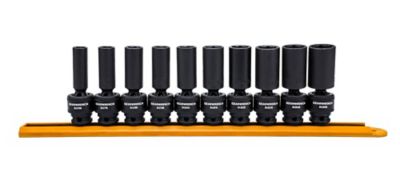
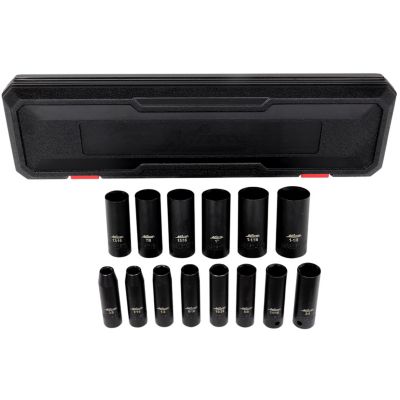
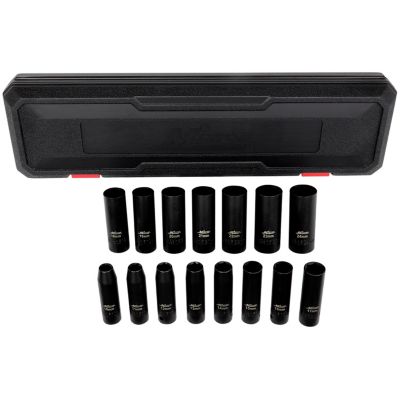
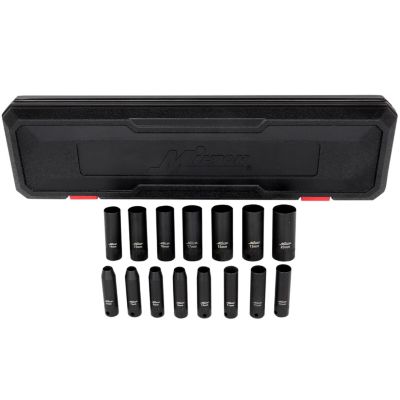
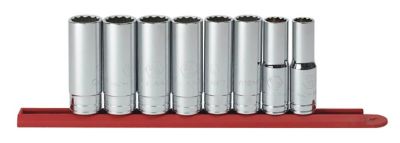
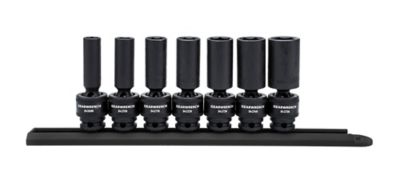
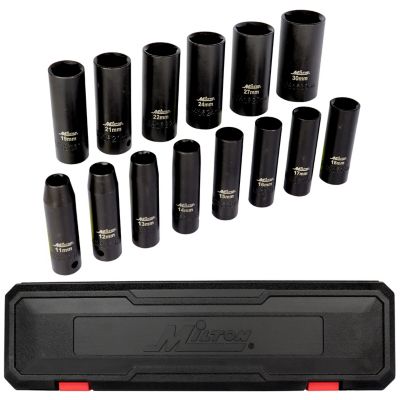
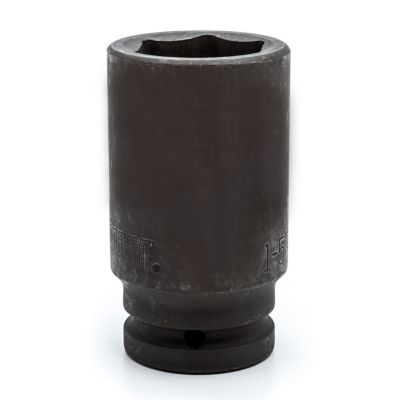
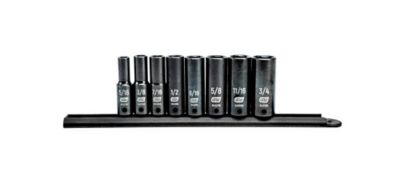
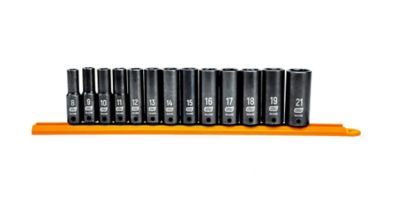
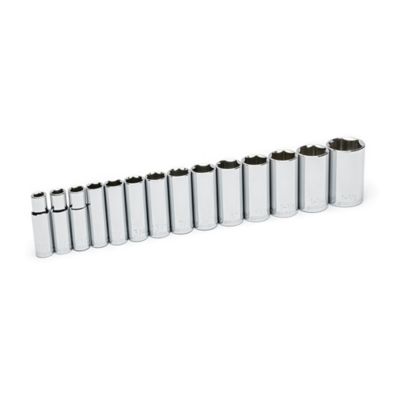
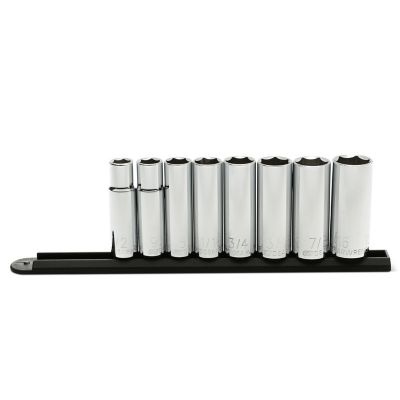
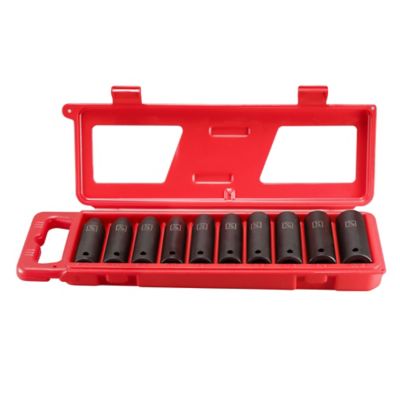
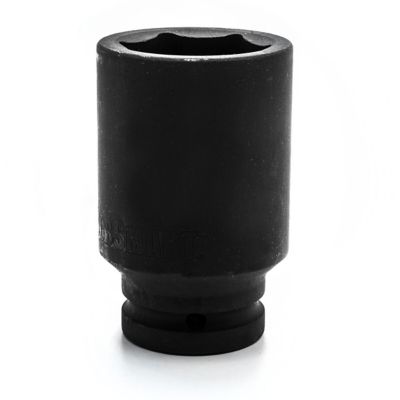
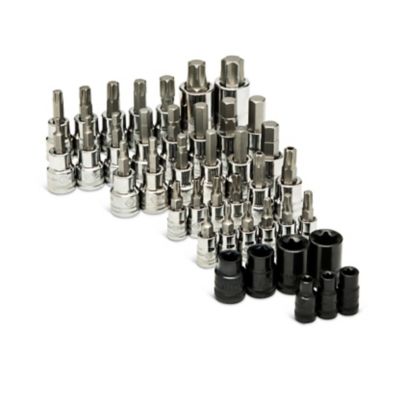
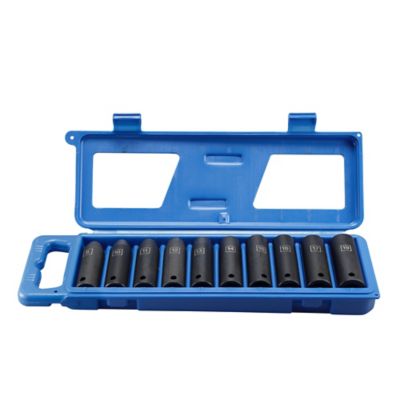
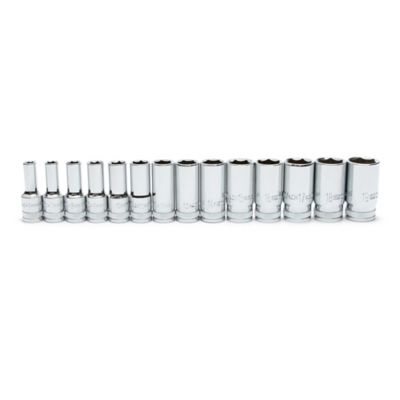
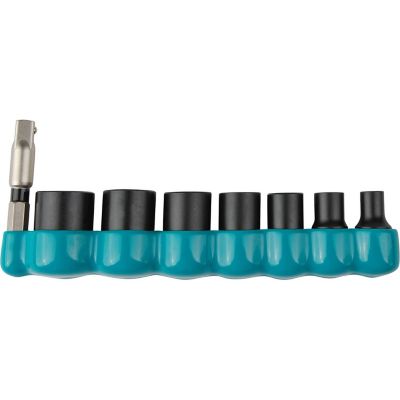
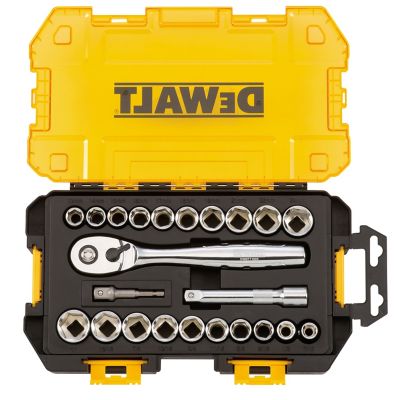
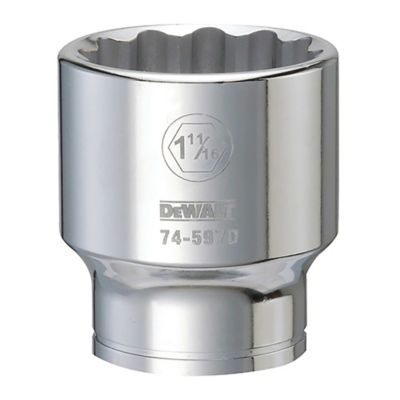
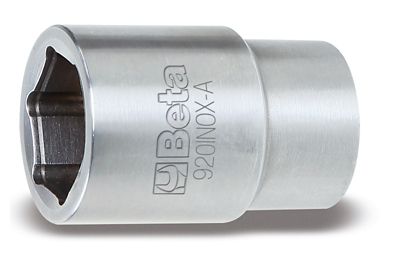
Deep sockets for lug nuts provide extra reach for wheel fasteners that sit down inside a wheel opening or extend over longer wheel studs. Their longer bodies can reach where a shallow socket falls short, making them a practical part of a wheel-service setup for pickups, passenger vehicles, utility trailers, and farm trucks. For a pickup that pulls the stock trailer or a utility trailer that hauls fencing supplies, the right socket starts with three separate measurements: the lug nut’s hex size, the socket’s drive size, and the clearance around the fastener. The hex opening must match the lug nut, while the square drive must fit the wrench or other drive tool. A 1/2-inch drive is common for automotive wheel work, but the required drive size and tool capacity depend on the application. Metric and SAE measurements are not interchangeable just because two openings look close. A loose fit can concentrate force at the corners and damage a stubborn lug nut before it breaks free. Six-point sockets are a common choice for hexagonal lug nuts, and many designs place the load along the flats rather than directly on the corners. Depth matters, too, especially with open-ended nuts and studs that extend past the nut. Overall socket length does not always tell the whole story; the internal opening needs enough working depth to seat fully without the stud bottoming out inside. Closed-end lug nuts need room for their caps as well as a snug fit around the hex. Swollen, damaged, or rounded lug nuts can require a different approach rather than a larger socket forced into service. Checking the actual fastener and wheel opening helps separate a socket that simply reaches the nut from one that seats squarely and has room to turn. That distinction matters on recessed wheels, where a socket may appear to fit from the outside but contact the wheel before engaging the nut completely.
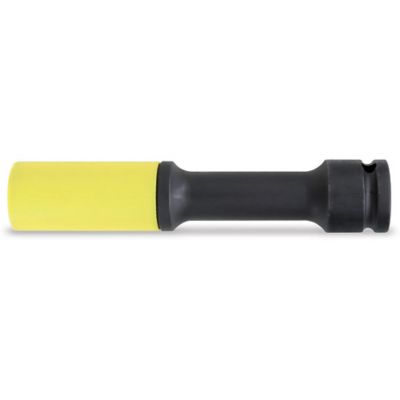
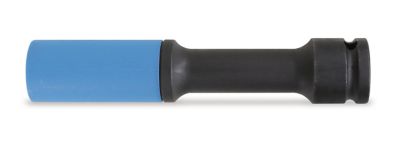
Construction becomes especially important when a deep lug nut socket is paired with an impact wrench. Impact-rated sockets are built to handle repeated blows, while sockets intended only for hand tools should stay with hand-driven equipment. Chrome-molybdenum and chrome-vanadium steels both appear in socket construction, but the alloy name alone does not establish an impact rating. The manufacturer’s stated application and markings matter more than color or finish. A black finish does not, by itself, prove that a socket belongs on an impact wrench. Wall thickness is another consideration, since wheel openings can leave very little space around the lug nut. Thin-wall lug nut sockets provide clearance in tighter recesses, though the socket still needs the proper rating for the tool and task. Protective sleeves and inserts can help limit metal contact with painted, polished, or coated wheels. They are not a promise against scratches, especially if grit gets caught between the sleeve and the wheel. The outside diameter with the sleeve in place also affects fit, so a sleeved socket needs enough room to enter the opening without binding. A long socket that rubs against the wheel is not a good match, even when its hex size is correct. For locking lug nuts, the matching wheel-lock key remains part of the setup; a standard deep socket is not a substitute for that key. On larger wheels or heavily recessed fasteners, extra reach can keep the wrench body farther from the wheel face, but more length is not automatically better. A socket that seats fully and keeps the tool aligned is more useful than unnecessary reach. Breaker bars, ratchets, impact wrenches, and torque wrenches each have their own role, and socket selection should account for the drive connection and the demands of that work.
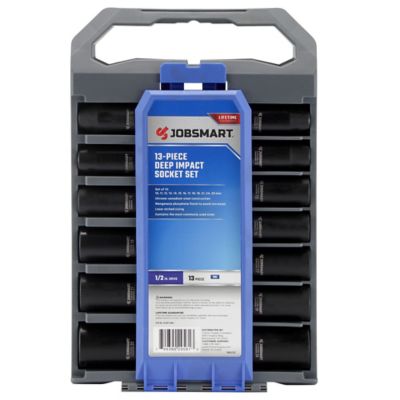
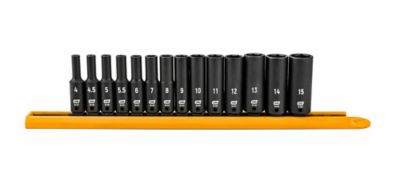
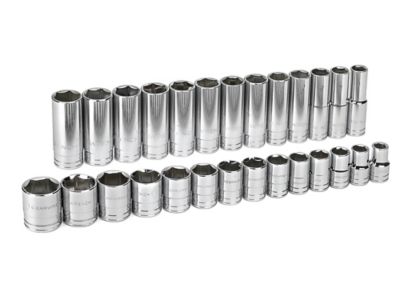
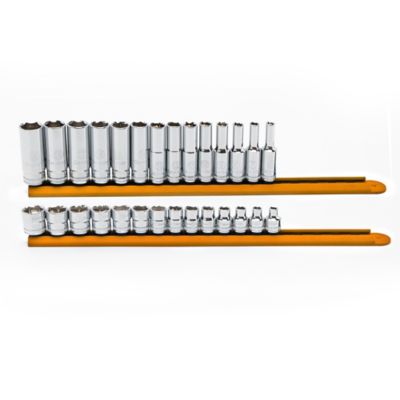
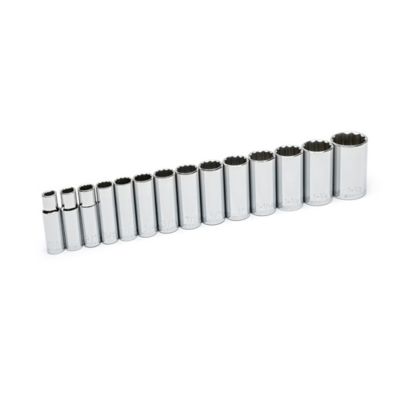
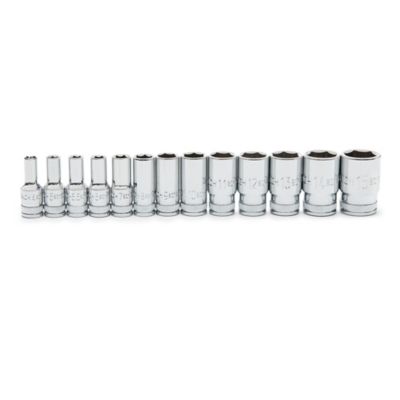
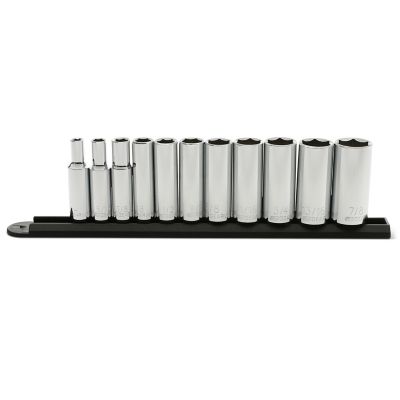
A single deep socket can make sense for someone maintaining one vehicle with the same lug nut size at every wheel. A set offers more flexibility for a household with several vehicles, a farm shop serving different trailers, or a mechanic moving between jobs. Clearly marked sizes and an organized case make it easier to find the right fit without trying several sockets against a fastener. For work that extends beyond wheels to equipment repairs and larger fasteners,
Heavy Duty Socket Sets can round out a tool collection, with drive sizes, socket depths, and tool ratings still worth matching to each job. Everyday care helps protect that investment. Wiping away road grit, grease, and moisture keeps markings easier to read and reduces the chance of debris scratching a wheel. Storage in a dry toolbox or fitted tray helps keep matching sizes together, rather than rattling loose beneath a seat or in the bottom of a truck box. Cracks, distorted openings, badly worn drive ends, and damaged protective sleeves are reasons to take a closer look before the next job. Wheel service also calls for more than a strong socket: proper vehicle support, sound fasteners, and the vehicle or trailer manufacturer’s tightening specifications all matter. Lug nuts should start straight by hand, and final tightening belongs with a torque wrench set to the specified value rather than guesswork with an impact wrench. Thread condition and any lubrication must follow the manufacturer’s directions because they affect clamping force. For someone putting together a roadside kit, keeping the socket with a compatible wrench and the wheel-lock key saves a search when a tire needs attention. Deep lug nut sockets also make a practical gift for a truck owner, trailer owner, or home-shop mechanic when the vehicle’s fastener sizes and existing tools are known. The best match is straightforward: enough depth, proper clearance, the correct drive, and construction suited to the work.