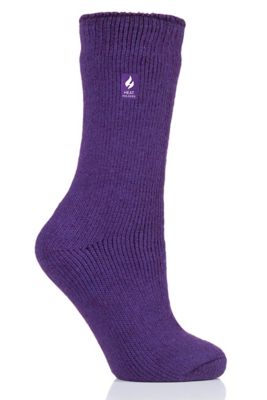
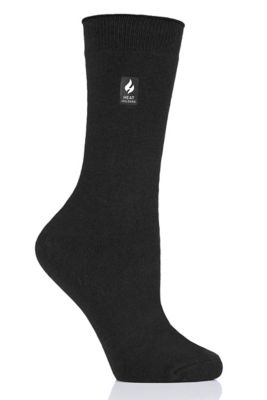
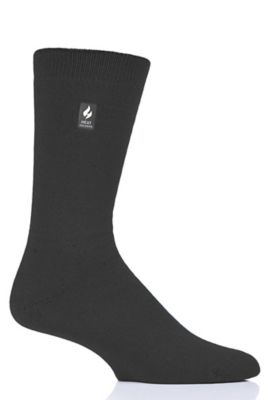
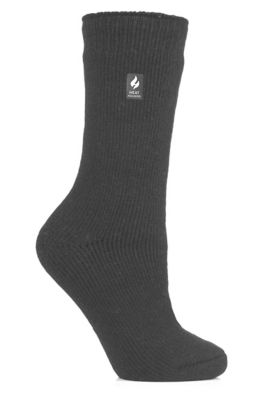
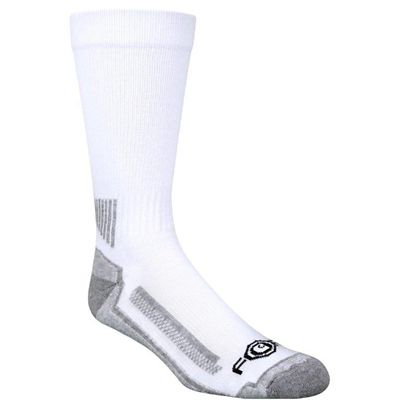
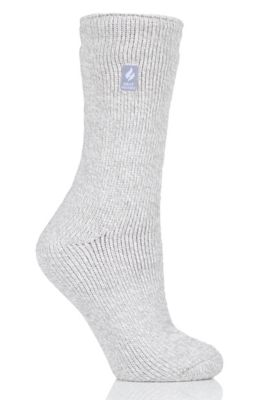
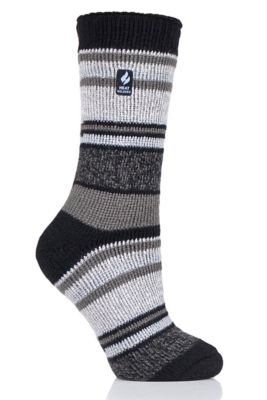
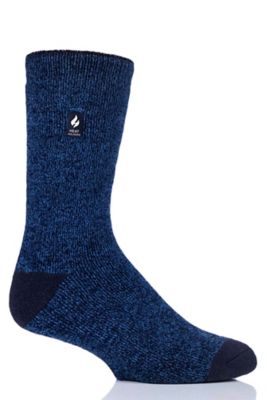
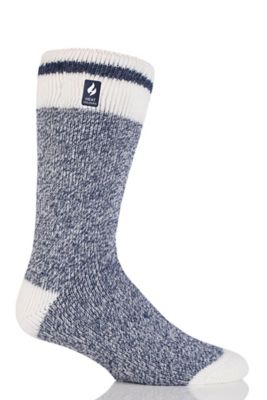
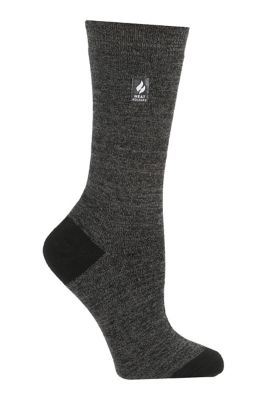
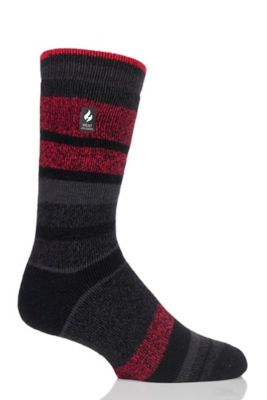
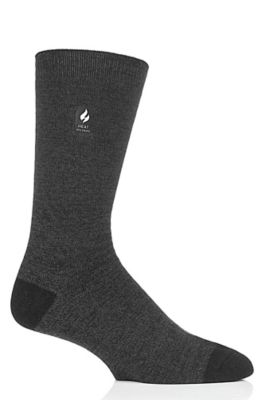
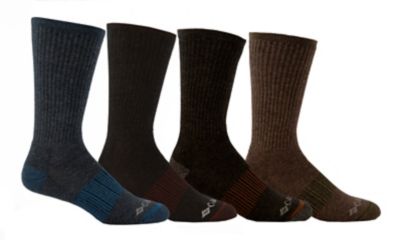
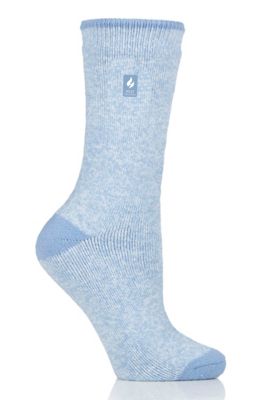
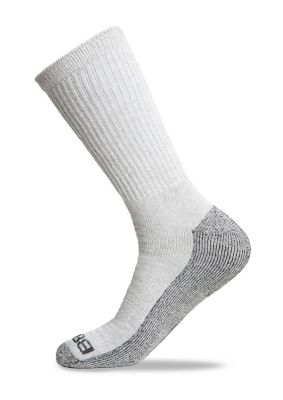
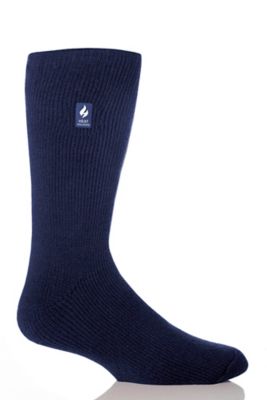
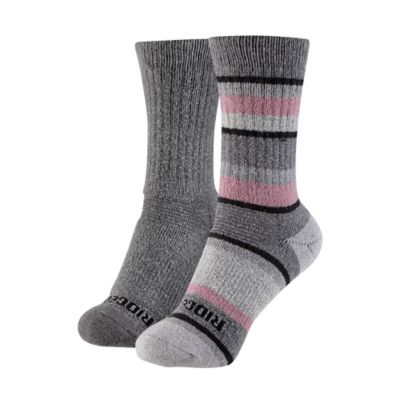
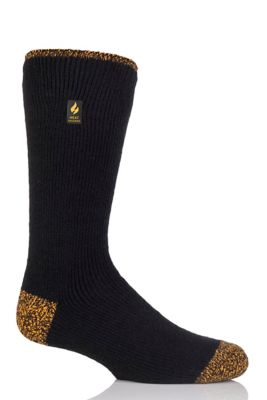
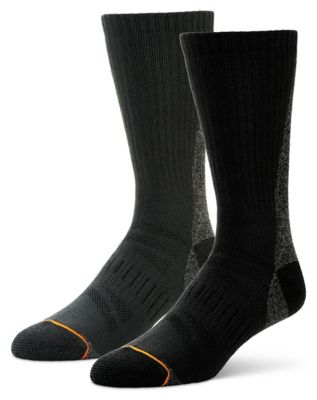
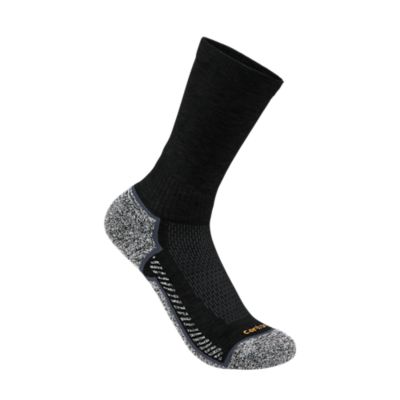
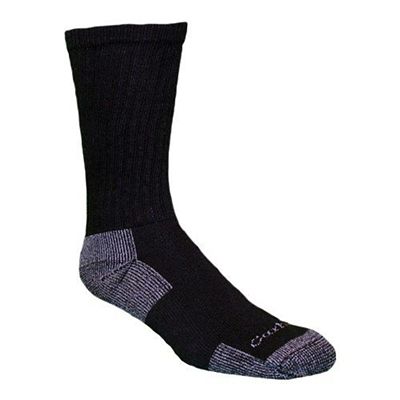
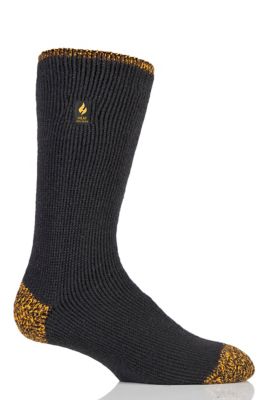
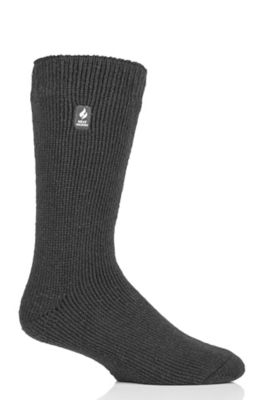
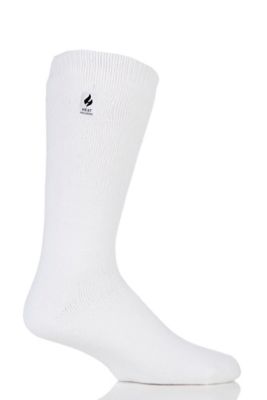
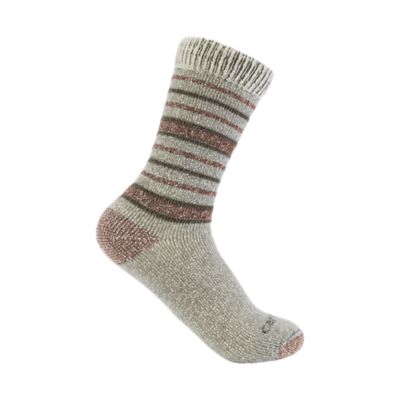
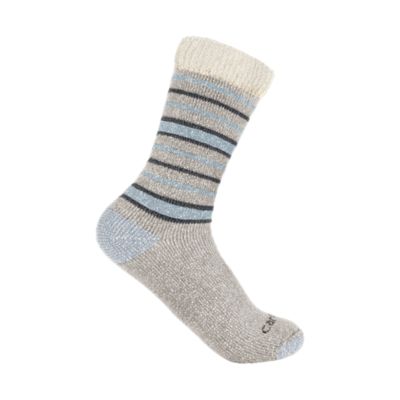
Moisture-wicking crew socks move sweat away from the skin through fibers and knit structures that spread moisture across the fabric, where it can evaporate. Their crew-length cuffs extend above the ankle toward the calf, adding coverage inside work boots, hiking boots, and other everyday footwear. That combination makes them a practical choice for feeding livestock, walking fence lines, stocking shelves, or spending a shift on a concrete floor. Polyester, nylon, and merino wool are common materials, often blended with a small amount of spandex or elastane for stretch and shape retention. Polyester absorbs relatively little moisture into the fiber itself, while the yarn and knit construction help move sweat through the fabric. Nylon adds strength in areas that face repeated rubbing, and merino wool can absorb moisture vapor within its fibers while helping manage moisture next to the skin. These materials work differently, so the fiber blend alone does not tell the whole story. Yarn thickness, cushioning, ventilation zones, and the fit of the sock all affect how it feels through the day. Cotton can feel soft, but cotton-heavy socks tend to hold more moisture and take longer to dry than many performance blends. A blend that includes cotton may still have moisture-management features, depending on its construction. Wicking also does not mean waterproof: sweat still needs somewhere to go, and a tightly enclosed boot can limit evaporation. Breathable footwear and a fresh pair of socks help support the fabric’s performance during long stretches of activity. For chores that switch between walking, standing, and climbing onto equipment, the appeal is straightforward: less of that damp, clingy feeling against the foot and enough coverage to keep boot collars from sitting directly against bare skin. The best match depends on the footwear, the pace of the work, and how much cushioning feels comfortable underfoot.
Fit matters just as much as fabric, especially when a pair of boots stays on from the first feeding until the last gate is latched. Moisture-wicking crew socks should sit smoothly around the foot, with the heel pocket lined up at the heel rather than pulled beneath the arch or riding up the back. Extra fabric can bunch under the toes or wrinkle along the sole, while a sock that is too small may crowd the toes and pull tightly across the instep. Sock sizing generally follows shoe-size ranges, though calf shape and the amount of stretch also influence the feel. A stay-up cuff helps keep the leg from sliding down into a boot, but it should not leave the wearer dealing with a pinching band. Ribbed legs and stretch panels can help hold the sock in place without adding much thickness. Cushioning ranges from a light layer beneath the foot to thicker terry loops through the heel, sole, and toe. More padding can feel welcome when carrying feed bags or walking over gravel, but it also takes up space inside footwear. In a close-fitting work boot, a thinner sock may leave more room for the toes than a heavily padded one. A cushioned sole paired with a less bulky upper section offers another balance between padding and fit. Smooth toe seams can reduce an obvious rubbing point, while a well-shaped heel helps limit shifting with each step. Neither cushioning nor moisture management guarantees blister prevention; boot fit, repeated friction, and the length of time on foot still matter. Crew height is especially useful when extra coverage between the boot shaft and the leg is wanted. For sneakers and other low-top footwear,
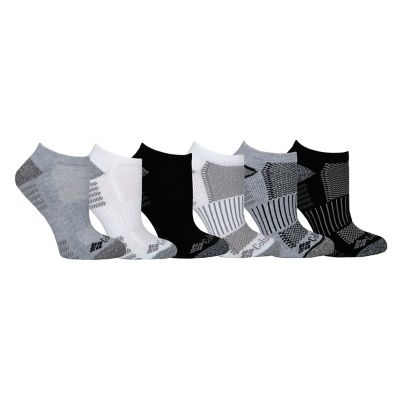
Moisture Wicking Ankle Socks offer a lower-cut alternative without as much fabric around the calf. The right sock height is the one that works with the footwear rather than slipping beneath its collar.
Construction and care both have a say in how moisture-wicking crew socks hold up through repeated wear. Reinforced heels and toes place extra material where boots and toenails tend to create the most friction, while a close, even knit can help the fabric keep its shape. Thicker is not automatically longer-lasting, and a lighter sock with reinforcement may suit a close-fitting shoe better than an all-over heavy knit. Washing instructions vary by fiber blend, so the care label is the starting point for laundry. Turning socks inside out helps expose the surfaces that collect sweat and skin oils. Fabric softeners can leave a coating that interferes with moisture movement, and bleach may damage certain fibers or affect stretch. Merino blends may call for a gentle cycle or different drying treatment than a mostly synthetic pair. Excessive dryer heat can shorten the life of elastic fibers, making the recommended drying method worth following. Letting socks dry fully before putting them back on also keeps lingering dampness from carrying into the next day. Between washes, a glance at the heels, toes, and cuffs can reveal thinning fabric, stretched bands, or seams that have started to rub. Those small changes matter when the same pair will spend hours inside a boot. For people whose work involves steady walking or extended time on their feet, several pairs in a regular rotation make it easier to start each day with clean, dry socks. They also make a practical gift for someone who works around a barn, tends a garden, hikes local trails, or simply prefers a crew-length sock for everyday wear. Shoe size, preferred cushion level, and usual footwear are useful details when picking a gift. A comfortable pair should fit into the recipient’s routine without changing how their boots fit, whether that routine means chores before breakfast, a full workday, or a long walk down a gravel road.