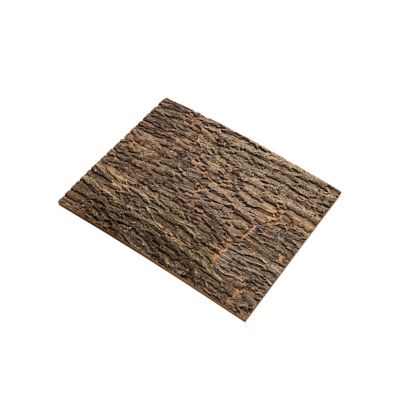
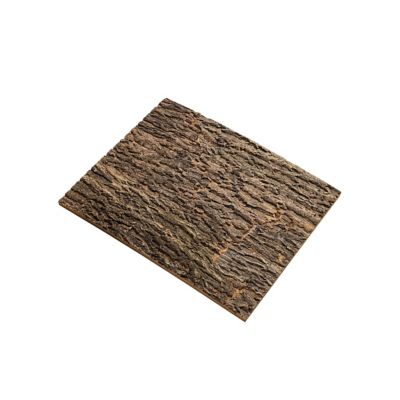
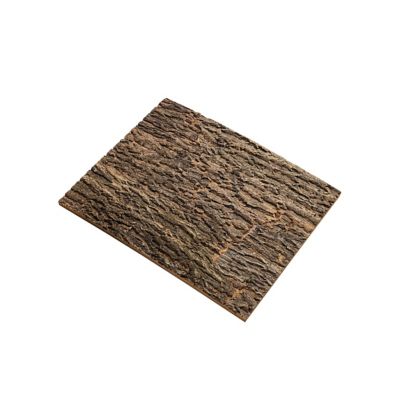
Cork bark brings the rough texture of a woodland setting to animal enclosures, planted terrariums, and indoor growing spaces. It comes from the cork oak, Quercus suber, an evergreen tree native to the Mediterranean region. Its thick outer bark has deep furrows, a gray-brown surface, and a lightweight, springy structure. Those traits make natural cork bark useful for climbing surfaces, sheltered resting spots, and plant mounts without adding the weight of stone or solid wood. Cork oaks commonly reach about 40 to 70 feet tall and can live for well over 150 years. Once a tree is mature enough, skilled harvesters can remove the outer cork layer while protecting the living tissue beneath it. The tree then grows another layer, with commercial harvests generally spaced about nine to twelve years apart. This ability to regenerate is what makes cork a renewable material when it is responsibly harvested. For habitat and planting purposes, cork bark usually retains its uneven outer surface rather than being ground and pressed into a smooth sheet. Flats offer broad faces for backgrounds or low shelters, while rounds and tubes create hollow spaces that can serve as retreats. Curved sections fall somewhere between the two, making a sheltered nook without enclosing every side. Because bark follows the shape of a growing tree, thickness, curvature, openings, and surface texture vary from piece to piece. A listed length tells only part of the story; the inside opening and overall footprint matter just as much. Cork resists taking on water readily, but it is not a substitute for drainage or airflow. Its practical appeal lies in that combination of low weight, textured footing, and a natural appearance that fits comfortably among branches, leaves, moss, and substrate. For reptile keepers, amphibian keepers, invertebrate enthusiasts, and plant growers, it offers a useful building block for a habitat arranged around the needs of its occupants.
The best fit for cork bark depends on what needs to climb it, hide beneath it, or grow across it. In a reptile enclosure, a broad flat can create cover close to the ground, while an upright section can provide climbing space for a species that spends time above the substrate. A hollow round may offer a secluded retreat, provided its opening accommodates the animal comfortably and allows access for inspection. Fit should account for the animal’s adult size, not just how small it is when the enclosure is first arranged. A tight passage, an unstable stack, or a heavy section balanced against glass can turn a useful habitat feature into a problem. Even lightweight bark needs secure placement, especially when an active animal can push underneath it or climb along its top edge. For a ground-dwelling inhabitant, a low, steady shelter with a suitable entrance may be more useful than a tall arrangement that takes up floor space. For a climbing species, the direction of the bark and the routes between resting places deserve closer attention. Rough ridges can provide purchase, but broken edges and loose fragments should be checked before placement. Natural cork also fits into bioactive enclosures, where plants, leaf litter, and suitable cleanup organisms share the space. Its surface provides crevices and cover, though bark alone does not establish a balanced habitat or meet an animal’s moisture requirements. Damp pockets beneath a flat can differ considerably from the exposed upper surface, so placement matters alongside ventilation and substrate choice. Keeping food and water areas accessible makes everyday tending easier, and leaving room to lift or remove a section helps with cleaning and animal checks. Cork bark intended for animal habitats is a better starting point than craft material with paint, glue, or an unspecified finish. The intended application and any treatment information deserve a close look, particularly for animals that spend much of their time pressed against the surface or tucked into its crevices.
Plant growers often choose cork bark for mounting epiphytic orchids, certain ferns, and other plants that naturally grow attached to trees rather than rooted in ordinary garden soil. The ridged surface offers places for roots to grip, while a mounted arrangement leaves those roots exposed to more air than a conventional pot. That also changes watering needs: a plant on bark can dry more quickly than the same plant in a moisture-holding potting mix. The plant’s growth habit, root system, and need for moisture should shape the choice of mount, with enough surface area for new growth and a secure attachment that does not pinch tender roots. A thin layer of an appropriate moisture-retaining material may suit some plants, while others need more exposed roots and faster drying. When cork forms a terrarium background, its depth also affects planting room and access to the glass. A deeply curved section can look right at home behind trailing foliage but leave less usable space than a flatter panel. Long-term care matters in both planted displays and animal habitats. Cork generally holds up well around moisture, yet trapped waste, leftover food, and poor airflow can still encourage mold or odors on its surface. Cleaning should follow the bark supplier’s directions and the needs of the enclosure’s inhabitants; a porous natural material should not be soaked in household chemicals without an established, animal-safe protocol. Loose debris can be brushed away, and removable sections make it easier to inspect hidden areas. Crumbling edges, persistent contamination, or a weakened attachment are reasons to reassess a piece rather than leave it in place for appearance alone. Keepers who also maintain feeder insects may find a
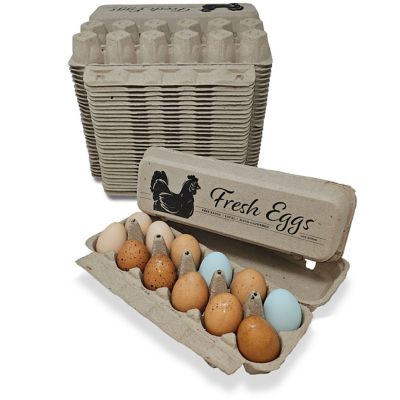
Cardboard Egg Carton useful as a separate, replaceable shelter in an appropriate dry insect setup, rather than treating cardboard as an equivalent material for a damp terrarium. Cork bark serves a different role: it supplies substantial texture, cover, and mounting space in settings where shape and moisture resistance count. Whether the project is a modest planted enclosure or a roomy climbing habitat, room to grow, steady placement, and straightforward upkeep help make the finished space work day after day.