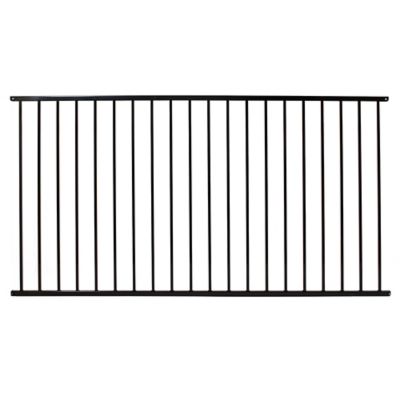
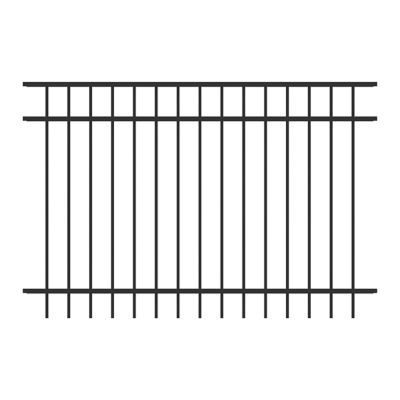
Continuous fence panels create long runs of livestock fencing with horizontal metal rails that connect from one section to the next and fasten to supporting posts. Many systems have sleeved or tapered rail ends that fit together, helping form a continuous fence line without welding every connection on-site. They’re a familiar fit for pasture boundaries, horse paddocks, riding arenas, and ranch lanes where a permanent layout makes sense. Common panel lengths include 10 and 20 feet, though dimensions, rail counts, and connection styles vary by system. Longer sections can reduce the number of panel joints along a straight stretch, while shorter sections may be easier to handle around smaller enclosures and changes in direction. For a cattle producer dividing a pasture or a horse owner fencing an arena beside the barn, the appeal is a clearly defined boundary with open sightlines and a consistent rail pattern. That open construction lets handlers keep an eye on animals across the enclosure, but it also means rail spacing deserves close attention. Four-, five-, and six-rail configurations can have quite different openings, and rail count alone doesn’t establish whether a fence suits a particular animal. Panel height, the distance between rails, and clearance beneath the bottom rail all affect containment. A layout intended for mature cattle may leave openings that are unsuitable for calves, sheep, or goats. Horse fencing also needs careful consideration of openings that could catch a hoof or allow a head through, along with smooth connections and hardware that doesn’t project into the enclosure. These panels aren’t automatically a match for every pen just because they’re steel. Intended livestock use and the manufacturer’s application guidance matter, especially around animals that lean, crowd, or challenge a fence. A quiet pasture boundary and a busy sorting area place very different demands on rails, connections, and posts. Matching the fence system to that daily activity matters more than choosing by appearance or overall dimensions alone.
Steel tubing is a common material for continuous fence panels because it provides a rigid rail structure and doesn’t have the same rot or chewing concerns as wood. Still, steel construction covers a wide range of designs. Tubing diameter, wall thickness, weld construction, and post spacing all contribute to how an assembled fence handles contact. Gauge numbers can help describe wall thickness; within the same gauge standard, a lower number generally indicates thicker metal. That number isn’t the whole story, though, and comparisons make more sense when they include the complete panel specifications and intended application. Panels suited to an arena perimeter shouldn’t be assumed to meet the demands of a crowded cattle holding pen. Finish is another practical difference. Galvanized steel has a zinc coating that helps protect against corrosion, while painted and powder-coated finishes provide a coated surface with a different appearance and care routine. Bare steel needs a finish or maintenance approach suited to its intended service, since exposed steel can rust. No finish makes every scratch, cut end, or connection point immune to corrosion. Around a working barnyard, those details matter where a feed cart brushes a rail, a chain rubs against tubing, or bedding and manure collect near the bottom of a fence. Routine care generally includes checking for loose fasteners, damaged rails, rough edges, and coating wear, with repairs and touch-ups matched to the manufacturer’s recommendations. Keeping vegetation and packed debris away from connections also makes inspection easier. A bent rail or cracked weld calls for attention before that section goes back to containing livestock. For folks maintaining a long fence line, accessible attachment points and compatible replacement hardware can make ongoing upkeep more straightforward. The strongest-looking panel still depends on sound supports and secure joints, so panel construction and the condition of the finished fence belong in the same conversation.
Fit starts with the whole fence layout, not simply the length printed in a panel description. Panel height and finished fence height aren’t necessarily the same, and raising a section changes the opening beneath the bottom rail. That gap needs to suit the livestock rather than follow a standard mounting height that may not fit the job. Rolling ground, low spots, and changes in grade can also affect bottom clearance and how adjoining rails meet. Some continuous fence systems accommodate limited changes in slope, while others need different connections or a revised layout; forcing rail ends together can put strain on joints and attachments. Post material and spacing must match the system, whether the project involves wood posts, steel posts, or another approved support. Sleeves, clips, brackets, and other connections aren’t necessarily interchangeable across panel designs, even when tubing looks similar. Corners, end points, and gate openings need their own attention because a long straight run doesn’t explain how the entire enclosure will function. A pasture entrance might need room for a tractor and implement, while a barn-side opening may see a wheelbarrow, feed cart, and horses passing through throughout the day. Gate swing, latch placement, and equipment clearance all shape how comfortably that space works. Continuous fence panels generally make the most sense where the boundary is meant to stay put. For changing layouts or short-term enclosures,
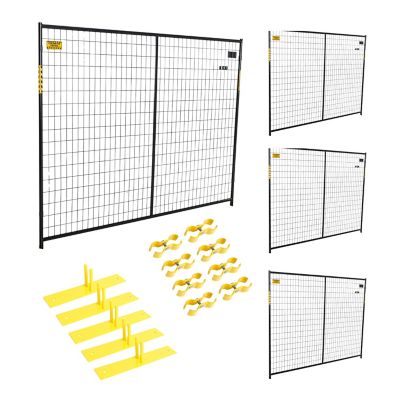
Temporary Fence Panels offer a different category to consider, with livestock suitability and support requirements that still need a close look. Permanent rail fencing and portable panels serve different purposes, even when both have an open metal design. Along a pasture, beside a riding area, or around an appropriate livestock enclosure, a well-matched continuous fence system brings the rails, posts, connections, and access points together into a practical boundary that fits the way the property runs.