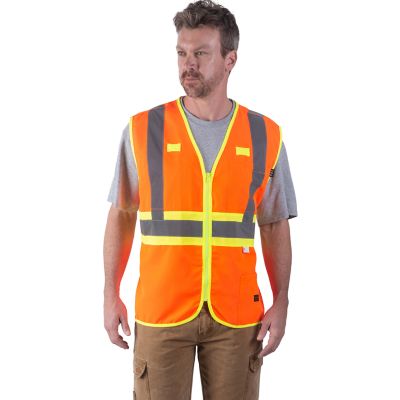
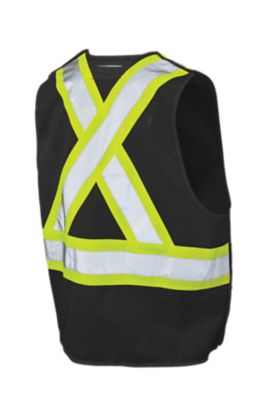
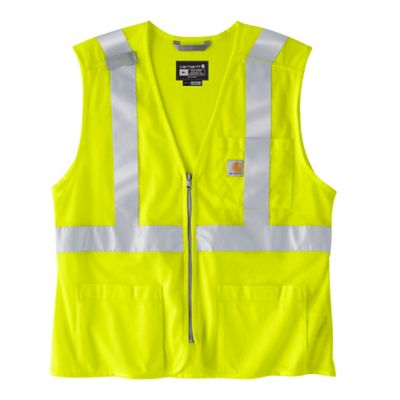
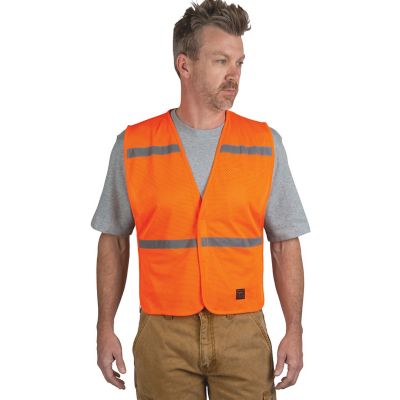
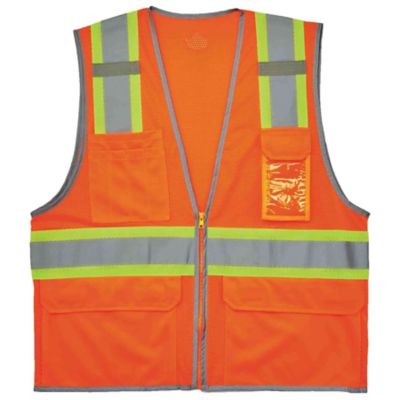
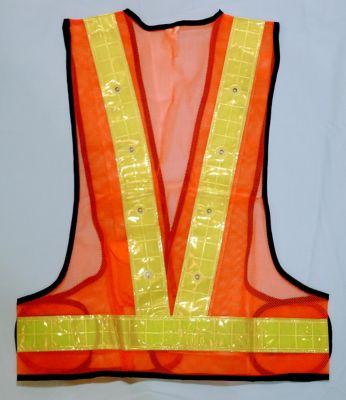
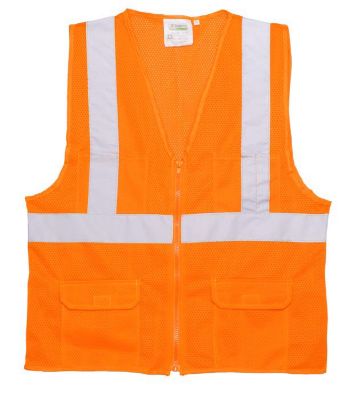
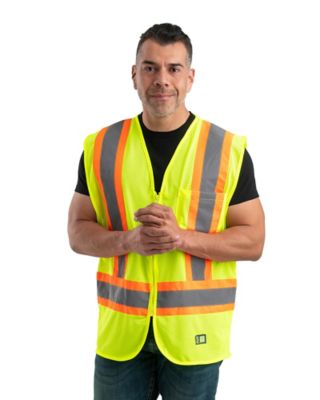
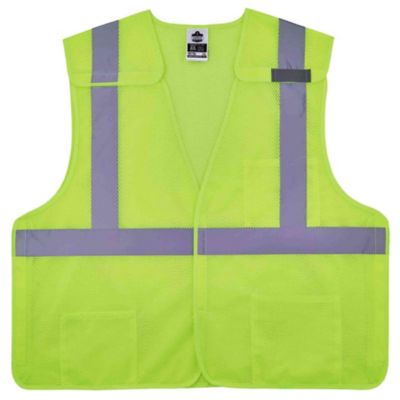
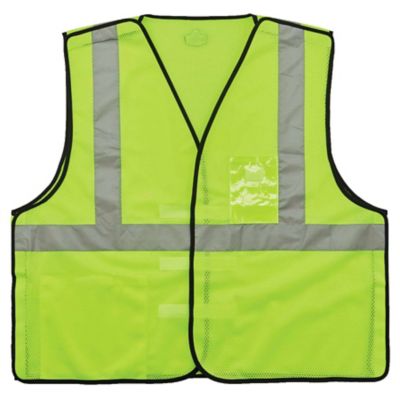
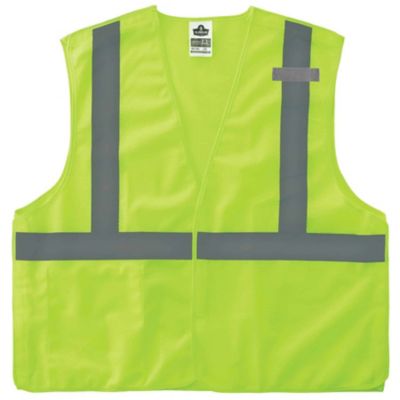
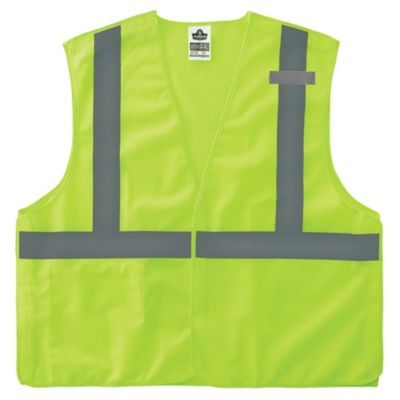
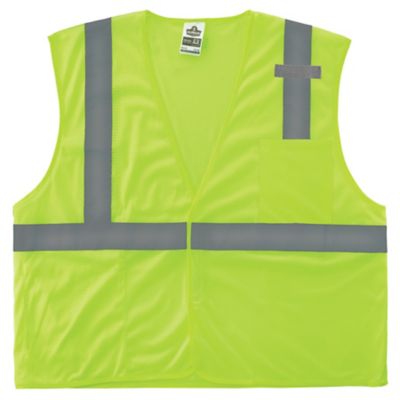
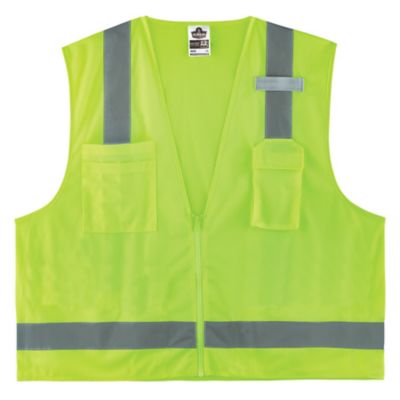
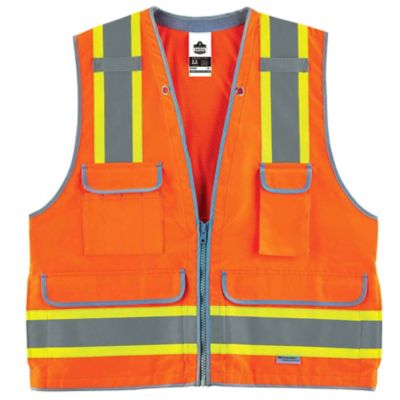
Construction site safety vests are high-visibility garments that help workers stand out around moving equipment, vehicle traffic and busy work areas. They commonly combine fluorescent background fabric with reflective striping, making a worker easier to notice in daylight and when illuminated by headlights or other directed light. Fluorescent yellow-green and orange-red provide strong contrast against many jobsite backgrounds, while reflective material returns light toward its source. These features serve different purposes, and neither replaces good lighting, traffic controls or clear communication with equipment operators. On a site where a loader is moving gravel, a truck is backing toward a material pile and a ground crew is working nearby, visibility is one important part of keeping people separated from moving machinery. Construction safety vests may suit road crews, utility workers, surveyors, equipment spotters, delivery personnel and contractors handling work around a farm or rural property. The right garment depends on the actual hazards and the employer’s requirements, not simply how bright it looks on a hanger. ANSI/ISEA 107 sets requirements for high-visibility safety apparel, including background material, reflective material and garment design. Type R apparel addresses roadway environments and includes Performance Class 2 and Class 3 garments. Class 3 calls for more visible material and body coverage than a typical sleeveless vest provides, so additional stripes alone do not establish that classification. Garment labels identify the applicable type and performance class when a vest meets the standard. That distinction matters when comparing general visibility apparel with clothing intended for a job that requires a particular classification. A
Neon Safety Vest can stand out against earth-toned work clothes, but bright color alone does not establish compliance. For crews working near public traffic, site-specific rules and applicable roadway requirements help determine which apparel belongs on the job. Visibility needs also change with a worker’s position, the surrounding background and the direction from which vehicles approach. A person bending beside a trench or turning away from a truck needs visible material that remains noticeable through ordinary working movements.
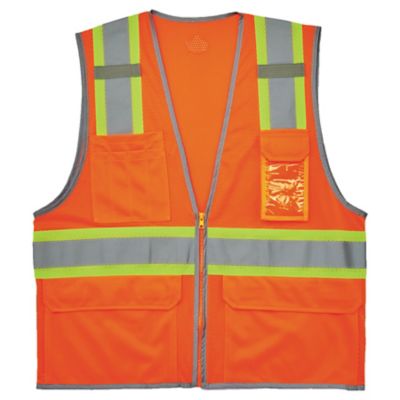
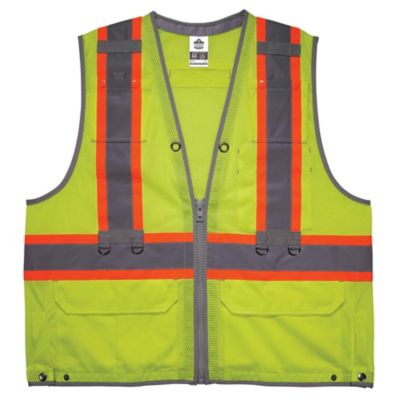
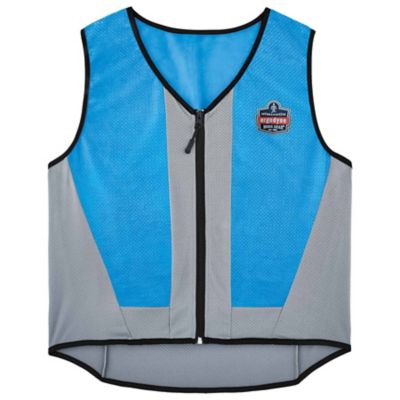
Materials and construction make a noticeable difference over a full shift. Polyester is common in construction site safety vests because it supports lightweight designs and is practical for routine care. Mesh fabric allows airflow through the garment, while solid fabric offers a more continuous surface and can support pockets without the same open structure. Some designs combine both, placing different fabrics where they best serve the garment’s layout. Resistance to snagging, tearing and seam wear depends on the fabric, stitching and overall construction rather than on mesh or solid fabric alone. Reinforcement around pocket openings, closure points and other areas that take repeated pulling can help a vest hold together through everyday handling. Fit is just as important as fabric. A vest should sit comfortably over the work clothing worn for the task without pulling tight across the shoulders or hanging loose near moving equipment. Arm openings need enough room for reaching, carrying and signaling, and the front closure should fasten as intended without straining. Extra length may provide useful coverage, but excessive fabric can interfere with bending, climbing steps or reaching a tool belt. Sizing based on the manufacturer’s measurements gives a better starting point than assuming every workwear garment fits the same way. Pocket placement also deserves attention: a radio, marker or small notebook should be accessible without covering reflective material or weighing the vest down unevenly. A vest pocket is not a replacement for a properly secured tool pouch, especially when climbing or working above others. Zipper fronts provide a continuous closure, while hook-and-loop fronts offer a different fastening style; either needs to remain functional for the vest to sit as designed. Breakaway designs have attachment points intended to release under specified conditions, but they are not appropriate for every task and do not eliminate entanglement hazards. Compatibility with hard hats, hearing protection, tool belts and fall-protection equipment matters, too. A harness or carried load can hide visibility features, so the complete work setup needs to match the site’s safety requirements.
Day-to-day care helps preserve the visibility features that make a construction safety vest useful. Dust from cutting, mud from excavation and grime from handling materials can cover fluorescent fabric and reflective striping, reducing how well they perform. The care label is the best source for washing and drying directions because reflective materials, closures and fabrics do not all tolerate the same treatment. Bleach, fabric softener, high heat or certain cleaning chemicals may damage components, so washing methods should follow the garment maker’s instructions rather than a general work-clothes routine. Where a maximum number of cleaning cycles is stated, that limit matters alongside the vest’s actual condition. A garment can need replacement before reaching that number if it becomes torn, badly stained or otherwise compromised. Reflective tape that is peeling, cracked or missing, background fabric that has noticeably faded, and closures that no longer hold are all reasons for closer inspection. Even a vest with intact seams may no longer provide its intended visibility if large areas stay covered with stains after cleaning. Storage also plays a part: keeping the vest clean, dry and away from prolonged sunlight when it is not being worn helps protect its materials between jobs. For a crew that shares equipment, individual fit and condition still matter each time a vest changes hands. Intended use remains the deciding factor throughout the garment’s service life. A general construction vest does not automatically provide flame resistance, electrical protection, cut protection or protection from chemical splashes. Work involving welding, electrical hazards or other specialized exposures may call for separately rated apparel selected under the employer’s safety program. Around trucks, tractors and jobsite equipment, the strongest setup combines suitable high-visibility clothing with designated walking routes, clear signals and operator awareness. The vest helps a worker be seen; safe procedures address the rest of the job. Matching the garment’s classification, fit, features and care requirements to the work keeps the focus where it belongs: on getting through the day with people visible and tasks under control.