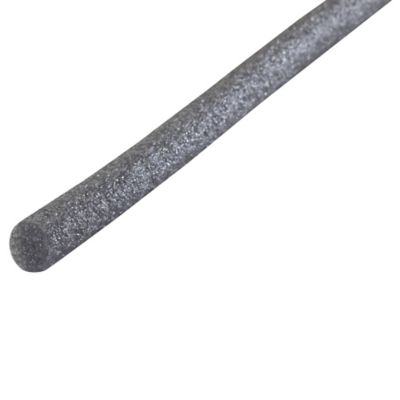
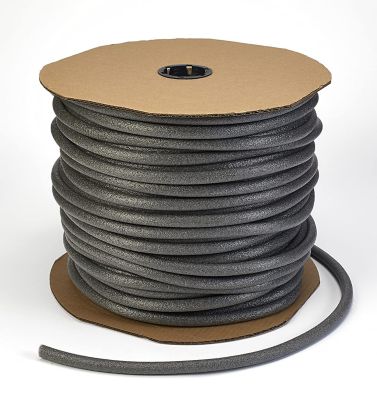
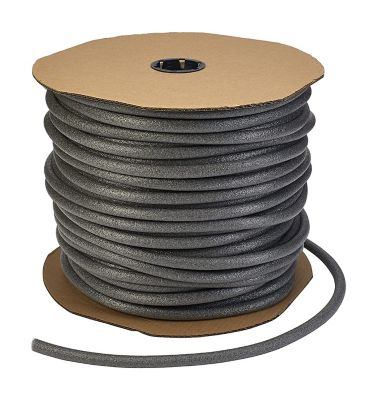
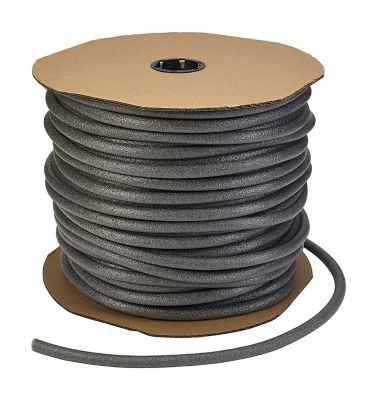
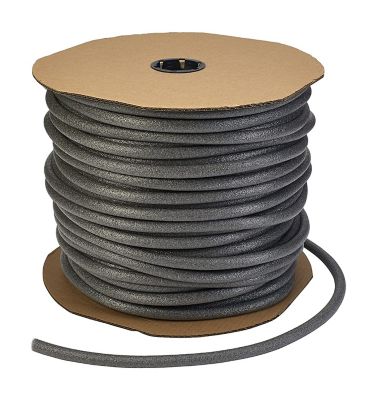
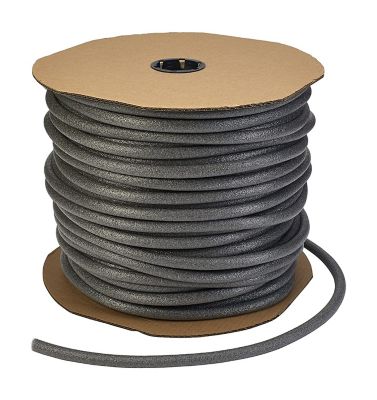
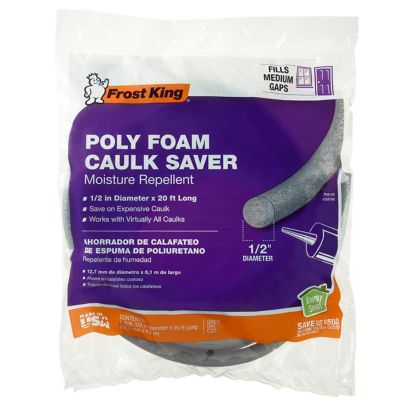
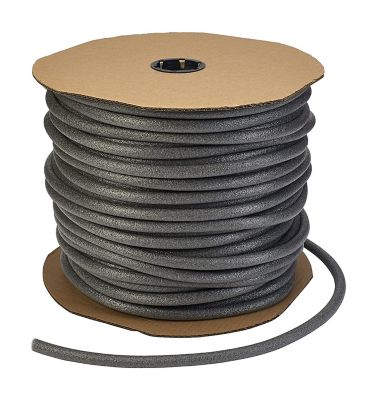
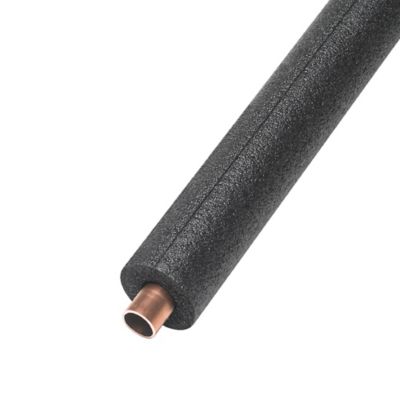
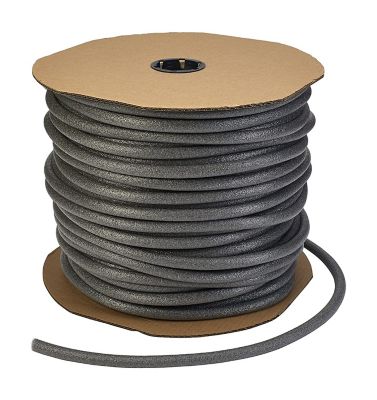
Closed cell backer rods are flexible foam cords used to fill deep gaps and joints before caulk or sealant is applied. Their waterproof, closed-cell construction helps keep moisture from passing through the filled space, while the soft, compressible foam gives the sealant a firm backing without filling the entire joint with costly caulk. This makes them useful for homeowners, farmers, maintenance crews, concrete workers, window installers and anyone handling repairs around a home, shop, barn or other property. Common applications include concrete expansion joints, driveway and sidewalk cracks, gaps around window and door frames, seams between building materials and other openings that need a neat, weather-resistant finish. A backer rod is not a replacement for sealant, but it helps create the right foundation for it. Once placed at the proper depth, the rod keeps the sealant from sinking too far into a joint and helps the finished bead stay flexible as the surrounding materials expand, contract and shift with changing temperatures. That flexibility matters outdoors, where a sunny wall, a shaded foundation and a frost-prone driveway can all move at different rates. During the cooler months, a well-prepared joint can help limit drafts, water entry and the gradual damage caused by repeated freezing and thawing. Backer rod can also help stretch a tube of sealant farther by filling the deeper part of a gap, leaving the sealant to do its best work near the surface where it can bond and shed water.
One of the most important purchase considerations is size. Measure the width of the gap at several points, since joints are not always perfectly even, and choose a rod that fits snugly without being forced into place. In many applications, the rod should be slightly wider than the opening so it stays put through installation, but it should not be stretched thin or compressed so tightly that it loses its ability to cushion movement. A rod that is too small may slip down into the joint, while one that is too large can bulge above the surface or make it difficult to leave the correct amount of room for sealant. Consider the depth of the opening as well as its width, especially when working on thick concrete joints, masonry, sill plates or larger gaps around frames. Longer rolls are handy for running a continuous line along a driveway or foundation, while smaller lengths may be easier to manage for spot repairs and individual openings. Look for foam that can be cut cleanly with a utility knife or scissors and handled without tearing. The joint should be free of loose dirt, old caulk, standing water and sharp debris before the rod goes in. A clean, dry surface helps the sealant bond to the two sides of the joint. Push the backer rod into place with a blunt tool rather than a sharp screwdriver, and avoid puncturing or gouging the foam. For many repairs, the rod should sit below the surface so the sealant forms a slightly tooled, flexible bead instead of a raised lump. Always check the sealant manufacturer’s instructions for recommended joint depth, compatibility and weather conditions, since different sealants call for different preparation methods. For related ways to reduce drafts and keep gaps around the property under control, see
Airtight Seals.
Closed cell backer rods are a practical item to keep in a repair tote, truck box or workshop cabinet because they take up little room and can solve several common maintenance headaches. A homeowner may use them while sealing a drafty window frame before colder weather settles in, or while refreshing the joints along a garage slab after years of weather and vehicle traffic. On a farm or rural property, they can be useful around equipment buildings, livestock facilities, storage sheds and outbuildings where small openings allow rain, dust or cold air to work its way inside. Contractors and building crews often appreciate them for creating straight, consistent sealant joints on larger jobs, while do-it-yourselfers value the cleaner finish and reduced sealant waste. They are also a sensible addition to a housewarming, workshop or new-home project basket for someone who enjoys handling their own upkeep, though proper sizing and sealant selection matter more than simply having a roll on hand. Keep unused material protected from prolonged sunlight, heat and sharp edges, and store it where it will stay clean and dry. When a joint is exposed to heavy movement, standing water, vehicle traffic or harsh weather, choose a sealant intended for that setting and follow the recommended preparation steps. Used correctly, a closed cell backer rod helps control sealant depth, prevents unwanted three-sided adhesion and gives the finished joint room to move. That combination can make a small repair look neater and last longer, whether the work is part of a careful fall maintenance routine or a winter project waiting for the next workable day.