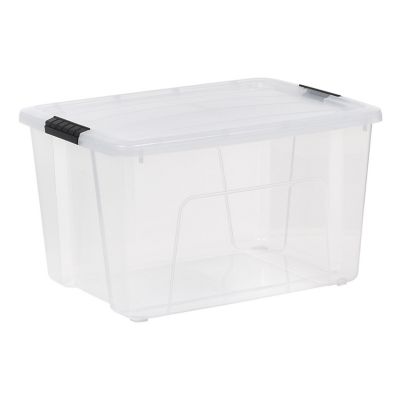
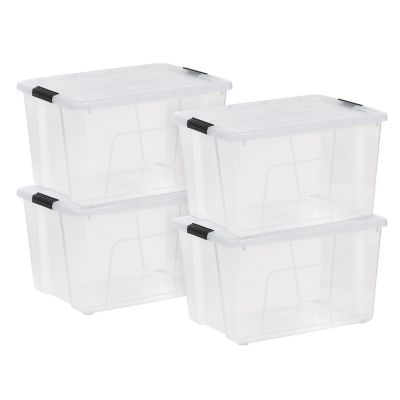
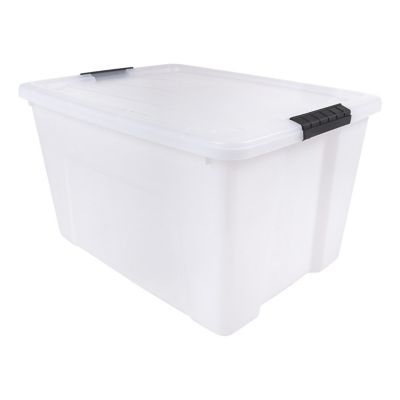
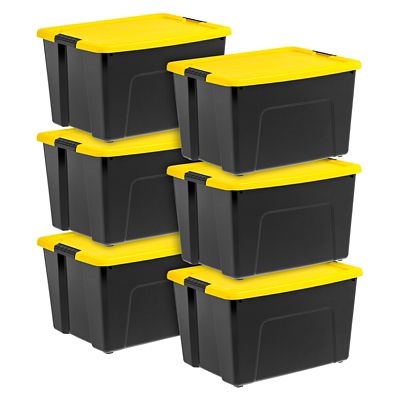
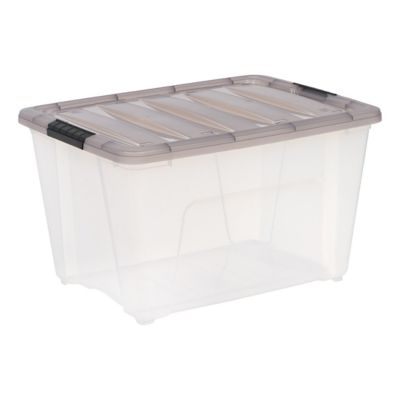
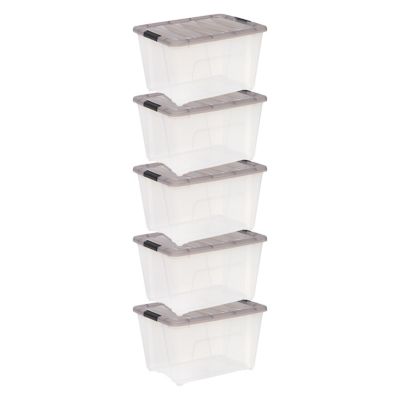
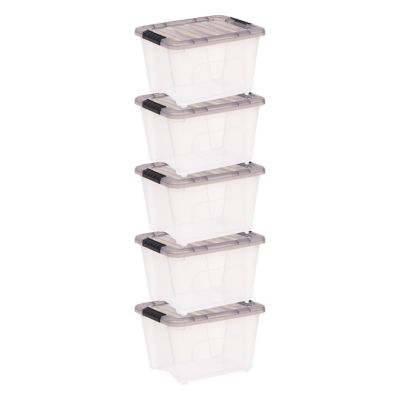
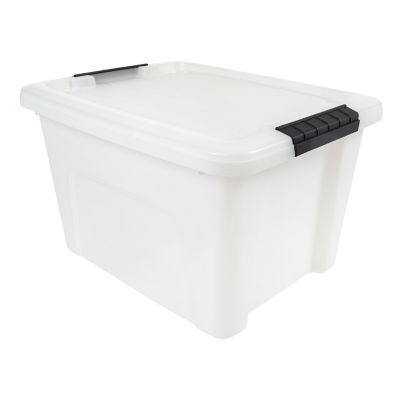
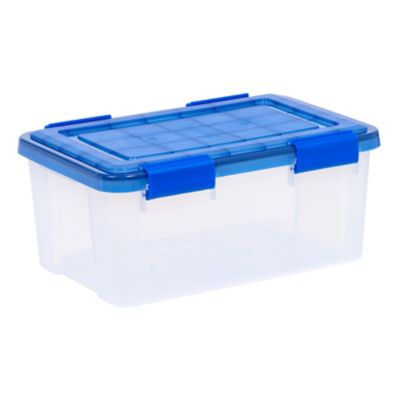
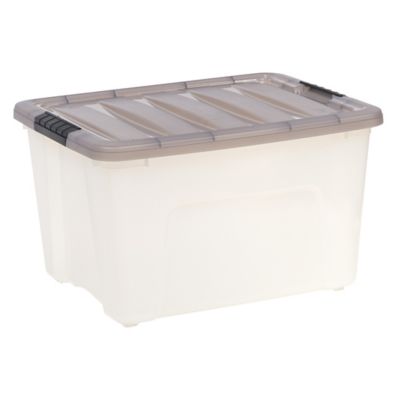
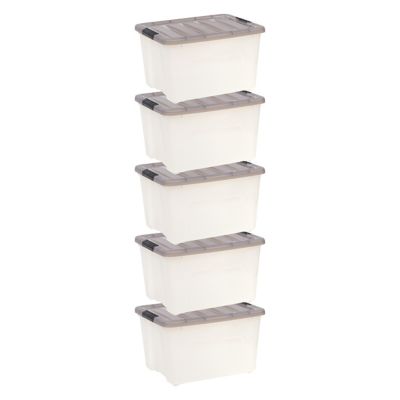
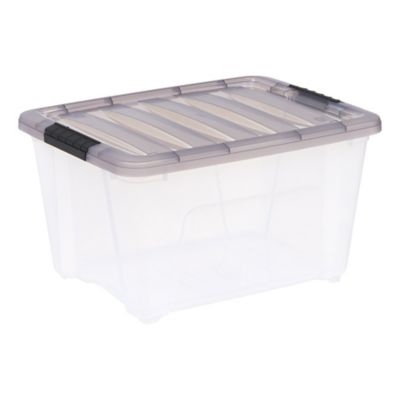
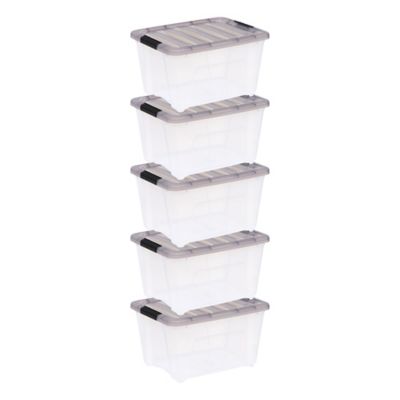
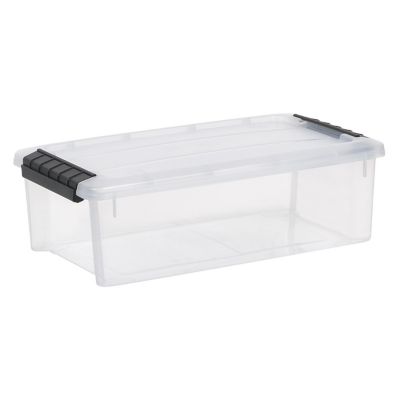
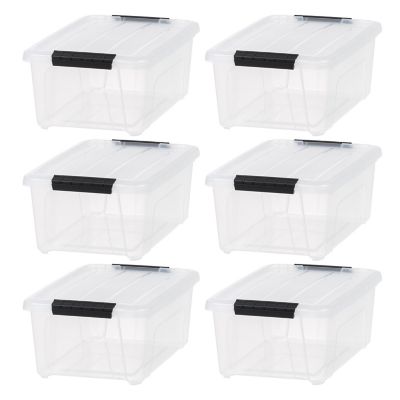
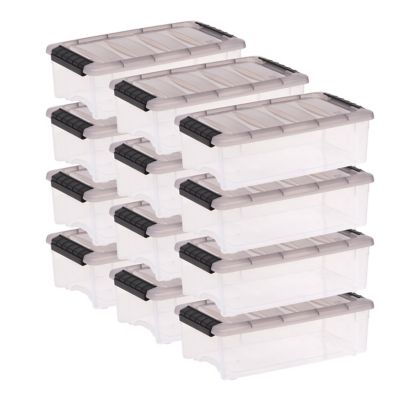
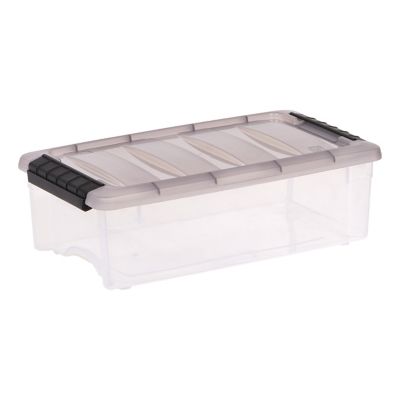
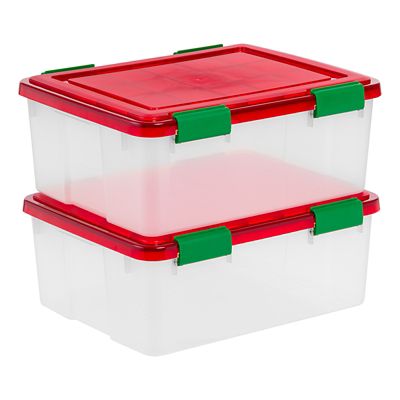
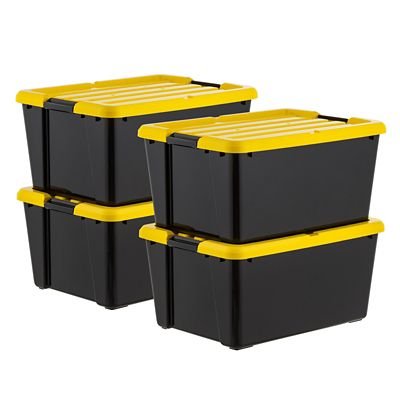
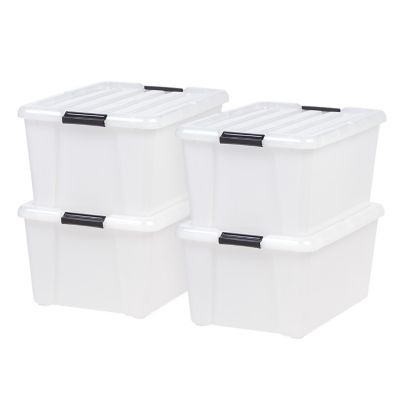
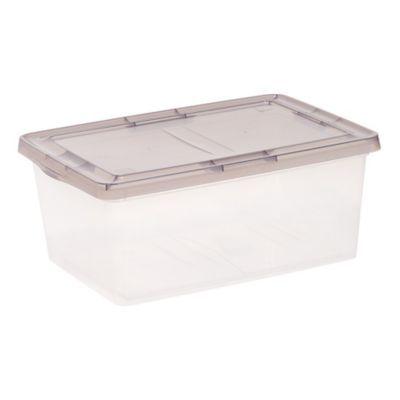
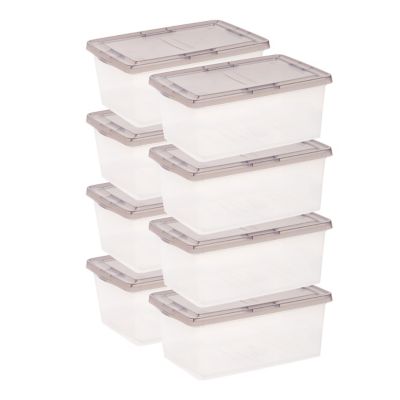
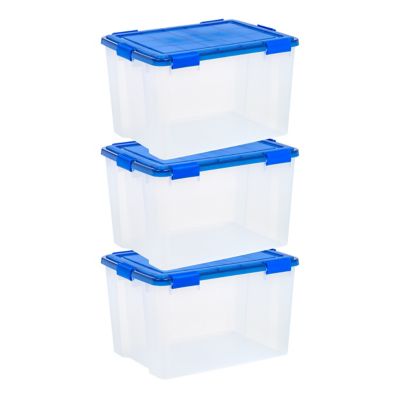
Clear stackable storage bins are see-through containers that keep belongings visible while making room for storage above a single bin’s footprint. They bring order to everything from pantry shelves and laundry rooms to garage cabinets and enclosed tack-room storage. Instead of opening several boxes to find a roll of tape or a spare pair of work gloves, the clear sides let you spot what belongs where. Lidded bins help keep dust off the contents, while open-front styles make everyday supplies easier to reach without lifting the container above them. The right shape depends as much on the shelf as on what goes inside. A shallow bin keeps small parts within sight; a deeper container gives folded blankets, cleaning cloths, or larger accessories more room. Straight-sided designs can make good use of shelf space, though tapered bins may nest together when empty. Capacity measurements tell only part of the story. Outside dimensions determine whether a bin fits between shelf supports, while inside dimensions show whether a full-size folder, tall bottle, or pair of boots will fit. Handles, lids, and latches can extend beyond the main body, and a shelf needs enough clearance to open the lid or pull the bin forward. Materials matter, too. Polypropylene is common in storage containers and often has a little give, while acrylic generally offers a rigid body and glasslike clarity. Neither material name alone establishes how much weight a container can carry. Wall thickness, base construction, and the stated load limit all help determine whether a bin suits lightweight household supplies or heavier shop contents. Clear plastic can also vary in appearance, from crisp transparency to a softer, slightly cloudy finish. For folks sorting several containers on a deep shelf, being able to recognize the contents at a glance can matter more than having a perfectly matching row. A comfortable grip and a size that stays manageable when filled make everyday storage easier to live with.
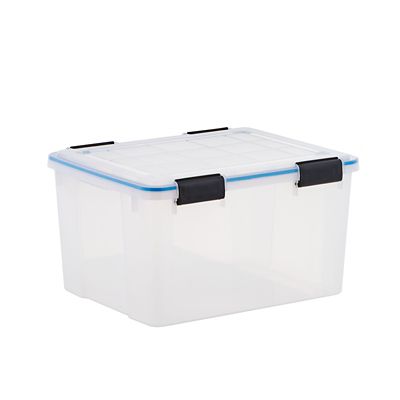
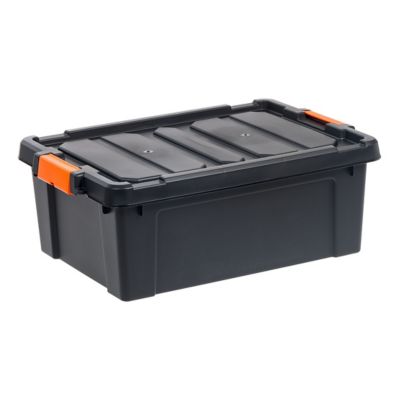
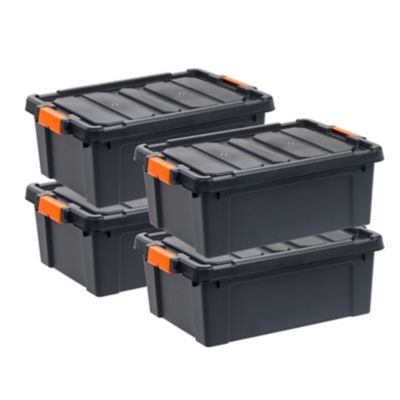
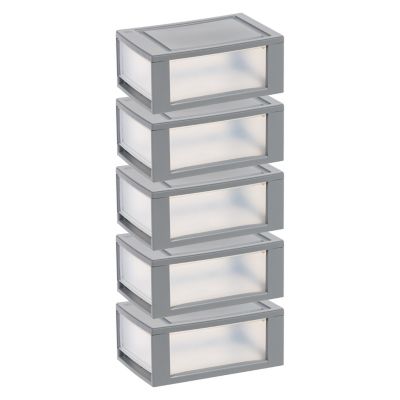
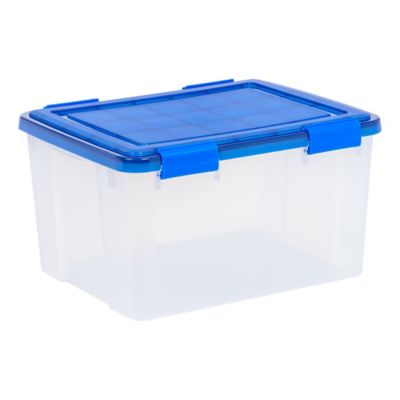
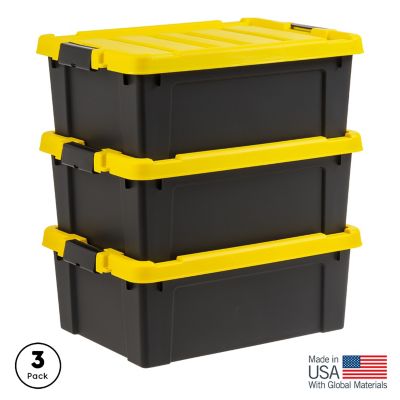
The difference between a storage bin with a lid and an open-front bin comes down to protection and access. A lid is handy for spare linens, sewing supplies, paperwork, or accessories that spend more time put away than in use. Latching closures help hold the lid in place, but they do not automatically make a container airtight, watertight, or pestproof. Open-front clear bins suit spaces where the same supplies come out several times a day, such as packaged snacks in a pantry, washcloths in a linen cabinet, or grooming brushes on an enclosed shelf near the barn. Their openings need to remain accessible when stacked; a container that simply sits on another container may still require the top one to be removed. Stackable designs can have recessed lids, raised rims, or molded feet that help compatible pieces line up. Those features are worth distinguishing from nesting, which means empty containers fit inside one another. Divided interiors offer another way to keep small belongings from becoming a jumble. Removable dividers can separate screws from washers, thread from needles, or charging cords from spare batteries, while an undivided bin leaves room for larger objects. The contents should suit the container rather than testing its limits. A modest-size box of metal fasteners can weigh much more than a large bin of folded towels, and sharp tools may need separate protection to keep points and edges from gouging the plastic. Pantry storage has its own considerations: keeping food in its original packaging is different from placing loose food directly against the bin. Direct food contact calls for a container designated for that purpose. Likewise, ordinary clear storage bins are not a substitute for approved containers for fuel, pesticides, or other hazardous materials. Their everyday strength is simpler: keeping related belongings together, separating clean supplies from messy ones, and making missing essentials easier to notice before the next chore starts.
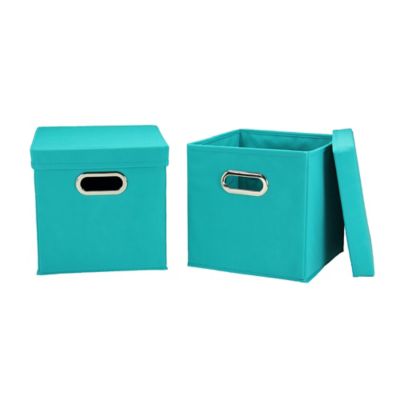
Clear stackable storage bins work best as part of a setup that matches the way a household or workspace runs. A family laundry shelf might hold separate bins for clothespins, stain-treatment supplies, and spare cleaning cloths, while a garage cabinet might group sanding supplies, tape, and small repair parts. In a craft room, visible containers keep fabric pieces and sewing notions from disappearing behind larger boxes. On a farm, an enclosed cabinet with clearly separated grooming supplies and spare equipment accessories can save time between chores without leaving everything loose on a bench. Stackable plastic storage cubes offer another shape to consider when square compartments fit the space better than long, low boxes;
stackable plastic storage cubes can be a useful comparison when planning a shelf layout. Whatever the shape, stacking compatibility should come from the container’s design rather than appearance alone. Similar-looking lids and bases may not fit together securely, and a tall stack can become awkward when the bottom bin holds something needed every day. Heavier containers belong lower in the arrangement, with frequently reached supplies where they can be lifted without stretching or twisting. Shelving also needs to support the combined weight of the bins and their contents. Built-in handles can help with carrying, but a loaded bin should stay within its stated limits; supporting the base makes sense when moving heavier belongings. Basic care helps preserve visibility and function. Mild soap, water, and a soft cloth are a sensible starting point when consistent with the manufacturer’s care directions, while abrasive scrubbers can leave scratches that make contents harder to see. Letting bins dry completely before closing them helps avoid trapping moisture around paper, fabric, or metal parts. Cracked corners, damaged latches, and distorted lids are signs that a container may no longer stack or close as intended. With sensible sizing, compatible stacking features, and space for easy access, clear bins turn scattered supplies into an orderly setup that still works when the day gets busy.