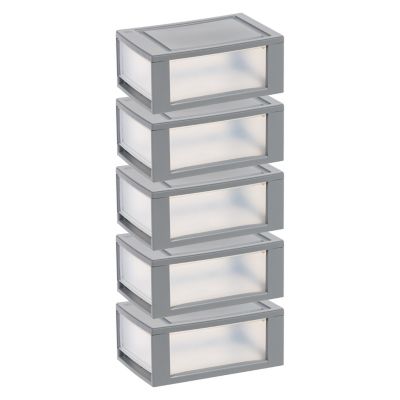
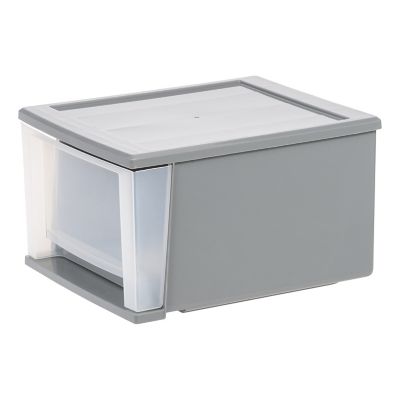
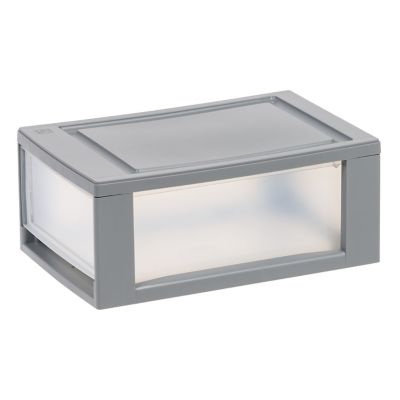
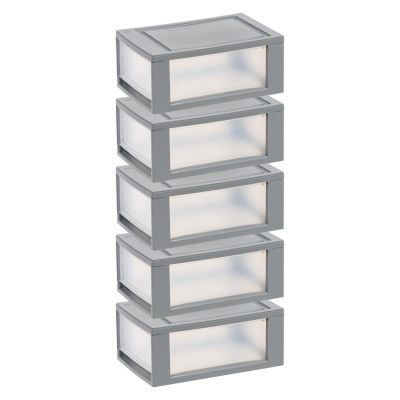
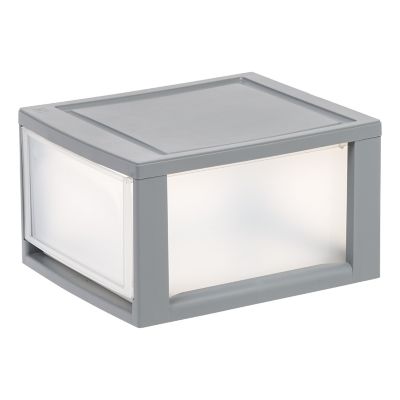
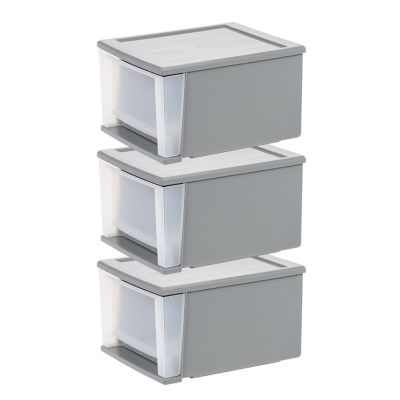
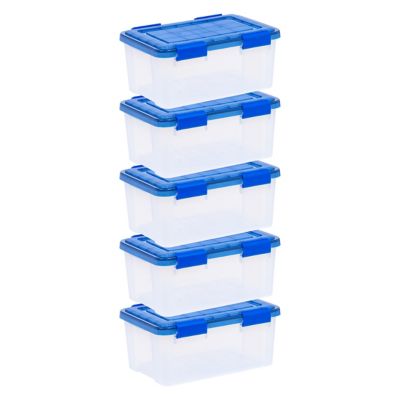
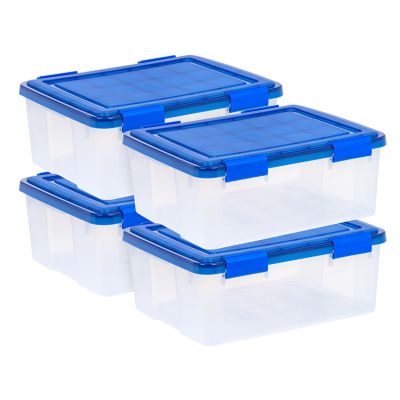
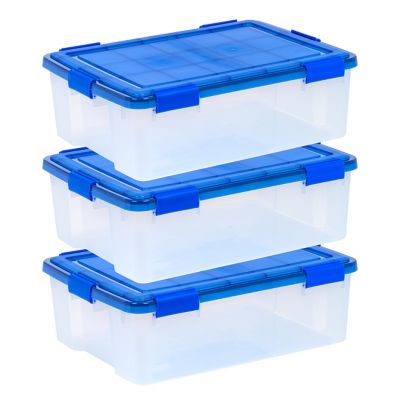
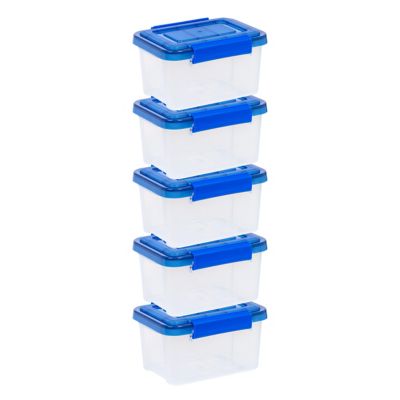
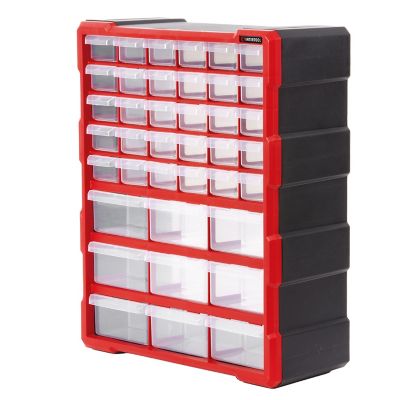
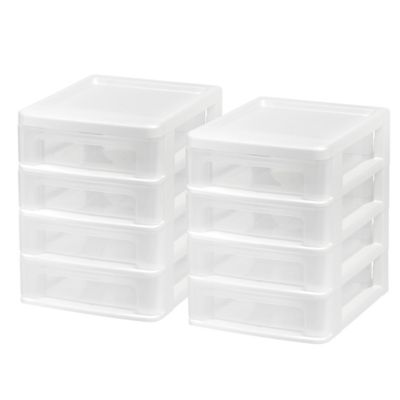
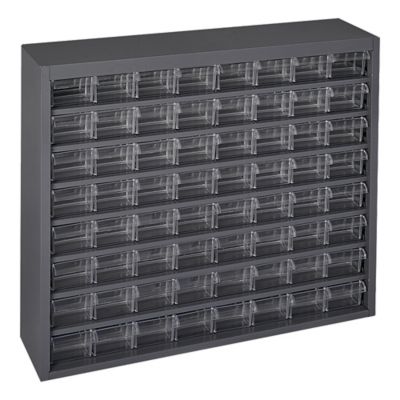
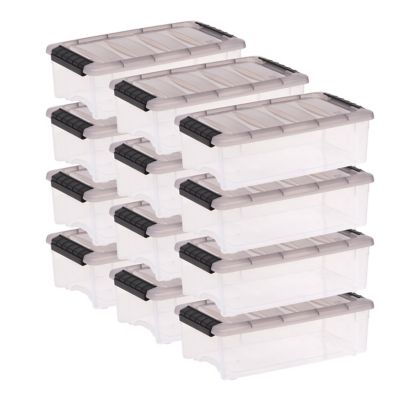
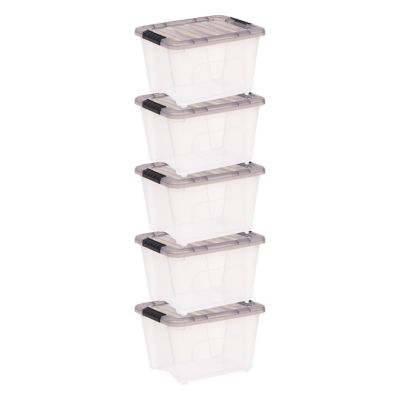
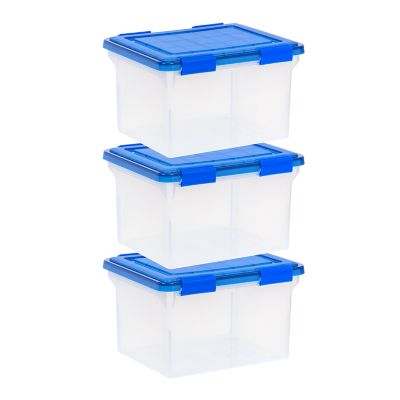
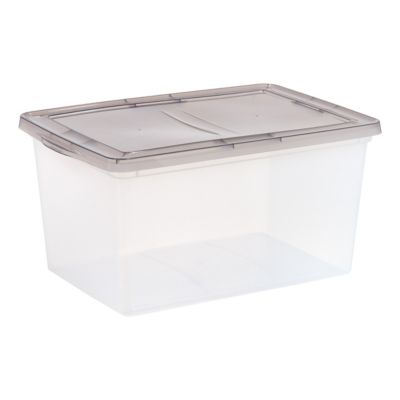
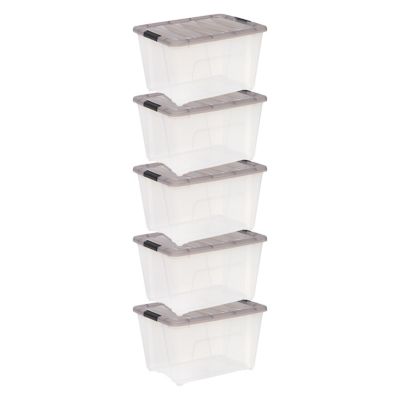
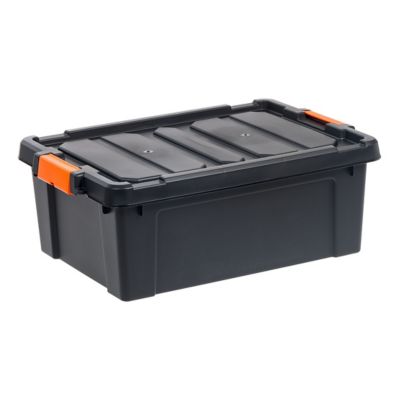
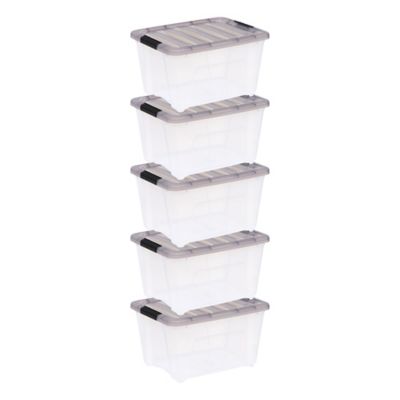
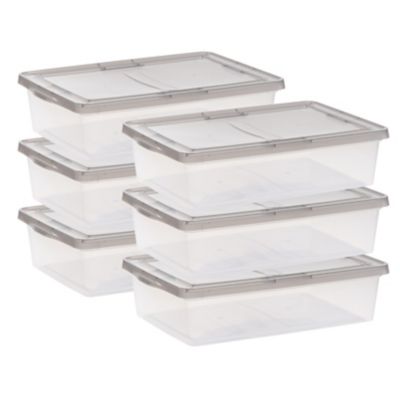
Clear plastic stacking drawers are see-through storage units with pull-out compartments arranged vertically, making it easier to sort small belongings without spreading containers across a shelf or countertop. They bring order to bathrooms, closets, pantries, craft rooms, home offices, and work areas where a little extra organization goes a long way. The clear fronts let someone spot a tape measure, a spool of thread, or a pack of hair ties before opening a drawer, while the stacked layout makes use of space above the base. Unlike bins that open from the top, drawers allow access from the front without lifting off every container above them. That can be handy on a closet shelf or beside a sewing machine, where there may not be much room to shuffle things around. Shallow compartments suit small supplies that tend to disappear beneath larger belongings, while deeper drawers provide room for folded cleaning cloths, craft materials, or spare office supplies. In a bathroom, separate drawers can keep grooming tools apart from cotton pads and unopened toiletries. On a pantry shelf, they can organize individually wrapped snacks or sealed packets without leaving little packages scattered behind taller containers. Around a home workbench, smaller drawers offer a place for lightweight hardware, marking pencils, and other odds and ends that otherwise collect in a coffee can. Direct contact with unpackaged food calls for containers specifically identified for that purpose; a general storage drawer should not be assumed to be food-safe. For busy households, the biggest benefit is often simple: belongings have a spot, and everyone can see where they go. Clear sides also make it easier to notice when a compartment needs straightening. A small label can add another cue for shared spaces, especially when several drawers hold similar-looking supplies or when children are learning to put their things away.
The best fit depends on both the space around the unit and the belongings going inside it. Exterior width, depth, and height describe the overall footprint, but the usable drawer interior can be smaller because of the frame, corners, and sliding mechanism. A narrow compartment may fit pens neatly yet leave no room for a full-size notebook, while a deep drawer can hold more but make tiny pieces harder to keep separated. Removable dividers or smaller trays can help organize those little pieces when the drawer design allows them. Front clearance matters just as much as shelf space: a unit tucked into a cabinet needs enough room for the drawer to open past the door and hinges. Handles, drawer stops, and the shape of the front edge also affect everyday access, particularly for anyone opening a compartment with one hand. Depending on construction, clear plastic stacking drawers may have transparent compartments inside a separate frame or a body that is clear on several sides. Plastic type, wall thickness, and frame design all influence how the unit handles everyday wear. Acrylic can provide a glasslike appearance, while polypropylene is common in many household storage designs; the material information for a particular unit tells more than appearance alone. Clear plastic can show scuffs, so a drawer beside a gritty work surface has different demands than one holding socks in a closet. Stacking also depends on the design rather than matching dimensions alone. Units intended to connect may have recessed tops, shaped feet, or other features that help them sit together, and those connections are not necessarily interchangeable between different systems. A level, supportive surface and a stack within the stated height and weight limits help keep the arrangement steady. Heavier contents belong lower in the setup, with lighter belongings above, and opening one drawer at a time reduces shifting. These units are better suited to manageable household supplies than loads of heavy tools or dense hardware that exceed their rated capacity.
Clear plastic stacking drawers work especially well where belongings need to stay close at hand without taking over the whole room. A compact stack beside a desk can separate charging cords, writing supplies, and mailing materials, while a taller arrangement inside a closet can give socks, scarves, and accessories their own compartments. In a sewing space, clear fronts make thread colors and notions easier to recognize, though small loose pieces may still need divided inserts. Families sharing a bathroom can assign a drawer to each person, cutting down on the jumble around the sink. Hobby supplies also stay easier to manage when each drawer holds one kind of material rather than a little of everything. For broader compartments or a different arrangement of enclosed storage,
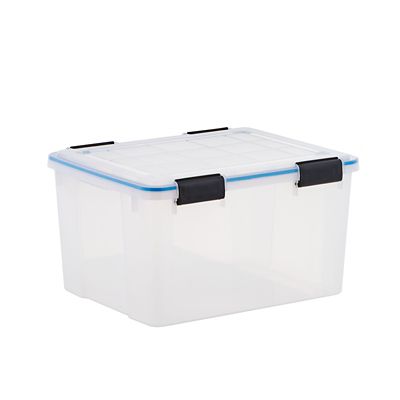
Stackable Plastic Storage Cubes offer another format to consider alongside drawer-based storage. The distinction comes down to access and fit: pull-out drawers bring contents forward, while cube layouts vary in how their compartments open and connect. Either way, storage works best when the container suits what goes inside rather than forcing belongings into a space that is too tight. Routine care is generally straightforward, with a soft cloth and mild soap suitable for many plastics when consistent with the maker’s care directions. Abrasive scrubbers and strong solvents can scratch or cloud clear surfaces, and excess moisture should be wiped away before contents go back in. Unless the design specifically says otherwise, ordinary stacking drawers should not be treated as airtight or waterproof containers. Liquids need secure lids, and anything that requires controlled storage belongs in a container made for that job. Cleaning products, medicines, and sharp objects also need storage that keeps children and animals out; an ordinary pull-out drawer is not a locking cabinet. With sensible placement and room for each compartment to move freely, clear drawers can turn an awkward shelf or crowded corner into an orderly spot that is easy to keep up with.