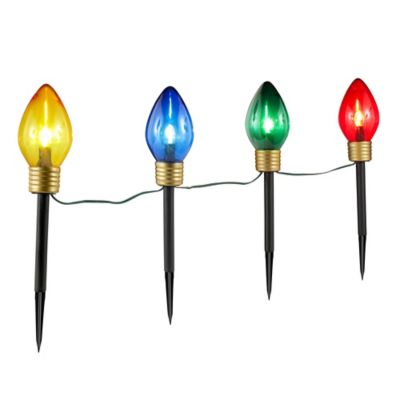
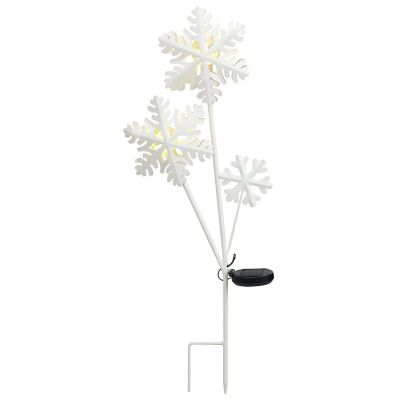
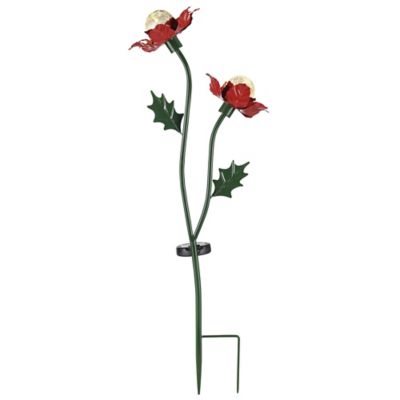
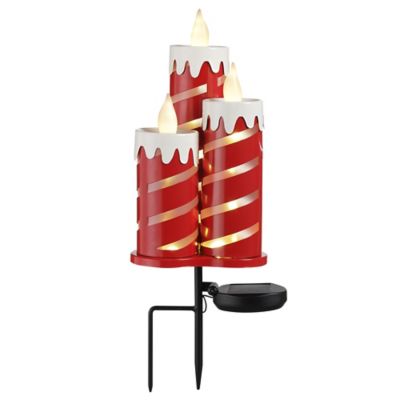
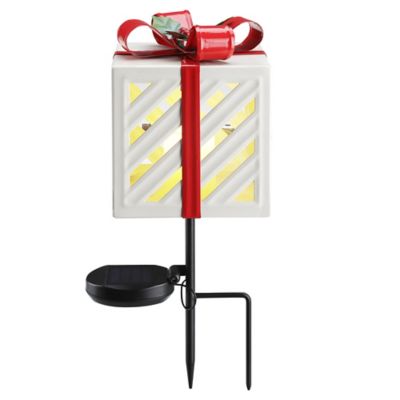
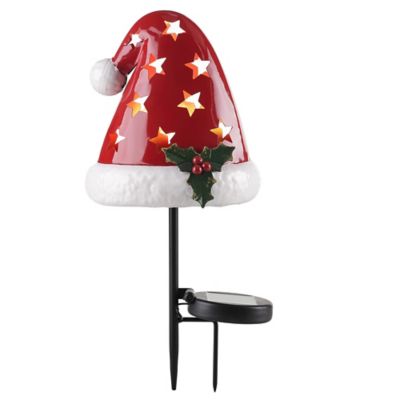
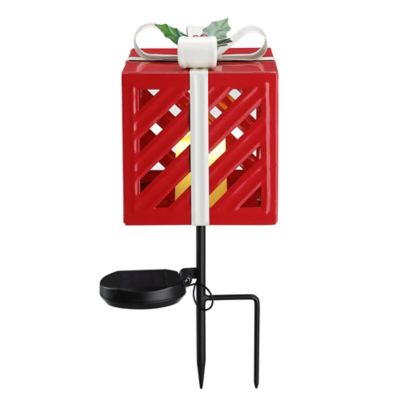
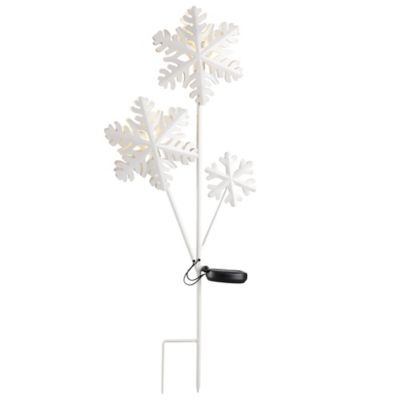
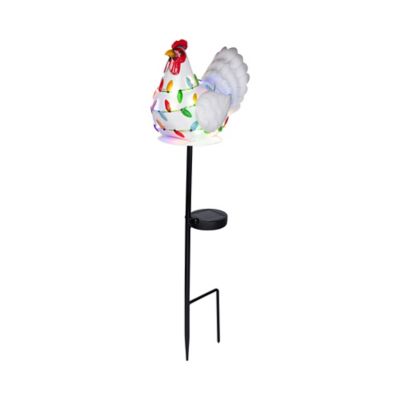
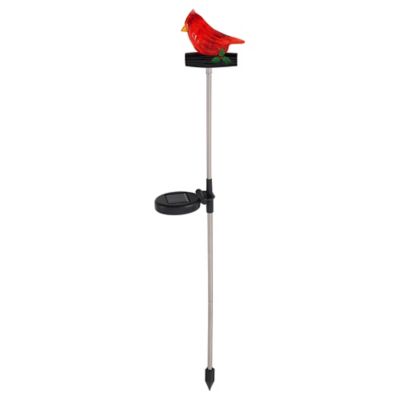
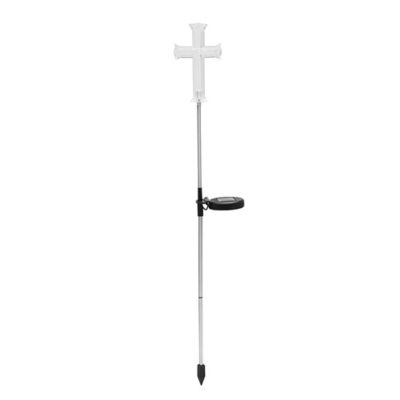
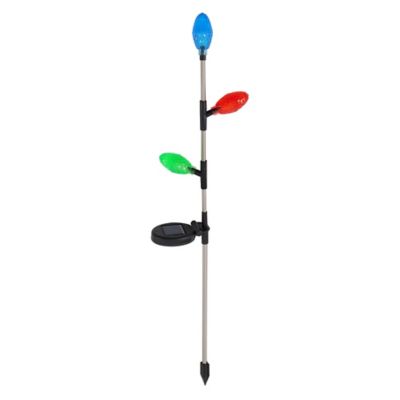
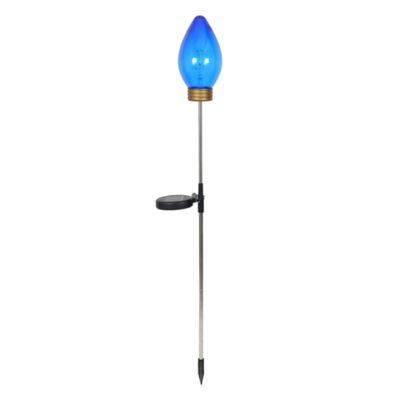
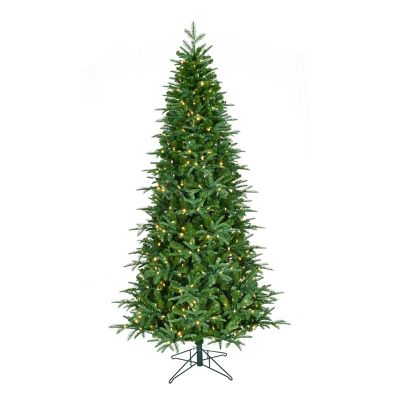
Christmas stake lights are ground-mounted holiday lights that add a festive glow along walkways, flower beds, driveways, and front yards. A pointed stake holds each light above the soil, making it easy to outline a path or bring a little Christmas cheer to an open stretch of lawn. Common styles include candy cane shapes, stars, snowflakes, Christmas trees, and oversized bulb silhouettes, along with simpler lighted markers that let the color do the talking. Warm white lights lend a soft glow to a farmhouse porch or a fence lined with greenery, while multicolor lights bring a cheerful look to the walk leading up to the front steps. Red and white designs fit naturally beside wreaths and porch garland without needing much else around them. The right scale depends on where the lights will sit and how far away folks will see them. Smaller shapes suit a narrow front walk or a low planting border, while taller stakes and broader silhouettes stand out better across a deep yard. Overall height and the height above ground are worth comparing, since part of the stake disappears into the soil. For a long driveway, a repeating shape can create a tidy line toward the house; near a front entry, a shorter grouping can make the space feel welcoming without crowding the steps. Steady lighting gives the display a settled look, while flashing or color-changing settings add movement when the selected set includes those features. Matching the color tone to nearby roofline or porch lights helps the whole scene feel connected. Christmas pathway lights serve mainly as holiday accents, though, rather than replacements for the everyday lighting that helps people see steps, uneven ground, and turns in a walkway. Their appeal is in that cheerful line of light greeting family, neighbors, and guests as they head toward the door.
Power source, materials, and construction make a real difference in how Christmas stake lights fit a property. Plug-in designs suit displays near an outdoor power source, especially where a consistent glow throughout the evening matters. Their layout depends on the lead cord length, the distance between lights, and any limits on connecting additional sets. Those measurements help show whether a strand will reach from the outlet to the first planting bed or leave an awkward gap at the end of a walk. Solar-powered stake lights offer more freedom from outlets, making them an option for borders farther from the house, provided the panel receives enough direct sunlight. Short winter days, shade from buildings or evergreens, and snow covering a panel can affect charging and nighttime run time. Battery-powered designs offer another option where cords would be inconvenient, with battery access and any timer function worth considering before placing them. LED Christmas stake lights are common across these power types and can provide bright color with lower electricity consumption than comparable incandescent lighting. Materials vary, too: molded plastic light housings can keep larger shapes light in weight, while metal stakes or supports may provide a firmer structure for certain designs. Neither material alone tells the whole story. Secure connections, a well-supported light head, and a stake suited to the intended ground conditions all matter when a display faces wind, rain, or snow. An outdoor-use rating is essential for lights going into the yard, and the instructions should identify any separate placement requirements for controllers, battery boxes, or power connections. Outdoor-rated does not mean every component can sit in standing water. For corded displays, an outdoor GFCI-protected outlet and extension cords rated for outdoor use are important parts of the setup. Compatibility matters as well; separate strands should connect only when their instructions specifically allow it, within the stated electrical and connection limits.
A good fit also comes down to how the yard works on an ordinary evening. Along a sidewalk, Christmas stake lights need enough room that guests carrying covered dishes or gifts can pass without brushing against them. Around a driveway, a little setback helps keep the lights clear of tires, opening vehicle doors, and snow-clearing equipment. On a rural property, a small grouping near the porch or gate can make more sense than trying to light every foot of a long lane. Spacing changes the effect: closer placement creates a more continuous border, while wider spacing gives each shape room to stand on its own. With connected sets, the factory cord spacing sets the practical limit, so stretching wires tight to reach the next spot can put strain on the connections. Ground conditions matter just as much as the layout. Stakes are generally intended for soil rather than concrete, asphalt, or frozen ground, and forcing a plastic stake into hard earth can crack it. Installation before the ground freezes can make placement easier where winter temperatures drop below freezing. Keep the light heads visible above low plants or light snow cover, without placing them where they interfere with routine yard work. Children and pets may be drawn to bright shapes, so cords and stakes belong away from play areas and places where animals may chew or become tangled. Simple care helps keep the display ready for another Christmas: disconnect power before handling electrical parts, clear solar panels gently, and follow the manufacturer's cleaning directions. After the holiday display comes down, clean off soil, let the components dry, and check cords and housings for damage before packing everything away. Loose coils and a storage box that protects projecting shapes can help prevent bent stakes and cracked light covers. For someone who enjoys dressing up the front yard for Christmas, a set that suits their space and power access can make a thoughtful seasonal gift. For a different look along planting beds and paths beyond the holidays,
Garden Stake Lights offer another way to bring a welcoming glow closer to the ground.