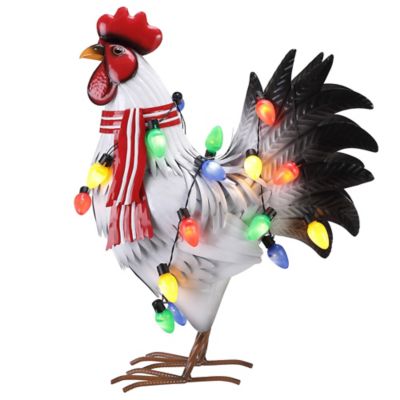
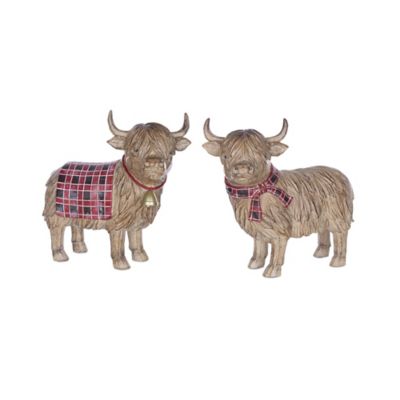
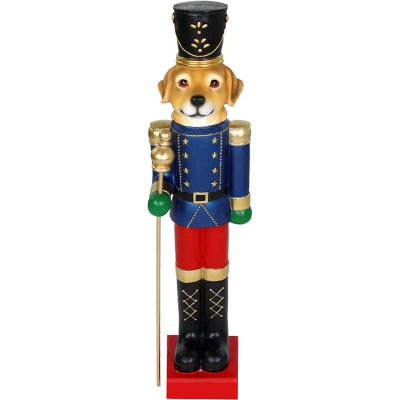
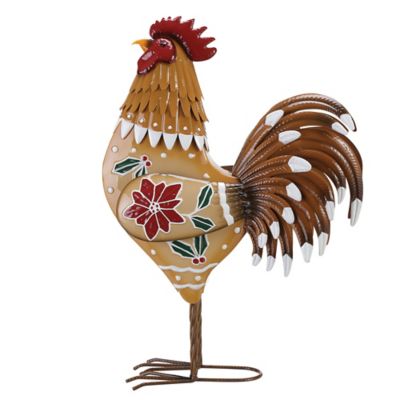
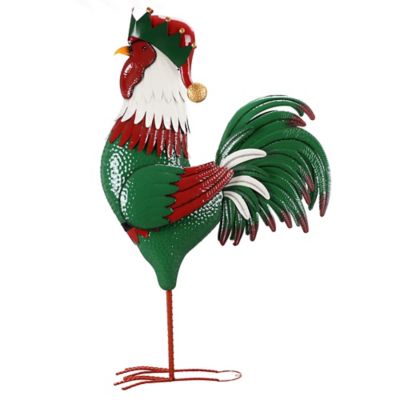
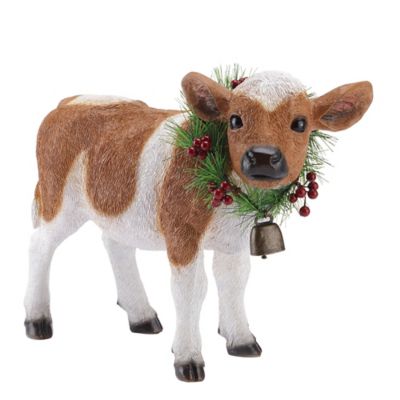
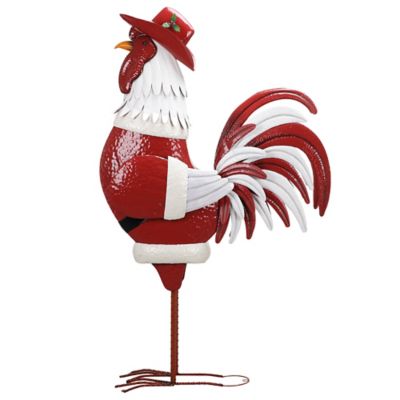
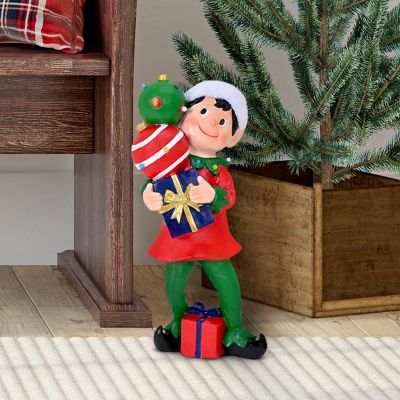
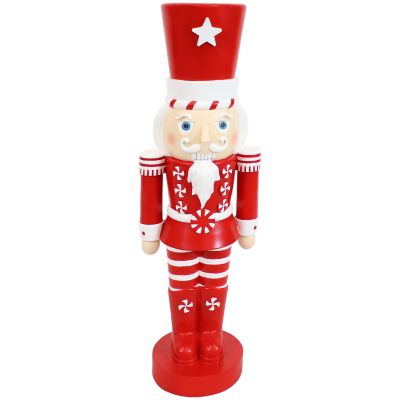
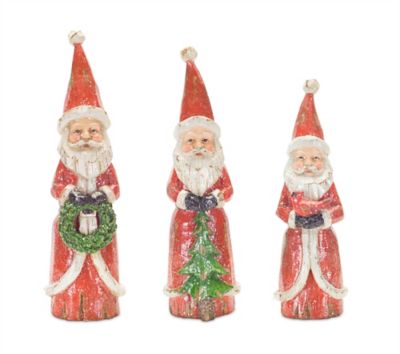
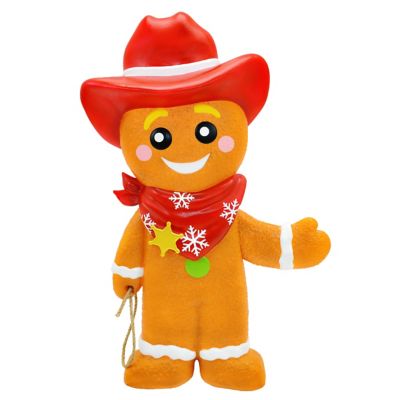
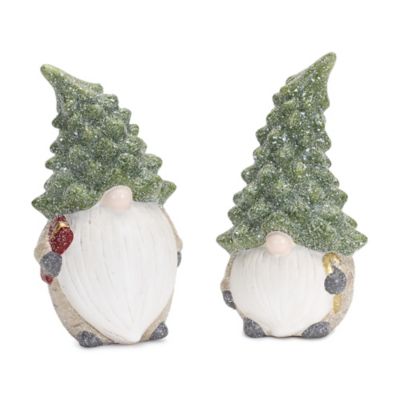
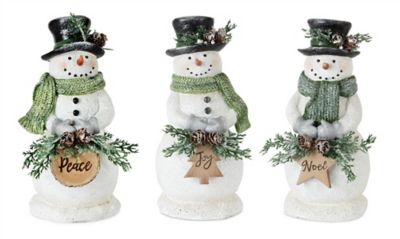
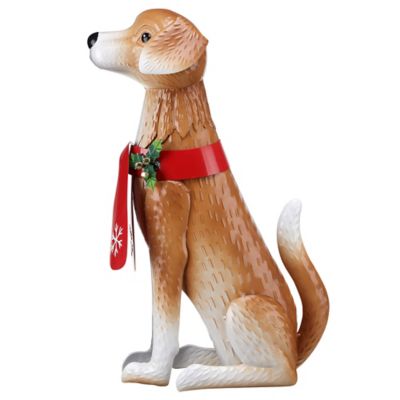
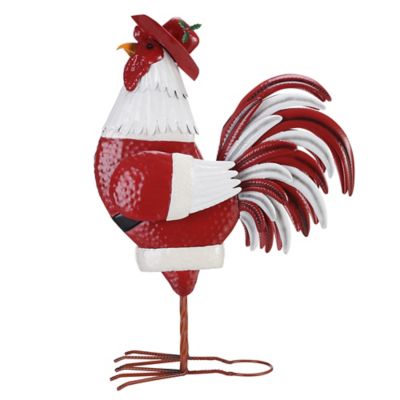
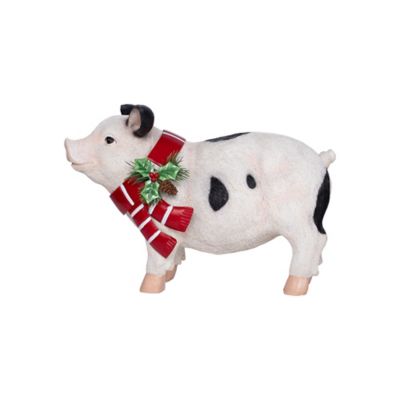
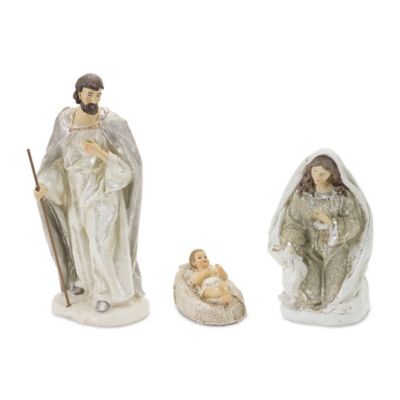
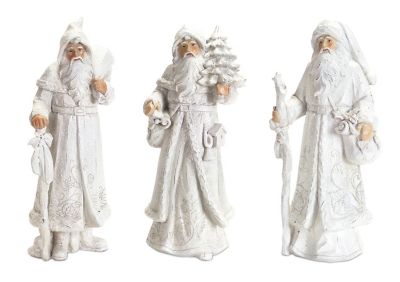
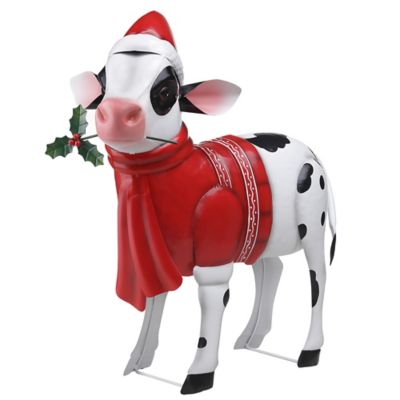
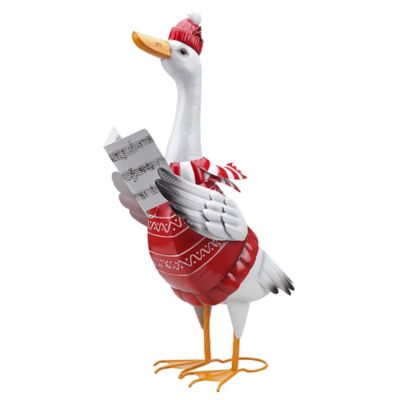
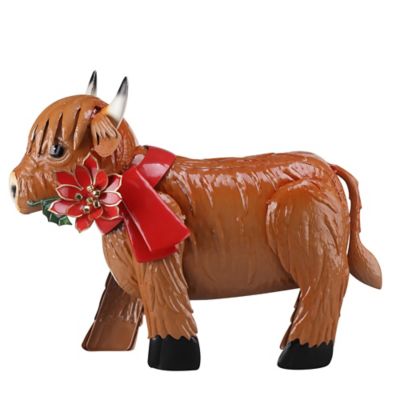
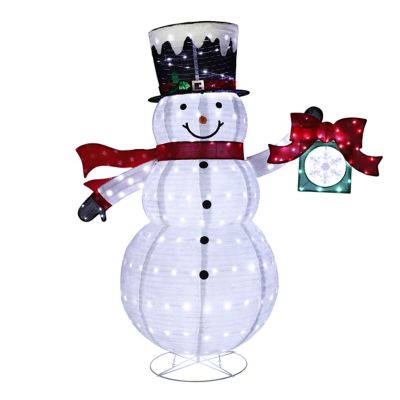
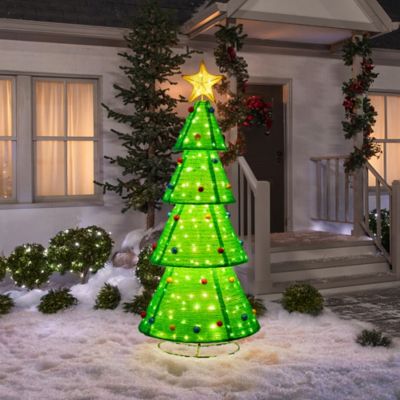
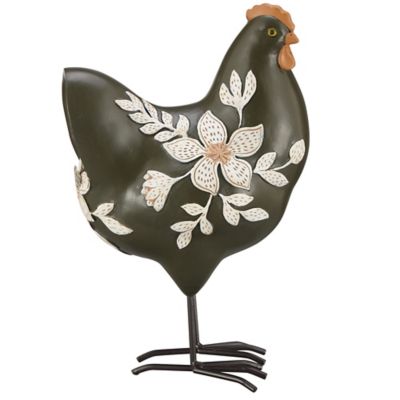
Christmas figurines and statues bring familiar holiday characters into the home, from nativity scenes and Santa figures to snowmen, reindeer, angels, and woodland animals. Figurines are generally smaller pieces suited to shelves, mantels, and tabletops, while statues tend to have more height or presence for floor displays, entryways, and outdoor settings. The names sometimes overlap, so measurements and intended placement matter more than the label alone. A small figure can add Christmas cheer beside a framed family photo, while a taller statue can anchor a covered porch or fill an open corner near the tree. Traditional styles often feature rich reds, deep greens, gold accents, and detailed clothing. Simpler country styles may lean toward natural wood tones, muted paint, textured finishes, and familiar barnyard characters. Nativity figures put the Christmas story at the center of a display, whether arranged together on a sideboard or given a quiet spot of their own. Santa and snowman figures bring a more playful feel to family gathering spaces, while deer and woodland figures sit comfortably alongside evergreen branches and pinecones. A grouping of
Christmas Figures can follow one theme or bring together favorites collected over the years. Matching every finish is less important than giving the arrangement a shared thread, such as similar colors, a common setting, or a repeated material. On a long mantel, a few figures with different heights can create a balanced scene without crowding family keepsakes. On a narrow shelf, one well-sized figure may be enough. Details such as carved-looking coats, painted faces, textured fur, or softly colored robes help set the mood, from lighthearted to reverent. The best fit is a piece that suits the household’s Christmas traditions and feels at home among the things already there, whether that means a farmhouse kitchen, a front room filled with family photos, or a small apartment with room for just one holiday display.
Material makes a difference in how Christmas figurines and statues look, feel, and hold up over time. Resin allows for fine details in faces, clothing, and animal features, and its weight can vary considerably by construction. Ceramic and porcelain bring crisp shapes and finishes that range from smooth and glossy to soft and matte, though they need protection from bumps and falls. Wood adds visible grain and a natural feel that pairs easily with country furnishings, while metal can lend a painted, polished, or weathered-looking finish. Heavier cast materials may give a larger statue a substantial feel, but weight alone does not establish whether a piece belongs outdoors. Intended use depends on the material, finish, construction, and care directions together. An indoor figure should stay inside unless its labeling specifically permits outdoor placement. Even a covered porch can expose a statue to windblown rain, damp air, and freezing temperatures, so a roof overhead is not the same as full protection. For outdoor displays, details such as a broad base, secure placement, drainage where applicable, and any supplied anchoring provisions deserve attention. A tall, narrow figure may need more protection from wind than a low, wide one. Painted surfaces can also respond differently to sunlight and moisture, making the maker’s placement directions worth checking before setting up a display. Lighted figures bring another consideration: the power source, cord reach, battery access, and indoor or outdoor rating all need to suit the setting. Care is usually simplest when dust never has much chance to settle into small details. A soft, dry cloth or gentle brush may suit many surfaces, but water, cleaners, and scrubbing should wait until the care label confirms they are appropriate. Porous finishes, glued accents, fabric trim, and electrical parts can call for different handling. Moving a figure by its base rather than a slender arm, antler, or other projecting detail helps protect the parts most likely to chip or break.
Size and placement help Christmas figurines and statues feel like part of the home rather than something everyone has to work around. Height is only one measurement; the width and depth of the base determine whether a figure sits fully on a shelf, table, or porch landing. A generous mantel can handle a broader arrangement, while a shallow windowsill calls for a smaller footprint and enough clearance for curtains or blinds. Near an entry, leave room for the door to swing and for folks carrying grocery bags, firewood, or gifts to pass comfortably. Floor displays also need to stay clear of everyday walking paths, especially where children and pets tend to run through. Fragile figures are better placed beyond the reach of curious hands, paws, and wagging tails, and display pieces should not be treated as toys unless their labeling says otherwise. Keep figures and any fabric accents away from open flames, heaters, and other heat sources. In shared spaces, a few pieces with room around them often show their details better than a crowded row. A larger statue can stand on its own, while smaller figures can form a scene on a stable tray or tabletop, provided each base rests securely. Christmas figurines also make thoughtful gifts when the subject matches the recipient’s interests or traditions. A nativity figure may hold meaning for someone who centers the holiday on faith, while an animal figure can suit a farm family or a friend fond of woodland scenes. For someone with limited display space, a smaller piece is often easier to welcome than a large statue. Storage matters, too, especially for figures that return year after year. Separate wrapping helps keep painted surfaces from rubbing together, and dividers protect delicate edges during packing. Dry, protected storage suited to the material helps preserve finishes between Christmas displays. Keeping care information and loose accessories with each figure makes the next setup easier and gives treasured pieces a better chance of becoming part of family holiday traditions.