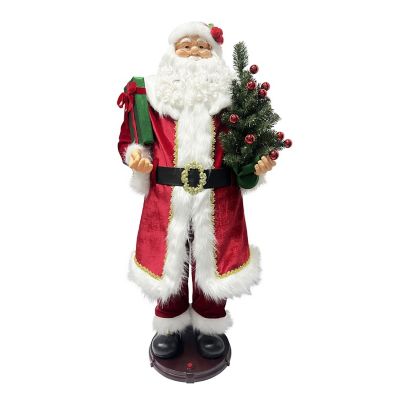
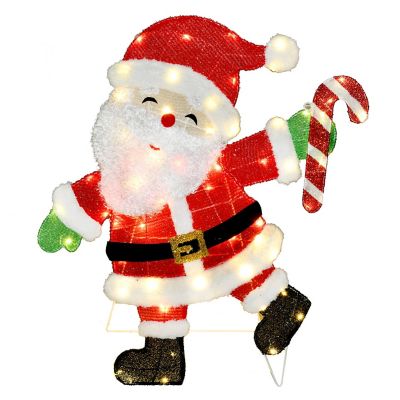
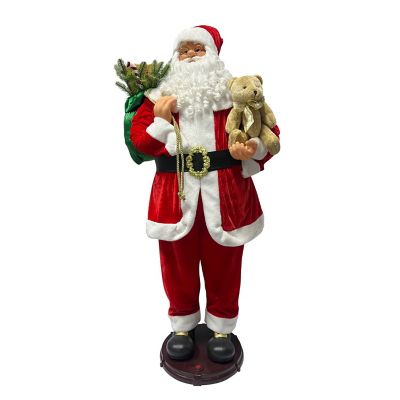
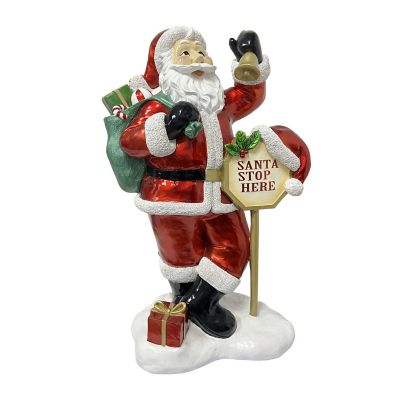
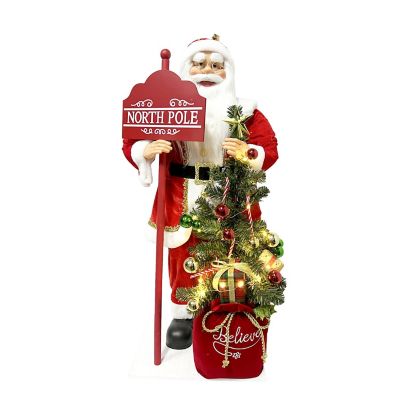
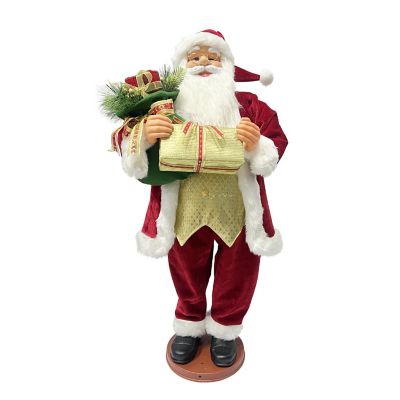
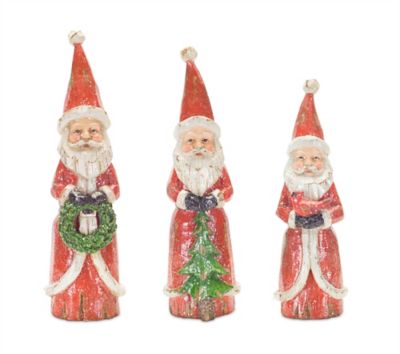
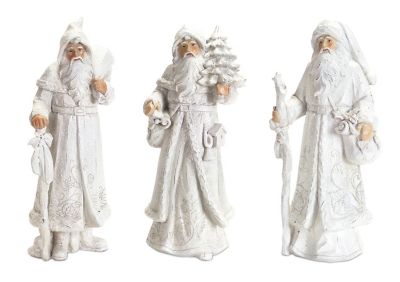
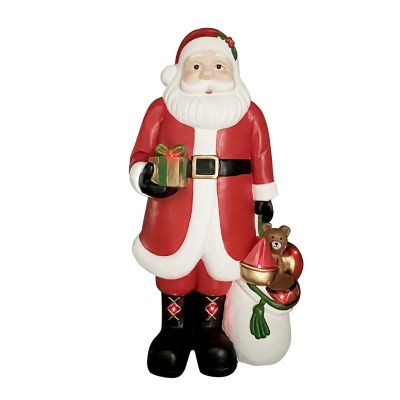
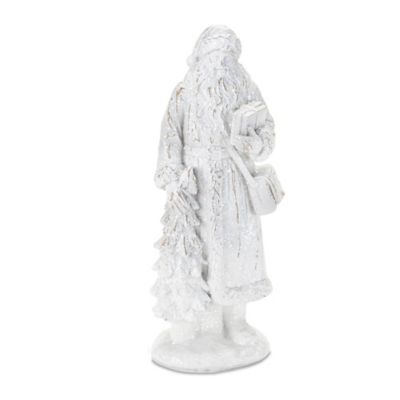
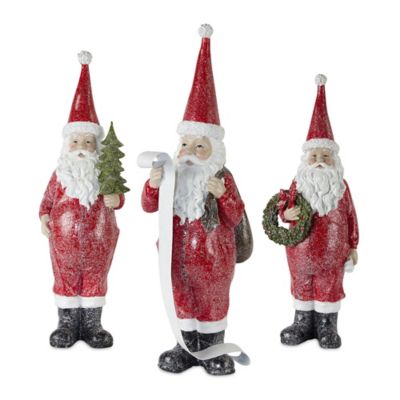
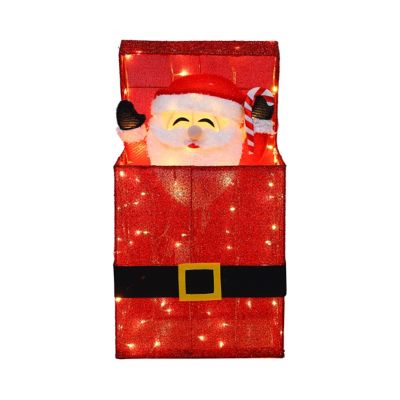
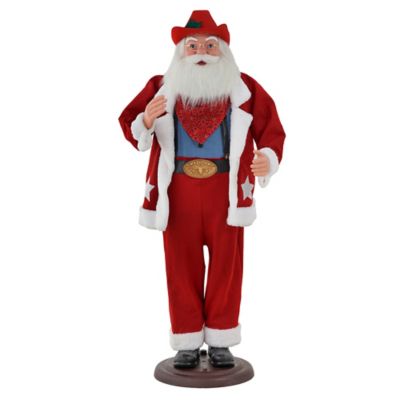
Santa Claus statues are Christmas figures that range from small tabletop accents to large freestanding pieces for porches and yards, with indoor or outdoor placement depending on their materials and stated use. Their appeal comes from familiar details: a bright red coat, a snowy white beard, a sack over one shoulder, or a friendly wave toward the front walk. Some Santa statues have a playful, storybook look, while others have quieter expressions, muted colors, and textured coats that sit comfortably beside greenery and wood furnishings. Standing figures create height beside a tree or entry table; seated figures fit naturally on broad shelves, hearths, and benches where their bases rest securely. Smaller Santa figurines can anchor a mantel arrangement without taking over the room, while a larger figure gives an otherwise plain corner a clear Christmas focal point. Scale makes a real difference in how the finished display feels. A statue that looks substantial on a kitchen counter may seem lost across a deep front porch, and a tall figure can crowd a narrow entry even when its base fits. Overall height, width, and depth matter, including any outstretched arms, lanterns, or gift sacks that extend beyond the body. Room for opening doors, carrying grocery bags, and kicking off muddy boots keeps an entry welcoming rather than cramped. Color and finish help tie the figure to its surroundings, too. A red-and-white Santa stands out against dark siding or evergreen branches, while earth tones can blend with a stone fireplace or rough-sawn shelf. Facial details are easier to appreciate close up, so finely painted figurines suit eye-level displays, while a bold outline reads better from the driveway. For households with several Christmas displays, repeating one color or finish across a few figures brings the spaces together without making every Santa look the same. The result can feel cheerful and personal, whether the setting is a farmhouse living room, a small-town storefront, or a cabin entry.
An
Santa Claus Outdoor Yard Statue can give a front walk, garden bed, or porch corner a cheerful focal point, but outdoor placement calls for more than a figure that looks sturdy. The stated outdoor rating and care directions determine whether a statue belongs in an exposed yard, under a roof, or indoors only. Molded resin allows for detailed beards, coat trim, and facial features, though the weight and resistance to impact vary by construction. A hollow resin figure may be easier to move than a solid one, but that lighter weight can make secure placement especially important. Metal figures can offer crisp outlines and painted finishes; scratches or exposed edges may need attention according to the maker’s directions to help limit corrosion. Wood brings visible grain and a warm appearance, but joints, end grain, and painted surfaces need protection suited to the intended setting. Ceramic figures often have smooth surfaces and fine detail, though bumps and freezing moisture can cause damage unless the piece is specifically made for those conditions. A covered porch offers some shelter, but blowing rain, damp flooring, and low temperatures can still reach a display there. Ground contact matters as much as overhead cover: a level, firm surface helps prevent rocking, while standing water and soft soil can create problems. Any anchors, stakes, or mounting points should match the figure’s instructions rather than relying on an improvised attachment that might crack the base. Placement away from snow-removal paths, roof runoff, and areas treated with ice melt helps reduce avoidable wear. Near a front door, enough clearance for packages, guests, and a fully opened storm door keeps Santa from becoming an obstacle. Lighted figures also need electrical components rated for their intended setting, with cords routed out of walking paths and connections protected as directed. These practical details let the figure remain the focus instead of a tilted base, tangled cord, or blocked walkway.
Inside the house, Santa statues work best where their size, finish, and weight suit everyday family life. A broad entry table can hold a substantial figure without crowding the mail tray, while a smaller figurine leaves room on a side table for a lamp and a mug. Felt pads or another suitable barrier can help protect furniture from a rough base, provided the added layer does not make the statue unstable. A mantel display needs a secure footing and proper clearance from heat; Santa’s coat, painted finish, and any attached fabric should stay away from flames, hot fireplace surfaces, and candles. Homes with young children or curious pets call for extra thought about small accessories, loose trim, cords, and figures that could tip if bumped. A smiling Santa can look like a toy, so display pieces belong out of reach when their construction or care information makes clear that they are not for play. Cleaning depends on the material and finish, but gentle handling is a sensible starting point. A soft, dry cloth can lift ordinary dust from many surfaces, while carved-looking folds and beard details may call for a soft brush. Water, cleaning sprays, and scrubbing can harm some paint, glitter, fabric, or glued details, so the care label should settle what is safe. Between Christmas displays, clean, fully dry figures benefit from individual wrapping and a storage box that keeps pressure off hands, hats, and other projecting parts. Removable accessories are easier to find again when packed alongside the figure in a labeled compartment. Batteries should come out for storage when the instructions call for it. Santa statues also make thoughtful Christmas gifts for folks who enjoy setting out a familiar holiday scene each year. A shelf-size figure may suit someone with limited display space, while a larger piece calls for knowing the recipient has room to place and store it. Matching the figure to their home and habits helps it become part of a Christmas tradition rather than another box to work around.