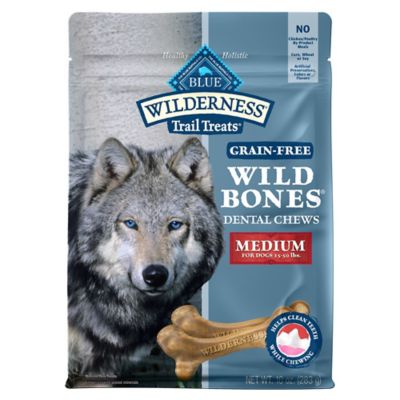
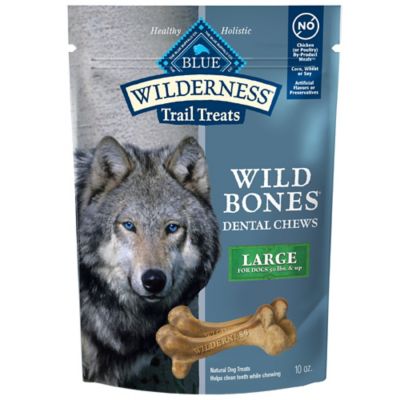
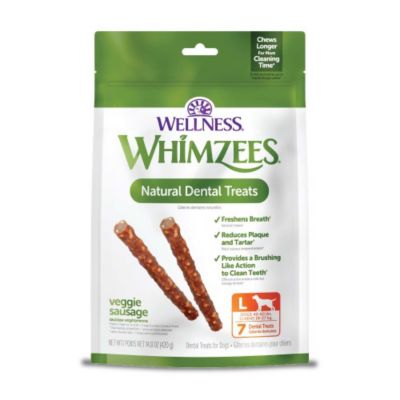
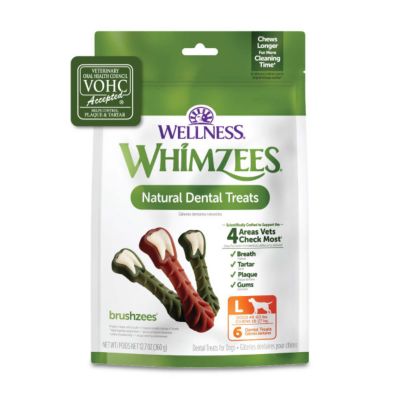
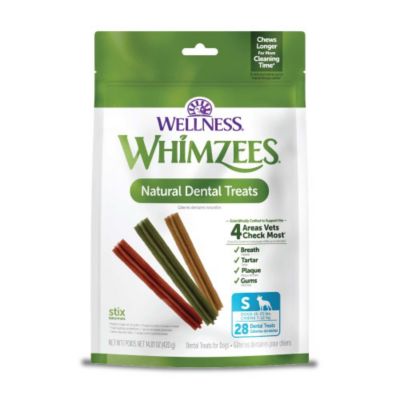
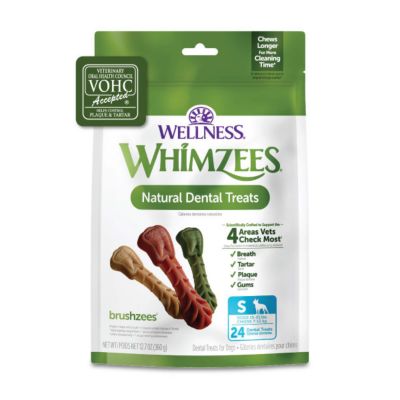
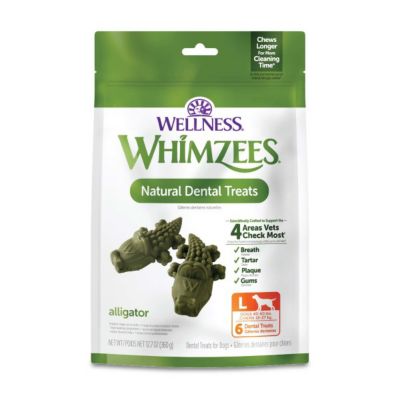
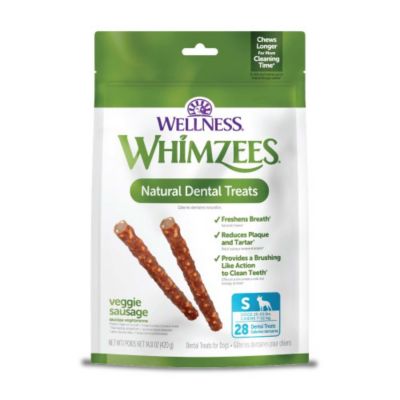
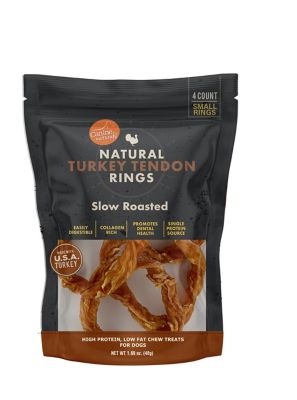
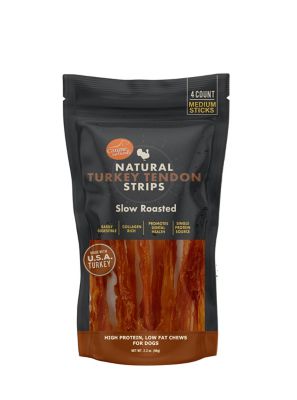
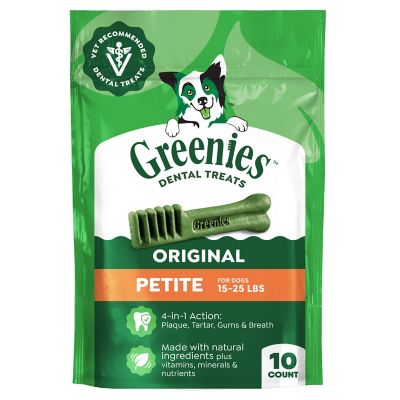
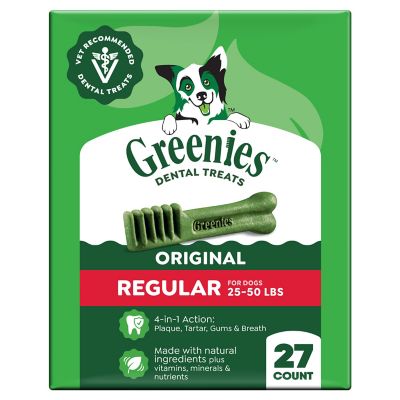
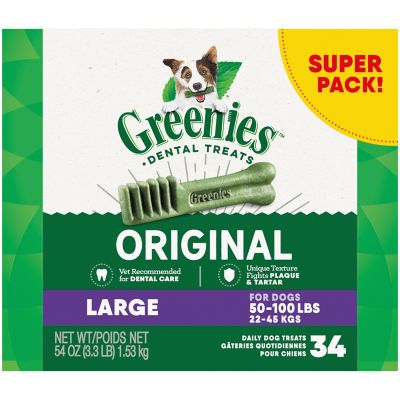
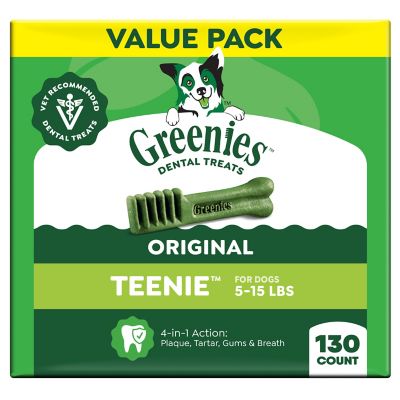
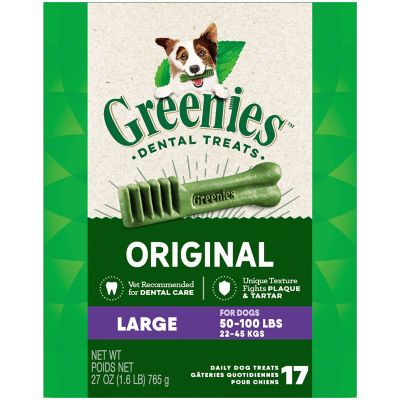
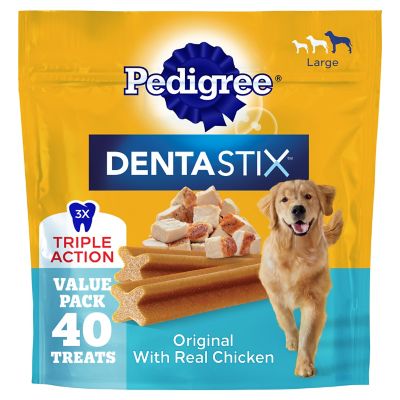
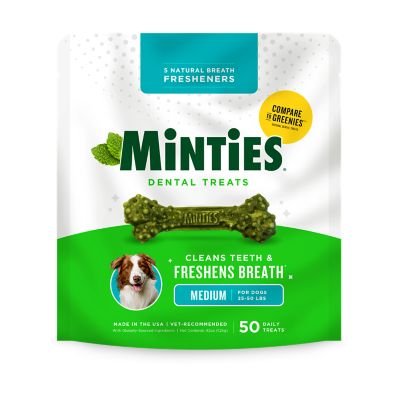
Chicken-free dog dental chews give dogs something satisfying to work on while helping support a regular oral care routine without chicken in the recipe. For a dog that needs to avoid chicken, the ingredient list matters just as much as the chew’s shape, size, and texture. These treats may feature plant-based ingredients or animal proteins other than chicken, with recipes that vary in flavor, firmness, and calorie content. Their dental benefit comes largely from chewing action: as a dog bites and works the treat, contact with tooth surfaces can help reduce buildup. Some dental chews help control plaque, tartar, or both, and some also help freshen breath. Those benefits depend on the individual formula and its supporting evidence, not simply on a chicken-free label. The Veterinary Oral Health Council seal is a useful distinction when comparing dental treats because it identifies products that meet the council’s standards for helping control plaque or tartar. Check which benefit the seal covers rather than assuming every accepted chew does the same job. Dental chews are a supplement to toothbrushing and veterinary dental care, not a replacement for either. They cannot remove established tartar the way a professional cleaning can, and better-smelling breath does not necessarily mean a dog’s teeth and gums are healthy. Still, a suitable chew can fit neatly into everyday life, whether a dog spends the day tagging along for chores or keeping watch from a favorite spot by the door. A supervised chewing break offers a reward with a practical purpose, especially for dogs that enjoy having something to settle down with. For households managing food restrictions, choosing a dental treat that matches the dog’s regular diet also helps keep snack time consistent. That consistency matters when several family members hand out treats or when a neighbor takes over feeding and pet care for a few days.
The term chicken-free needs a close look at the full ingredient panel, particularly when the restriction comes from a veterinarian rather than a flavor preference. Chicken meat, chicken meal, chicken by-product ingredients, chicken broth, and chicken fat are different ingredients, so checking only the protein named on the front of a package can leave gaps. Food allergies generally involve proteins, but that does not make every chicken-derived ingredient appropriate for every dog on a restricted diet. Follow the veterinarian’s direction on what to exclude. Broad terms such as poultry or animal digest may need clarification from the manufacturer, and flavoring sources deserve attention when their origin is not clear. A chicken-free recipe is not automatically poultry-free, grain-free, vegetarian, or free of other ingredients a particular dog needs to avoid. Turkey, duck, beef, fish, dairy, and grains each need their own consideration if they are part of the dog’s dietary restrictions. Plant-based dental chews can offer another route, often relying on starches and fibers to create their structure, but a plant-based description alone does not settle every allergy concern. Likewise, the absence of chicken does not guarantee that a treat will agree with a sensitive stomach. When avoiding both chicken and grains is part of the feeding plan,
Grain Free Dental Chews for Dogs provides a related category to consider, with the same need to check each ingredient list. Grain-free and chicken-free describe separate features, and neither one establishes that a chew is the right match for every dog. For a veterinarian-directed elimination diet, even a small treat can interfere with the feeding trial, so dental chews need approval before they join the routine. Manufacturing practices may matter for strict avoidance, too; a recipe without listed chicken ingredients does not by itself establish that there is no cross-contact during production. Clear ingredient information and answers from the manufacturer are more useful than assumptions based on a bag’s front label.
Size and texture help determine how well a chicken-free dental chew fits the dog doing the chewing. Package weight ranges and age recommendations are a starting point, with individual chewing habits adding another layer. A small dog needs a chew it can comfortably handle, while a large dog should not receive a piece small enough to gulp down whole. In a home with dogs of different sizes, separate portions and supervised chewing spots help keep each dog with the right treat. Ridges, grooves, twists, and other shaped surfaces give teeth different points of contact, but appearance alone does not establish dental performance. Some recipes have a yielding, chewy texture; others are firmer and take more effort to break down. Harder is not necessarily better, especially for dogs with worn teeth, dental disease, or a history of tooth fractures. Puppies with developing teeth and older dogs with sore mouths may need a different approach recommended by their veterinarian. How long a chew lasts depends on its formulation, dimensions, and the dog’s chewing style, so a strong chewer may finish much faster than a dog that takes small, deliberate bites. Supervision remains important throughout the chewing session. A dog that tears off large chunks, tries to swallow a chew intact, or guards treats from another pet needs closer management and possibly a different option. Follow the package directions for serving frequency, keep fresh drinking water nearby, and count dental treats toward the day’s calories. Treats generally should supply no more than 10 percent of daily calories unless a veterinarian recommends otherwise. Storage affects texture as well: keep chews in their original packaging or a tightly closed container, follow label directions, and protect them from moisture and curious noses. Keep the ingredient panel and feeding directions handy if transferring treats to another container. A chew that fits the dog’s diet, mouth, and habits is easier to work into a steady routine, alongside brushing and regular dental checkups. Persistent bad breath, bleeding gums, dropped food, or chewing on only one side calls for veterinary attention rather than a different treat.