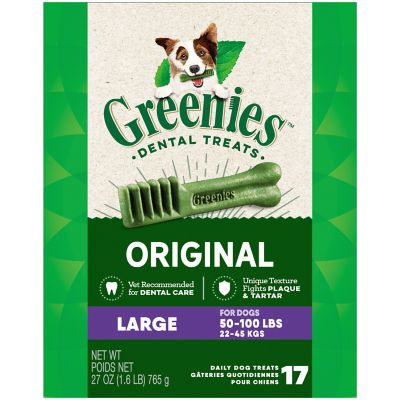
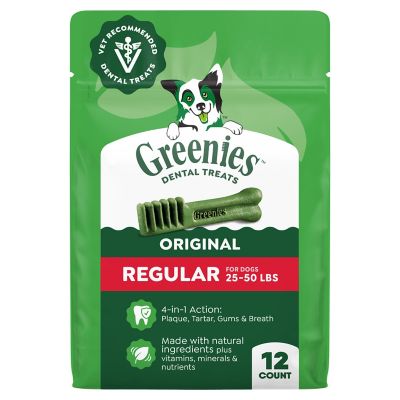
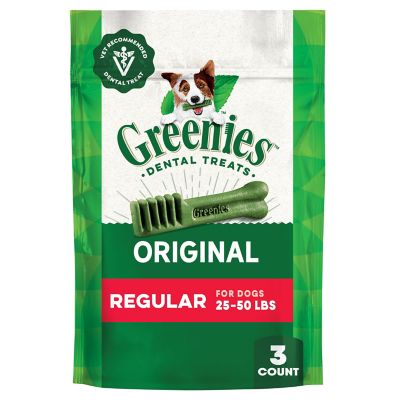
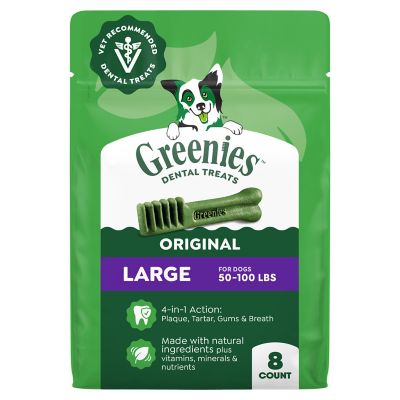
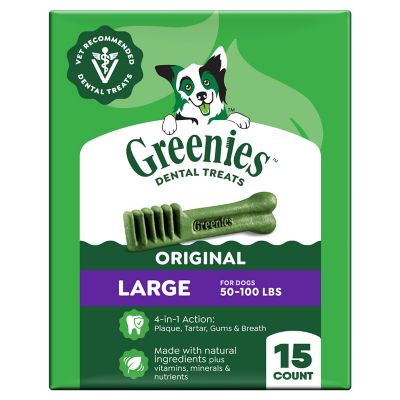
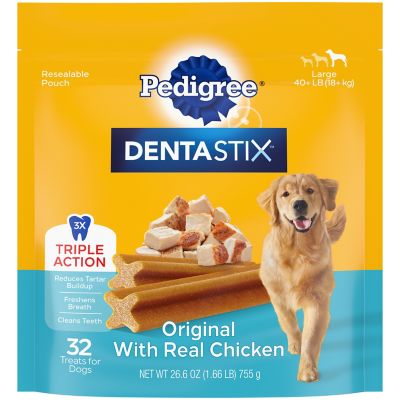
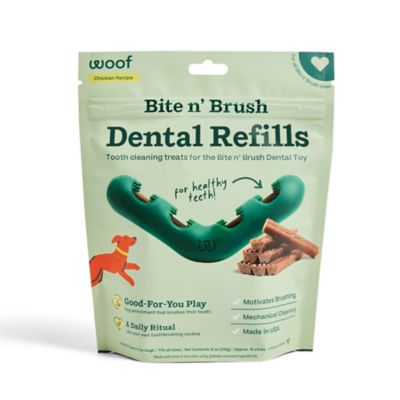
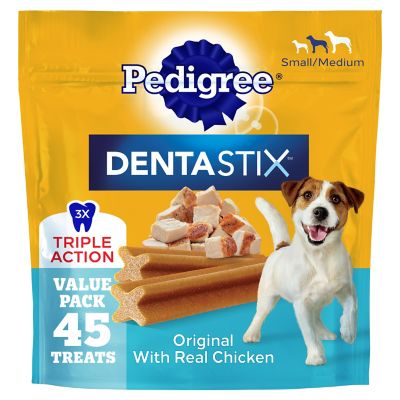
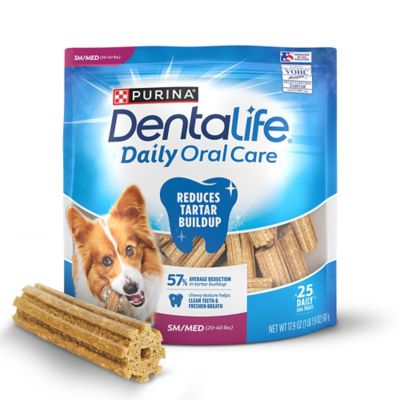
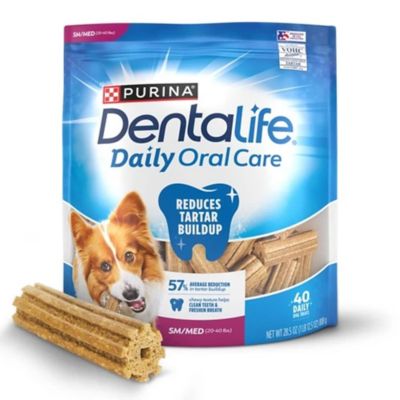
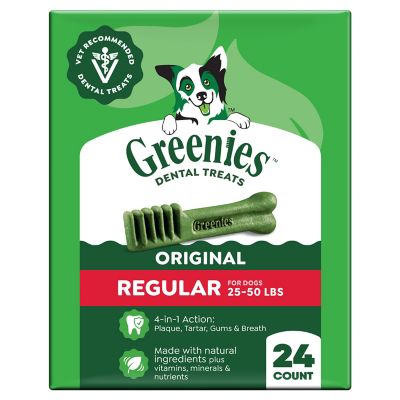
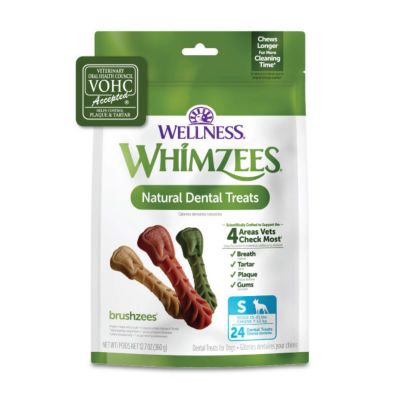
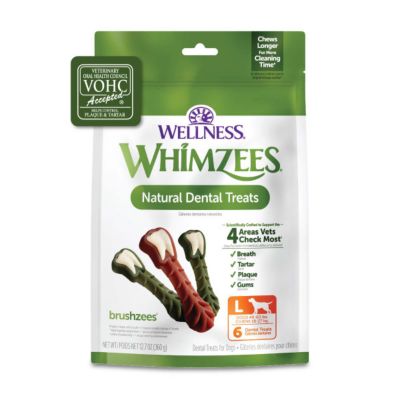
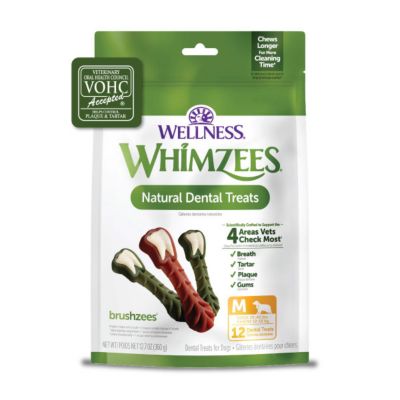
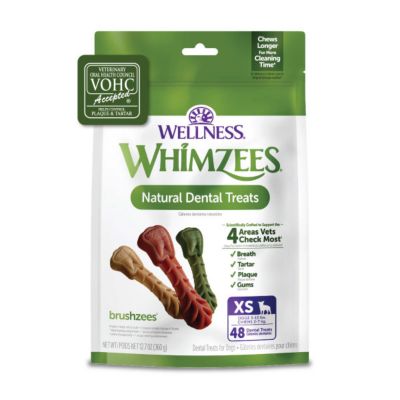
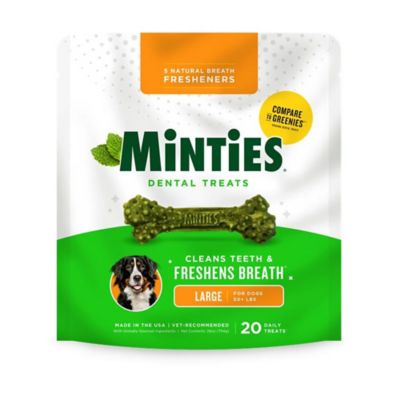
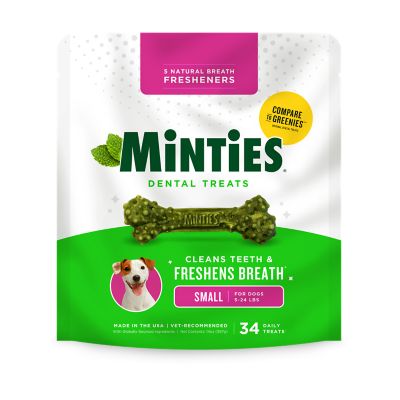
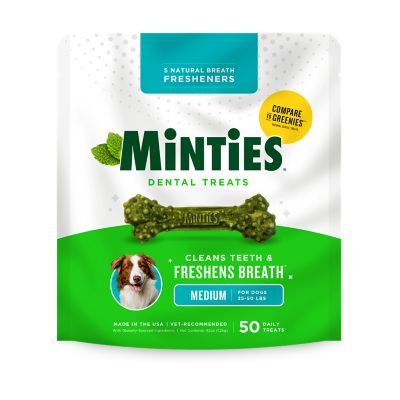
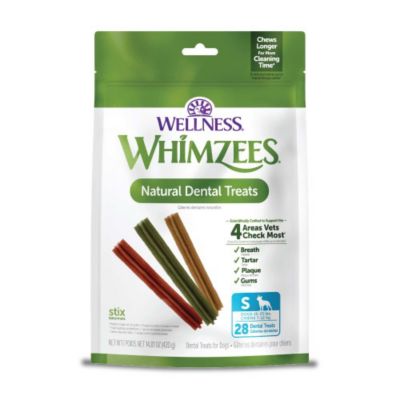
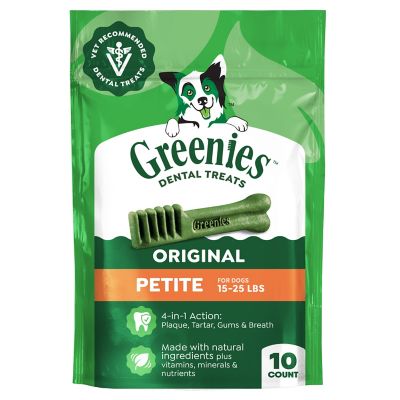
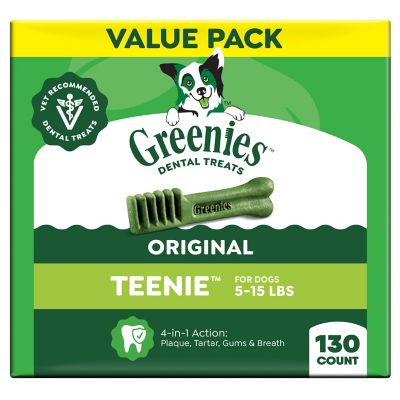
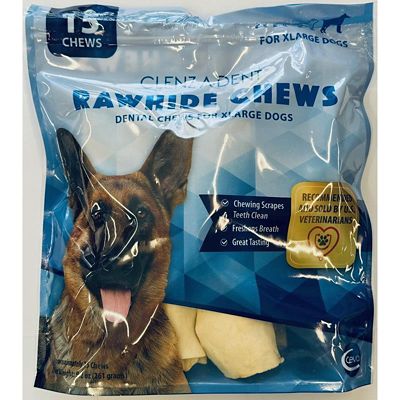
Dog dental chews give dogs something satisfying to work on while helping support a regular oral care routine. Their main benefit comes from contact between the chew and the teeth: as a dog bites into an appropriately sized chew, its surface can help rub away soft plaque. Certain dental chews also help reduce tartar buildup, though results depend on the formula, design, and chewing habits of the dog. Chewing stimulates saliva, which helps rinse away food particles, and some formulas contain ingredients intended to freshen breath. These benefits make dental treats a practical addition to everyday care, whether your dog spends the day tagging along for chores or keeping an eye on the front porch. Ridges, grooves, twists, and other textured shapes create different chewing surfaces, while the thickness and flexibility influence how a dog works through each piece. Some formulas feature plant-based starches or vegetable fibers; others contain animal proteins, gelatin, or a combination of ingredients that provide structure and flavor. An ingredient list matters just as much as the shape, especially for a dog with food sensitivities or a prescribed diet. Dental chews are not all interchangeable, and a dental claim on a package does not mean every chew has the same supporting evidence. Acceptance by the Veterinary Oral Health Council, often shown as a VOHC seal, identifies products that meet its standards for helping control plaque, tartar, or both. The claim associated with that seal is worth checking because plaque control and tartar control are different benefits. Plaque is a soft bacterial film, while tartar is hardened buildup that generally requires professional removal. Dental chews can help limit buildup, but they do not replace toothbrushing, veterinary exams, or professional dental treatment. A useful way to think about them is as an edible part of a broader routine, with the added appeal of a treat your dog looks forward to.
Size, chewing style, and life stage all affect which dog dental chews make sense for a particular dog. Package weight ranges and age recommendations provide a starting point, but a dog's habits deserve attention, too. A little terrier that steadily nibbles has different needs from a big farm dog that tries to gulp every treat in two bites. A chew should match the dog's size and the manufacturer's directions rather than simply being the largest or longest-lasting option. Pieces that are too small may be swallowed whole, while an overly large or firm chew can be difficult to manage. Texture should allow appropriate chewing without requiring a dog to bear down on an unyielding surface. Extremely hard chewing materials, including hard bones and antlers, can fracture teeth; longer chewing time is not automatically better for dental health. Flexible, chewy, and firmer edible textures each have a place, depending on the dog's mouth and the product's intended use. Puppies need options specifically labeled for their age because developing teeth and chewing habits call for different considerations than adult teeth. Older dogs may need a gentler texture or a change in routine, particularly if they have missing teeth, sensitive gums, or previous dental work. The choices described on
Dental Chews For Senior Dogs offer a closer look at those age-related considerations, but trouble chewing or mouth pain calls for a veterinarian's assessment before another treat. Whatever a dog's age, chewing should happen with someone nearby and enough space to settle comfortably. In a home with several dogs, separate spots can help keep one dog from rushing to finish before another comes close. A quiet place within sight works better than handing over a chew as the dog heads off alone. Large broken pieces or a remaining end that could be swallowed whole should be taken away. Coughing, gagging, or repeated attempts to swallow are reasons to stop the session and check on the dog.
Everyday fit also includes food preferences, calorie needs, and the practical details of keeping treats fresh. Chicken, beef, and other savory flavors can appeal to dogs with different tastes, but flavor wording alone does not tell the whole ingredient story. A dog that cannot tolerate a particular protein needs a review of the full label, including minor ingredients, rather than a choice based only on the name on the front. Grain-free formulas are not necessary for every dog, and dental treats should fit any diet restrictions established with a veterinarian. Calories from chews count toward the day's food intake, even when the treat has an oral care purpose. For most dogs, treats should make up no more than about 10 percent of daily calories unless a veterinarian recommends otherwise. Feeding directions also matter: a chew intended for once-daily feeding is different from a small reward offered several times throughout the day. For a dog watching the kitchen after supper, a dental chew can become a predictable part of the evening routine without turning into an open-ended snack. Fresh drinking water should remain close at hand, and changes in stool or stomach comfort after introducing a new formula deserve attention. Resealable packaging and a dry storage spot help protect the intended texture; package instructions take priority, and treats showing mold or an unexpected change in smell should be discarded. Oral care continues between chewing sessions with regular brushing using toothpaste made for dogs. Persistent bad breath, bleeding gums, drooling, dropping food, or chewing on only one side can signal a problem that a breath-freshening treat cannot address. With the right size, suitable ingredients, sensible portions, and supervision, dog dental chews can bring a welcome bit of chewing enjoyment to daily care while helping keep attention on the teeth and gums that matter through every stage of a dog's life.