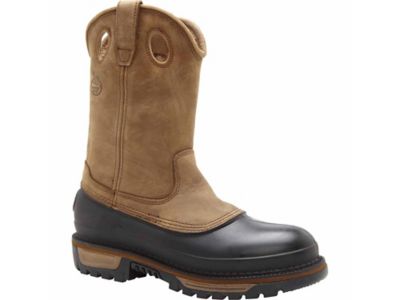
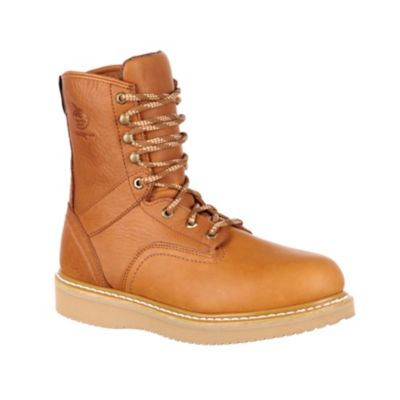
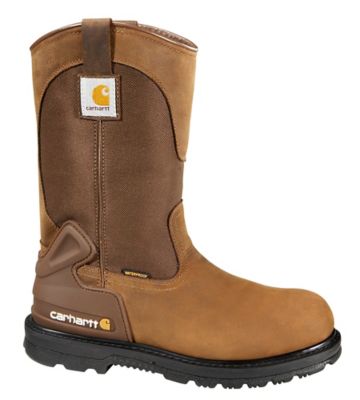
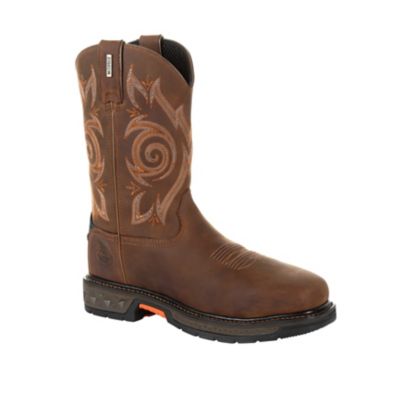
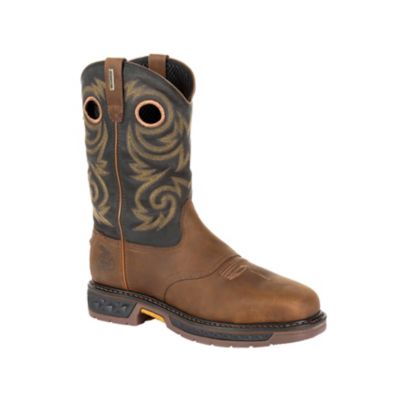
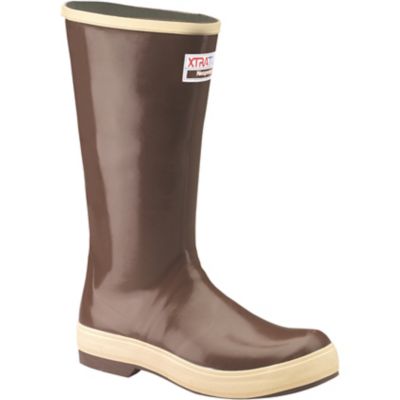
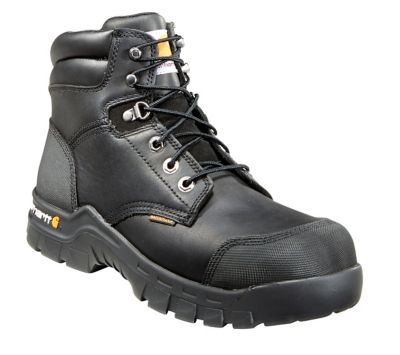
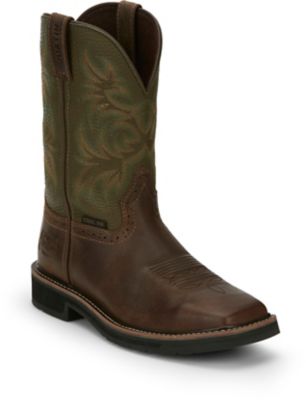
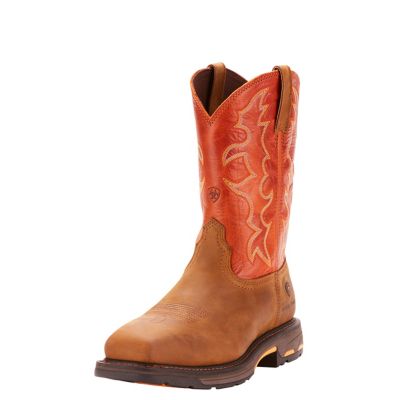
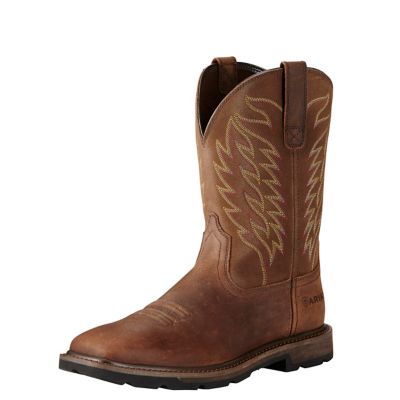
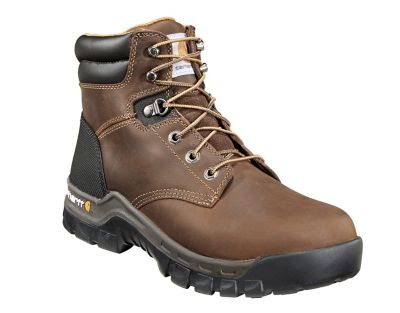
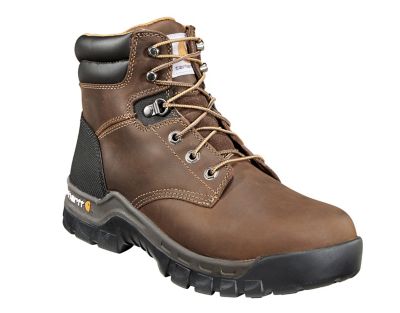
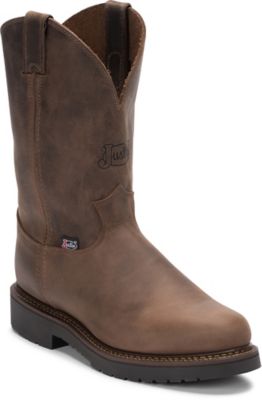
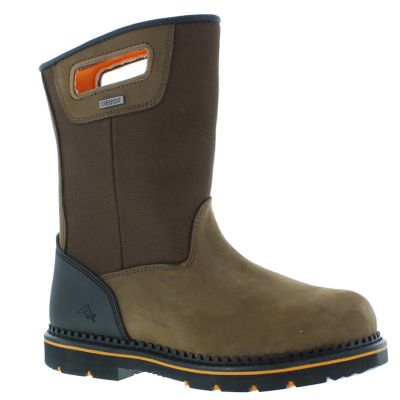
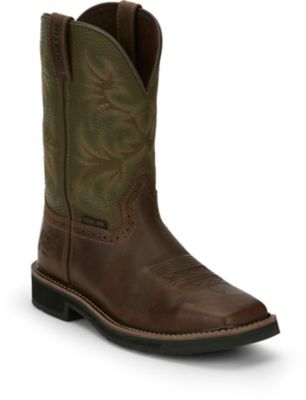
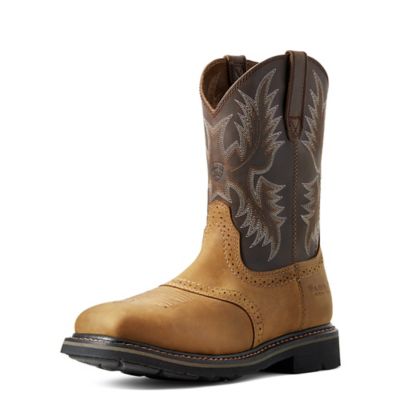
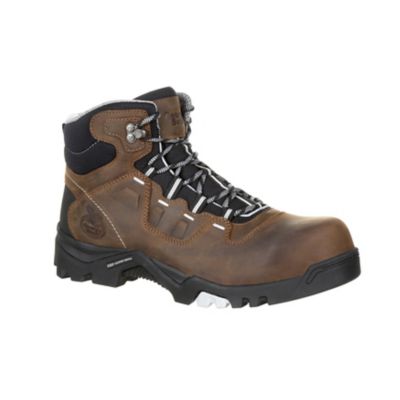
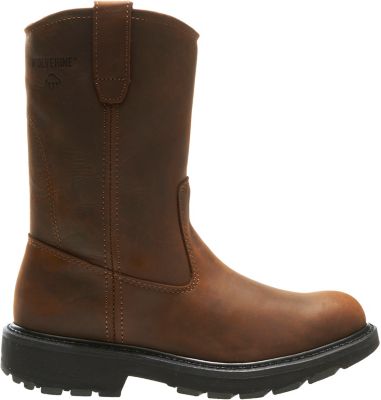
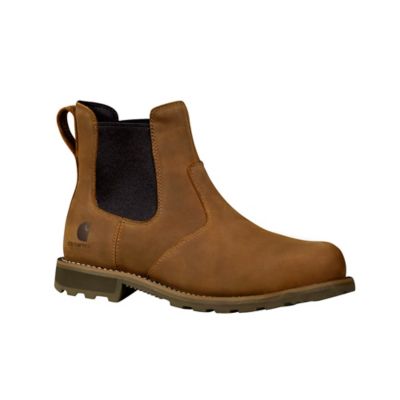
Chemical resistant steel toe boots are built for jobs where ordinary work boots may not hold up to wet conditions, corrosive splashes, oils, fertilizers, cleaning solutions, and other harsh substances. They are commonly used on farms, ranches, dairies, food-processing floors, chemical handling areas, utility sites, workshops, and industrial job sites where liquids can end up underfoot. A molded rubber, PVC, or neoprene construction creates a smooth, sealed barrier that is easier to rinse clean than leather and less likely to absorb spills. Many styles reach the knee or close to it, helping keep splashes, spray, mud, and standing water from finding their way inside. The steel toe adds a layer of protection against dropped tools, feed bags, pipe, equipment parts, and other heavy objects, while a sturdy sole helps provide traction on slick concrete, packed dirt, gravel, and muddy ground. These boots can be especially useful during wet stretches of the year, when chores take longer and every trip across the yard brings along another layer of mud. They also make a practical gift for a farmer, livestock handler, mechanic, groundskeeper, sanitation worker, or anyone whose work regularly takes them through wet or messy conditions. Before choosing a pair, consider the actual substances involved, how often they are handled, and whether the work calls for occasional splash protection or dependable coverage throughout a full shift. Chemical resistance is not the same for every boot, and no single material protects against every chemical. Always check the manufacturer’s chemical-resistance information and compare it with the safety data sheet for the substances being used. Concentration, temperature, exposure time, and repeated contact can all affect how a boot performs. If the job involves aggressive acids, caustics, solvents, pesticides, fuels, or concentrated industrial cleaners, the right footwear should be selected as part of a complete personal protective equipment plan rather than by appearance alone.
Fit and construction matter just as much as the outer material. A knee-high shaft, often around 15 to 16 inches, can help reduce the chance of liquid entering from above when working around troughs, wash-down areas, tanks, or deep mud. A wide opening may be easier to pull on over work pants, while an adjustable gusset, buckle, or drawstring can help close the gap around the calf. Look for enough room to move your toes without letting your heel slide, since a loose heel can cause blisters and make walking on slick ground less steady. Try boots on with the socks normally worn for work, especially thicker moisture-wicking or insulated socks during cooler months. A removable footbed can make cleanup and drying simpler, and a cushioned insole may be welcome when the day includes hours on concrete. Traction deserves close attention as well. Deep, well-spaced tread can help shed mud and manure, while a flatter, oil-resistant outsole may be more suitable for smooth shop or processing floors. Steel toe boots can feel different from standard rubber chore boots, so leave enough space at the front and check that the toe cap does not press against the top or sides of your foot. If electrical hazards are part of the work area, look for an appropriate electrical hazard rating and follow the workplace’s footwear requirements. ASTM F2413 markings are commonly used for protective toe footwear, but the exact label and rating still need to match the job. A steel toe alone does not make a boot chemical-proof, slip-proof, or safe for every electrical application. Likewise, waterproof construction helps keep outside moisture out, but it does not automatically mean the boot has been tested for chemical permeation. For general wet chores, you may also want to compare these styles with
Waterproof Steel Toe Boots to find the level of protection that fits the work.
After each use, give chemical resistant steel toe boots a little attention so they are ready for the next chore. If the material has contacted a substance, follow the workplace cleanup procedure and the chemical label rather than simply carrying the boots into the mudroom or truck. Many molded boots can be rinsed with clean water, but some exposures call for a specific neutralizing or decontamination process, and contaminated footwear may need to be removed from service. Never mix cleaning chemicals in an attempt to make a stronger cleaner. Let boots dry in a well-ventilated area away from direct heat, flames, heaters, and hot truck beds, since excessive heat can damage rubber, PVC, adhesives, and molded components. Do not store them folded, crushed, or sitting in a puddle. Check the shaft, sole, seams, toe area, and heel for cracking, swelling, soft spots, cuts, separation, or changes in texture. A boot that looks fine from across the barn may have a small split near the flex point where water and chemicals can get through. Replace footwear when the protective material, tread, or toe area is damaged, or whenever the boot has been exposed beyond its rated conditions. Keep in mind that chemical resistant boots are only one part of safe work habits; gloves, eye protection, protective clothing, ventilation, and proper handling procedures may also be needed. Choose a pair that suits the height, fit, tread, ratings, and substances found in your workday, then keep the boots clean and stored properly. That combination can make long days around livestock, equipment, wash bays, fields, and shop floors more comfortable while helping your feet stay protected from the hazards underfoot.