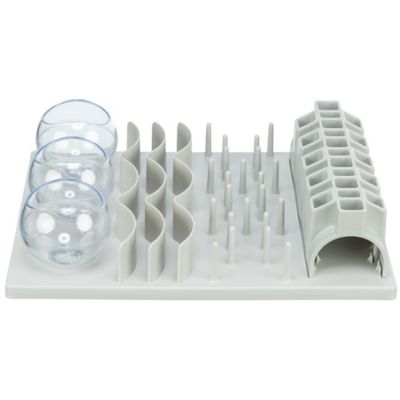
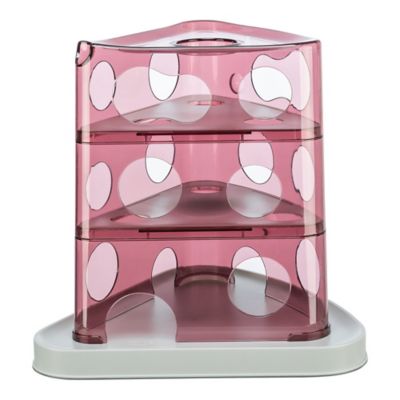
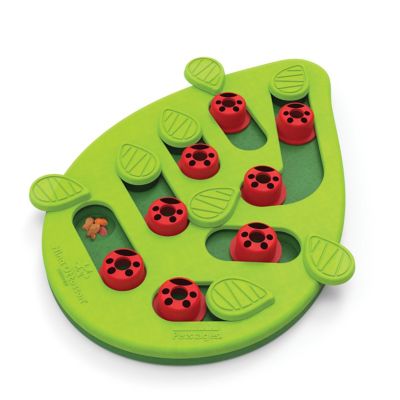
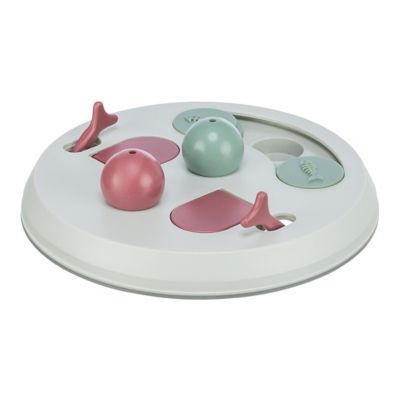
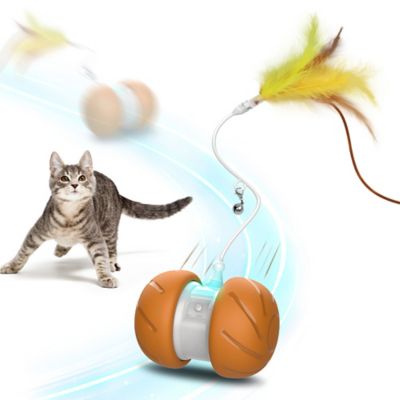
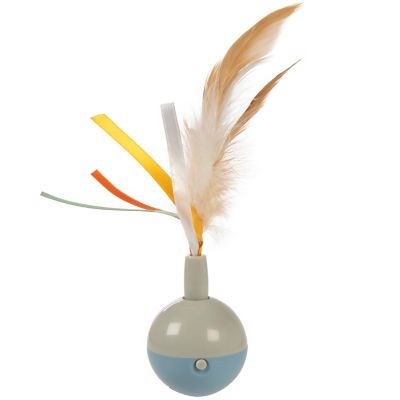
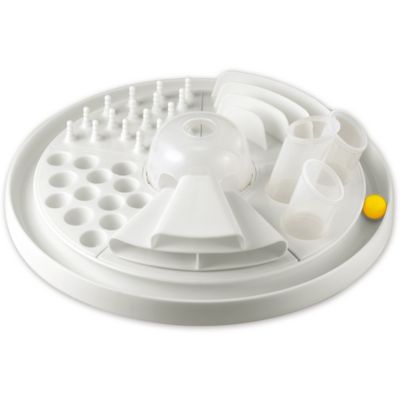
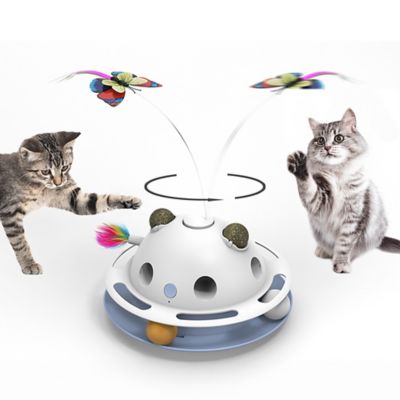
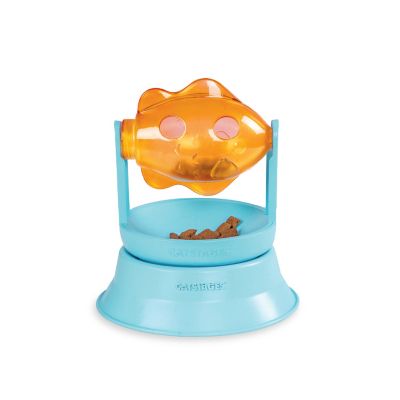
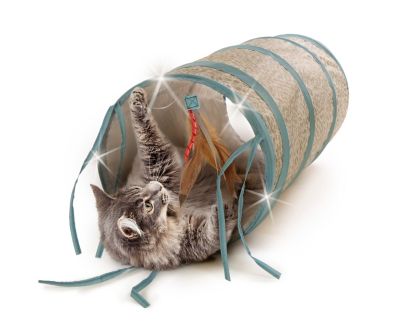
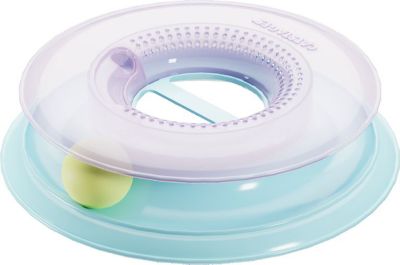
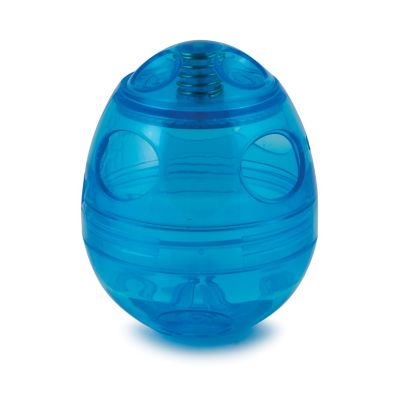
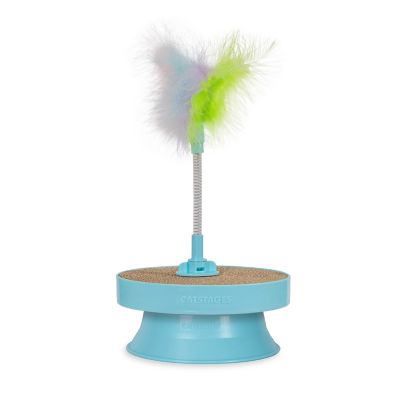
Cat toys for intelligent cats combine problem-solving, exploration and active play, giving curious cats a chance to work their paws and minds. Puzzle feeders, treat-dispensing toys and interactive play designs encourage natural behaviors such as stalking, searching, batting and figuring out how to reach a reward. For the cat that opens cabinet doors or fishes stray objects out from under the couch, a toy with sliding covers, hidden compartments or movable pieces can offer a more satisfying challenge than something that simply sits on the floor. Different designs call for different skills: a rolling treat dispenser rewards a well-placed nudge, while a stationary puzzle may require a cat to lift, slide or reach around an obstacle. Mental stimulation comes from that connection between an action and a result, not just from how many moving parts a toy has. A straightforward challenge can hold a cat’s attention when the reward is appealing and the task makes sense. Adjustable openings and multiple difficulty settings give a familiar activity room to grow as a cat learns its patterns. Some cats enjoy working for a portion of their regular kibble, while others respond better to a toy they can stalk and catch. Food-based play fits best when the portions come out of the cat’s daily allowance rather than adding a steady stream of extra snacks. For cats with special diets or feeding concerns, a veterinarian can help determine whether food puzzles fit their routine. Nonfood puzzles and interactive toys offer another outlet when treats are not the right match. These toys can complement climbing, scratching, resting and time spent with people; they do not need to turn every waking moment into a test. Short, successful play sessions often suit a cat better than a complicated task left out all day. The best match gives a clever cat something worth investigating without making every reward hard to reach.
Materials, size and construction make a real difference in how a toy handles everyday paws, teeth and tumbles across the kitchen floor. Firm plastic and rubber components can provide surfaces for batting and nudging, while fabric textures may appeal to cats that like to grip, kick or carry their catch. Wood and composite puzzle designs bring their own care requirements, especially around food, moisture and seams. Smooth edges, secure attachments and a stable base are practical features for enthusiastic players that put their whole body into the job. A puzzle that slides away with every paw swipe may be harder to enjoy than one that stays put, particularly for a cat learning a new task. Openings should suit the cat’s paws and the intended reward without creating a tight spot where a paw or jaw could become trapped. Overall size matters, too: loose parts and small balls must not be small enough to swallow. Kittens, adult cats and older cats can all enjoy problem-solving play, but the same height, resistance or movement pattern will not suit every animal. A low, easy-to-reach puzzle may be a better fit for a cat with limited mobility, while a confident, active cat may enjoy moving between several reward locations. Resistance to scratching and chewing matters most at edges, seams and attachment points, where wear tends to show first. No toy is chew-proof, and damaged pieces belong out of reach. Care directions are worth a close look, especially for treat toys that collect crumbs and saliva. Removable food compartments and accessible corners can make cleanup simpler, but washing methods depend on the material and any internal parts. Fabric covers may need different care from hard surfaces, and electronic components need protection from water. A toy that is practical to clean and inspect is easier to keep in the regular play rotation.
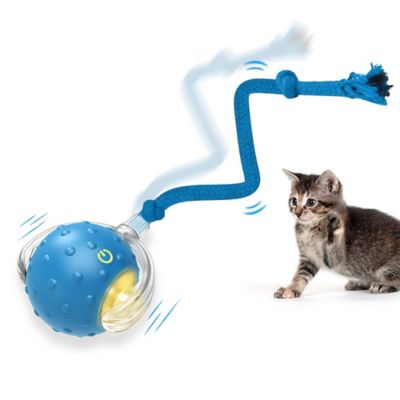
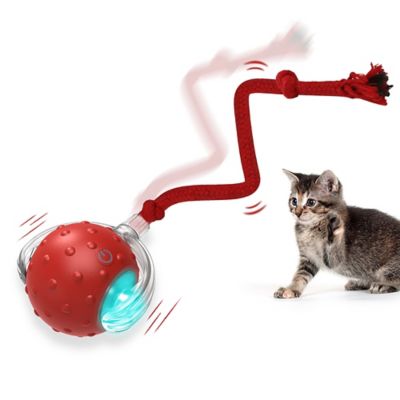
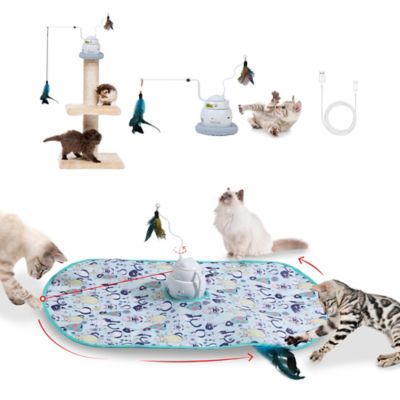
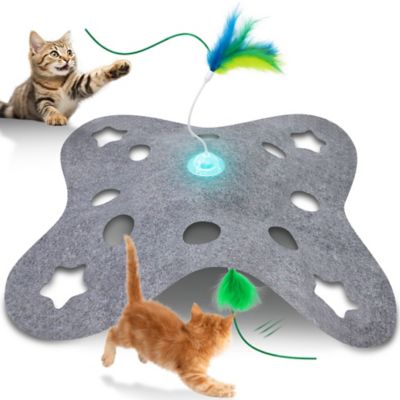
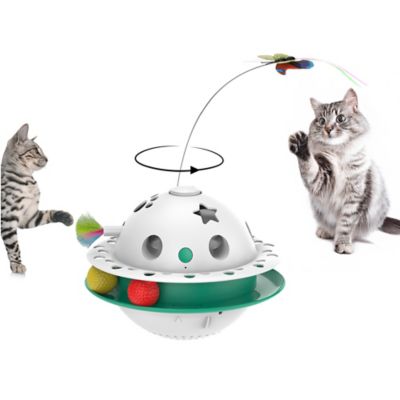
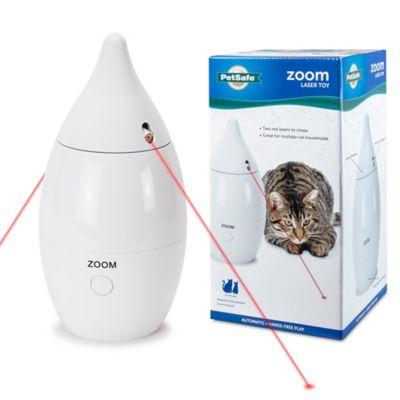
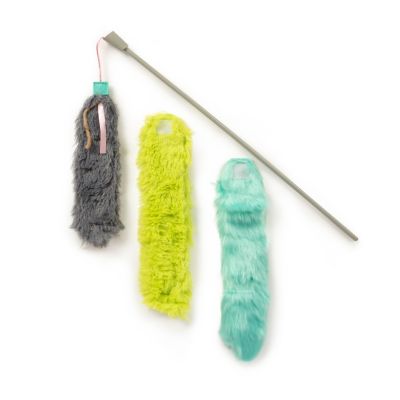
Interactive toys also differ in how much a person needs to take part. Wand-style play lets a cat follow movements that pause, hide and change direction, with a person controlling the pace. Toys with motion sensors or powered movement can add variety by responding to a paw tap or traveling in less predictable ways. Those features can interest a watchful cat, though motor noise, speed and sudden motion may be too much for a cautious one. Secure battery compartments, clear operating directions and the recommended level of supervision matter more than a long list of features. String, ribbon, feathers and other dangling attachments call for hands-on supervision and storage out of reach afterward. Even a toy intended for independent play deserves an inspection before it goes down on the floor. In a busy household, a small rotation of different play styles can keep familiar toys interesting without scattering the whole collection through the living room. A food puzzle near a quiet resting area, a chase toy on an open stretch of floor and a supervised hunting game offer different experiences. Placement matters in homes with several cats, where separate play spaces can give a timid cat room to explore without a bolder companion taking over. For a broader mix of play styles,
Cat Toys for Bored Cats is another place to explore enrichment options. Thoughtful toy choices also make sense as gifts for cat owners, especially when the giver knows whether the cat favors food rewards, soft textures or a good chase. A cat that settles beside the family after chores may enjoy a puzzle within easy reach, while an energetic house cat may prefer something that gets paws moving across the room. Matching the activity to the individual cat keeps the focus where it belongs: on satisfying play, manageable challenges and a chance to put that busy little brain to work.