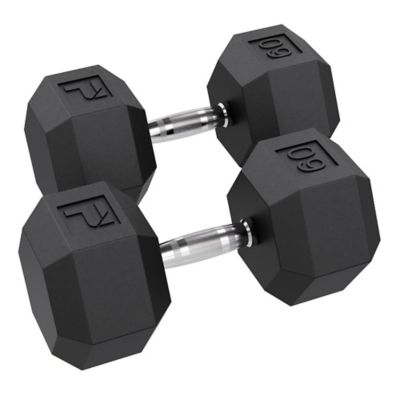
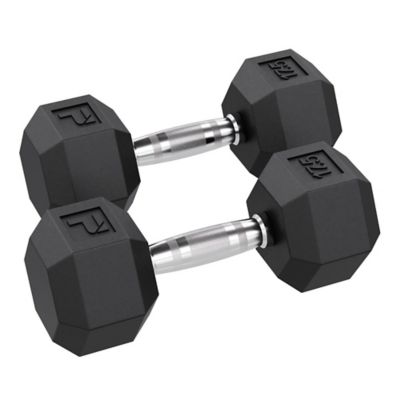
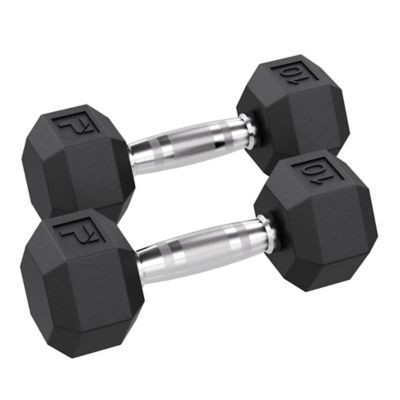
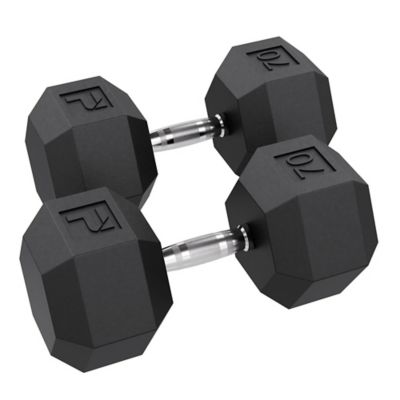
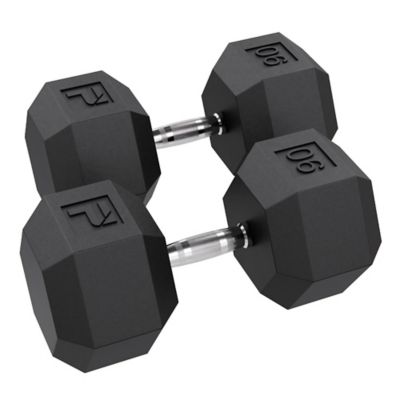
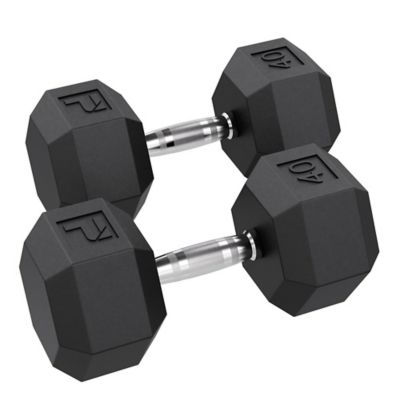
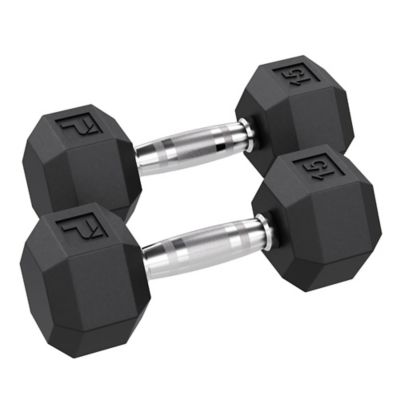
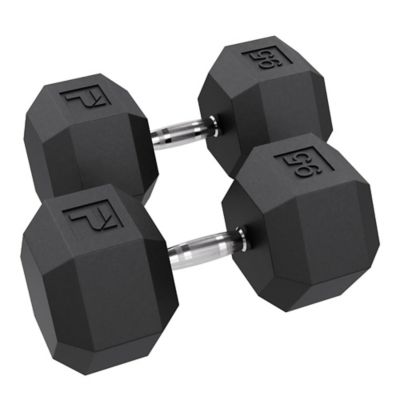
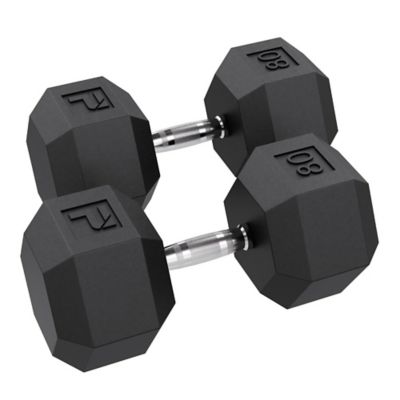
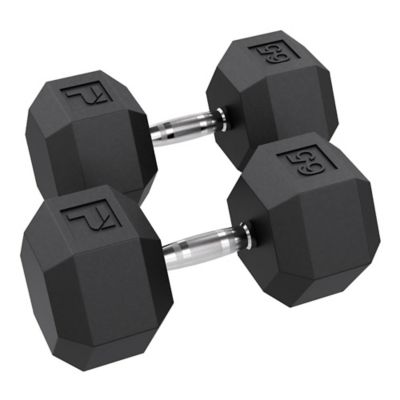
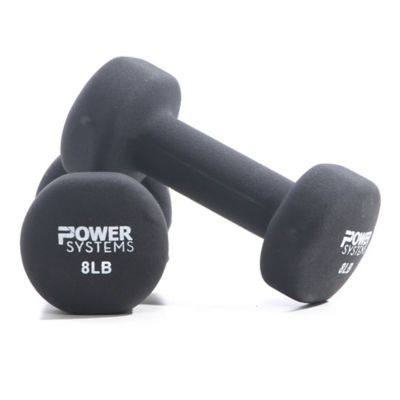
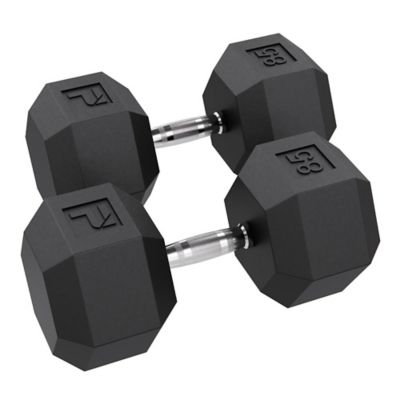
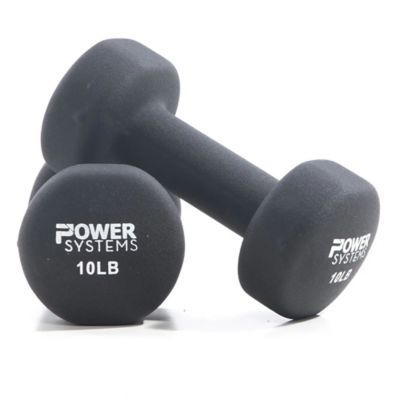
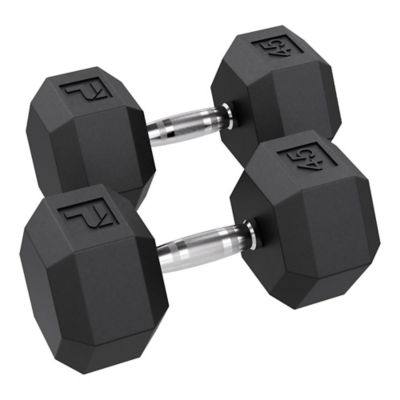
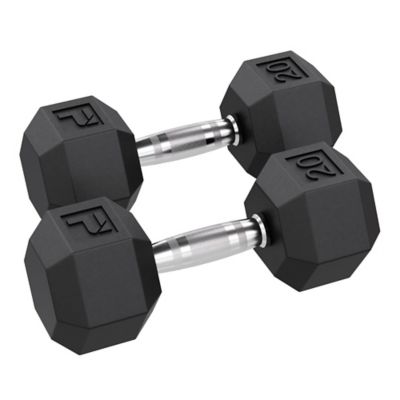
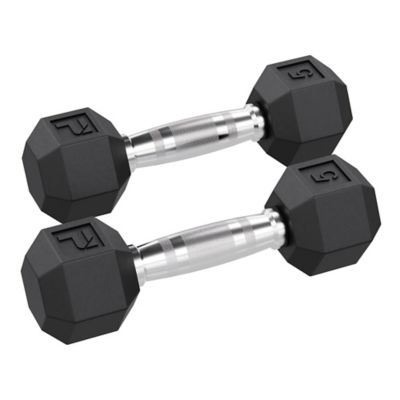
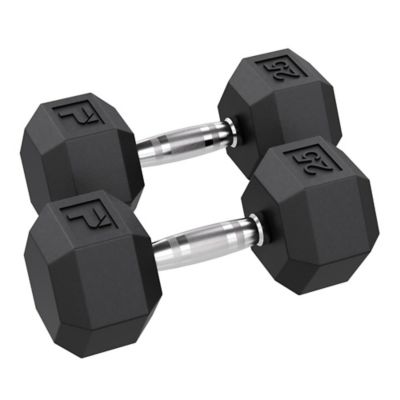
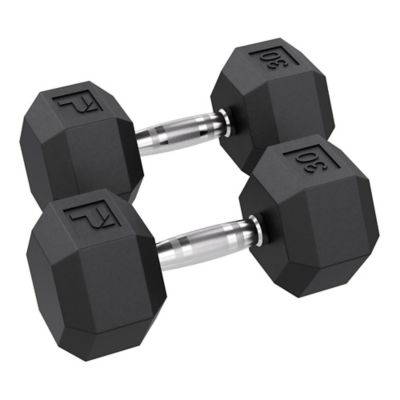
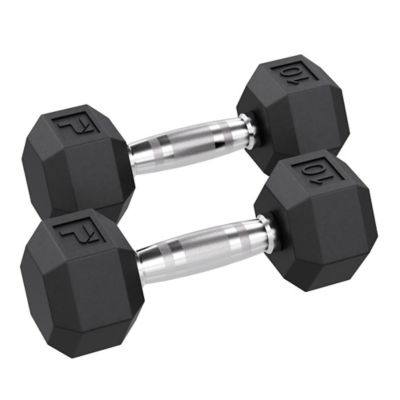
Cast iron hex dumbbells are fixed-weight strength-training tools with six-sided heads that help keep them from rolling when set down on a flat, level surface. Their straightforward design makes them a practical fit for a home workout corner, a garage gym or a dedicated training room. Each dumbbell carries a set weight, so there are no plates to change or collars to tighten between exercises. The heads are made from cast iron, while the handle construction can vary: some designs are cast in one piece, and others combine iron heads with a steel handle. Many have a painted or enamel finish in black or gray, although the finish and handle texture depend on the design. These thin coatings leave the heads relatively compact compared with thick rubber-covered weights of a similar weight, which can help when rack space is tight. A textured or knurled grip gives the hand something to hold onto, but the depth of that texture matters. A sharply patterned handle may feel different from a smoother cast handle, especially during longer sets. Handle thickness and the space between the heads also affect comfort, particularly for someone with smaller hands or broader palms. Cast iron hex dumbbells suit a wide range of strength exercises, including curls, rows, presses, squats and controlled carries. They can support a short session before chores or a longer workout focused on building strength for everyday lifting and carrying. Beginners, experienced lifters and people putting together a simple home gym can all find a place for fixed-weight dumbbells, provided the weight matches their abilities and the exercise. They can also make a thoughtful gift for someone who already enjoys strength training, especially when the weight, grip and storage needs are known ahead of time. For shared workout spaces, the intended setting matters as much as the shape: equipment rated for home training may not be suitable for a public gym or another high-traffic facility.
Choosing cast iron hex dumbbells starts with how they will fit into a workout, not just the number stamped on the head. A weight that feels manageable for a squat may be too heavy for a shoulder raise, while a lighter weight can make sense for practicing controlled movement. Having more than one weight gives a household room for different exercises and different strength levels without forcing everyone to work with the same load. Smaller increases between weights can be helpful when a larger jump makes good form harder to maintain. Weight markings should be easy to read, and the listed unit deserves a look so pounds and kilograms do not get mixed up. The listing should also make clear whether it describes a single dumbbell or a pair; a matching pair is convenient for exercises that call for a weight in each hand. Beyond weight, consider how the handle sits across the palm and whether there is enough room to close the fingers without rubbing against the heads. A comfortable grip helps keep attention on the movement rather than on shifting the weight around in the hand. The workout area needs room, too. An overhead press calls for clear space above, while lunges and carries need an unobstructed path away from tools, cords, pets and other household traffic. Hex heads help a resting dumbbell stay put, but they are not a substitute for a level floor or careful placement. Cast iron has little cushioning, and a dropped weight can damage wood, tile or concrete and may chip or crack the iron itself. Heavy rubber gym flooring or a suitable exercise mat can help protect the training area, though neither makes dropping weights harmless. Controlled lowering is the better habit, whether the dumbbells are going onto a rack or back to the floor between sets. For someone training beside a workbench or in a spare room, a defined lifting area keeps the equipment separate from the rest of the space and makes each session easier to get started.
Care and storage play a big part in how cast iron hex dumbbells hold up over time. Painted and enamel surfaces can pick up scratches from contact with other weights, and exposed iron can develop rust when moisture stays on it. A quick wipe after training helps remove sweat and keeps the handle from becoming slick. When more cleaning is needed, follow the maker’s care directions, wipe with a lightly dampened cloth as appropriate and dry the metal thoroughly rather than leaving it wet. Harsh cleaners, soaking and abrasive scrubbing can damage certain finishes, so the coating deserves the same attention as the iron underneath. Grip surfaces should stay free of oily residue that could make a dumbbell slip. It also helps to look over the equipment regularly for cracked heads, loose connections, rough edges or other changes that could affect safe handling. A damaged dumbbell should be taken out of the workout area rather than worked around. For storage, an A-frame rack can suit a smaller collection, while a horizontal shelf rack may provide more room for several weights. The rack’s weight rating, shelf dimensions and spacing should match the combined load and the size of the heads; a hex shape alone does not mean every dumbbell will fit every rack. Keeping heavier weights low can make them easier to retrieve without an awkward lift, and clear markings help everyone return each weight to its place. A stable rack also keeps metal heads away from walkways where they can catch a boot or toe. If floor storage is necessary, a designated spot on a protective surface is better than scattering weights around the room. Cast iron serves other practical jobs around the house as well, including
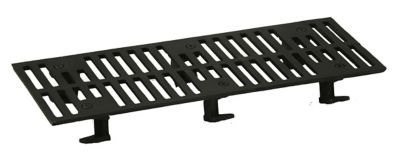
Cast Iron Wood Stove Grates, though each type of equipment needs care suited to its purpose. For dumbbells, the priorities stay simple: a weight that suits the movement, a grip that fits the hand, controlled handling and a dry, orderly place to rest between workouts.