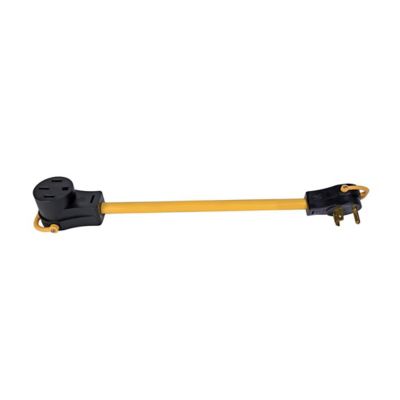
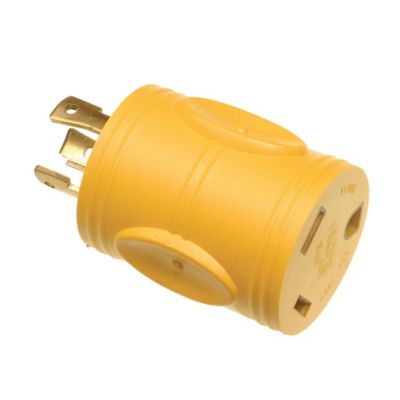
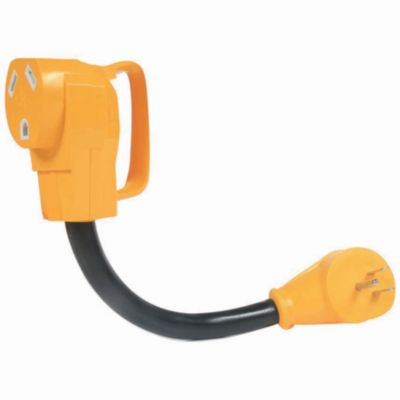
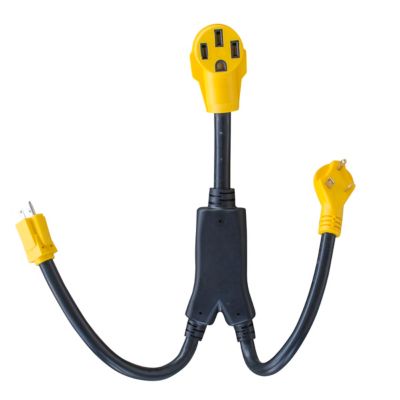
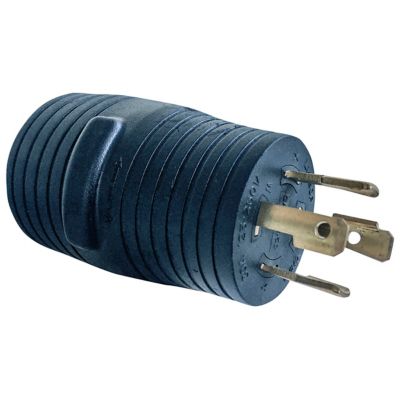
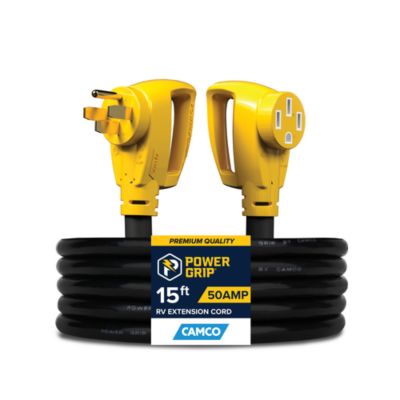
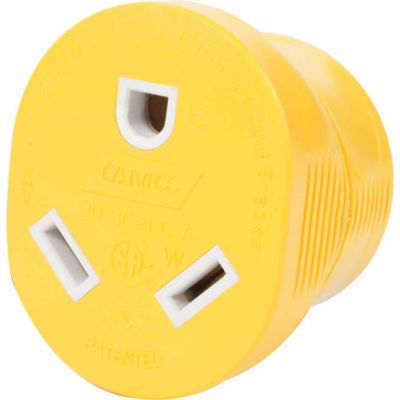
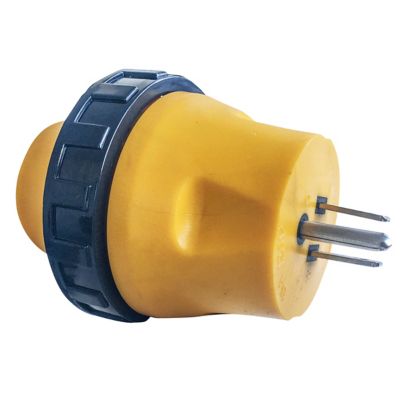
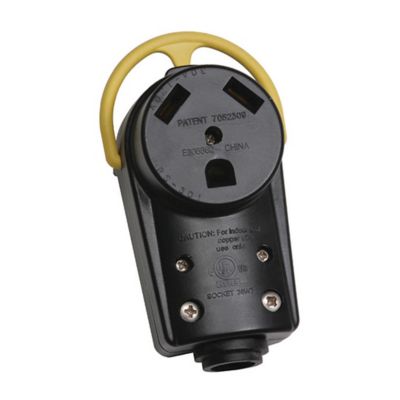
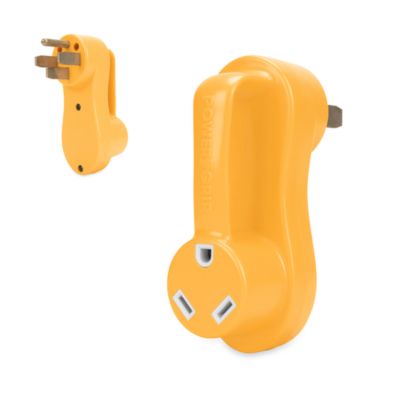
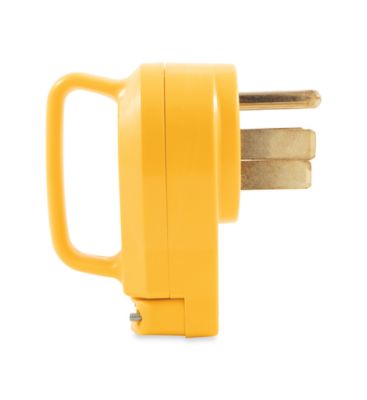
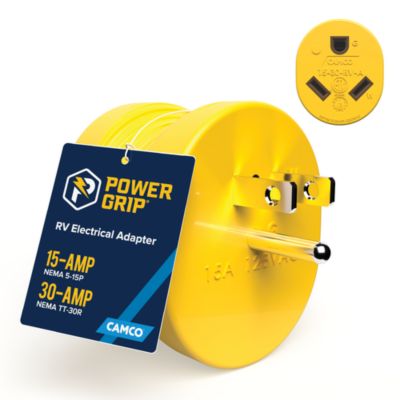
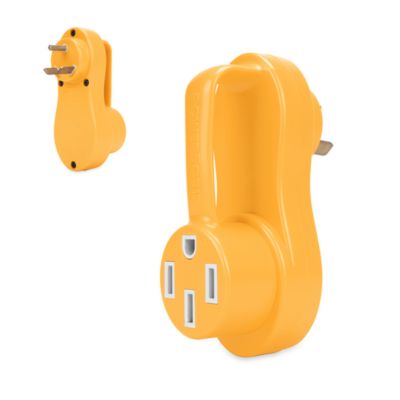
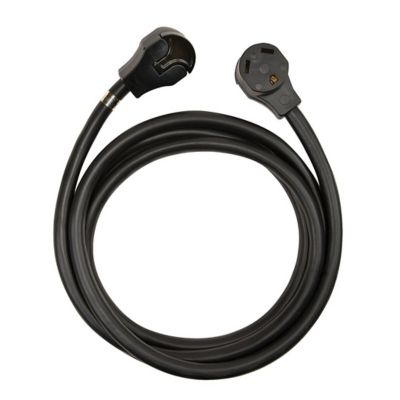
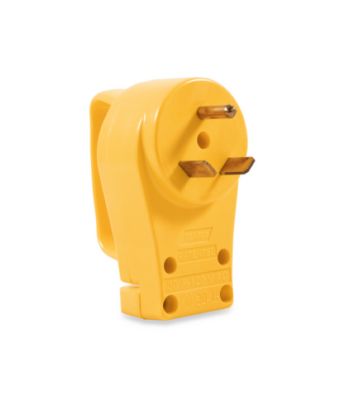
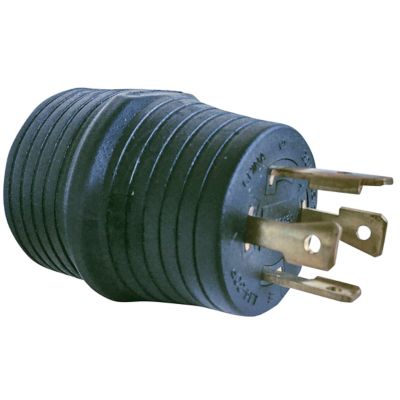
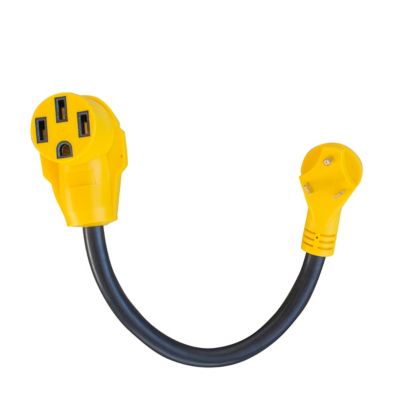
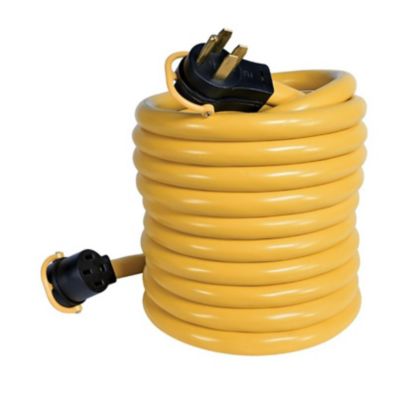
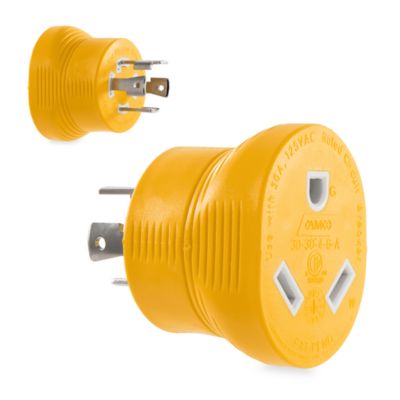
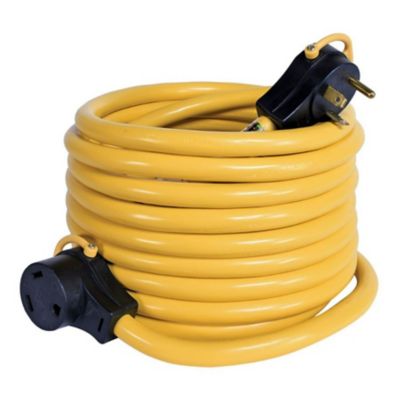
Camper power cord adapters help bridge the gap between a camper’s shore power cord and the electrical connection at a campsite, beside a barn or along the driveway at home. That connection matters whether the trip involves a small travel trailer headed for a fishing weekend or a larger fifth wheel parked near the fairgrounds. Campground pedestals do not all have the same receptacles, and a hookup that fits one rig may not fit the next. An adapter with the right plug and receptacle configuration gives the power cord a compatible connection without changing the camper’s wiring. Common RV connections include 30-amp service and 50-amp service, along with adapters intended for certain household outlets. A 30-amp RV hookup supplies 120 volts, while standard 50-amp RV service supplies two 120-volt legs through a 120/240-volt connection. Those differences make electrical ratings and prong layouts more important than appearance alone. A plug that looks close is not necessarily the right match, especially around older garage outlets or connections intended for other equipment. For shoppers comparing camper power cord adapters, the useful details are the source-side plug, the camper-side receptacle, the voltage rating and the supported amperage. The direction of the connection matters, too: an adapter for a 30-amp camper at a 50-amp pedestal is not interchangeable with one for a 50-amp camper at a 30-amp pedestal. The adapter also does not create additional electrical capacity. A larger camper connected to a lower-amperage supply still has to operate within that supply’s limits, which can mean keeping some appliances off while others run. That is especially relevant when an air conditioner, microwave or electric water heater draws power at the same time. At home, a properly matched adapter may support limited tasks such as battery charging, provided the circuit and camper requirements allow it. It should not turn an ordinary household outlet into the equivalent of a full campsite hookup. Having the right connection sorted out can make the difference between settling into camp and spending the evening looking for a different place to plug in.
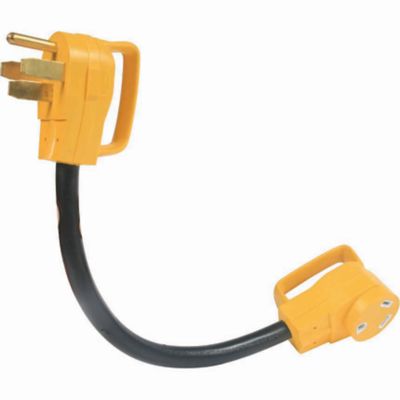
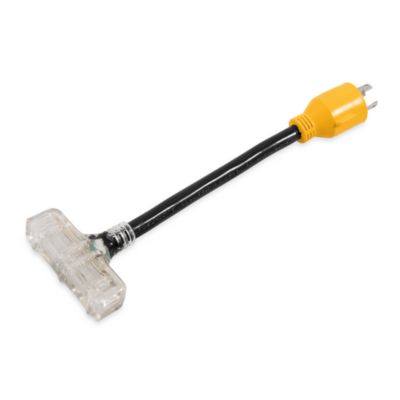
Construction and shape play a big part in how a camper power cord adapter handles everyday travel. Compact, one-piece adapters take up little room in a storage compartment, while short-cord styles, often called dogbone adapters, put a flexible section between the plug and receptacle. That extra movement can help a heavy shore cord hang more naturally instead of pulling directly against a pedestal outlet. The best fit depends on the space around the hookup, the position of the outlet cover and how the camper’s cord approaches the connection. A crowded power box mounted low on a post presents a different fit than an open connection near a driveway parking spot. Grip handles or molded finger holds can make larger plugs easier to manage, especially when hands are cold or the cord is stiff after a chilly night. Inside the assembly, conductor size and properly matched electrical components support the stated rating; outside, molded housings, insulating jackets and strain relief help protect the areas that face bending and regular handling. Copper conductors are common, and housing materials may include thermoplastic or rubber compounds, depending on the design. Outdoor exposure ratings deserve attention because a campsite connection can face damp grass, road dust, sunlight and changing temperatures. Weather resistance does not mean a connection can sit in standing water or remain exposed without the protection its manufacturer requires. A snug electrical fit matters just as much as the outer shell: loose contacts can generate heat, and a worn campground receptacle is not something an adapter can fix. For trips that involve gravel lots, horse trailers with living quarters or repeated stops along a backroad route, strong strain relief and a shape that keeps weight off the outlet are practical considerations. Cord length also affects where the connection rests. A short adapter provides room to position the ends, but it is not a substitute for a properly rated extension cord when the pedestal is farther away. Fewer well-matched connections generally mean less clutter around the hookup and fewer places to check before heading inside for supper.
Camper power cord adapters have a place in the travel kit for occasional campers, folks who spend weeks on the road and owners who keep a trailer ready for weekends away. They can also be a practical gift for someone with a camper, as long as the rig’s connection and the expected power sources are known beforehand. The most useful choice is not necessarily the one with the most connection options; it is the one that matches the equipment and the places that camper goes. A familiar campground may offer the same hookup every visit, while a route through several parks can bring a mix of pedestal configurations. Generator connections add another consideration for camping away from shore power. Anyone comparing a
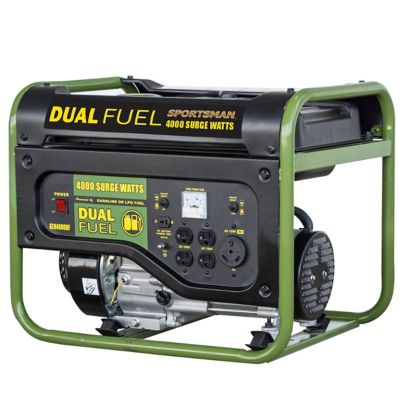
Generator For RV 30 Amp alongside an adapter needs to account for the generator’s receptacle type, output rating and the camper’s electrical requirements rather than assuming every 30-amp outlet has the same layout. An adapter alone does not provide surge protection, voltage monitoring or protection against incorrect pedestal wiring unless those functions are specifically part of its design. Equipment intended for those jobs serves a separate purpose. Care between trips helps keep the connection ready for the next stop. With power disconnected, the housing, cord jacket and blades should be checked for cracks, cuts, corrosion, discoloration or signs of overheating. A burnt smell, softened plastic or a loose connection calls for taking the adapter out of service, not covering the damage with tape. Keeping the ends clean and dry, following the manufacturer’s cleaning directions and storing the adapter without sharp bends helps limit wear during travel. Pulling by the plug body rather than the cord protects the strain relief and internal connections. During the cooler months, a dry storage spot also keeps the adapter out of wet leaves, mud and melting frost. From a quick battery charge before departure to a settled campsite hookup after a long drive, a correctly matched, well-cared-for adapter supports the ordinary electrical needs that help a camper feel ready for the road.