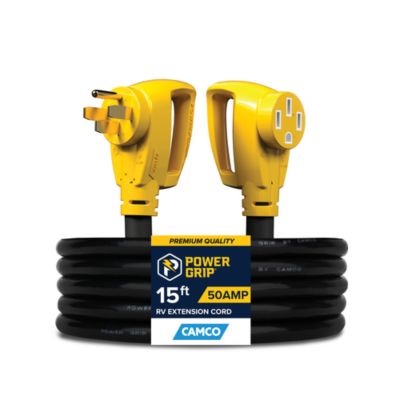
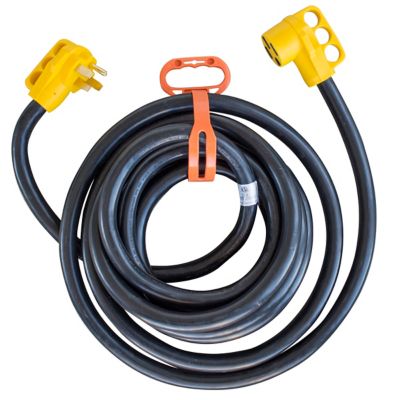
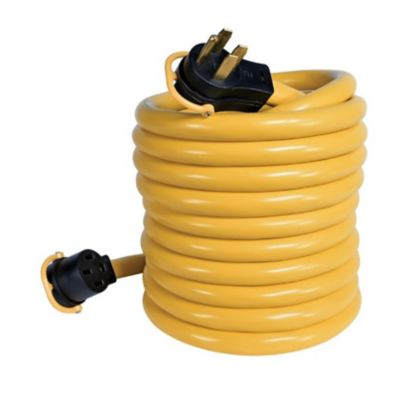
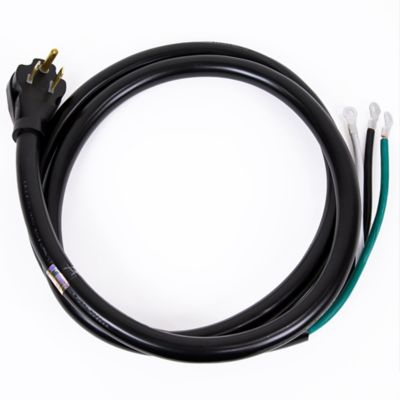
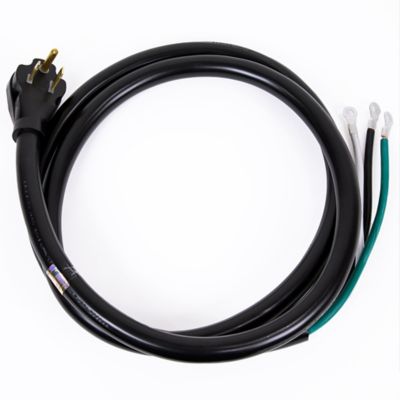
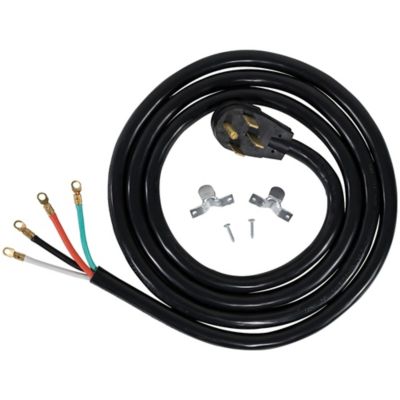
A 50 amp RV power cord carries shore power from an electrical pedestal to a compatible motorhome, fifth wheel, travel trailer, or horse trailer with living quarters. A standard 50 amp RV connection has four conductors: two hot wires, one neutral, and one ground. Each hot leg supplies 120 volts, giving the connection up to 12,000 watts of total capacity with a properly wired 120/240-volt supply. That capacity supports rigs with larger electrical needs, such as multiple air conditioners, a microwave, an electric water heater, and other onboard appliances. It does not make every outlet inside the camper a 50 amp outlet; individual circuits still have their own limits. For shoppers comparing 50 amp RV power cords, the cord’s amperage rating, conductor size, length, and connector configuration all matter. A common construction marking is 6/3 + 8/1 AWG, meaning three 6-gauge conductors for the hot wires and neutral, plus one 8-gauge grounding conductor. The complete cord assembly still needs to carry the proper electrical rating for its intended application. Copper conductors, an abrasion-resistant outer jacket, and reinforced connections suit the handling that comes with campground hookups and repeated packing. Outdoor-rated jackets help protect the wiring from contact with gravel, pavement, and everyday campsite surfaces, though no jacket makes a cord safe to drive over or pinch beneath a leveling jack. Common cord lengths include 15, 25, 30, and 50 feet. A shorter run can keep a close hookup tidy, while a longer cord can reach a pedestal located toward the back of a campsite. Extra footage also means more weight to carry, more space in the storage bay, and greater potential for voltage drop under load. The practical fit is enough reach to connect without tension, with room for sensible routing around the rig rather than a long stretch of unnecessary cable across the campsite.
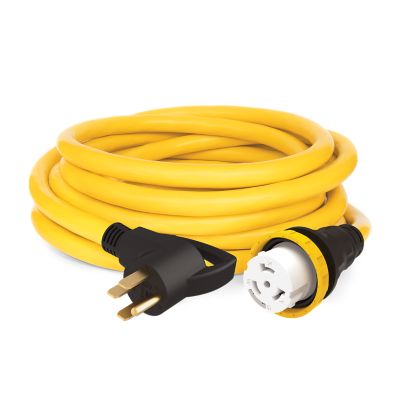
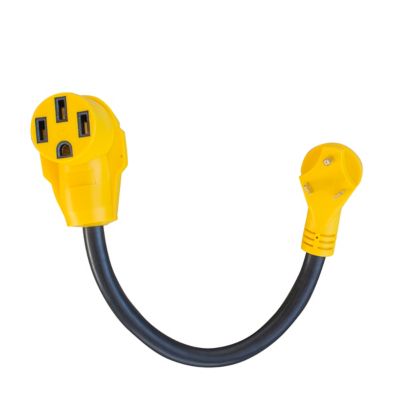
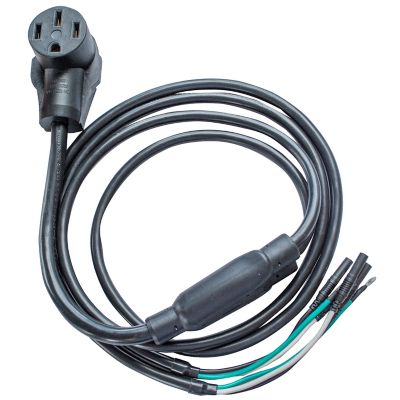
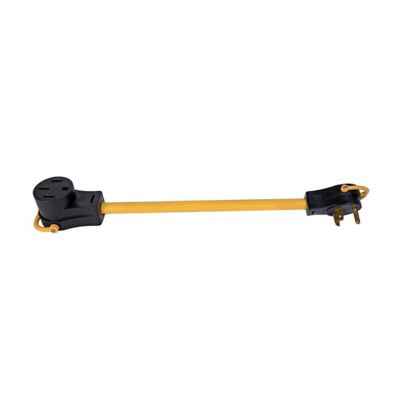
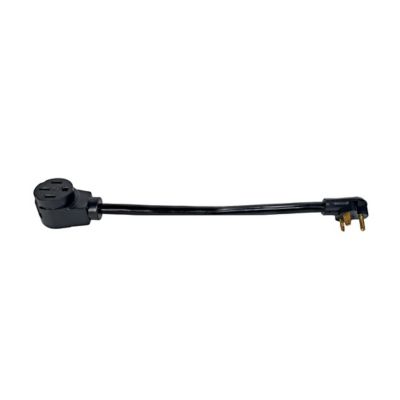
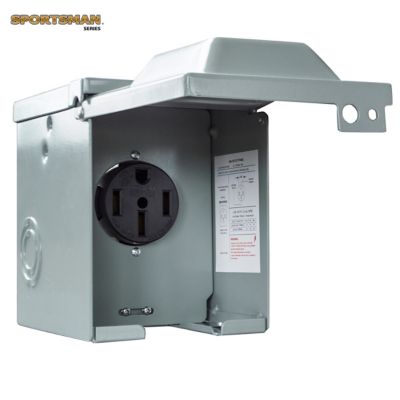
The connections at both ends determine whether a cord fits the job. At a typical 50 amp campground pedestal, the cord has a four-prong NEMA 14-50P male plug. The other end depends on the camper and whether the cable is a replacement shore power cord or an extension. A detachable cord for an RV with a compatible locking inlet may have an SS2-50R female connector, which engages the inlet with a twist-lock connection. A matching threaded collar helps secure the connection and supports the seal when assembled according to the manufacturer’s directions. A 50 amp extension cord commonly has a NEMA 14-50R female receptacle to accept the male plug on an existing shore power cord. Those two female connector styles serve different purposes and are not interchangeable simply because both carry a 50 amp rating. Matching the inlet designation and plug configuration is more useful than judging fit from a photo or the shape of the connector housing alone. For a camper with a permanently attached cord, replacement requirements may also involve the RV’s internal connection, making the manufacturer’s specifications especially important. Everyday handling features deserve a look, too. Molded grip handles and finger openings provide a firmer hold when connecting or disconnecting, while an angled connector can reduce how far the cable projects from the rig. Proper strain relief helps keep normal cable movement from bearing directly on electrical connections. An indicator light can show that power is present at its location, but it does not establish that pedestal wiring is correct or that voltage is suitable for the RV. When the campsite outlet and camper connection differ,
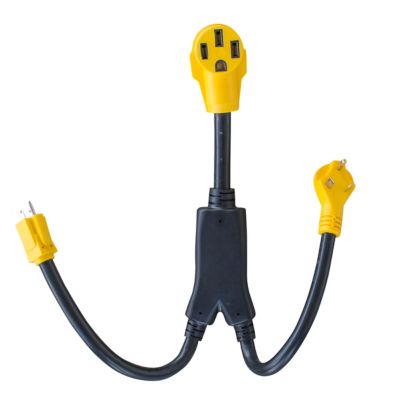
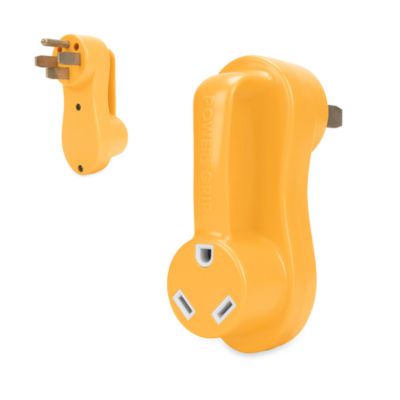
Camper Power Cord Adapters can help match compatible configurations. An adapter does not increase the capacity of the source circuit, however. A 50 amp camper connected to a 30 amp supply still has to stay within the limits of that supply, with fewer high-draw appliances running together.
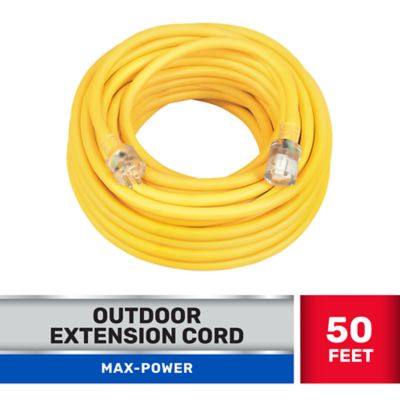
For weekend campers, full-time RV travelers, and folks hauling living quarters to fairgrounds or horse events, a manageable cord makes a difference every time the rig gets parked. A substantial 50 amp cable takes more effort to lift and coil than a household extension cord, so flexibility, connector grip, and storage space all play a part in the fit. Generous storage loops help prevent sharp bends, and a strap or carrying compartment can keep the cable from tangling with hoses and tie-downs. The cord should be arranged during operation as its manufacturer directs, rather than left tightly wound under a heavy electrical load, which can trap heat. At the hookup, enough slack keeps the weight of the cable from pulling against the pedestal receptacle or RV inlet. A route clear of tires, stabilizers, doors, and walking paths helps prevent damage and tripping, while connections kept out of standing water are easier to protect and inspect. Bright jacket colors can make a cable easier to spot beside a gravel pad, but visibility is no substitute for a clear route. Care between trips is straightforward: disconnect with the pedestal breaker off, hold the plug body or grip instead of pulling on the cable, and follow the manufacturer’s cleaning directions before storing the cord dry. Cracked insulation, loose fittings, bent blades, discoloration, or melted areas call for taking the cord out of service rather than covering the problem with tape. A loose or damaged pedestal receptacle also needs attention before a hookup proceeds. Standard household extension cords are not substitutes for a properly rated 50 amp RV cord, and a similar-looking outlet at a house or barn is not proof of compatible wiring. With the electrical rating and connections matched to the rig, the right length and handling features help make shore power hookups a straightforward part of setting up camp.