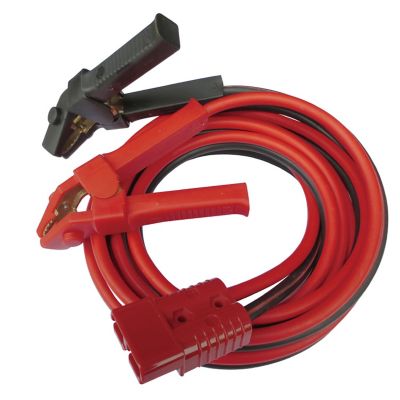
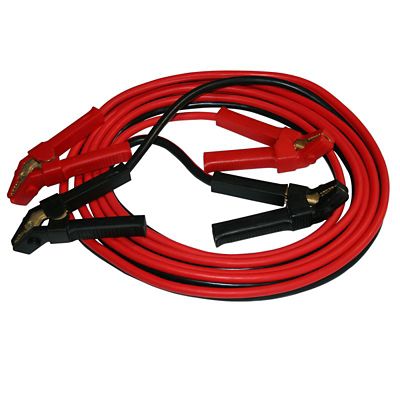
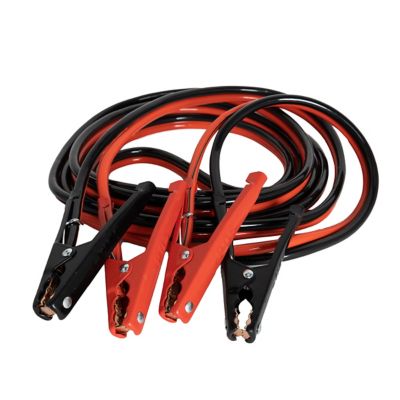
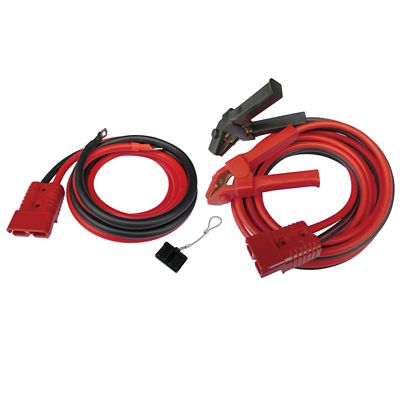
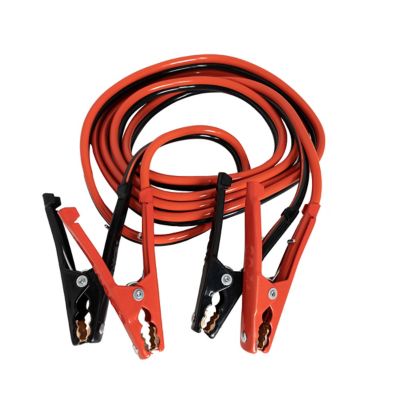
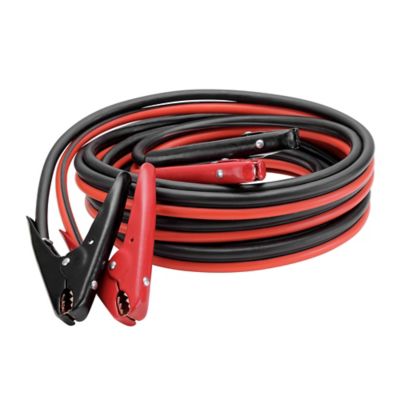
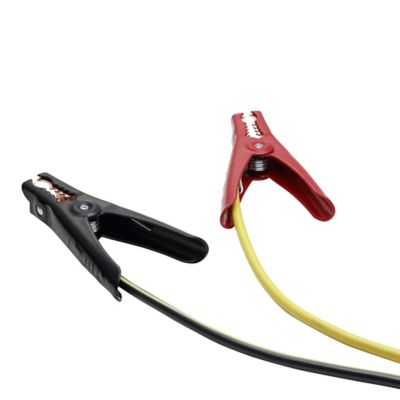
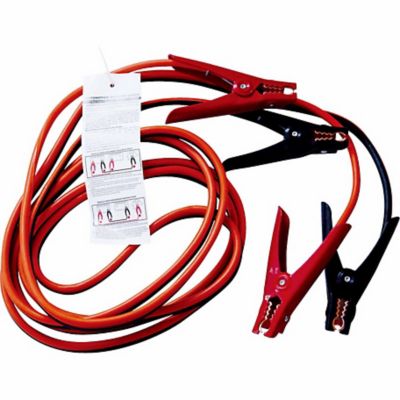
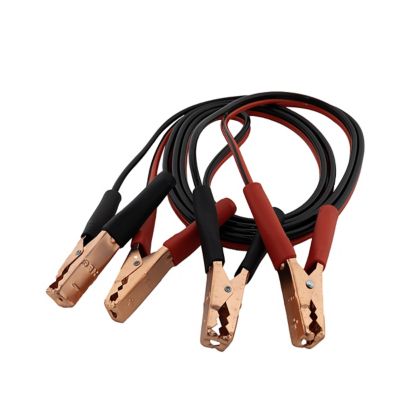
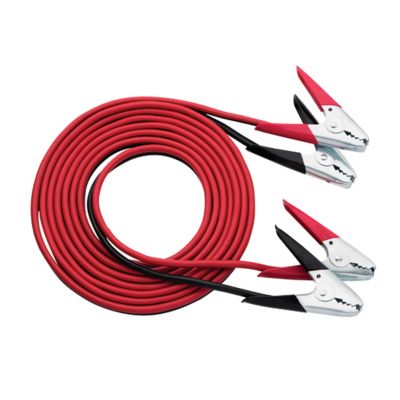
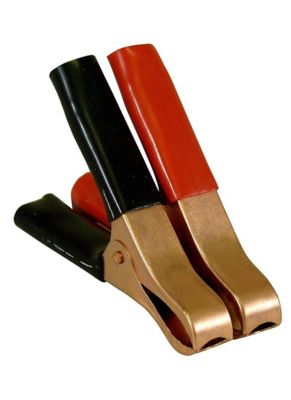
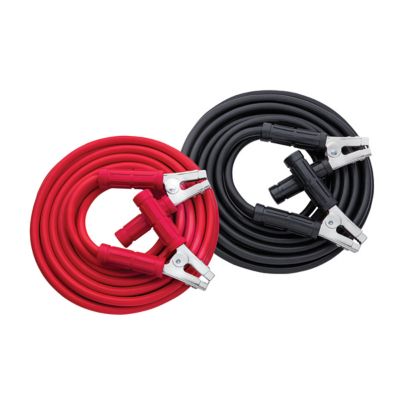
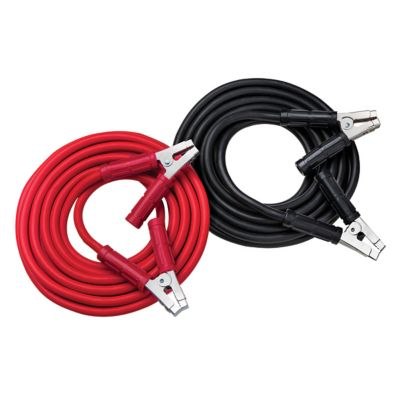
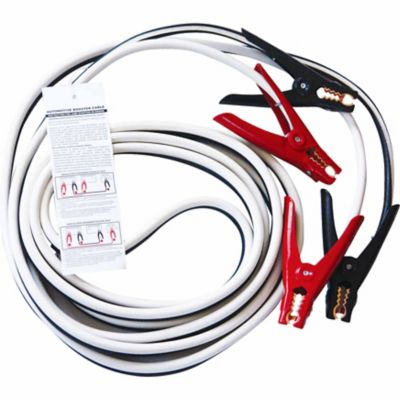
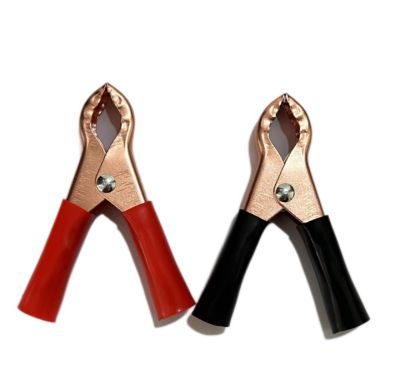
Booster cable clamps are the spring-loaded, alligator-style clips at the ends of jumper cables, used to make a solid connection between a vehicle battery and a charged battery or jump starter. When a car, pickup, tractor, ATV, boat, or other engine will not turn over, dependable clamps help transfer power through the cables so the dead battery can receive enough charge to start. They are also useful for replacing worn or damaged ends on an older set of booster cables, especially when the cable itself is still flexible and in good shape. A good clamp should open wide enough to fit common battery posts and hold firmly without slipping when the cable is moved. Look for sturdy jaws with teeth that can bite through light corrosion and make contact with the metal terminal, along with a strong spring that keeps the connection tight. Color-coded handles make the positive and negative sides easier to identify at a glance, with red generally used for positive and black for negative. Heavy insulation around the handles helps reduce the chance of accidentally touching the metal jaws together or contacting another metal part under the hood. Materials matter, too. Copper and copper-alloy parts conduct electricity efficiently, while copper-plated steel and other treated metals can offer a practical balance of conductivity, durability, and resistance to rust. Since vehicles often sit outside through damp mornings, road spray, dust, and changing temperatures, a corrosion-resistant finish can help clamps stay dependable over time. Check the cable opening or terminal connection before purchasing so the clamp can accept the gauge of cable you plan to use. A clamp made for a small emergency cable may not be the right choice for a heavy cable used on a diesel pickup or farm equipment.
Amperage rating is another important detail when comparing booster cable clamps. Light-duty clamps may be suitable for compact cars, lawn and garden equipment, motorcycles, or occasional roadside use, while higher-rated heavy-duty clamps are better suited to large trucks, diesel engines, farm machinery, construction equipment, and other applications that demand more starting power. The rating should match the cable size and the type of engine being serviced; fitting a heavy clamp onto an undersized cable does not turn the cable into a heavy-duty set. Check the manufacturer’s listed capacity, jaw dimensions, and recommended cable gauge rather than judging strength by appearance alone. The clamp should also have a secure way to attach to the cable, such as a crimped, bolted, or otherwise reinforced connection designed for the intended wire size. Loose connections create resistance, which can lead to heat buildup, weak charging, and frustrating starts. Before using booster cables, park the vehicles safely, switch off accessories and ignitions, and keep the clamps from touching one another. Connect the positive clamp to the positive terminal and the negative clamp to the negative terminal or an approved unpainted engine ground, following the vehicle and cable instructions. Make sure each clamp is fully seated on clean metal and stays clear of belts, fans, pulleys, and other moving parts. After the engine starts, remove the clamps in the recommended reverse order, keeping the metal jaws separated. A battery terminal brush can help clean away buildup, but never force a clamp onto a cracked, leaking, or visibly damaged battery. Wearing eye protection and gloves is a sensible habit around batteries, and anyone unsure about the connection should ask a qualified mechanic for help.
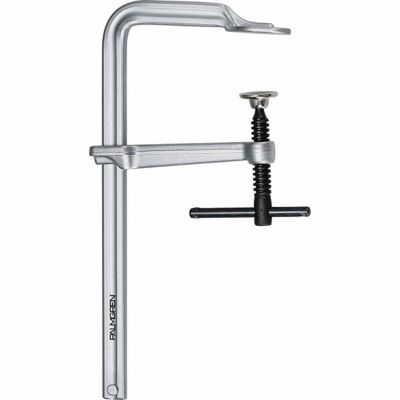
A reliable set of booster cable clamps earns its place in a glove box, tool chest, service truck, or equipment shed because battery trouble rarely happens at a convenient time. During the cooler months, an aging battery can lose starting strength overnight, leaving a commuter in a driveway, a rancher near a gate, or a driver stopped along a back road with an engine that only clicks. Keeping sound clamps and cables on hand can make that situation less stressful, whether the help comes from a neighbor, a family member, or a second vehicle already parked nearby. They are a practical addition to an emergency roadside kit and can also make a thoughtful gift for someone who drives an older vehicle, maintains a farm or homestead, works around tractors and trailers, or spends time on hunting and camping roads where a service call may take longer to arrive. For shoppers replacing only the ends, compare the old clamp with the replacement by cable gauge, attachment method, jaw size, handle insulation, and polarity marking. For shoppers building a complete setup, consider the distance between vehicles, the cable length, flexibility, storage space, and the starting demands of the engine. It is worth inspecting clamps from time to time for bent jaws, weak springs, melted insulation, loose cable connections, green or white corrosion, and signs of overheating. Store them clean and dry, with the jaws protected from unnecessary contact with tools or other metal objects. Booster cable clamps are made for temporary battery connections, not for permanent wiring, lifting, or use as general-purpose shop clamps. If your project involves securing wire or routing a cable along a vehicle, trailer, fence, or piece of equipment, browse
Cable Loop Clamps for a different style suited to holding cable in place. Choosing the right clamp for the vehicle, cable, and working conditions helps provide a firm connection when a tired battery needs a hand and keeps a useful roadside tool ready for the next cold start, long workday, or unexpected stop.