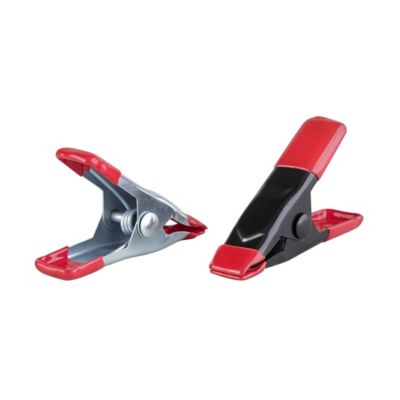
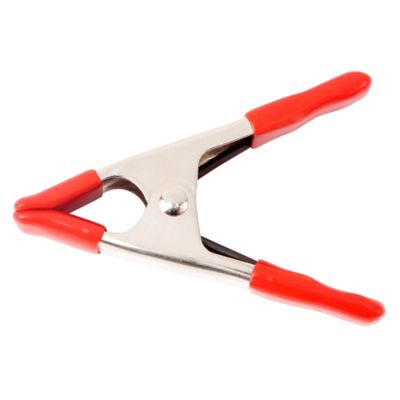
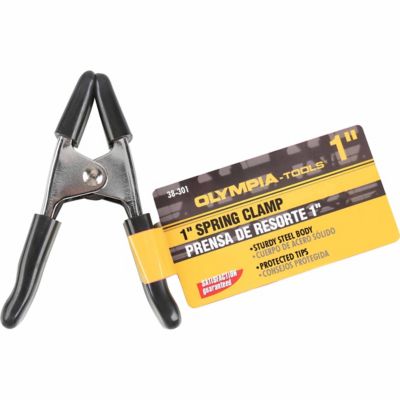
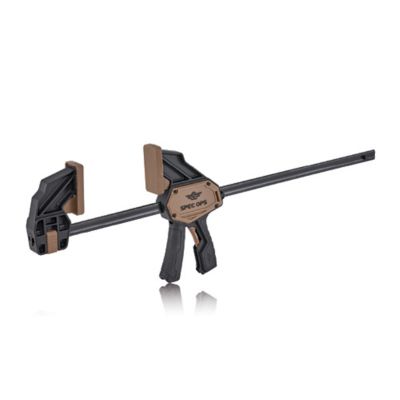
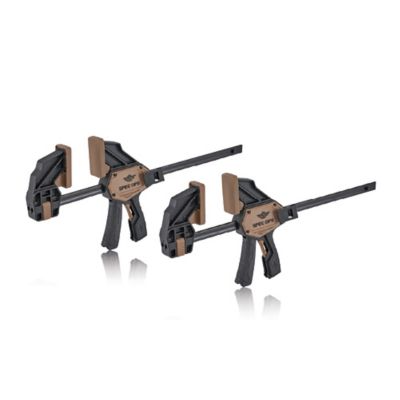
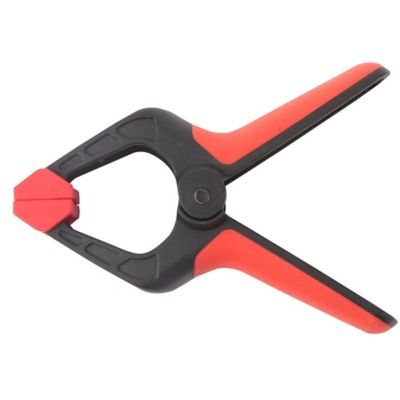
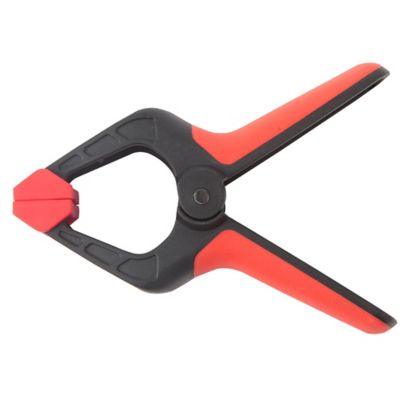
Heavy duty spring clamps provide a quick, firm hold for materials that need to stay together while a job moves along. A spring-loaded pivot keeps the jaws closed, and squeezing the handles opens them so the clamp can slip over an edge. Once the handles are released, spring tension supplies the holding pressure without a screw to turn or a trigger to keep pumping. That simple action makes these clamps handy around a farm shop, garage, woodworking bench, or craft table, especially when one hand is already steadying a board or holding fabric in place. They work well for temporary positioning, light assembly, and small glue-ups where the required pressure falls within the clamp’s rating. A heavy duty designation generally points toward a sturdier frame or stronger spring than a lighter clamp, but the name alone does not establish holding force. Jaw capacity, throat depth, frame construction, and any stated pressure rating give a clearer picture of what a clamp can handle. Jaw capacity describes how far the jaws open, while throat depth describes how far they can reach past the edge of the work. Those measurements matter more than overall length when fitting a clamp around a board, bench lip, or layered stack of material. A long handle does not automatically mean a wide opening, and a wide opening does not necessarily mean a deeper reach. Spring pressure also varies by design and jaw position, so there is no single force rating that applies to every heavy duty spring clamp. For everyday shop work, the appeal is speed: a clamp can hold a thin strip against a layout mark, keep a paper pattern from sliding, or steady a protective cover along a bench edge. It is the sort of tool that earns its place close to the work surface, where a quick squeeze can take care of a small holding task without interrupting the rest of the job.
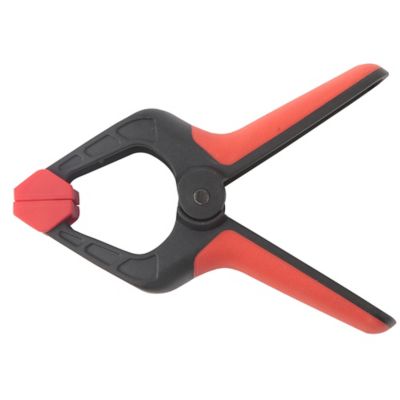
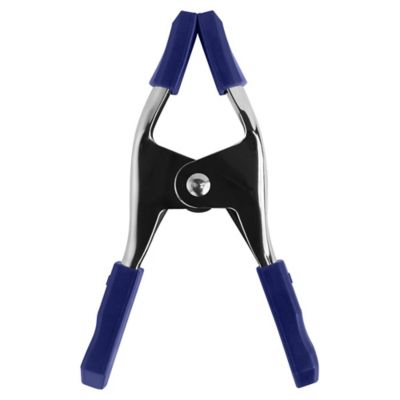
Materials and contact surfaces play a big part in how heavy duty spring clamps feel in the hand and behave on the workpiece. Metal-bodied designs commonly combine steel frames with steel springs, giving the tool a rigid structure for repeated opening and closing. Protective finishes can help limit corrosion, though scratched or worn areas still deserve attention. Reinforced plastic bodies offer another construction option, often with a lighter feel and shaped handles that spread pressure across the palm. Neither body material tells the whole story; the pivot, spring, jaw alignment, and handle shape all contribute to performance. Bare jaws may suit some rough shop tasks, while rubber, vinyl, or other cushioned tips help reduce direct contact between the frame and the material. That cushioning is useful around painted trim, finished wood, and fabric, but it does not guarantee a mark-free result. Grit caught on a pad can scratch a surface, and concentrated pressure can dent softer wood or leave an impression in delicate material. Clean contact points and a small protective scrap between the jaw and the work can help distribute pressure, provided the added layer does not make the clamp slip. Pivoting pads can settle against slightly angled surfaces, improving contact where fixed tips might touch only along an edge. They still need a stable seating area; a narrow, rounded, or sharply tapered edge may not offer enough purchase. Fit also includes the person doing the work. Strong springs take effort to open, and handle spacing can make a larger clamp awkward for smaller hands. A comfortable grip matters when repositioning several clamps along a bench or working in gloves. For a glue joint, enough opening must remain for both pieces, any protective blocks, and a clear path onto the assembly. Clamping force should match the adhesive and joint requirements rather than simply being as strong as possible. Where a project calls for greater reach or adjustable pressure across a wider assembly,
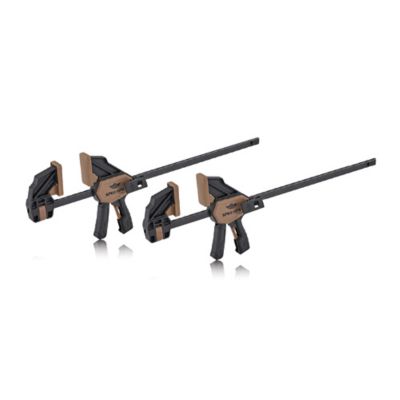
Heavy Duty Bar Clamps serve a different role from the quick, spring-driven hold of this category.
Around the workshop, heavy duty spring clamps fit plenty of jobs that benefit from a temporary extra hand. A woodworker might use several to hold a narrow edging strip in alignment while checking the fit, while someone repairing a chair seat might clamp fabric against a support before fastening it. In a farm shop, a pair can keep a paper template flat on a panel or hold a protective sheet away from an area being painted. Crafters and photographers may find the same quick action helpful for securing cloth to a suitable support, as long as the fabric and frame can take the pressure. For projects with several contact points, spacing clamps along an edge can help keep material aligned, although spring clamps are not a substitute for a fixture when a task requires controlled positioning. They are also not lifting devices, load restraints, or a replacement for a vise or appropriate workholding system around powered cutting equipment. A clamp that holds a light sheet against a bench may not safely hold a workpiece against drilling or cutting forces. Long service life depends on keeping the moving parts and gripping surfaces in good shape. Sawdust, dried adhesive, and oily residue can interfere with jaw contact or the pivot, so routine cleaning helps preserve both grip and movement. Adhesive is easier to remove before it hardens, following the adhesive maker’s cleanup directions and taking care not to damage the clamp’s finish or pads. Storage off a damp floor and away from spills helps protect metal parts. Any lubrication should follow the clamp manufacturer’s directions and stay off gripping pads and surfaces intended for gluing or finishing. Cracked bodies, bent jaws, loose pivots, damaged pads, or weakened springs are signs that a clamp needs attention or replacement. For woodworkers, farm tinkerers, sewing enthusiasts, and folks setting up a first workbench, these practical tools can also make a useful gift when the opening size and grip strength suit the recipient’s projects. A well-matched clamp stays out of the way, holds where it belongs, and leaves both hands free for the next part of the work.