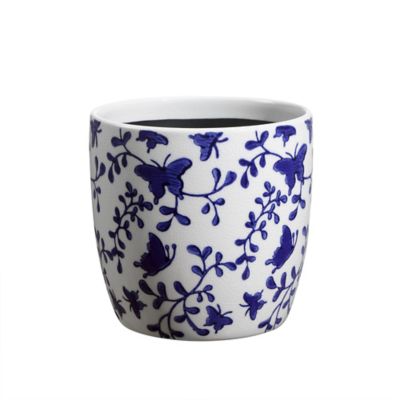
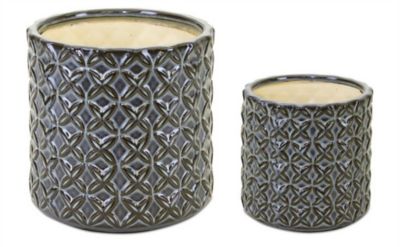
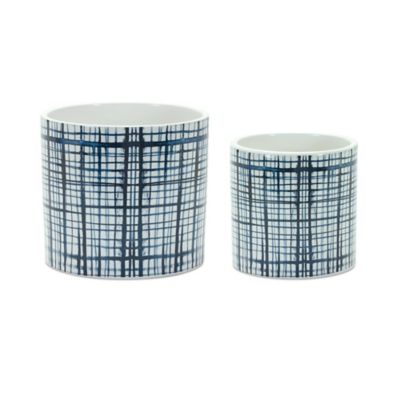
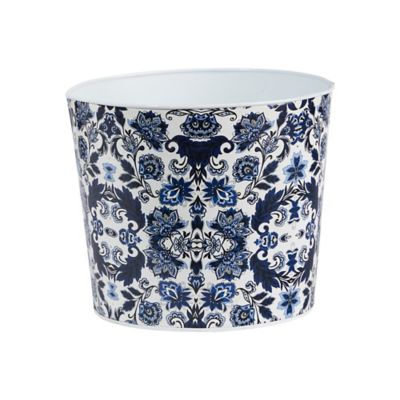
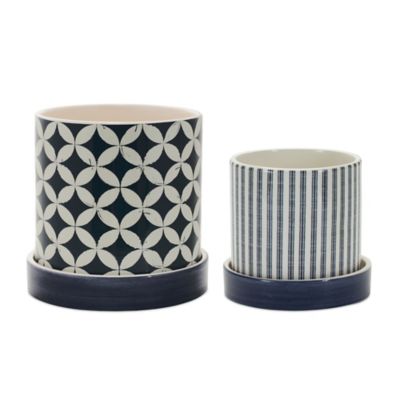
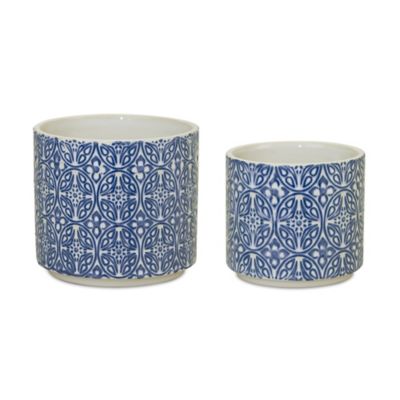
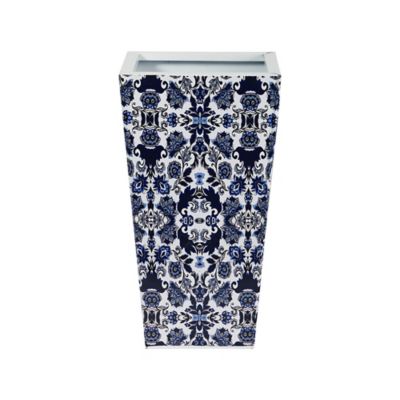
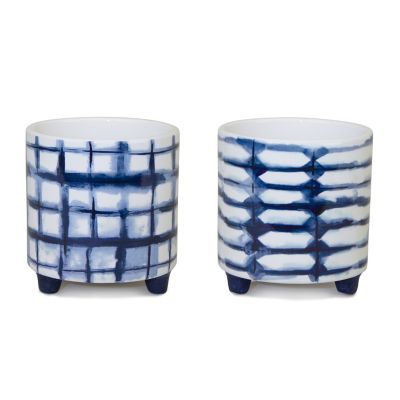
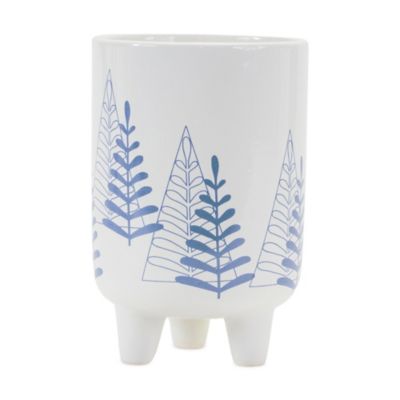
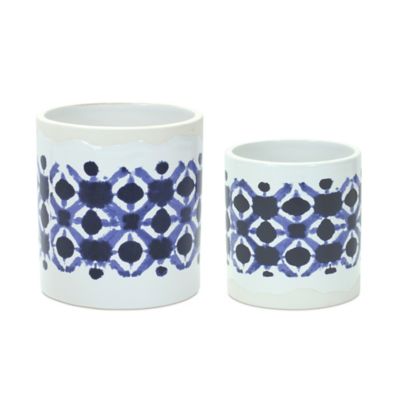
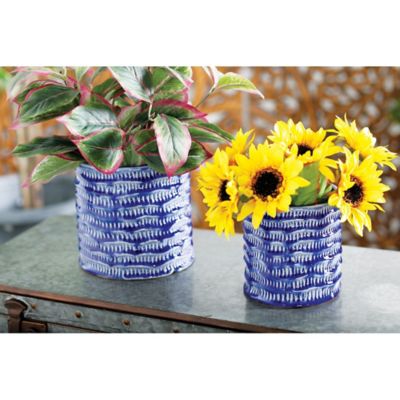
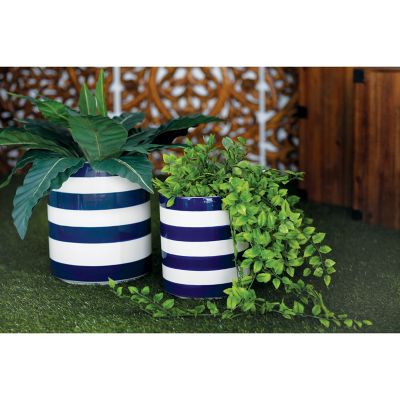
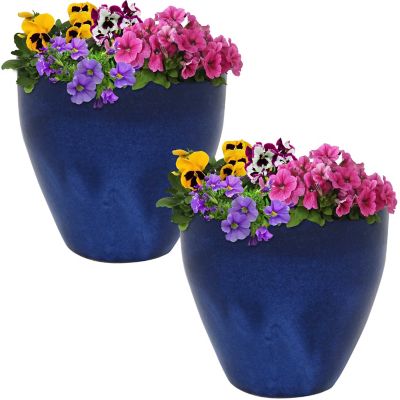
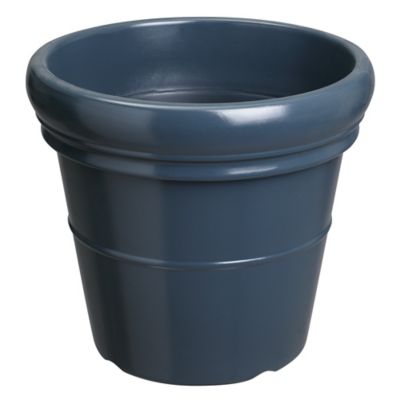
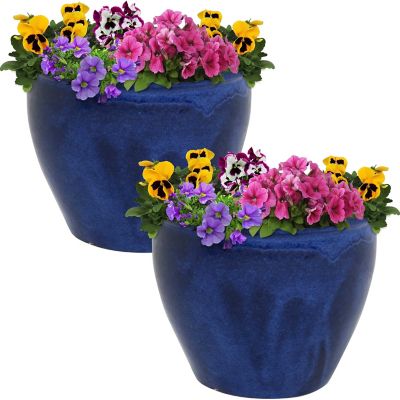
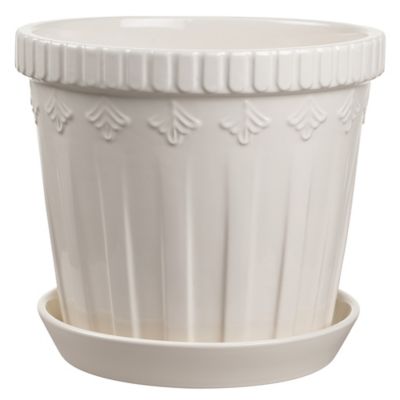
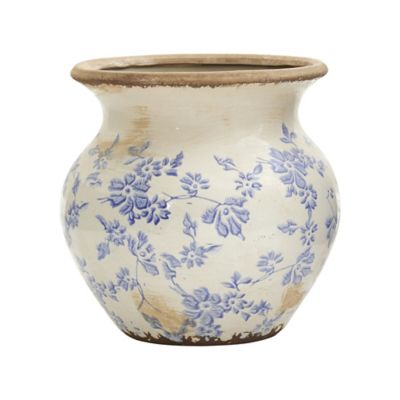
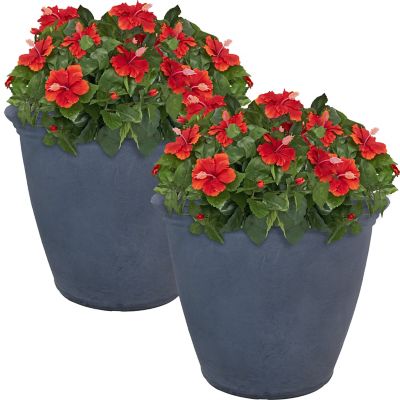
Blue and white flower pots bring an easygoing, classic look to porches, entryways, kitchen windowsills, and living rooms. Their crisp color combination works with just about any kind of greenery, from a trailing pothos tucked into a sunny corner to a rosemary plant set near the back door for quick snips while cooking. Many blue and white planters draw on Chinoiserie or Ming-style design, with hand-painted or printed botanical patterns, scrolling vines, birds, flowers, and other details that give a pot the feel of a collected piece. Glazed ceramic and porcelain are especially common choices because their smooth finish helps colors stand out and makes the surface easy to wipe clean. A blue and white pot can look right at home with farmhouse décor, traditional furnishings, cottage-style spaces, or a simple outdoor arrangement made with greenery and neutral accents. During the warmer part of the year, use these pots to dress up a porch step, patio table, or covered deck. As the weather turns cooler, they can move indoors with herbs, small houseplants, orchids, succulents, or seasonal greenery. A pot with a traditional pattern also makes a thoughtful gift for a new homeowner, a gardener setting up a first space, or anyone who enjoys adding a little personality to their plant collection without taking on a full decorating project.
Size is one of the most important details to consider when choosing a blue and white flower pot. Small pots around 5 to 6 inches are handy for succulents, compact herbs, small flowering plants, and windowsill arrangements. They are also easy to group in pairs or clusters, with different heights and patterns creating a finished look on a shelf, side table, or plant stand. Medium pots around 7 to 10 inches provide room for everyday houseplants, orchids, leafy tropicals, and fuller arrangements that need more space for roots. These are a good fit for tabletops, covered porches, and entryway furniture, though it is wise to check the mature size of the plant before settling on a container. Large flower pots, generally 11 inches and up, can serve as a focal point for taller greenery, broad-leaved plants, small shrubs, or floor arrangements. For more room to work with, browse
Large Flower Pots. Keep the plant’s root ball, expected growth, and final location in mind rather than choosing a container by appearance alone. A pot that is just a little larger than the current root ball is often easier to manage than one with excessive extra space, which can hold moisture longer than the plant needs. Weight matters, too. A heavier ceramic or porcelain planter may be steady in a breezy spot, while a lighter pot is easier to move when watering, cleaning, or bringing plants indoors during cooler months.
Drainage is another feature worth checking before planting. Pots with drainage holes allow extra water to escape and are often the safest choice for herbs, succulents, flowers, and most houseplants, since soggy soil can lead to root problems. Place a saucer beneath the pot to protect furniture, porch boards, and floors, and empty standing water after watering when needed. If a decorative pot does not have a drainage hole, it can still work as a cachepot: keep the plant in a plain nursery container, set that container inside the blue and white planter, and lift it out for watering so excess water can drain fully. Use a well-draining potting mix suited to the plant, and avoid filling the decorative pot with yard soil, which can become heavy and compacted in containers. Before placing a glazed pot outdoors, consider the finish, the amount of sun, and the local weather. Bright sunlight can warm a container quickly, while repeated freezing and thawing may damage some ceramic or porcelain pieces, so moving them to a sheltered location before hard freezes is a sensible precaution. To keep the display looking cared for, wipe away dust and mineral marks with a soft cloth and handle painted or detailed surfaces gently. Whether arranged beside a porch rocker, lined along a sunny kitchen window, or given as a housewarming gift with a simple green plant, blue and white flower pots offer a dependable way to add color, pattern, and a welcoming touch through changing seasons.