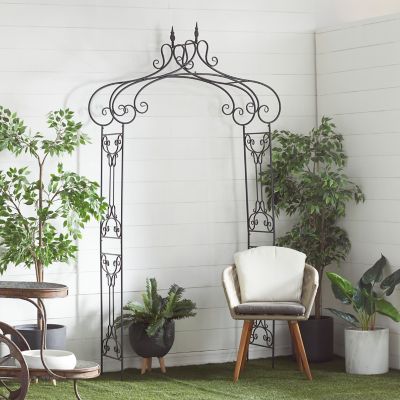
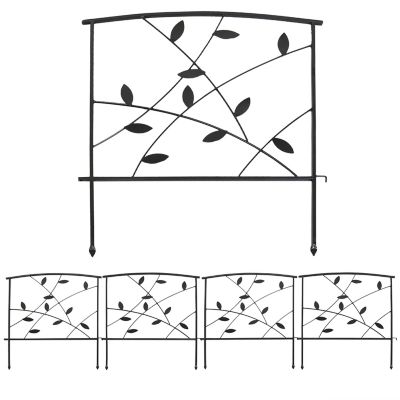
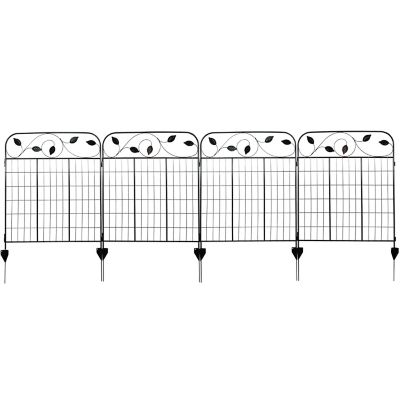
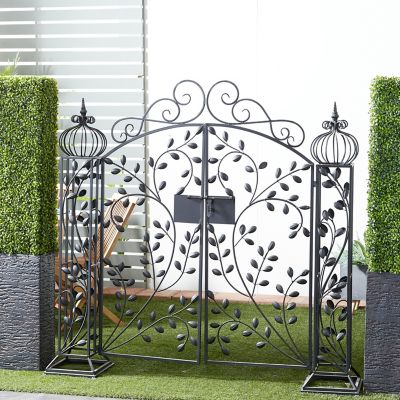
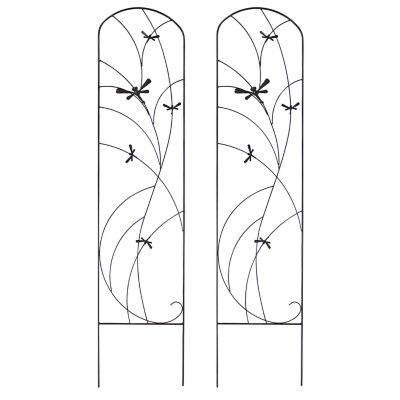
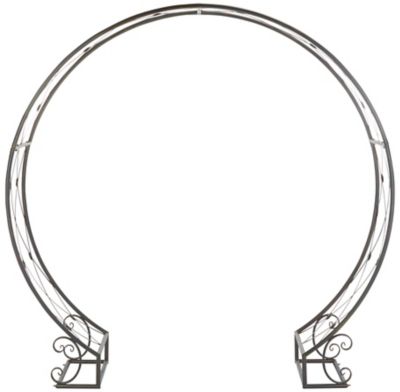
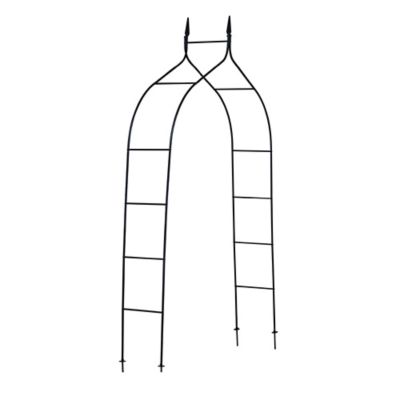
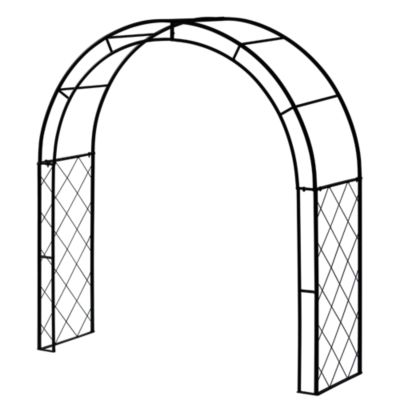
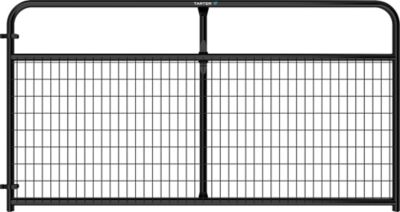
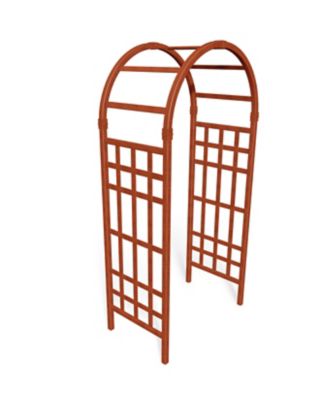
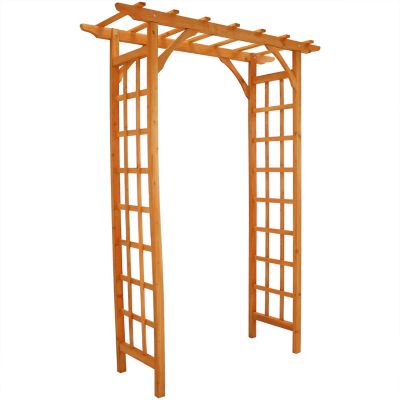
Black metal garden arbors are outdoor structures that support climbing plants, frame walkways and mark an entrance to a garden or yard. Their open framework adds height without creating a solid wall, making them a good fit beside a vegetable patch, along a cottage garden path or between a lawn and a fenced planting area. The dark finish gives leaves and flowers a clear outline, while keeping the structure itself simple enough to sit comfortably beside wood fencing, brick paths or gravel walks. A rounded arch creates a soft overhead curve, a pointed top draws the eye upward, and a flat top brings a straighter profile to the space. Side panels matter just as much as the roof shape: closely spaced lattice gives young tendrils more places to catch, while broad openings leave more room for tying and training stems by hand. An arbor with a gate can make an entrance feel more defined, though the gate and adjoining fence need to work together if keeping animals in or out is part of the plan. For a busy backyard, fit comes down to more than how the arbor looks from the porch. Check the clear opening between the posts, the height beneath the lowest crosspiece and the space needed for a gate to swing. A path that carries a wheelbarrow, mower or garden cart needs room for that equipment as well as the person pushing it. Leave extra clearance for plants that may lean into the opening as they fill out. Overall dimensions can include feet, scrollwork or projecting top rails, so they are not always the same as usable passage space. A well-proportioned arbor should frame the path rather than pinch it, with enough room around the base to tend plants without stepping into a bed or scraping against thorny canes. Keeping its entrance lined up with the walkway also makes the whole setup feel settled, rather than like something set down in the middle of the yard.
Materials, connections and anchoring determine how a black metal garden arbor handles its job over time. Steel frames can provide substantial support, but tube size, wall thickness, joint design and the manufacturer's load guidance tell more than the material name alone. A slender frame intended for light climbers is a different choice from one meant to carry a heavier plant. Powder coating creates a protective surface over the metal; scratches, exposed fasteners and joints still deserve attention because bare steel can develop rust. A galvanized layer, when specified, adds another barrier against corrosion, but it does not remove the need for inspection and care. Look closely at how the side panels meet the top, how sections fasten together and whether the installation calls for ground stakes, buried legs or mounting plates. Those attachment methods are not interchangeable. Loose garden soil, compacted gravel and a concrete pad each present a different anchoring situation, and a frame should be secured according to its instructions rather than simply pushed into place. Underground utilities and irrigation lines also need to be located before digging or driving anchors. Plant choice belongs in that same decision. Clematis and other lighter climbers need supports suited to the way their stems attach, while climbing roses generally need their canes tied to the framework. Heavy woody vines can put considerable weight on an arbor as they mature, so their eventual size matters more than the small plant in the nursery pot. Soft plant ties help hold stems without cutting into them, and leaving access to bolts and connection points makes later maintenance easier. Keep the center passage open by directing growth along the sides and across the top instead of letting it bunch at shoulder height. Dense foliage can provide a little screening around an entrance, but an open arbor is not a substitute for a privacy fence. The best match is a structure with the space, support and attachment points needed for the planting and foot traffic it will actually carry.
Care is mostly a matter of keeping the finish intact, the connections snug and the base easy to inspect. Soil and mulch piled against metal can trap moisture and hide early corrosion, so keep those materials away from exposed frame sections unless the installation instructions say otherwise. Direct irrigation toward the plants rather than repeatedly soaking the frame, and rinse away fertilizer residue that lands on the metal. For routine cleaning, a soft cloth or brush and mild soap are generally gentler on a coated surface than abrasive pads; follow the finish-care directions before applying any cleaner. Check for chipped coating, loose fasteners and movement at the feet, especially as plants become larger and place more weight on the frame. Address exposed metal with a compatible touch-up treatment recommended for that finish, rather than painting over loose rust. Gate models also need enough clearance to open without dragging, plus hinges and latches that remain accessible behind the planting. Nearby plant shelves or fence details can carry the same dark finish with
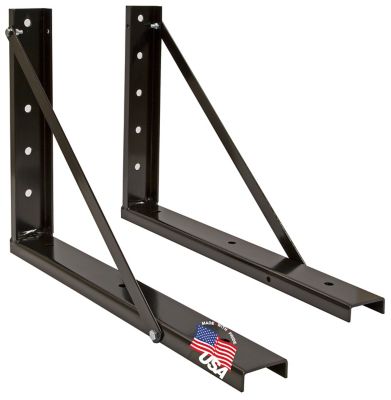
Black Metal Brackets, while the arbor itself should retain the connections and anchoring specified for its design. For a gardener who enjoys training roses or laying out inviting paths, an arbor can be a thoughtful housewarming gift, provided its size and installation requirements suit the property. It can also give a quiet sitting area a clear entrance or frame the walk from a back gate toward the house. An open frame offers a finished outline before vines cover it, so there is no need to crowd every panel with growth. A few well-placed stems can leave the metalwork visible and make pruning easier. Hang planters or other accessories only where the structure is rated to carry them, and keep anything overhead clear of passing heads. With the right proportions and a little regular attention, a black metal garden arbor becomes a useful part of the yard: a place for plants to climb and a clear, welcoming way through.