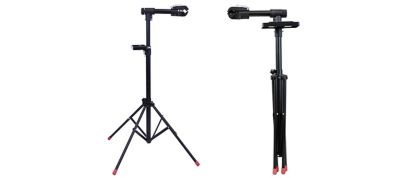
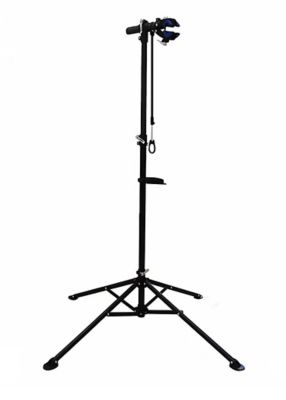
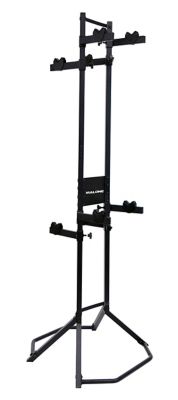
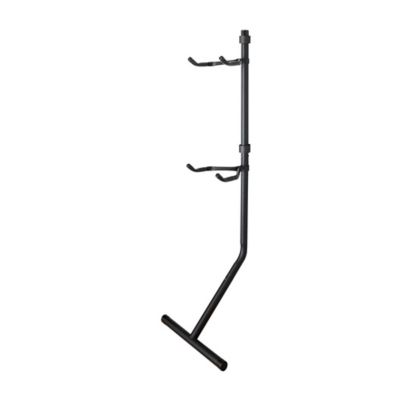
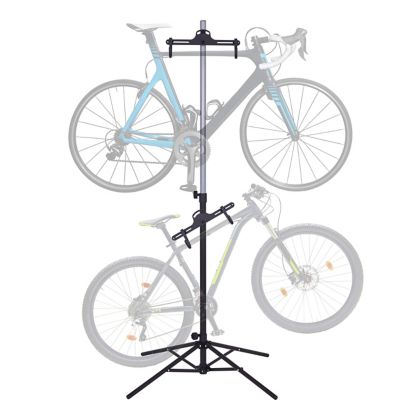
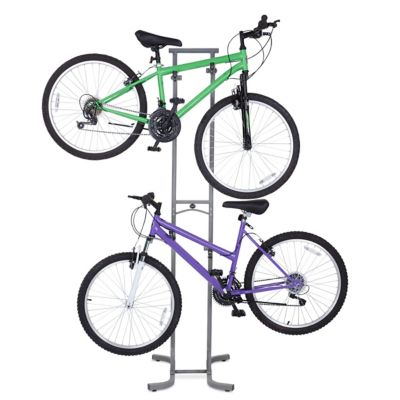
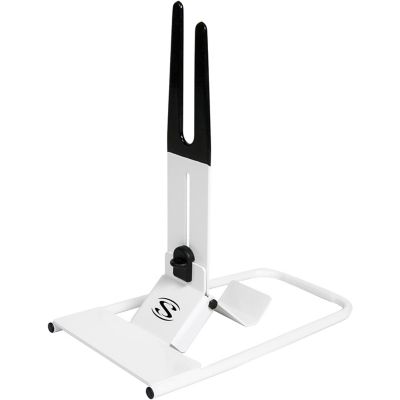
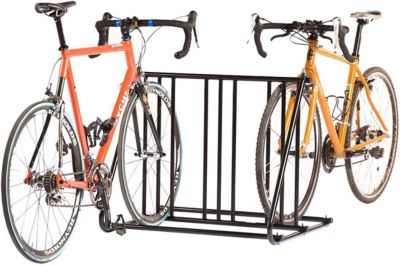
A bike floor stand holds a bicycle upright by supporting a wheel or another part of the bike. A freestanding model sits right on the floor, so there’s no need to drill into a wall or lift the whole bike onto a hook. That makes it handy in a garage, mudroom, shed or apartment where the bike gets ridden often enough to keep it within easy reach. With a roll-in stand, parking can be as simple as guiding a wheel into the cradle and letting the stand take the weight. A low cradle leaves less for a child to lift when putting a bike away, and it can make a difference when parking a heavier bike, too. A single-bike stand can give a bicycle without a kickstand a place to land next to the workbench, while a floor rack with several slots can give the whole household a parking spot. The space a rack takes up on its own tells only part of the story. With bikes in place, the handlebars, pedals and rear wheels can stick out farther than expected. In a narrow garage, leaving room to swing the handlebars can mean the difference between rolling straight out and having to move another bike first. On a multi-bike rack designed for entry from either side, alternating which way the bikes face can help keep wide handlebars from bumping into one another. A spot along a wall can work well as long as there’s enough room to guide the wheel in and pull it back out without backing into a mower, shelving or a parked vehicle. For a bike that comes through the same door after every ride, a parking spot just off that route keeps it handy without putting it in the middle of the walkway. In a shared space, keep in mind that a stand helps prevent tip-overs but doesn’t lock the bike against theft.
Fit comes down to the bike and the way the stand supports it. For a wheel cradle, compare the stand’s stated wheel diameters and tire widths with the markings on the tire. A narrow road tire may lean in a slot meant for a much wider tire, while a wide mountain bike tire may not settle all the way into a narrow cradle. A small wheel may sit too low for the supports to hold it steady. On a bike with full fenders or disc brakes, check where the stand touches the bike as the wheel rolls in as well as where it rests once parked. A cradle that fits the tire can still sit too close to a fender or brake rotor, depending on its shape. Front-wheel and rear-wheel parking aren’t always interchangeable, so follow the stand’s fit guidance rather than assuming either end will work. For a heavier electric bike, check the weight limit along with wheel fit, including the weight of any battery, racks or bags that stay on the bike while it’s parked. It’s also worth looking at how high the wheel has to rise to get into the cradle; a low entry is easier to manage if the bike is awkward to lift. Match the stand to the job as well as the bike. A parking stand is meant to hold a bicycle at rest. If the job calls for turning the pedals or spinning a wheel freely, as it might during a gear adjustment, a repair stand that holds the bike off the floor is better suited to the task. For a broader look at ways to park a bike inside,
Indoor Bike Stands covers options beyond freestanding floor racks. Floor stands make practical gifts for a rider setting up a first apartment or a family making room for several bikes, especially when the tire size and parking space are known ahead of time.
Materials and base design matter where a bike gets wheeled in and out day after day. A steel frame can add heft that helps the stand stay put when the tire meets the cradle. An aluminum frame is generally lighter, which can be handy if the stand gets moved aside when the garage doubles as a workspace. Look at the width of the base and how it sits on the floor, too. A heavier stand can still rock if one foot lands in a low spot or on the edge of a mat. Rubber or plastic feet can help limit sliding on smooth concrete and keep metal from rubbing directly against a finished floor. Coated metal helps resist corrosion, and padded contact points can help protect the finish on parts of the bike they’re meant to touch. Over time, grit can work into those pads or collect under the feet. A quick sweep around the base and a wipe with a soft cloth can clear it out before it scratches the floor or wears on a contact surface. On stands that bolt together, check the fasteners if the cradle starts to wobble or the rack shifts as a bike rolls out. Replace missing feet or worn pads as needed so the stand sits level and the bike rests where it should. Some racks fold or come apart for storage, which is handy in a shop where the same stretch of floor might hold bikes one day and sawhorses the next. For a spot the bike returns to after every ride, a fixed base and an easy roll-in path may matter more than whether the stand packs away. The best fit is one that holds the bike steady on the floor you have and leaves enough room to roll it out without untangling handlebars or rearranging the rest of the garage.