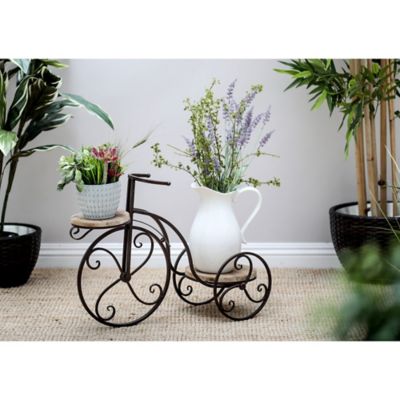
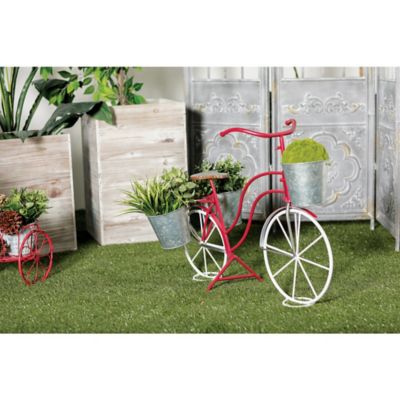
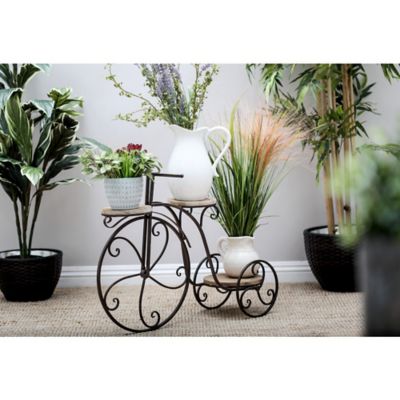
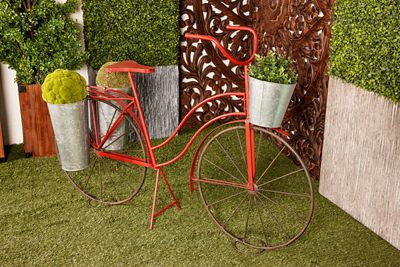
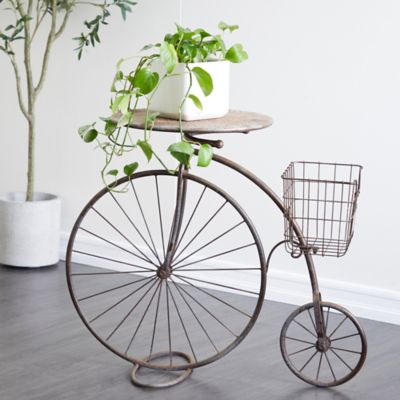
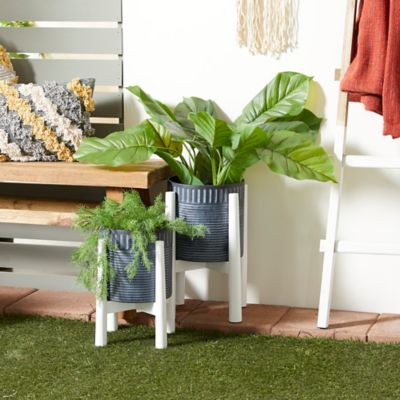
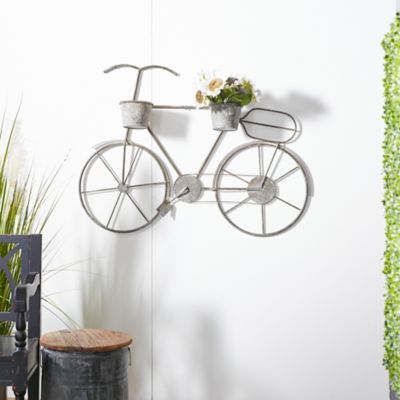
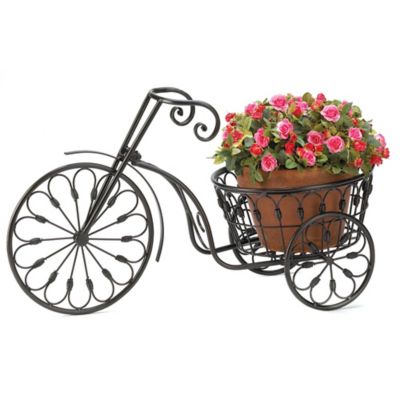
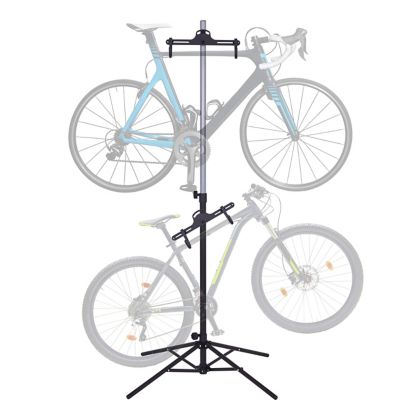
Bicycle plant stands are plant holders shaped like bicycles or tricycles, with baskets, rings, shelves, or bucket-style containers that support potted flowers and greenery. Their curved handlebars, spoke-like wheels, and open frames bring a playful touch to a porch, patio, entryway, or indoor plant corner without taking attention away from the plants themselves. Some designs sit neatly on a tabletop, while larger floor-standing styles make a more noticeable focal point beside a bench or along a garden path. A tricycle-shaped base can provide several points of contact with the ground, and bicycle-shaped designs may rely on additional feet or supports to stay upright. The wheels are often part of the frame’s appearance rather than working wheels, so these stands are best thought of as stationary plant displays, not carts for hauling heavy pots. Single-pot styles give one flowering plant room to stand out, while multi-pot arrangements bring several smaller containers together at different heights. A front basket filled with upright greenery and a rear holder with trailing foliage can create a full display without hiding every curve of the frame. Metal is a common material for bicycle plant stands, including iron and steel, and some designs pair a metal frame with wood shelves or woven baskets. Open wire holders leave more of the pot visible, while enclosed holders give the arrangement a more finished, coordinated look. Painted and powder-coated finishes add color and help limit direct contact between metal and moisture, though the finish alone does not establish whether a stand belongs outdoors. The stated indoor or outdoor rating remains important. In a farmhouse entry, a compact bicycle planter can soften the space beside a plain wall; on a patio, a larger frame can pull a few scattered pots into one tidy arrangement. The appeal is part plant storage, part familiar bicycle silhouette, with plenty of room for personal taste through container colors, leaf shapes, and flowers.
A comfortable fit depends on more than the stand’s overall height. Width and depth determine how much floor or tabletop space the frame needs, including handlebars, projecting baskets, and any support feet extending beyond the wheels. The inside diameter of each pot ring or basket matters just as much, since a container that rests securely in one holder may slip through another or sit too high to feel steady. Tapered pots need particular attention because the rim may fit while the lower portion has little support. Shelf-style bicycle plant stands offer a flatter resting place, but the pot base still needs enough contact with the shelf to sit level. Weight limits should account for the container, plant, soil, and water together; a freshly watered clay pot can weigh considerably more than an empty plastic nursery pot. On multi-level frames, keeping heavier containers low helps maintain balance, while smaller plants can occupy higher or narrower holders. Space between baskets also affects the finished arrangement. Upright leaves need headroom, and trailing stems need a clear path that does not tangle around support feet or spill into a walkway. For a small entry, one or two well-proportioned plants often look more settled than several crowded containers. A larger porch corner can accommodate a broader frame with room around it for watering and cleanup. Plant needs still come first: containers grouped on the same stand work best when their light and watering needs suit the location. Drainage deserves a close look, too. A basket or holder is not necessarily a watertight planter, and an enclosed bucket may not have a drainage opening. Removable pots with suitable saucers can make watering easier to manage, especially indoors, where drips may mark wood floors or furniture. Any saucer should fit without perching on the edge of the holder. A level, firm surface and clear walking space help the whole setup feel at home rather than in the way, particularly near a doorway, chair, or frequently traveled path.
Everyday care helps a bicycle plant stand keep its good looks and remain steady under its intended load. Metal frames benefit from having spilled potting mix brushed away and fertilizer residue wiped off before it builds up around joints or basket bottoms. A soft cloth and a mild cleaning solution, when permitted by the care instructions, are generally gentler on a finish than abrasive pads. Drying enclosed holders after watering helps prevent trapped moisture from lingering against the frame. Scratches, loosened fasteners, and changes around welded joints are worth checking whenever pots are moved or rearranged. Any touch-up coating should match the manufacturer’s directions and the material underneath. Wood shelves and accents have their own care requirements, including any recommended protective treatment, and should not sit beneath overflowing containers. Woven baskets may need a separate liner or inner pot, depending on their construction. For easier upkeep, removable containers let plants move to a sink or potting area without lifting the whole stand. That matters with wider bicycle shapes, which can be awkward to carry even before pots are added. Protective feet or an appropriate mat can help separate a stand from indoor flooring, provided they do not make the base wobble. In homes with children or pets, a stable location away from play areas is especially important, since handlebars and wheels can invite grabbing or climbing even though the frame is meant only to hold plants. These stands also make thoughtful gifts for gardeners, bicycle enthusiasts, and folks settling into a new home, particularly when the size suits a porch or plant corner they already enjoy. A compact frame leaves room for the recipient to choose plants and containers that fit their space. For a different outline with the same raised-container approach,
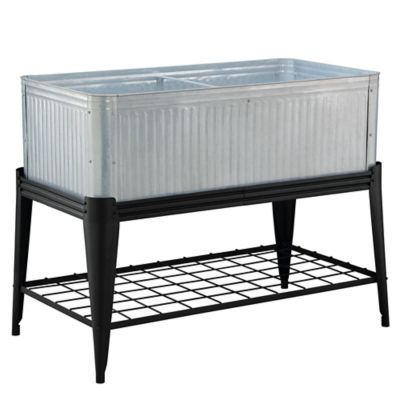
Metal Planters With Stands offer another way to bring potted greenery off the floor. With the right proportions, secure pot support, and manageable care needs, a bicycle plant stand gives everyday greenery a cheerful place to land.