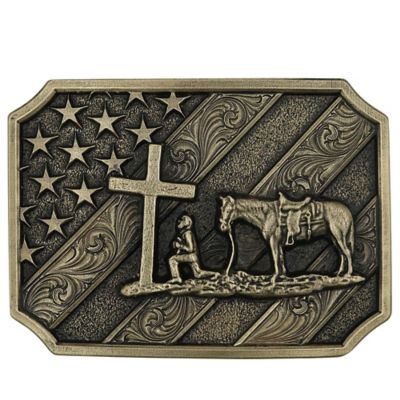
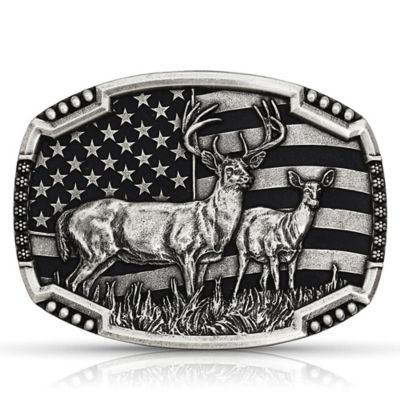
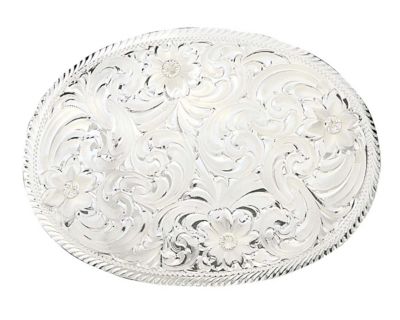
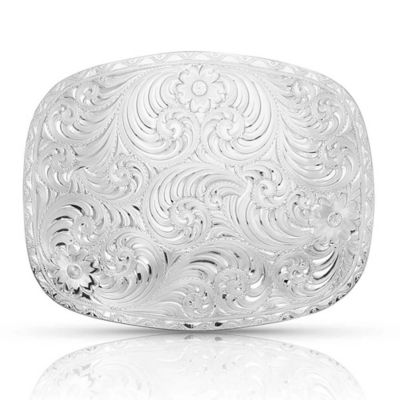
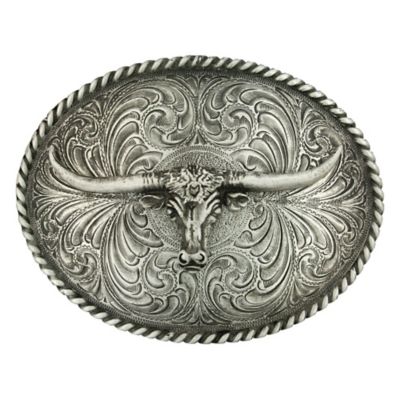
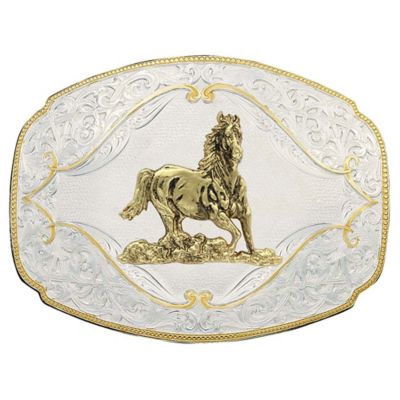
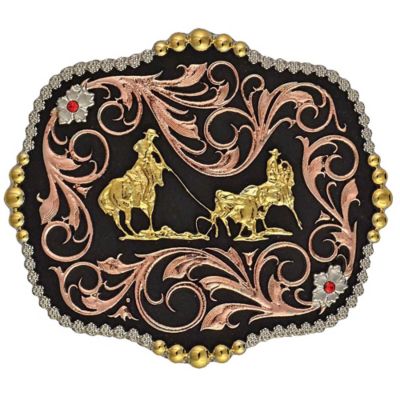
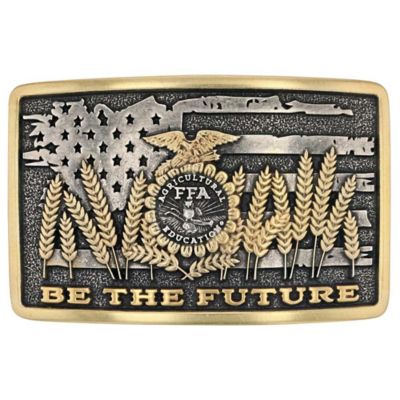
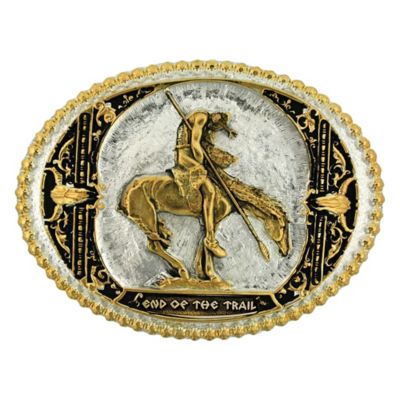
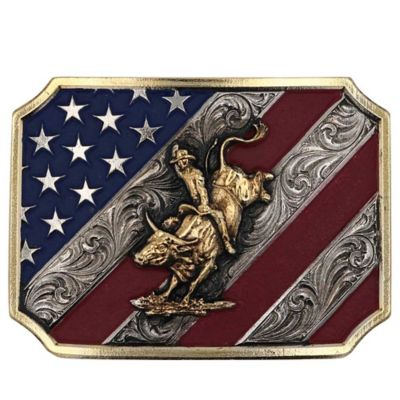
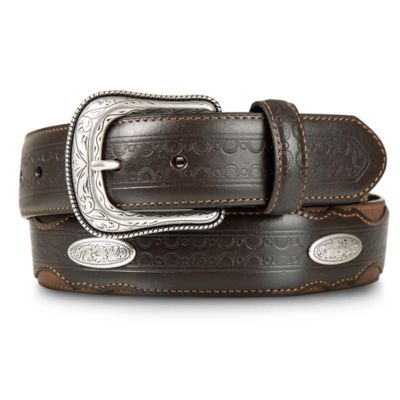
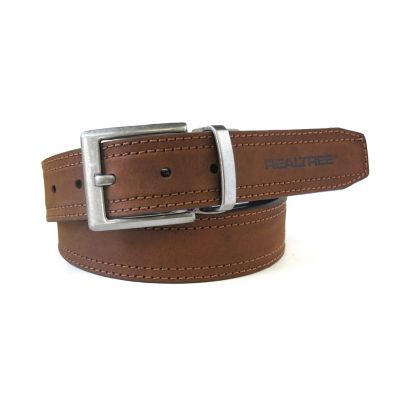
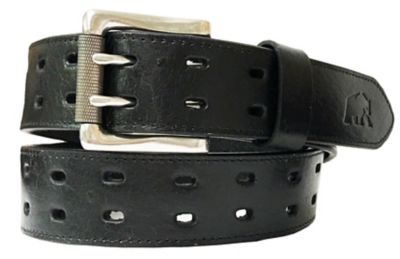
Belt buckles for men do more than hold a belt closed. They bring together the look of a leather strap, a pair of jeans and the clothes a man wears for work or time off. Styles range from simple frame buckles with a single prong to broad Western plates with raised designs, engraved details and shaped borders. A frame buckle keeps the profile trim and lets the belt itself do more of the talking. A Western buckle puts the metalwork front and center, whether the design features cattle, horses, wildlife, rodeo scenes or patriotic symbols. Trophy-style buckles draw on the tradition of rodeo awards, though the style also fits everyday Western wear without marking an actual competition win. Oval and rectangular plates give that familiar look, while rounded corners and curved backs can make a larger buckle sit more comfortably against the waist. Size changes the feel as much as the appearance: a broad plate makes a stronger statement, while a smaller buckle is less noticeable beneath an untucked shirt. For a man heading from chores to supper in town, a straightforward shape with a restrained finish can suit both settings. More detailed metalwork pairs naturally with a tucked-in shirt, jeans and boots for a dance, a concert or a trip to the rodeo. Dressier buckles tend toward slimmer proportions, smoother surfaces and simpler lines that work with trousers without drawing attention away from the rest of the outfit. Ratchet buckles offer another approach, fastening to a compatible track-style strap rather than relying on a row of punched holes. Each style has its place, and the best match comes down to how the belt fastens, how the buckle feels against the body and how much detail belongs in the finished look. That balance matters whether the buckle becomes an everyday staple or comes out for a wedding, a family gathering or a night at the dance hall.
Belt width and attachment style matter just as much as the design on the front. Many casual and Western belt straps measure 1.5 inches wide, but the buckle opening still needs to match the actual strap width. A narrow opening will not accept a wider strap, while too much extra room can let the belt shift instead of sitting neatly. The fastening system also needs to line up. Interchangeable buckles commonly attach to straps with snaps or screw closures at the folded end; a belt with a permanently stitched buckle end generally does not allow the same straightforward swap. Traditional frame buckles fasten with a prong through a belt hole, while many Western plate buckles have a rear loop and a hook that catches a hole in the strap. Ratchet systems require a matching strap and mechanism, so equal width alone does not establish compatibility. Those details are worth considering when pairing a buckle with
men's belts, especially when keeping a favorite leather strap and changing its look. Materials influence weight, wear and upkeep, too. Solid brass has a warm color and can develop a darker patina over time. Stainless steel offers a different appearance and resists corrosion, while zinc alloys allow detailed casting in a wide range of shapes. Plated finishes place a surface layer over a base metal, so a silver-tone appearance does not necessarily mean solid silver. Raised borders, darkened recesses and contrasting metal tones can make a pattern stand out without relying on a larger plate. Thickness and weight deserve attention alongside the face dimensions. A substantial buckle may feel right for occasional wear but noticeable during a long drive or a day spent bending and lifting. A lower-profile shape can sit more comfortably when seated in a pickup or tractor cab. Smooth edges, a secure fastening point and a shape that does not press into the waist all contribute to a buckle that feels right beyond the first few minutes.
Everyday wear puts a buckle against shirt fabric, belt leather, dust and the occasional bump against a gate or workbench. Solid construction and sound hardware help it hold up, but the finish still benefits from sensible care. A soft, dry cloth takes off fingerprints and loose dust without grinding grit across the surface. For marks that need more attention, the maker’s care directions should determine the cleaner and method, particularly with plated surfaces, darkened details, painted sections or stone accents. Abrasive polish can thin plating or change an intentionally dark background, and soaking can affect attached materials as well as the belt strap. Leather care belongs on the leather rather than across the metal face, with excess conditioner kept away from joints and recesses. Letting a buckle dry before storage and keeping it from rubbing against other metal pieces can help preserve its appearance. The back deserves a look now and then, too: a bent hook, loose attachment screw or damaged prong can interfere with fastening even when the front still looks fine. For men who spend their days around livestock, fences or equipment, comfort and a closure that stays seated matter more than extra weight or elaborate detail. For someone who enjoys Western dress, the artwork may carry just as much meaning as the function. A horseman might favor an equine design, while a hunter may lean toward wildlife imagery and a rodeo fan toward arena themes. Buckles also make thoughtful birthday, graduation or Father’s Day gifts for dads, sons, brothers and husbands. Matching the recipient’s belt width and fastening style helps make that gift ready for regular wear. A familiar shape, a meaningful design and a comfortable fit can turn a practical piece of hardware into something a man reaches for before heading out the door.