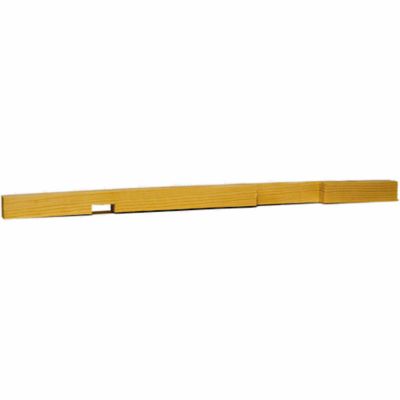
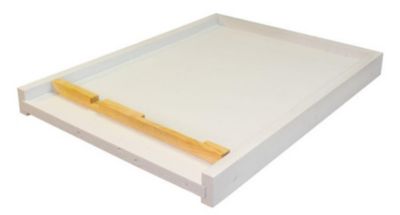
Beehive entrance reducers narrow the opening at the front of a hive, giving bees a smaller doorway to manage without closing off their access to the outside. These simple fittings sit at the entrance, usually where the bottom board meets the lowest hive body, and leave a passage for bees coming and going. Their main job is colony defense: fewer inches of open entrance can make it easier for guard bees to challenge robber bees and wasps. That matters for a newly installed package, a small nucleus colony or a split that has fewer workers than an established hive. Picture a young colony getting settled while neighboring colonies are busy searching for food. A wide-open entrance gives those newcomers more ground to defend, while a reduced opening concentrates activity in a smaller space. An entrance reducer does not guarantee protection against robbing or keep a colony from leaving, but it can support a more manageable entrance while the bees build their population. Opening size is an important distinction among beehive entrance reducers. Some designs offer a notch roughly three-quarters of an inch wide and another opening several inches wide; others have different dimensions or adjustable openings. Those measurements describe particular layouts, not a universal setting for every hive. A small opening may suit a colony with limited guard strength, while a larger passage can accommodate heavier foraging traffic. Colony population, feeding activity and the amount of traffic at the landing board all help determine what makes sense. Bees returning with packed pollen baskets need enough room to move through without a persistent bottleneck. A strong colony bringing in nectar can need a different entrance arrangement than a small colony drawing comb. The appeal of an entrance reducer is that it lets the doorway match the colony’s needs rather than leaving every hive with the same opening. For backyard beekeepers and folks tending a few hives beside a pasture or orchard, that small piece of equipment can make entrance management more straightforward.
Material and fit deserve as much attention as the opening itself. Wooden entrance reducers commonly have a simple bar shape with notches that provide different entrance widths when the bar is repositioned. Wood fits naturally with wooden hive equipment, and a sound piece with smooth edges can be easy to inspect and handle. Moisture, repeated scraping and pressure at the entrance can affect its shape over time, so straightness and freedom from splits matter for continued service. Plastic versions offer a different approach, with molded passages or adjustment features depending on the design. Their usefulness depends on how well they hold their shape, how securely they sit and whether the openings stay clear. Metal designs may provide adjustable access or additional resistance to chewing, but an entrance reducer is not automatically a mouse guard. Rodent protection depends on the material and the dimensions of every opening. Across materials, the best fit is one that rests firmly in place without leaving unintended gaps at the ends or squeezing the intended passage shut. Hive labels alone do not settle that question. Eight-frame and ten-frame equipment can have different entrance spans, and bottom-board designs can vary even among hives with the same frame count. The entrance width, available height and shape of the bottom-board lip are more useful compatibility details than a general hive description. A reducer should also leave bees a clear route between the landing area and the interior. Rough edges, an uneven seating surface or a strip that rocks loose can complicate that route. Care generally centers on keeping the passage free of obstructions and checking the fitting for wear. Propolis and wax can collect around the edges, while hive debris can gather near a narrow opening. Gentle scraping helps preserve the original shape; aggressive scraping can enlarge a notch or damage a thin edge. A reducer that has warped, cracked or developed sharp burrs may no longer provide the fit it once did.
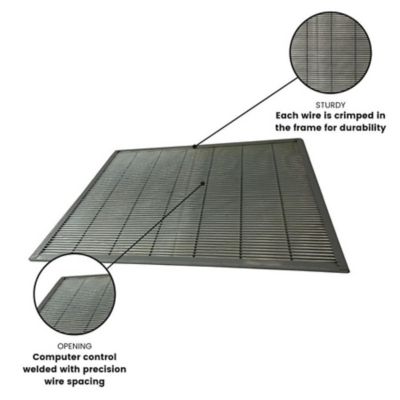
Entrance management works best when it fits the rest of the hive setup. A reduced opening still needs to allow normal bee movement and enough airflow for the colony’s arrangement; it is not meant to seal the hive shut. Screened bottom boards, upper openings, feeders and other components can all affect how the entrance functions. A feeder positioned near the doorway, for example, may take up space that would otherwise be open for returning foragers. A fitting that seems roomy on an empty bottom board can feel much tighter once the rest of the equipment is in place. At the other end of the hive,
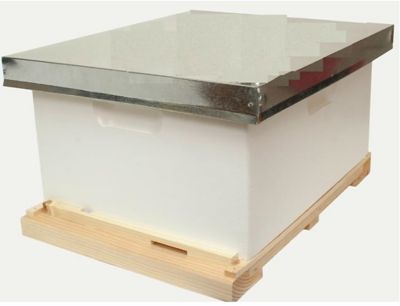
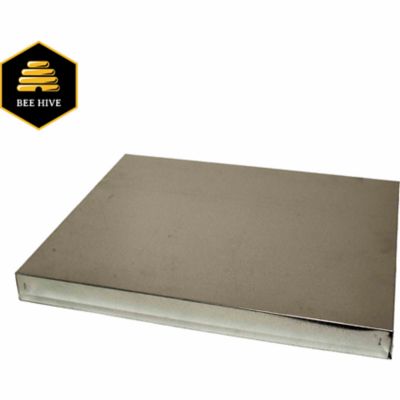
Beehive Tops And Covers provide protection above the hive body and form another part of the overall setup. The entrance reducer handles access at the front, while the arrangement above and below it influences ventilation and moisture movement. No single entrance opening suits every combination. Normal activity also tells a different story from an intrusion problem: a steady stream of bees returning with pollen is not the same as bees wrestling at the doorway or strangers probing gaps around the hive. Congestion, debris buildup and persistent fighting are reasons to look at the entrance arrangement rather than treating the reducer as a set-it-and-forget-it part. Reduced entrances can help colonies defend themselves when robbing pressure develops, but exposed syrup, spilled feed and open hive parts can still draw unwanted attention. Likewise, a reducer cannot control mites or replace regular colony checks. Its role is narrower and more practical: shaping the doorway the bees must travel through and defend. For someone expanding a small apiary, compatibility across existing bottom boards can simplify equipment choices and make spare fittings easier to keep organized. For a beekeeper receiving hive supplies as a gift, knowing the hive’s entrance measurements is more helpful than guessing from the number of boxes stacked above it. A well-fitting reducer should be easy to assess, straightforward to adjust and suited to the colony’s traffic, leaving the bees a manageable entrance without creating an obstacle at the front door.