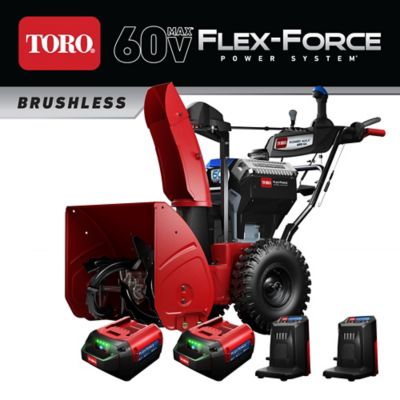
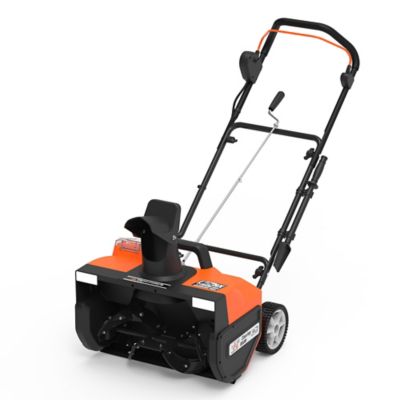
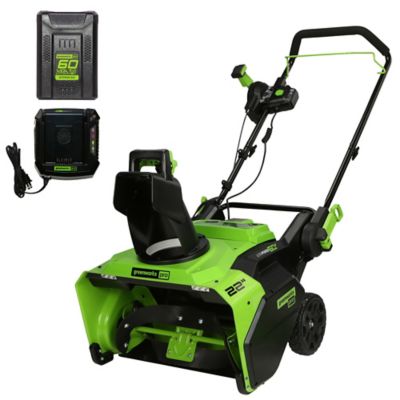
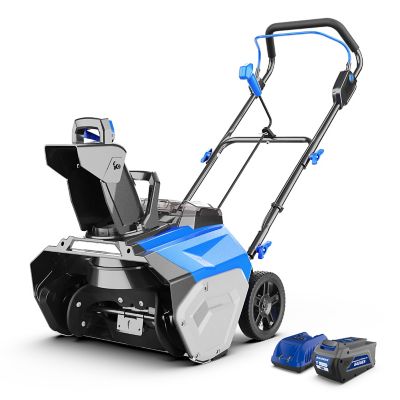
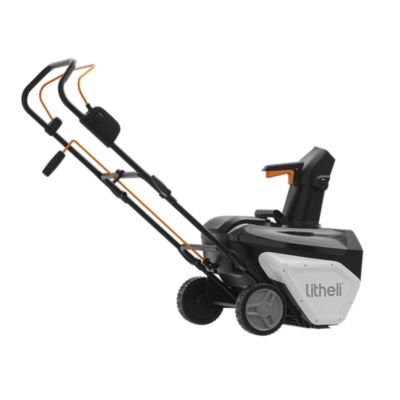
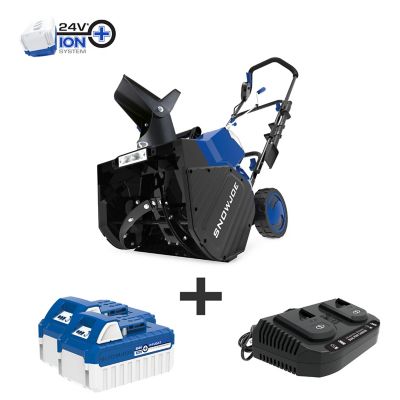
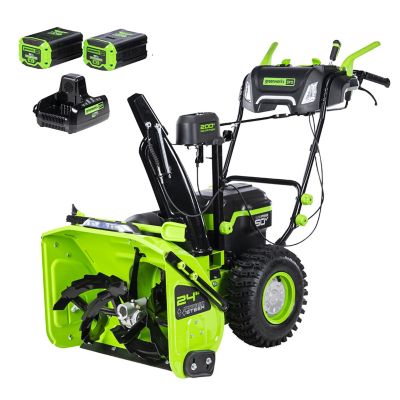
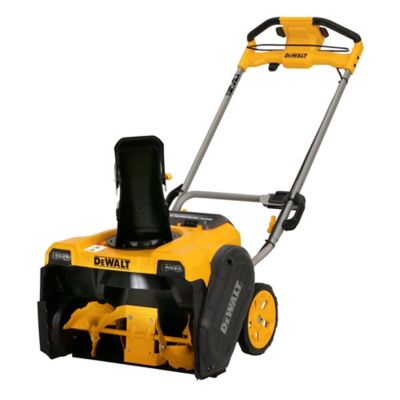
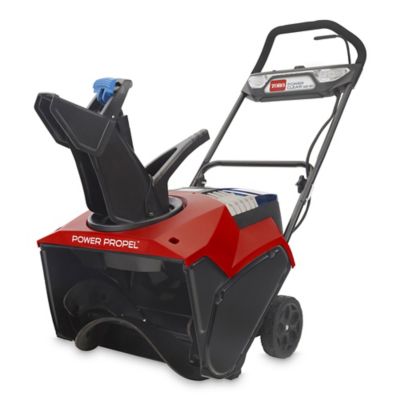
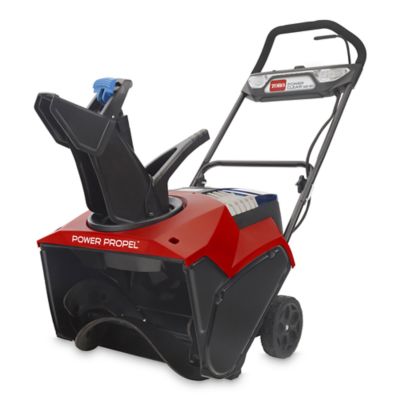
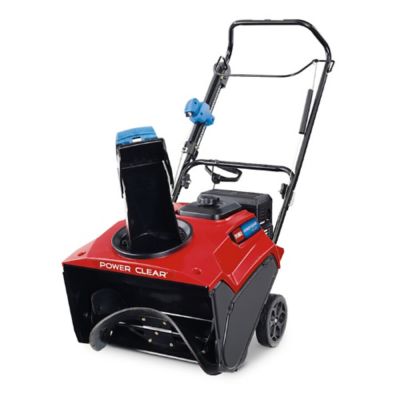
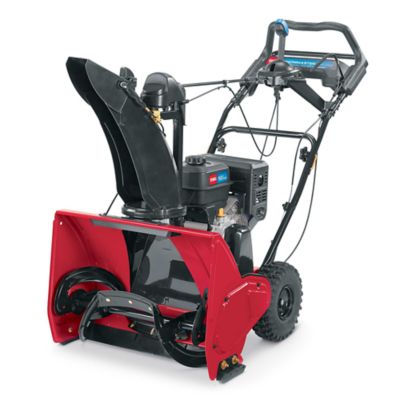
Battery operated snow blowers clear driveways, sidewalks and paths with rechargeable electric power, giving you cordless movement without gasoline, exhaust at the machine or gas-engine upkeep. They range from compact single-stage machines for smaller paved areas to larger two-stage snow blowers built for broader clearing jobs and heavier snowfall. Electric starting takes the pull cord out of the routine, and battery-powered motors generally run quieter than comparable gas engines, though the auger and moving snow still make noise. For a homeowner opening a path before chores or clearing room beside a pickup, the appeal is straightforward: charge the batteries, follow the starting procedure and get snow moving without handling fuel. The biggest differences between machines come down to clearing width, intake height, snow-handling design, drive system and battery capacity. A single-stage snow blower gathers and throws snow with its auger, making it a practical fit for many sidewalks and shorter paved driveways, especially when snow is fresh and relatively light. A two-stage machine adds an impeller that sends collected snow through the discharge chute, and many include powered wheels to help move the machine through deeper accumulation. That extra capability can matter on a long driveway or where drifting fills the same stretch between the garage and road. Neither design makes every snowbank an easy pass. Wet, heavy snow and packed ridges left by a road plow demand more power than a loose overnight covering, and frozen chunks may exceed a machine’s intended working conditions. Clearing width tells you how much ground a machine can cover in one pass; intake height helps describe how much snow can enter the housing, not a promise that every drift of that height will clear effortlessly. Matching those details to the area around your home is more useful than choosing by size alone. A narrow machine may slip neatly through a walkway gate, while a wider one can cut down the number of trips across an open parking pad.
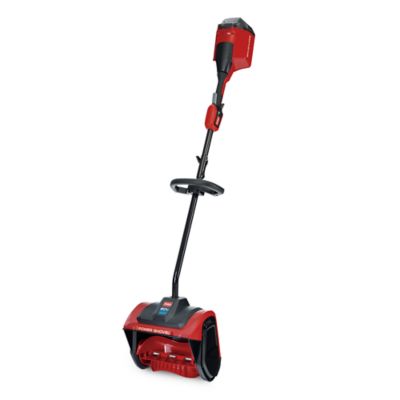
Battery performance deserves a close look because a driveway covered in dry powder is a different job from that same driveway under heavy slush. Runtime depends on battery capacity, temperature, snow depth and density, travel speed, and how hard the motor works. Voltage identifies part of the electrical system, but it does not tell the whole story about clearing strength or working time. Amp-hours describe battery charge capacity; watt-hours, when listed, give a more direct picture of stored energy across different voltage systems. Even then, motor efficiency and snow conditions affect how much ground gets cleared. Runtime and throwing-distance figures are best treated as results under stated conditions rather than promises for every storm. Wind, chute angle and wet snow can all shorten the distance snow travels. Battery requirements also differ: some machines operate with one pack, while others need two or more installed together. Battery fit is specific to the manufacturer’s approved system, so a pack from another cordless tool is not automatically compatible, even when its voltage matches. Charge time matters, too, particularly if your snow-clearing route includes the driveway, a path to the shed and the walk out to the mailbox. An approved spare battery set can extend the work session, but it also needs proper charging and storage. Cold temperatures can temporarily reduce battery output and runtime, and packs should stay within the operating, charging and storage temperatures in the manual. A heated utility space may suit those requirements better than an unheated outbuilding, provided the location is dry and follows the battery maker’s safety directions. For smaller stretches around the house,
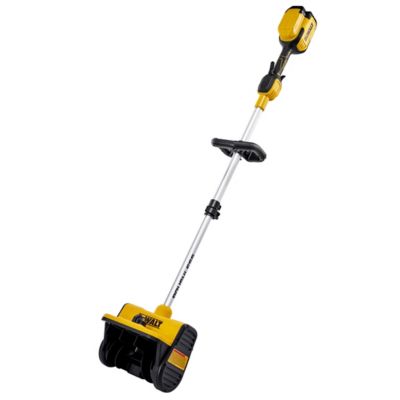
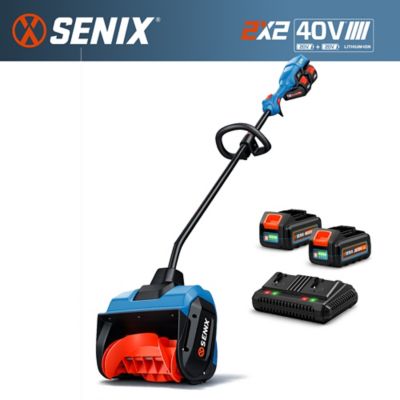
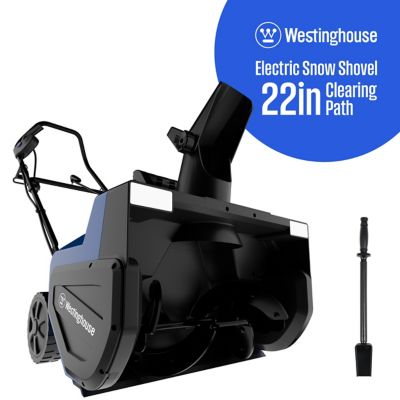
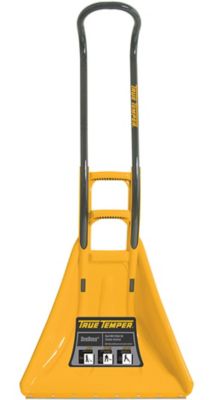
Cordless Snow Shovels offer another form of battery-powered snow removal, with a narrower working path suited to jobs where a full-size blower may be awkward. The right fit depends on the whole route: a broad driveway calls for coverage, while tight turns, steps and short connecting walks put more emphasis on manageable weight and maneuverability.
Construction and handling features help determine how a cordless snow blower feels once the first pass is underway. Augers may incorporate steel, rubber paddles or other materials, depending on the design, while housings and chutes may combine metal and cold-weather plastics. Metal components bring strength to demanding work, and lighter materials can reduce the effort of turning or storing the machine; the full design matters more than any one material. For paved surfaces, scraper bars and paddles influence how closely the machine clears to the ground. Gravel requires special attention because stones can become thrown objects. Many single-stage machines are intended for paved surfaces, while some two-stage models permit gravel operation with correctly adjusted skid shoes; the manual should specifically support that use. Self-propelled drive can ease forward movement, but the machine’s weight, balance, tire traction and turning controls still matter around parked vehicles and narrow garage entrances. Adjustable handle positions can make controls easier to reach, especially with winter gloves on. Headlights help illuminate the clearing path in low light, and chute controls let you redirect snow as the route changes. Snow needs a landing spot away from people, animals, vehicles, roads and neighboring property, with wind direction kept in mind. Before snowfall covers the ground, moving hoses, stones, branches and other loose objects helps keep them out of the auger. Battery power eliminates oil changes, spark-plug service and fuel storage, but it does not eliminate routine care. Scraper bars, paddles, belts, skid shoes and other wear parts still need inspection where fitted. After clearing, follow the shutdown procedure and remove the batteries before inspection, maintenance or clearing a blockage; use the designated cleanout tool, never your hands. Let the machine dry as directed, keep charging equipment dry and follow the manual’s storage instructions for both the blower and battery packs. Fold-down handles can help with garage storage where that feature is provided. From a short front walk to a wider driveway beside the barn, a well-matched battery snow blower helps keep everyday routes open without adding a gas engine to the chore list.