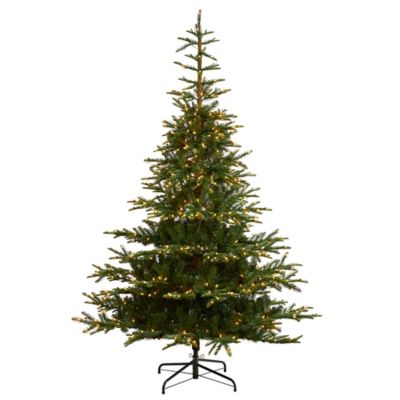
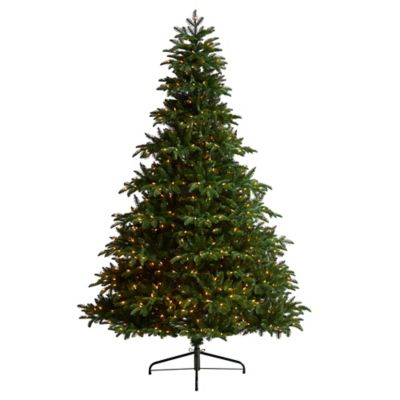
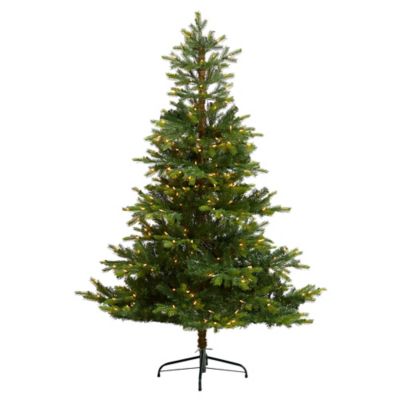
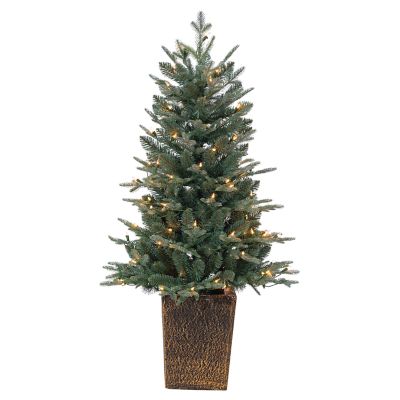
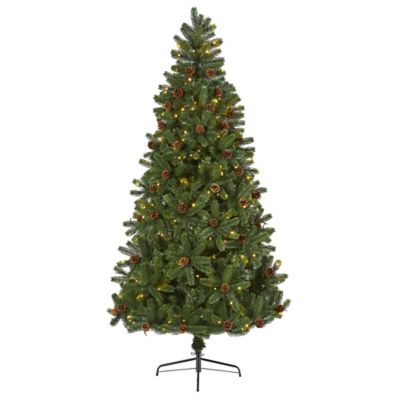
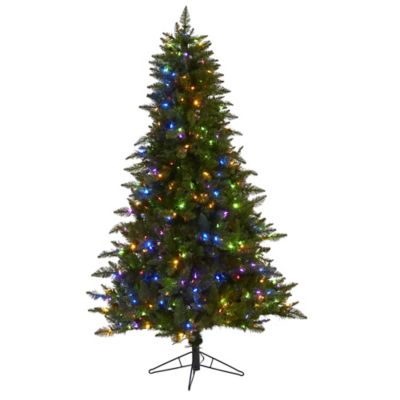
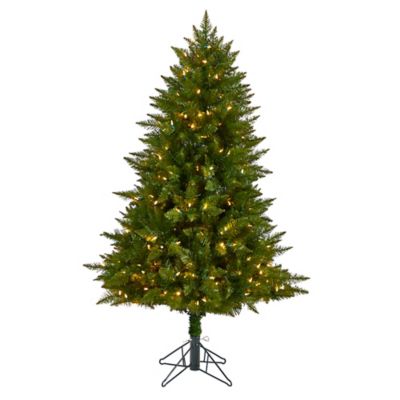
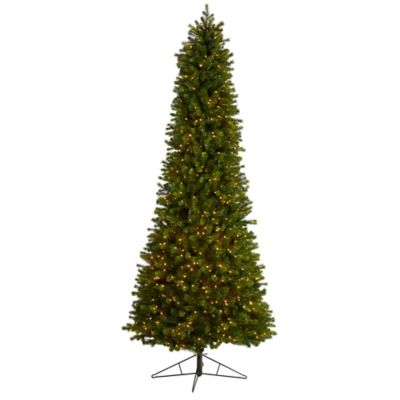
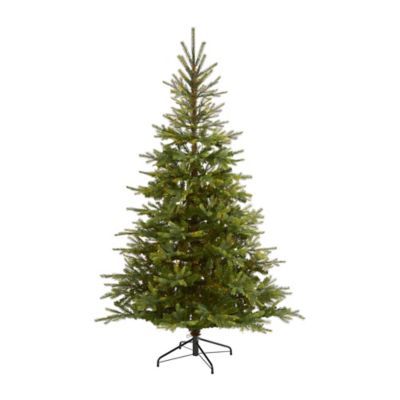
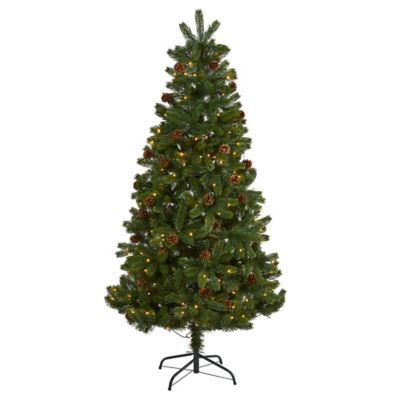
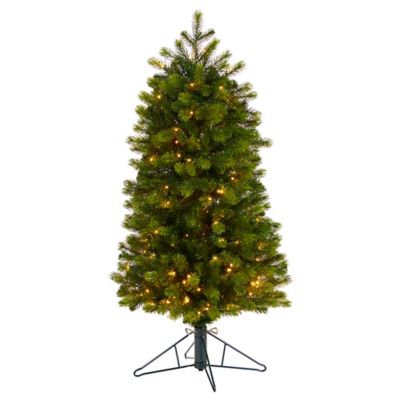
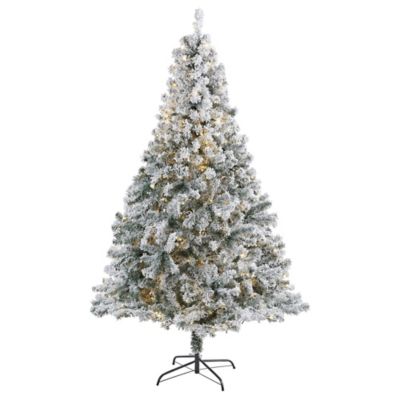
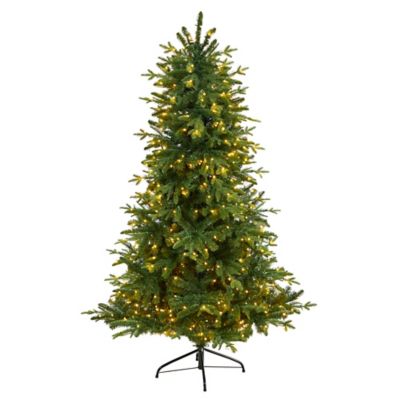
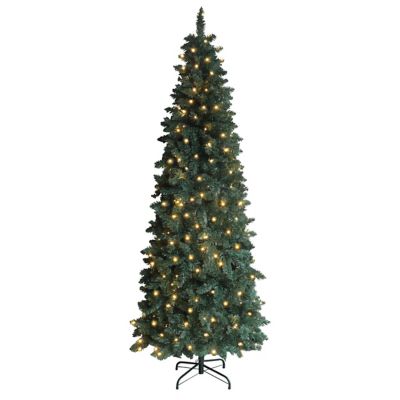
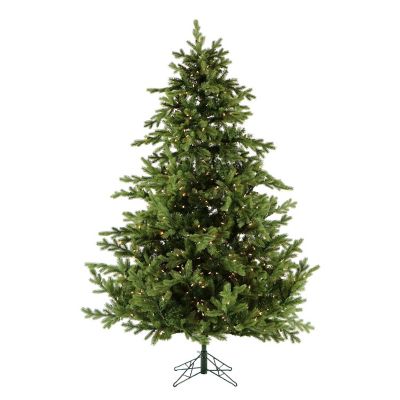
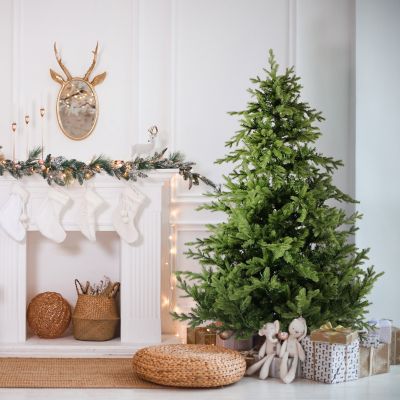
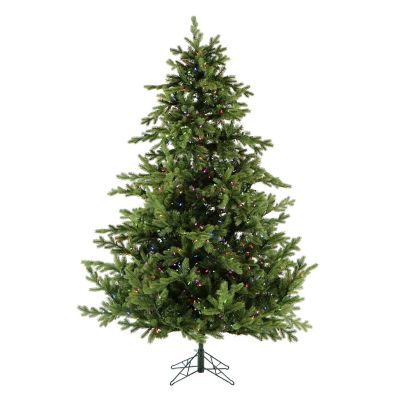
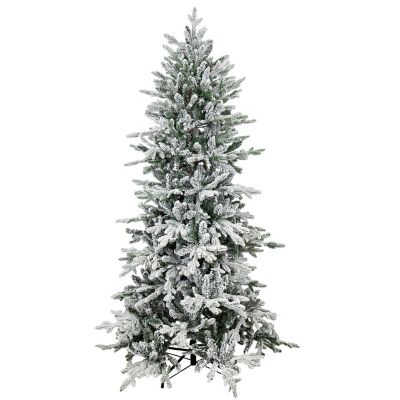
Artificial spruce Christmas trees offer the familiar shape of a Christmas evergreen without daily watering or a cut trunk to handle. Their tapered outlines, closely spaced branches, and short-needle appearance suit everything from a farmhouse living room to a small apartment or a welcoming front office. These trees generally feature PVC needles, molded polyethylene needles, or a blend of both, with full and slim profiles and pre-lit or unlit designs. PVC foliage typically has flat, cut needles that help create fullness, while polyethylene, often called PE, gives individual tips a more dimensional shape. Blended construction can place molded tips toward the outside, with PVC foliage farther inside to fill out the tree. The overall effect depends on branch placement, needle color, and how thoroughly the tips are spread after assembly. Deep green foliage gives bright ornaments a strong backdrop, while blue-green tones bring out the spruce-inspired look. Flocked finishes add the appearance of snow along the branches, though some loose flocking may fall during setup and packing. Size makes just as much difference as needle style. A broad tree can anchor an open living area, while a slim silhouette fits more comfortably beside a fireplace, in a dining room corner, or near an entryway with room for foot traffic. Height measurements deserve a little extra attention because the tree still needs room above it for a topper and clearance from the ceiling. The widest branch span, stand footprint, and nearby furniture all affect how comfortably a tree fits. In a room with low beams, a shorter, fuller shape may feel more balanced than a tall tree squeezed beneath the ceiling. For a busy household, leaving a clear path between the tree, the sofa, and the kitchen keeps holiday gatherings from feeling crowded. A well-proportioned artificial spruce can become the focal point of the room without taking over the space where everyone settles in.
Lighting changes both the look of an artificial spruce Christmas tree and the work involved in setting it up. Pre-lit trees have light strings arranged through the branches, which can simplify the process of getting an even glow from top to bottom. Unlit trees leave more freedom to choose light colors, replace separate strings, or change the arrangement from one Christmas to the next. Warm white lights pair naturally with wood finishes, red ribbons, and familiar family ornaments, while multicolor lights bring a cheerful look to playrooms and rooms where children gather. LED lighting typically draws less electricity and gives off less heat than incandescent lighting, although either type still needs proper handling and clearance. Lighting features vary by tree, so details such as steady illumination, changing colors, dimming, replacement bulbs, and controller operation matter when comparing designs. Electrical connections should stay accessible without stretching cords across a walkway, and indoor trees belong indoors unless their labeling specifically permits another setting. Branch construction matters, too. Hinged branches generally fold down from the center pole, while hook-in designs have separate branches that attach to the trunk. Both need shaping to open up the foliage and soften gaps around the center. The first setup often takes longer because compressed tips need spreading in several directions rather than simply pulling every branch straight outward. That little bit of attention helps lights sit within the foliage and gives ornaments room to hang freely. Sturdier branch sections closer to the trunk are generally better suited to heavier ornaments than the outermost tips, within the tree’s stated limits. Openings between branches can be useful for longer ornaments, while tightly packed foliage suits a simpler arrangement of smaller accents. A level surface, a properly fitted stand, and securely joined trunk sections help keep the display steady, especially in homes where children and pets share the room.
Care and storage play a big part in how an artificial spruce Christmas tree holds its shape from one holiday to the next. Metal frames, branch hinges, electrical connections, and needle attachments all benefit from gentle handling rather than forcing sections into place. Dust can collect on foliage during display or storage, so cleaning should follow the tree’s care directions, particularly around lights, flocking, and electrical parts. A dry, sheltered spot away from fireplaces, woodstoves, radiators, and other heat sources helps protect the tree and keeps the display clear of household hazards. Pets may find low ornaments and dangling cords hard to ignore, making branch access and cord placement worth considering before the first ornament goes up. For households with a curious cat or a big dog that likes to stretch out nearby, a steady base and a location outside the main traffic path matter more than squeezing in the tallest possible tree. Smaller spaces have their own appeal, too.
Artificial Tabletop Christmas Trees bring a Christmas focal point to a sideboard, desk, or kitchen counter without claiming floor space. Their scale can suit an apartment, a guest room, or a gift for someone who prefers a smaller holiday display, provided the surface is stable and the tree’s footprint fits comfortably. After the celebrations, removing ornaments and checking that all tree sections are dry helps make packing straightforward. A storage bag or sturdy container that fits the disassembled sections can limit dust and prevent branches from being crushed beneath other boxes. Light strings and controllers need room rather than tight bends or pinched wires, and labeled sections can make the next setup easier. Storage conditions matter as much as the container: a clean, dry indoor location generally treats foliage and electrical parts better than a damp outbuilding. With sensible care, an artificial spruce Christmas tree can remain a familiar backdrop for family photographs, wrapped gifts, and evenings spent together year after year.