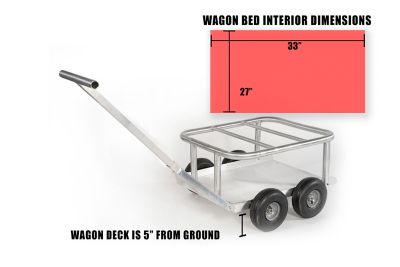
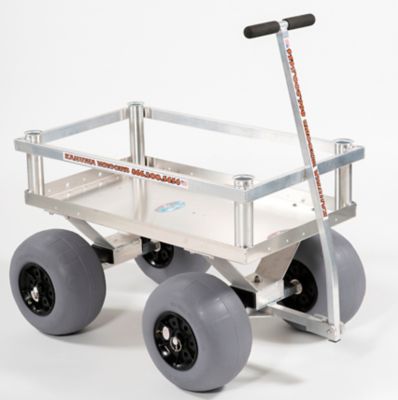
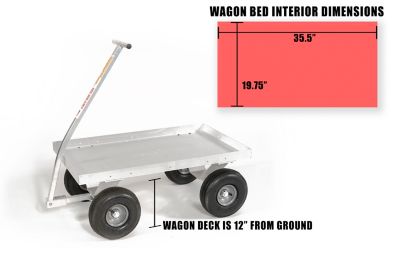
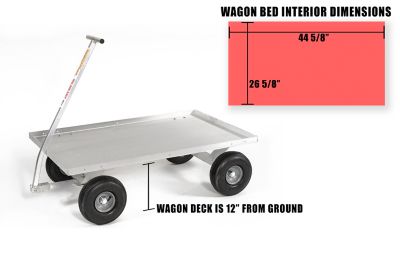
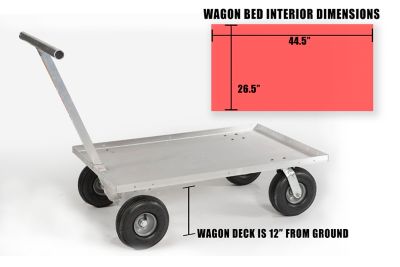
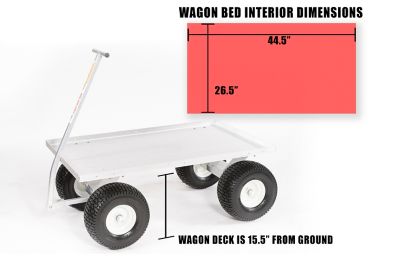
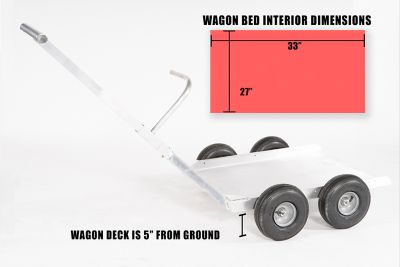
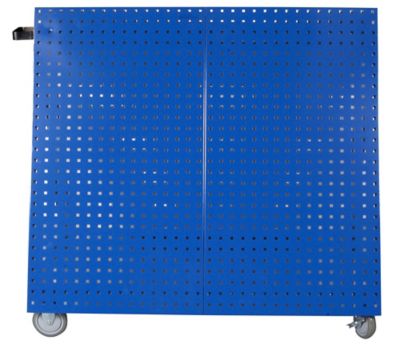
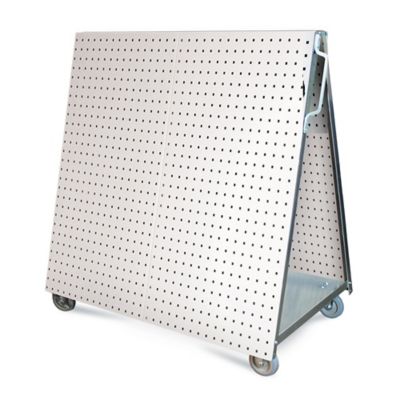
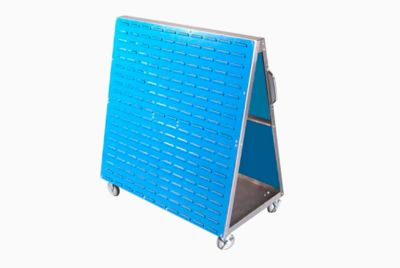
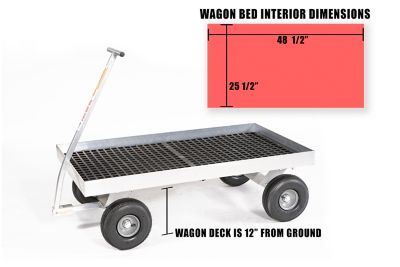
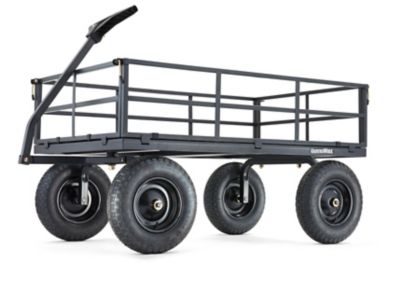
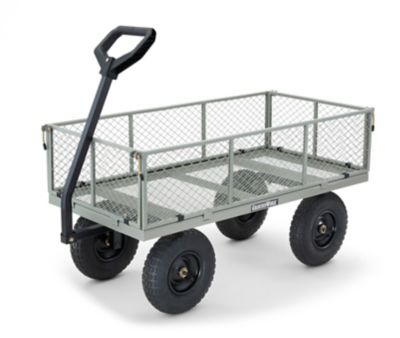
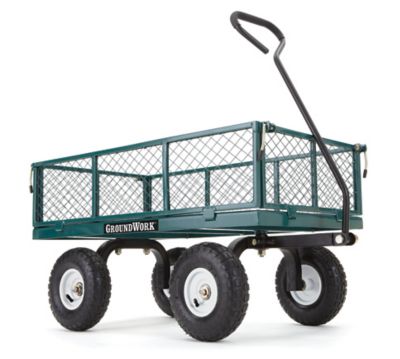
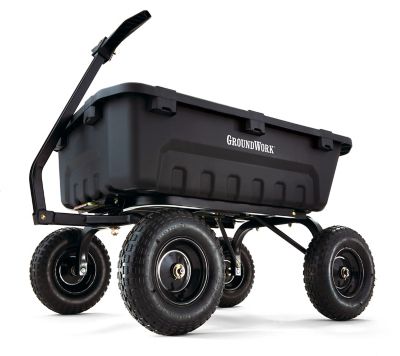
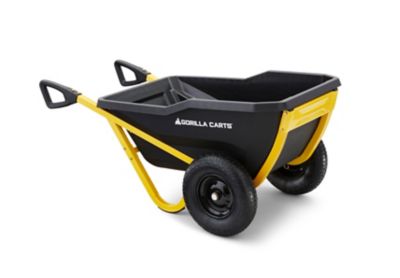
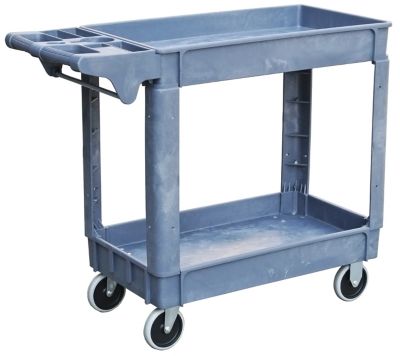
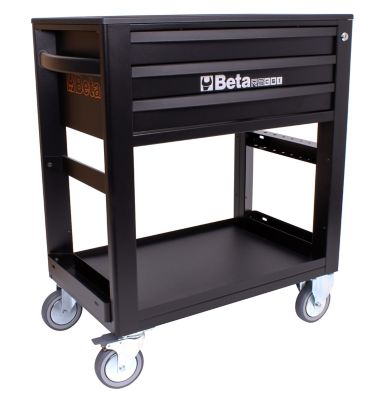
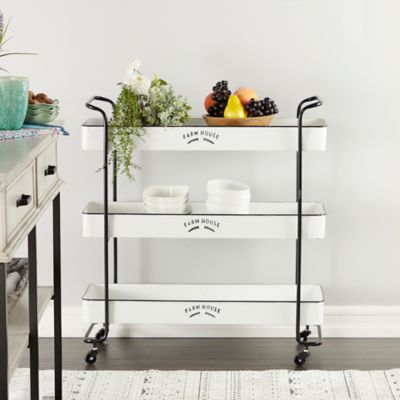
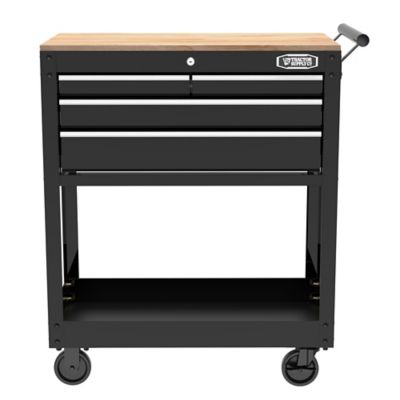
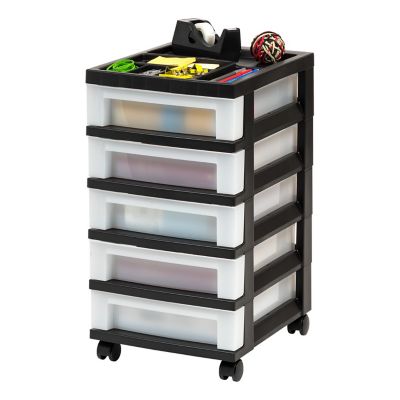
Aluminum carts are lightweight material-handling carts that help move supplies, tools, boxes, and equipment without carrying each load by hand. Their aluminum frames generally weigh less than comparable steel frames, making them easier to steer, lift into a vehicle, or tuck away between jobs. That combination of manageable weight and resistance to rust makes aluminum a practical choice for farm shops, garages, barns, warehouses, and work areas where hauling is part of the daily routine. A cart can carry bagged feed from a storage room to a nearby stall, bring repair tools across a shop floor, or keep several supply bins together on a trip from the truck to the workbench. Different cart layouts suit different kinds of hauling. Platform carts provide an open deck for boxes, containers, and loads that need support underneath. Shelf carts keep smaller supplies separated and within reach, while upright hand trucks carry stacked loads on a narrow footprint. Convertible designs can serve as both an upright hand truck and a four-wheel cart when their operating instructions allow it. Folding handles and collapsible frames can help with storage in a pickup, utility room, or crowded shed. The aluminum frame is only part of the build, though. Decks, shelves, wheels, axles, and handle hardware may include other materials, and those components affect how the cart handles a load. A solid deck supports smaller packages without gaps underneath, while an open-frame design may suit larger containers that rest securely across its supports. Raised shelf edges help contain loose supplies, and an open-sided platform leaves room for loading wider cargo within the cart’s stated limits. For folks who split their time between feeding animals, fixing equipment, and keeping a property running, the right layout means less juggling and a more organized way to move the things a job calls for. In a business setting, those same features can help keep deliveries, maintenance supplies, and packed orders moving between work areas.
An aluminum cart’s load capacity, deck dimensions, and wheel setup matter just as much as its frame material. A lighter frame does not automatically mean a lower capacity, and a larger deck does not automatically permit a heavier load. The manufacturer’s rating applies to the cart as a complete assembly, including its wheels, fasteners, and any folding or conversion mechanisms. On a convertible cart, the upright and platform positions may have different limits. Cargo size matters, too: a tall stack of cartons can become hard to control long before it reaches the weight limit. Loads that sit low, remain centered, and stay within the supporting area are easier to manage than cargo hanging far over one side. The route through a building deserves the same attention as the load itself. A cart needs room to pass through doorways, turn around workbenches, and clear shelving without catching its handle or cargo. Handle height and grip shape can make a noticeable difference when several trips are part of the workday, especially for people sharing the same equipment. Wheel diameter and tread influence where a cart rolls comfortably. Smaller casters often suit smooth floors and tight turns, while larger wheels can handle joints and minor surface changes more easily. Pneumatic tires can cushion a load over uneven ground but require air-pressure checks; flat-free tires avoid puncture-related flats, though ride feel varies with their construction. Gravel, packed dirt, and rough barn approaches call for wheels and a frame designed for those surfaces rather than a cart intended only for smooth indoor floors. Swivel casters help with maneuvering around corners, while fixed wheels help a cart track in a straight line. Wheel brakes can help hold a cart in place during loading on level ground, but they are not a substitute for following the manufacturer’s parking and load instructions. Nonmarking wheels may also matter in finished indoor spaces, where floor protection is part of the job.
Construction details help explain how aluminum carts hold up over repeated trips. Frame shape, wall thickness, joints, deck supports, and axle connections all contribute to strength; aluminum alone does not tell the whole story. Welded frames may have fewer connections to check, while bolt-together designs can allow certain components to be tightened or replaced according to the manufacturer’s directions. Aluminum does not form the red rust associated with iron and steel, but it can still corrode after exposure to salts, certain chemicals, or lingering moisture. Steel hardware and other attached parts may need separate attention. Routine care usually centers on clearing debris from the deck, wiping away spills, and checking wheels for wrapped string, twine, or other material that can interfere with rolling. Cleaning methods should match the frame finish, wheel material, and any shelf liners rather than relying on harsh cleaners that could damage those surfaces. Loose fasteners, worn grips, damaged tires, and bent supports deserve attention before another load goes aboard. Folding hinges and locking points also need to engage fully, with lubrication only where the manufacturer calls for it. For food-service work or other sanitation-sensitive settings, the complete cart needs to meet the requirements of the task; an aluminum frame by itself does not establish food-contact suitability. Storage is another part of everyday fit. A cart that folds flat may tuck beside a workbench, while a shelf cart may earn a permanent spot near the supplies it carries. Measure the folded dimensions as well as the working dimensions when vehicle space or shed space is tight. Aluminum carts are one option within the broader range of
Portable Carts, with the best fit depending on the load, the route, and the space between jobs. Whether the work involves hauling feed, organizing shop supplies, or moving boxes across a warehouse, a well-matched cart puts useful carrying space on wheels and keeps the next task close at hand.