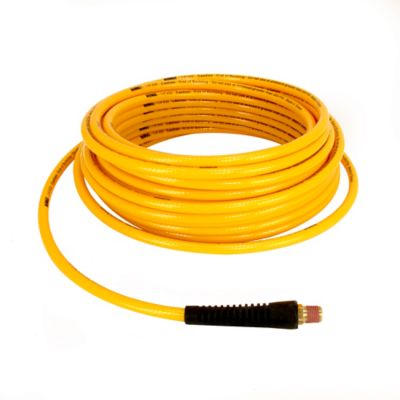
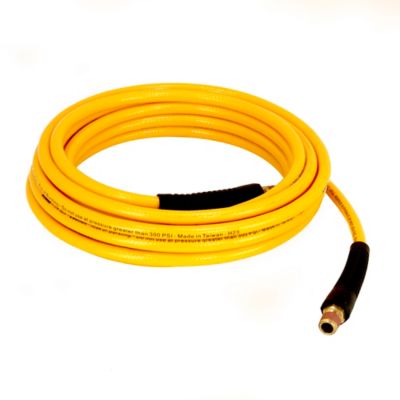
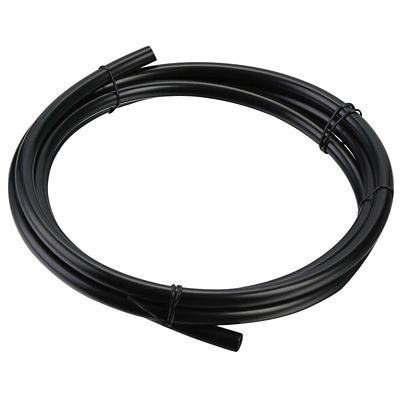
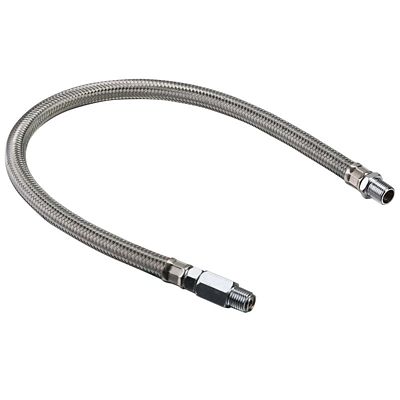
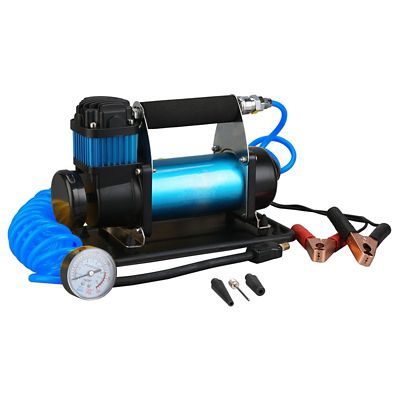
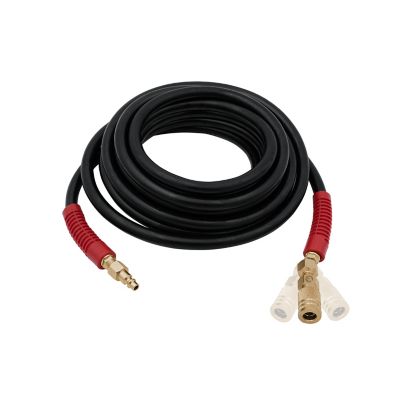
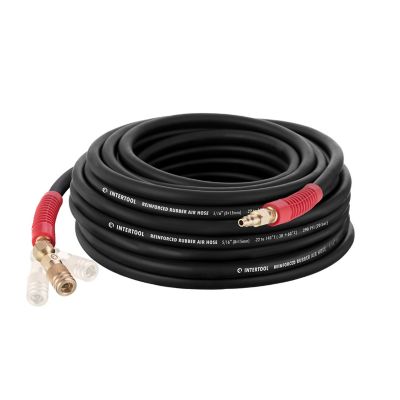
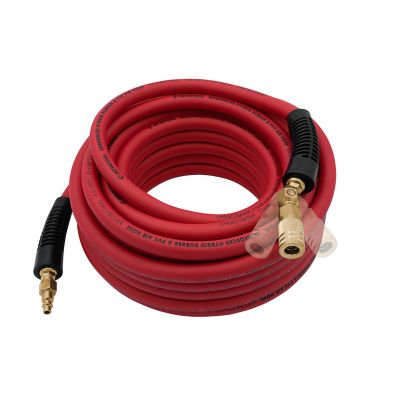
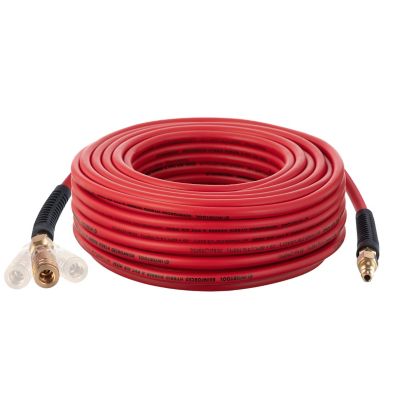
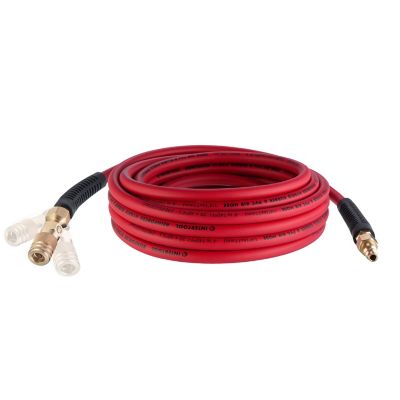
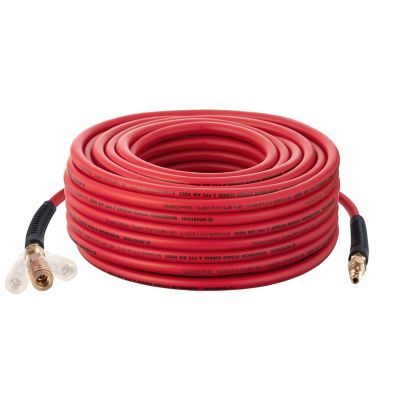
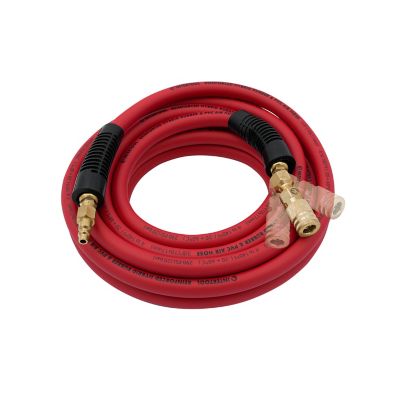
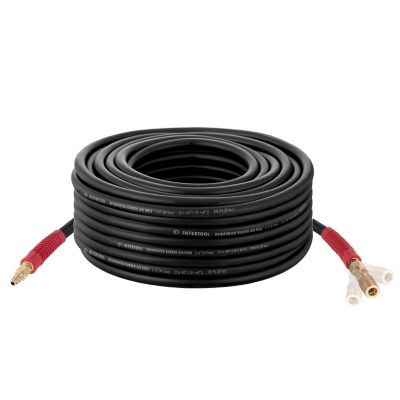
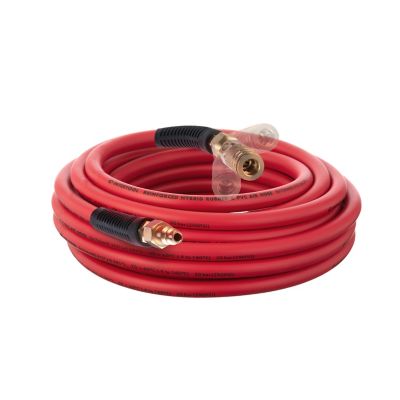
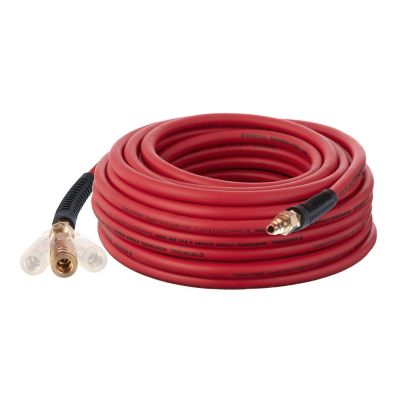
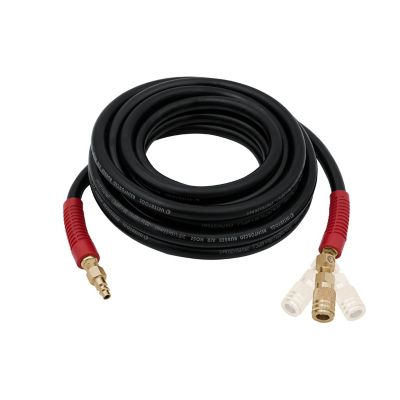
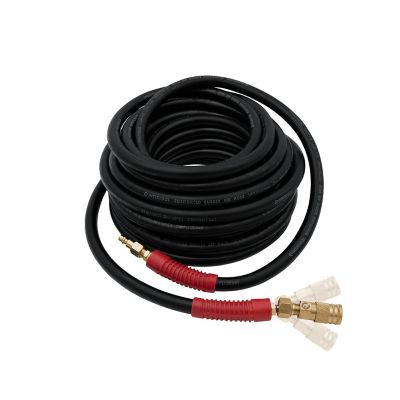
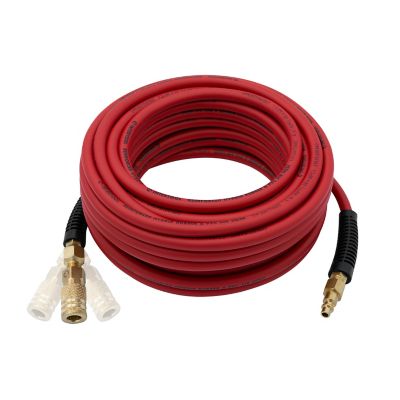
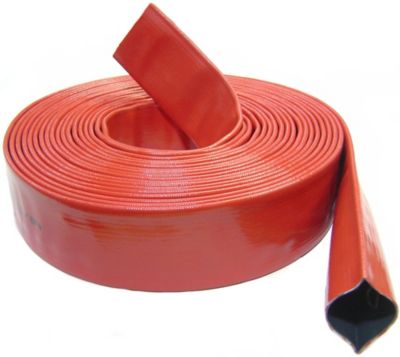
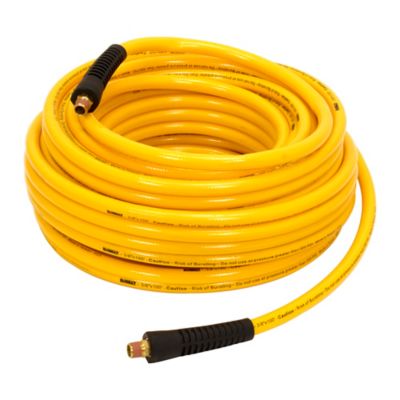
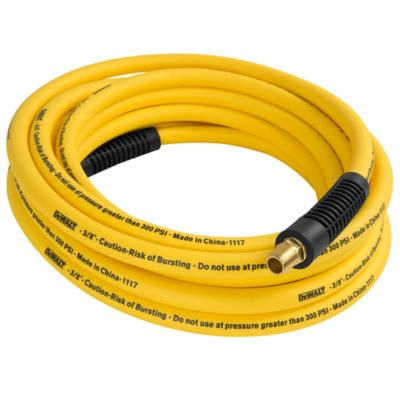
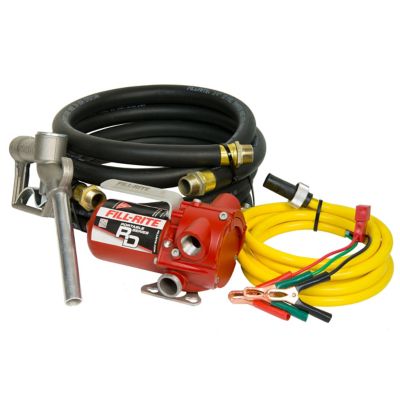
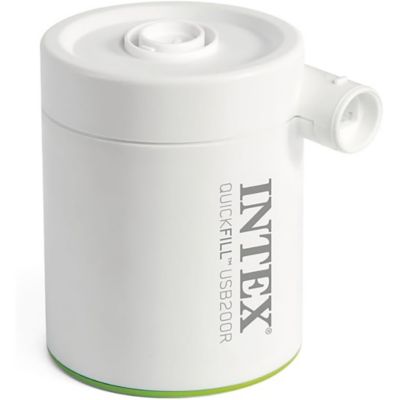
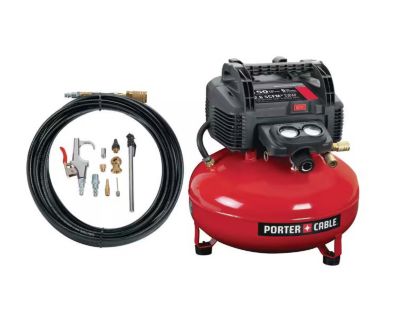
Air pump hoses carry air from a pump or compressor to the equipment that needs it, whether that means filling a lawn tractor tire, running a pneumatic tool in the shop or supplying an aquarium air stone. The name covers several kinds of hose, and they are not interchangeable. Reinforced air compressor hoses handle compressed air at their stated working pressure, while small aquarium airline tubing carries lower-pressure air through a much narrower passage. Inflator hoses may have threaded ends, valve chucks or pump-specific connections for tires and other inflatables. For farm owners, mechanics, woodworkers and folks keeping up with chores around the property, the right hose brings together suitable pressure capacity, manageable weight and enough reach to get where the work is. Material makes a noticeable difference when pulling a line around a workbench or reaching a trailer tire across a gravel driveway. Rubber generally offers good flexibility and abrasion resistance, though it can weigh more than other hose materials.
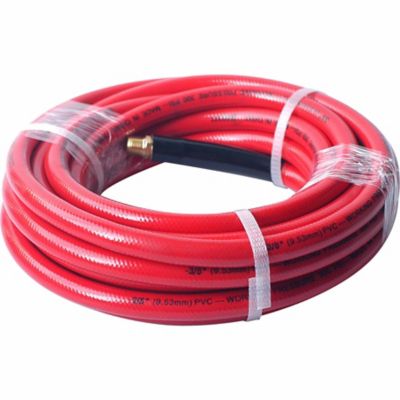
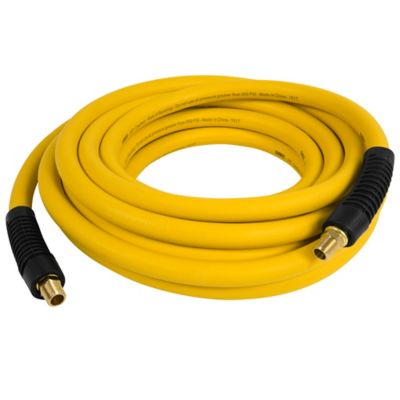
Rubber Air Compressor Hoses are a practical match for many garage and workshop tasks where a hose needs to bend around equipment and stand up to regular handling. Polyurethane often provides a lighter line that is easier to carry or move with a tool. PVC can also keep weight down, although some formulations become noticeably stiffer in cooler weather. Hybrid polymer blends balance weight and flexibility, with handling characteristics that vary by construction and temperature rating. For small air pumps, flexible vinyl or silicone tubing may suit aquarium and other low-pressure applications when the pump and accessory specifications allow it. Clear tubing makes moisture or buildup easier to spot, while reinforced compressor hose construction helps contain pressurized air. Across these categories, the material name alone does not tell the whole story; reinforcement, wall thickness, fittings and the stated operating limits all help determine where a hose belongs.
Hose diameter, length and working pressure matter just as much as the material. Inside diameter describes the size of the air passage, not the outside width of the hose or the thread size on its ends. A 1/4-inch inside-diameter compressor hose often fits light inflation work and tools with modest air demands, while a 3/8-inch passage generally allows more airflow with less pressure loss over the same distance. Tools that consume more air, especially over longer runs, may call for a larger line according to their specifications. A narrow hose can reach the other side of a building yet still restrict the airflow a tool needs under load. Length brings its own tradeoff: extra reach helps around parked equipment, but unnecessary footage adds weight, storage space and resistance to airflow. A shorter line may feel right at a fixed bench, while a longer hose can reach around a pickup without moving the compressor. The hose’s working-pressure rating needs to meet or exceed the highest pressure it will encounter in the system; a burst-pressure figure is not a normal operating limit. Tool operating pressure is a separate specification, and the regulator setting should follow the tool manufacturer’s requirements. Many shop connections have 1/4-inch NPT threads, but that measurement refers to the connection rather than the hose’s inside diameter. Male and female threads must pair correctly, and quick-connect plugs and couplers need matching profiles as well as suitable pressure and airflow ratings. Similar-looking fittings do not always seal or lock together properly. Small air pump tubing has different fit requirements, often slipping over a barbed outlet instead of connecting through a threaded fitting. Aquarium airline commonly has a 3/16-inch inside diameter, but the pump outlet and accessory connection remain the deciding measurements. Tire inflator replacement hoses may depend on a particular pump connection and valve attachment, so overall resemblance is not enough to establish fit. A secure connection helps keep air moving toward the task rather than escaping at the hose end.
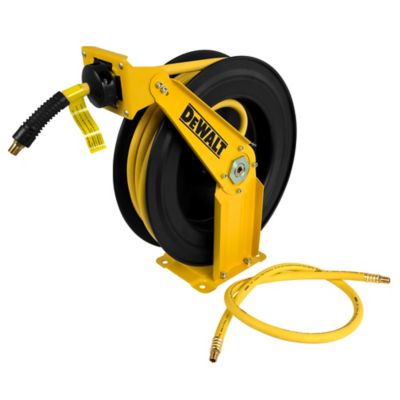
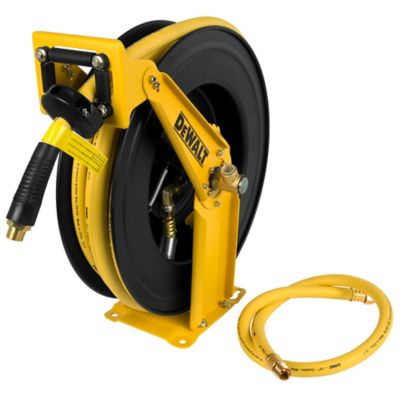
Day-to-day handling separates a hose that fits the job on paper from one that feels right during chores. Straight hoses offer flexible routing and can lie along the edge of a work area, while self-coiling styles pull back into a compact shape for smaller work zones. A reel can keep a longer compressor hose off the floor between jobs, provided the hose dimensions, connection and pressure rating match the reel. Bend restrictors near fittings help limit sharp flexing at a common stress point, and kink resistance matters when a line winds around bench legs or equipment tires. Even a tough outer cover benefits from a path away from sharp sheet metal, hot exhaust parts and moving machinery. On gravel or rough concrete, repeated dragging can wear the surface; on a crowded shop floor, a loop across the walkway creates a trip hazard. During the cooler months, low-temperature flexibility becomes especially noticeable when unrolling a hose in an unheated shed. Published temperature limits are more useful than assuming every rubber or hybrid line behaves the same in the cold. Care stays straightforward: disconnect and release pressure according to the equipment instructions before changing fittings or putting a compressor hose away, wipe off grit and store the line without tight bends. Cracks, blisters, exposed reinforcement and loose hose-end connections are reasons to take a pressurized line out of service rather than cover the damage with tape. For aquarium setups, compatible check valves can help prevent water from flowing back toward the air pump, with placement and orientation following the equipment directions. Outdoor aeration tubing also needs a rating suited to sunlight, moisture and the temperatures it will face. These details matter whether the hose serves a busy repair shop, a small homestead or a fish tank beside the kitchen counter. As a practical gift for someone setting up a garage or tending an aquarium, a hose makes the most sense when the pump type and connection measurements are already known. Matching those details brings useful reach and easier handling to the next tire check, shop project or everyday animal-care routine.