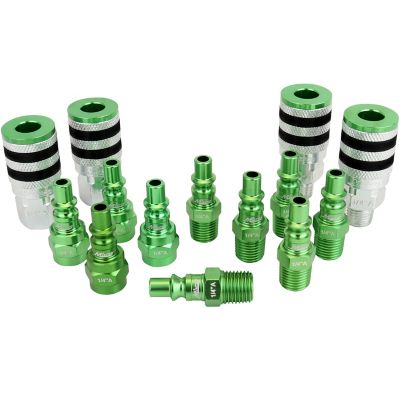
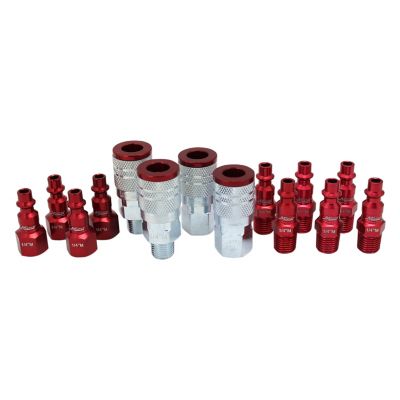
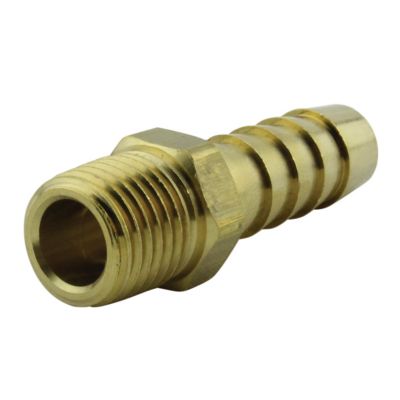
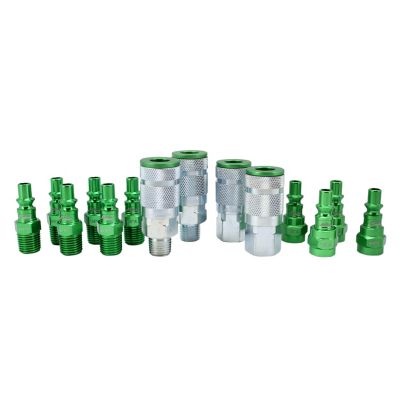
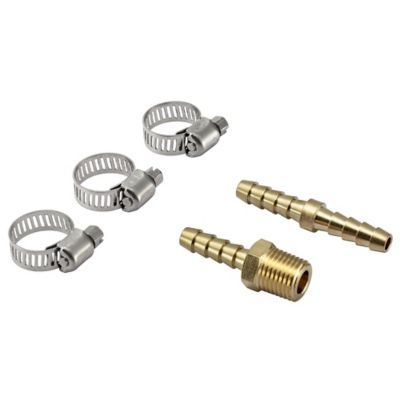
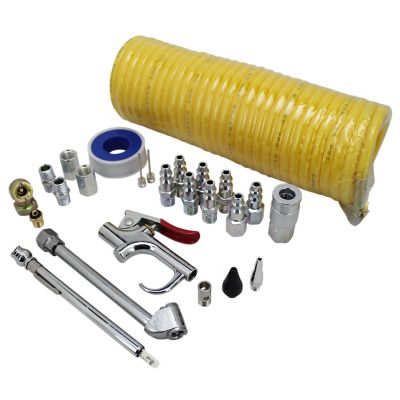
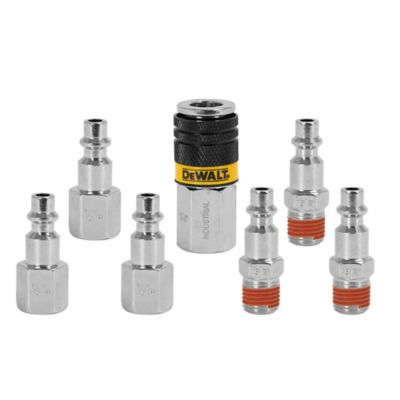
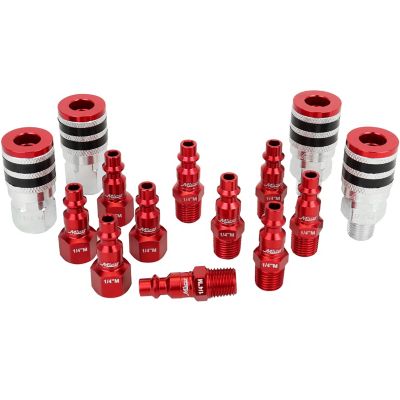
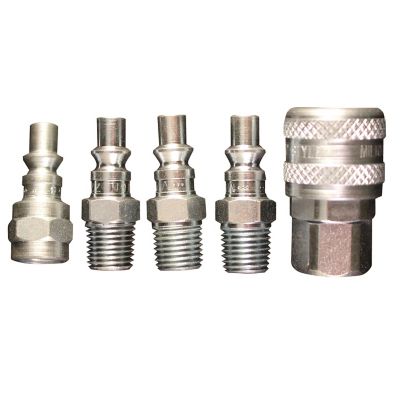
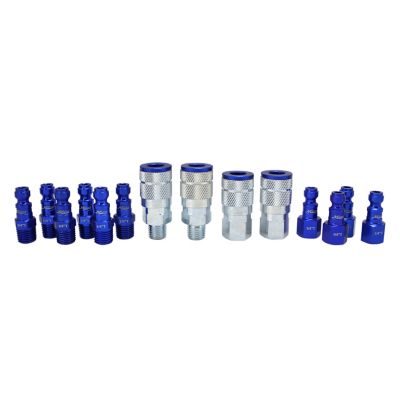
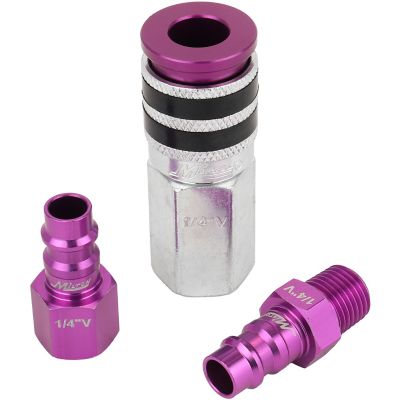
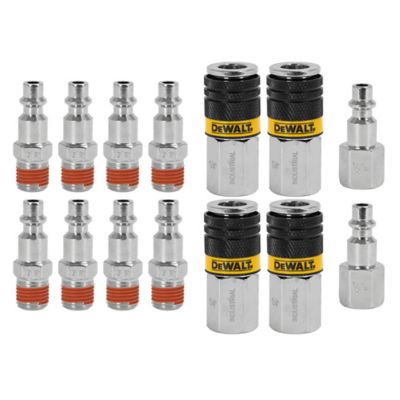
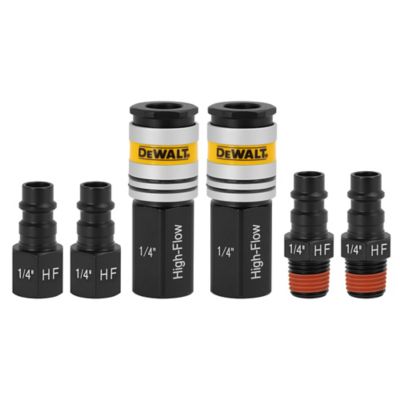
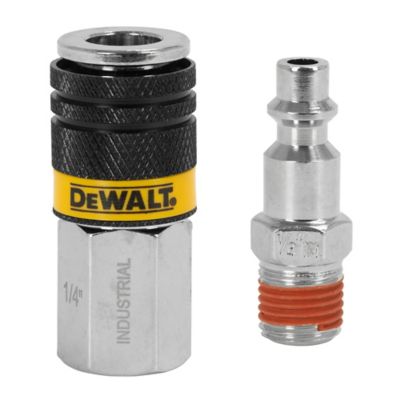
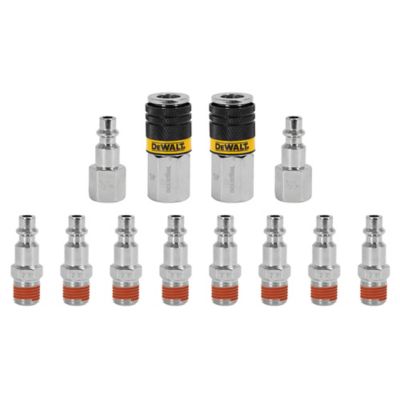
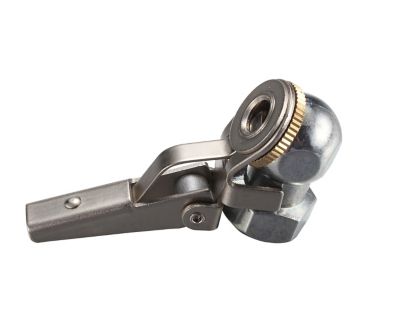
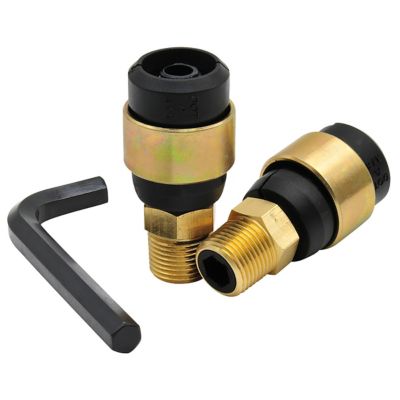
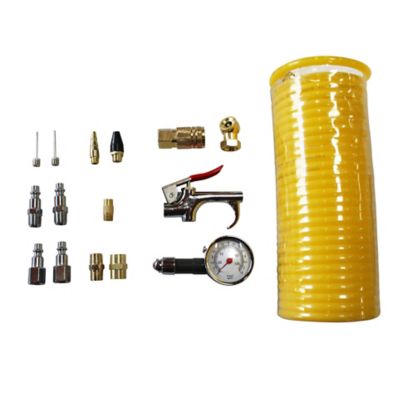
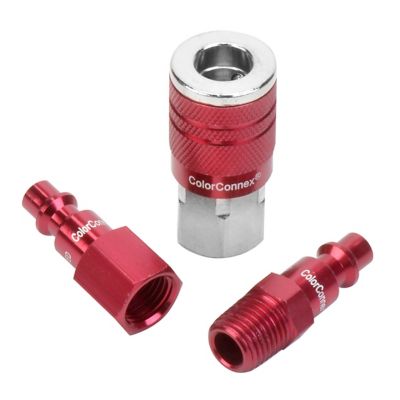
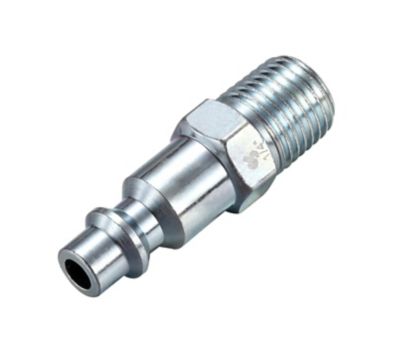
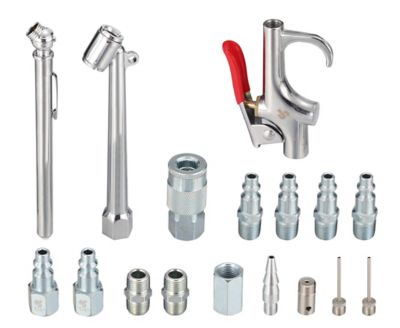
Air hose plugs connect compressed-air hoses to pneumatic tools and equipment through a quick-disconnect coupling. The plug is the projecting half of that connection, with a shaped nose that slips into a matching coupler and locks in place. Around a farm shop, garage or equipment shed, these small fittings make it easier to move between airing up tires, running an impact wrench and clearing a workbench with an appropriate blow gun. They also give mechanics, woodworkers and folks maintaining their own equipment a practical way to connect several tools to the same air line without threading each tool on and off. Although a plug is often called a male quick-connect fitting, that description refers to its connection with the coupler, not necessarily its threaded end. Air hose plugs can have male threads that screw into a tool inlet or female threads that attach to a threaded hose end or adapter. That distinction matters when replacing a fitting: the nose must match the coupler, while the threaded end must match the tool, hose or other connection. A plug is also different from a pipe plug that closes an opening. Most standard quick-connect air plugs have an open passage for airflow and do not shut off the supply by themselves when disconnected; that function generally belongs to the mating coupler. For a shop where the same hose serves a tire inflator, nailer and ratchet, keeping compatible plugs on those tools can simplify everyday work. The right connection should seat fully, lock securely and support the airflow the equipment calls for. Small details such as the shape of the plug nose, the thread specification and the fitting’s pressure rating have a direct effect on how well that setup works, even when two fittings look nearly alike in a parts drawer.
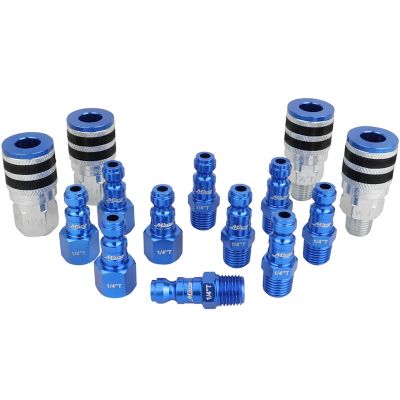
Fit starts with the interchange profile, which is the shape and dimensions of the plug section that enters the coupler. Industrial M-style is a common profile for general shop work, while automotive and other interchange patterns have different connection dimensions. High-flow profiles are another consideration for equipment that needs greater air volume. These categories are not automatically interchangeable, and matching only the general appearance or nominal size does not establish compatibility. A coupler described as accepting multiple profiles still needs to list the particular profile of the plug being connected. The mating
Air Hose Couplers should match the plug’s interchange specification and suit the working pressure of the air system. Thread size is a separate measurement from the quick-connect profile or body size. A common connection is 1/4-inch NPT, short for National Pipe Taper, but that designation does not mean the threads measure exactly one-quarter inch across. NPT is a nominal pipe-thread sizing system, and the tapered threads form a sealed connection with the appropriate sealant when specified. Other thread standards may look similar without forming a proper joint, so the equipment’s inlet specification matters more than an eyeball comparison. Male or female thread configuration, nominal thread size and thread standard all need to line up at the attachment point. Airflow deserves equal attention. An impact wrench loosening a stubborn wheel fastener may demand more air than a small inflator, and a narrow passage anywhere in the line can restrict delivery. A high-flow plug alone cannot make up for a restrictive coupler, an undersized hose or a compressor that cannot supply the tool’s required volume. Comparing the tool’s airflow needs with the complete hose-and-fitting setup gives a clearer picture than choosing by thread size alone. Working-pressure ratings also apply across the connected parts, with the lowest-rated component limiting the assembly. A snug fit is important, but it is not a substitute for the right specifications.
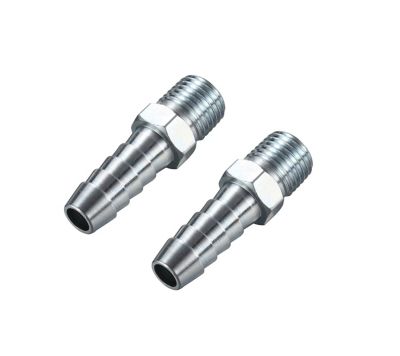
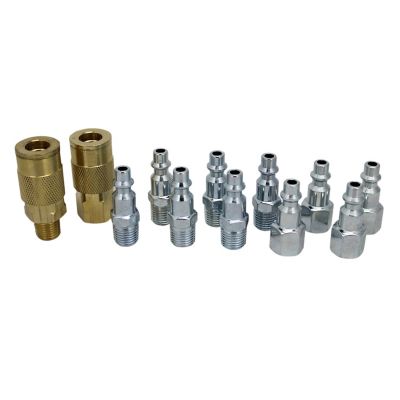
Materials and construction affect how air hose plugs hold up to the knocks and handling that come with shop work. Steel plugs offer strength for frequent connections, and many have a plated finish that helps resist corrosion. Brass offers corrosion resistance and is softer than steel, making care around its threads and sealing surfaces especially important. Stainless steel may suit applications where corrosion resistance is a particular concern. Material alone does not establish a fitting’s pressure capacity or suitability; its construction and stated ratings remain the deciding factors. Wrench flats provide a place to grip the fitting during installation, while a compact shape can help keep a connection from projecting too far beneath a tool handle. On a crowded bench or beside a tractor wheel, that extra clearance can make a difference in handling. Proper installation also helps protect the investment in hoses and tools. Where thread sealant is required, it belongs on the threaded joint rather than the quick-connect nose, and the sealant must be suitable for the fitting and application. Keeping excess tape or compound out of the air passage helps prevent debris from reaching valves and tool internals. Supporting the adjoining connection while tightening reduces strain on the hose, and excessive force can damage threads or crack a tool’s inlet housing. Any installation or inspection that opens the line calls for isolating the air supply and relieving trapped pressure first. Between jobs, clean plug noses and protected hose ends help keep grit out of the coupling. A fitting dragged across a gravel floor can pick up dirt or develop a nick where the coupler seals, leading to leakage or trouble connecting. Flattened locking grooves, damaged threads, persistent leaks and a plug that will not stay latched are reasons to take the connection out of service. Storing disconnected tools off the floor and checking fittings during routine equipment care can help extend their service life. For the farm mechanic, home-shop owner or carpenter, well-matched air hose plugs keep a small but essential part of the work setup straightforward.