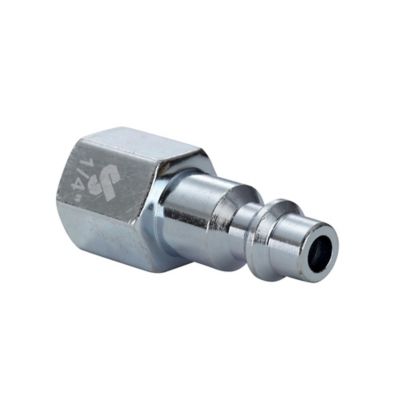
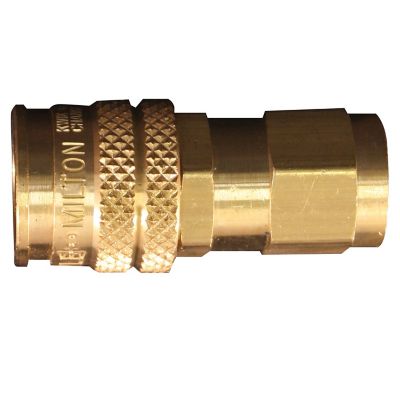
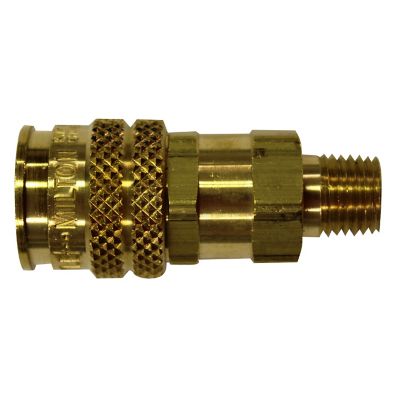
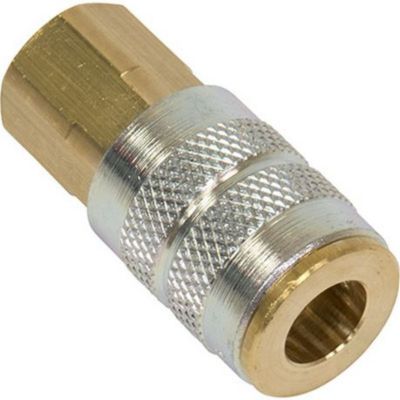
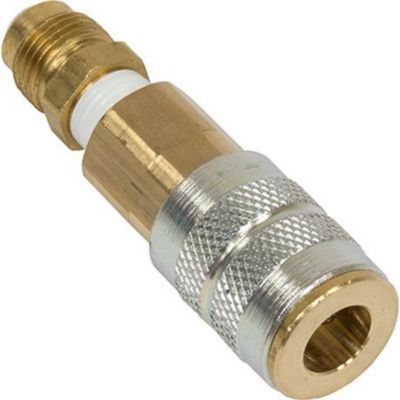
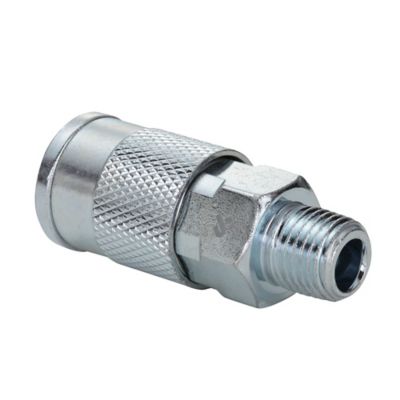
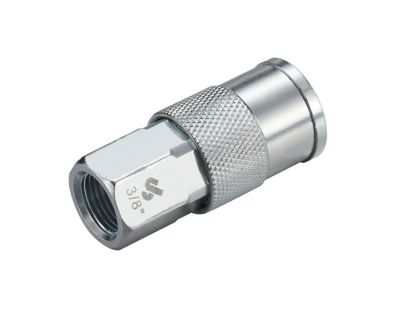
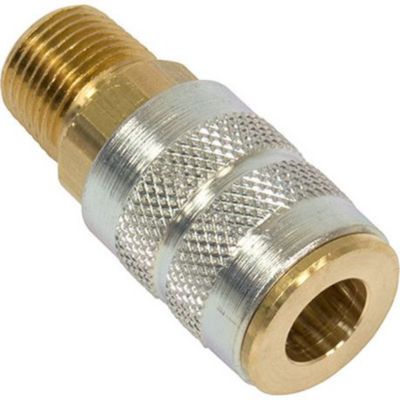
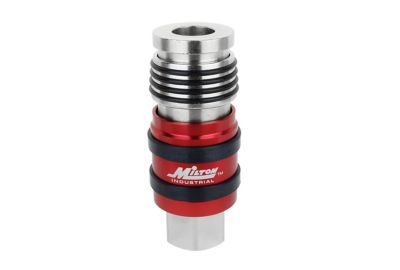
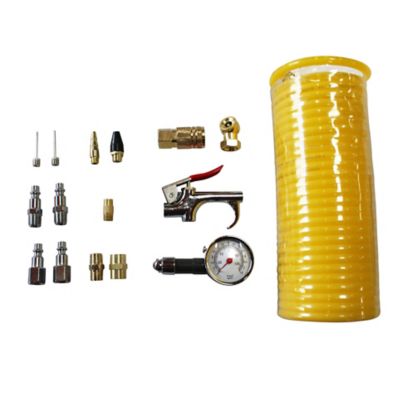
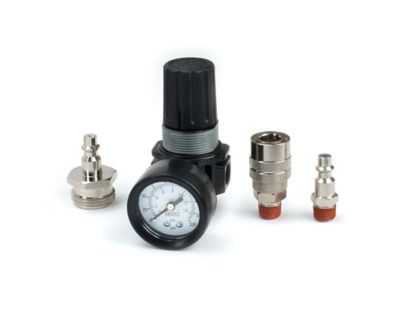
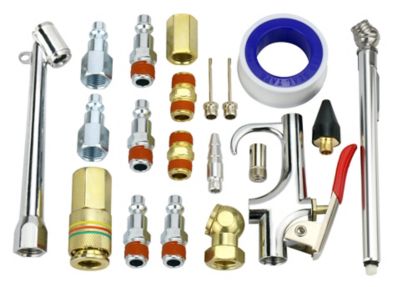
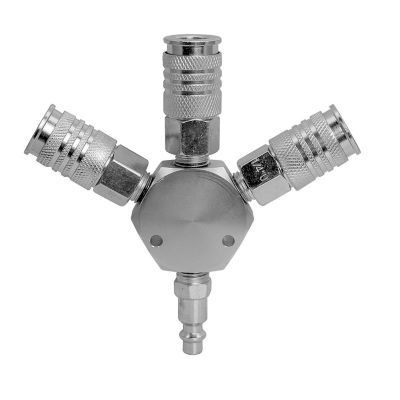
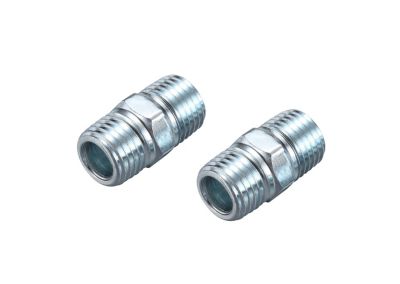
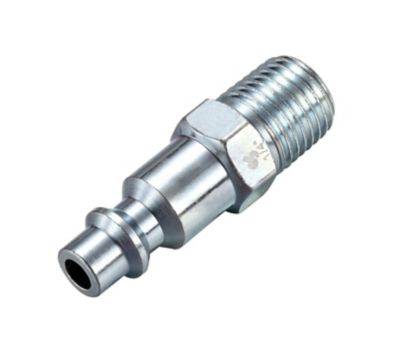
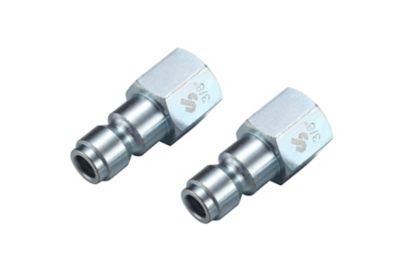
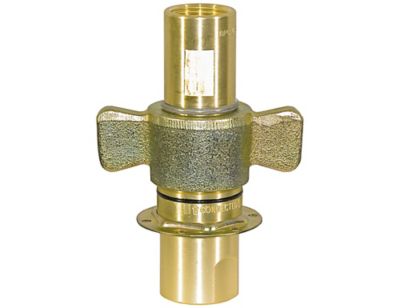
Air hose couplers are quick-connect fittings that join an air hose to a pneumatic tool without having to unscrew the hose each time the tool changes. In a typical setup, the female coupler, or socket, goes on the working end of the hose, and the male plug threads into the tool’s air inlet. A locking mechanism holds the plug in place while an internal seal keeps air from leaking around it. Most sockets also have a shutoff valve that stops air from flowing out of the supply hose when the plug is removed. The main thing to match is the interchange style, which is the shape of the part of the plug that seats inside the socket. Industrial (M-style), Automotive (T-style) and ARO (A-style) are common profiles, but they aren’t automatically interchangeable. Two plugs can look nearly alike on the bench and still have grooves in different spots. A plug that slides partway into a socket isn’t necessarily a match, and one that doesn’t seat and lock as intended can leak or come loose under pressure. A multi-profile socket can make sense in a shop with several kinds of plugs, as long as it’s designed for each profile in the mix. There’s also a separate fit to check: the threads that join the socket to the hose and the plug to the tool. The pipe thread size, thread type and whether the threads are internal or external all matter at those joints. A matching pipe thread tells nothing about whether the quick-connect ends will mate, and the inside diameter of the hose is another measurement altogether. Sticking with one interchange style across the tools on a shared air line makes it easier to swap an inflator for an air ratchet and get back to work without sorting through a drawer full of fittings.
How the air line gets put to work matters just as much as how the fittings go together. Topping off a tire on a utility trailer calls for short bursts of air, while running a sander puts a steady demand on the line. An impact wrench also needs enough air to do its job under load, even if it only runs for a few seconds at a stretch. If the wrench spins freely but bogs down on a stubborn fastener, a tight passage through a fitting can be part of the trouble, even when the regulator reads where it should with the trigger released. Flow ratings help distinguish fittings that look similar from the outside, and a high-flow connection works best with a plug designed to match it. A larger passage at the tool end won’t make up for a narrow hose or a restriction farther back in the line. The
Air Compressor Connectors page is a place to look when the connection that needs attention is at the compressor outlet rather than the tool end. Along the whole line, the working pressure rating of each fitting needs to cover the maximum pressure that can reach it. The way a coupler handles is worth a look, too. A sleeve with enough room to grip can make a difference when the hose drops from an overhead reel or connects under the edge of a workbench. Some sockets let the plug push straight in to lock, while others call for pulling back the sleeve. A venting coupler releases pressure on the tool side before freeing the plug, taking some of the kick out of disconnecting. Those differences matter on a shared repair bench or in a farm shop where the same air line might run several tools before a piece of equipment is ready to roll again.
Materials and upkeep make a difference when a hose end spends more time on the shop floor than hanging from a hook. Brass resists corrosion and suits many general shop setups, while steel stands up well to repeated contact and the knocks that come with pulling a hose around equipment. Plated steel adds a protective finish, though deep scratches or worn spots can leave the metal underneath exposed. Some couplers pair a brass body with a steel sleeve, so the body and the part that gets handled don’t have to be made of the same metal. The seal inside deserves attention, too. Grit carried in on a plug can wear the seal or keep it from closing snugly, and a sleeve that’s packed with dirt may not slide back into position. Wiping off the plug before connecting it and hanging the hose clear of the floor help keep metal filings and shop dirt out of the socket. A hiss where the plug enters the coupler can point to a worn seal, a nicked plug or a mismatch between profiles. A leak at the threaded joint points to a different spot and may have more to do with the thread fit or the way the joint was sealed. Shut off the air supply and relieve trapped pressure before taking a fitting apart or replacing it. If a coupler no longer locks positively, or a plug is bent from getting caught under a tire or pinched against a bench, forcing the two together won’t restore the fit. From a small garage set up for tire and fastener work to a farm repair bay where hoses get pulled around tractor tires and trailer tongues, a matched connection should seat firmly, stay quiet under pressure and come apart the way it’s designed to.