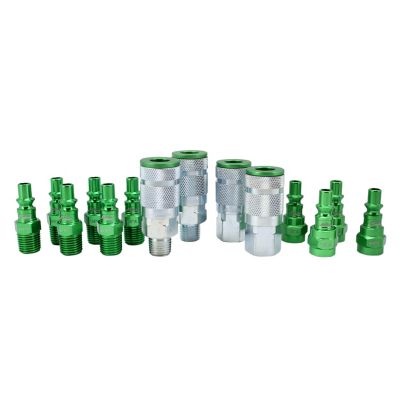
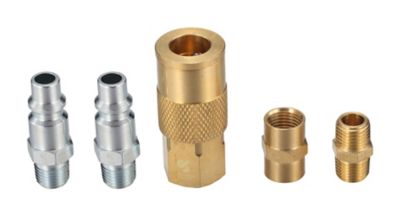
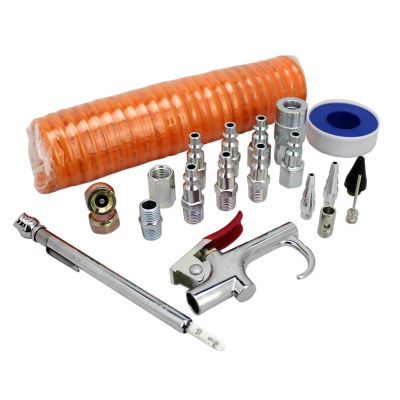
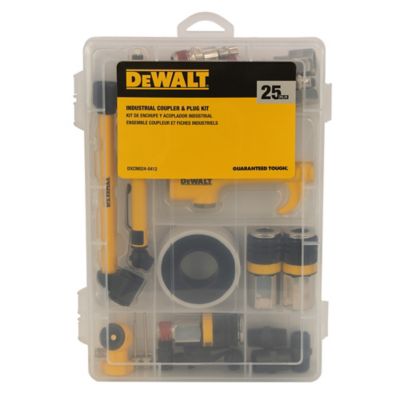
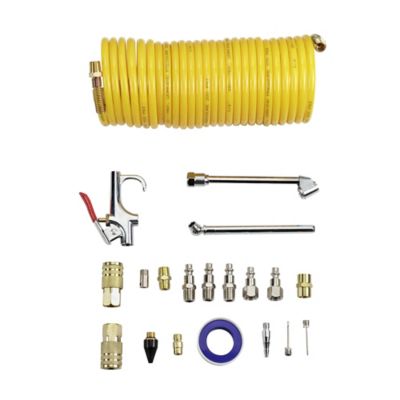
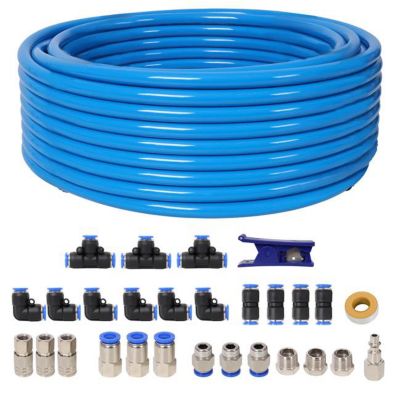
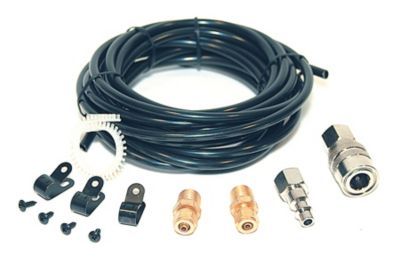
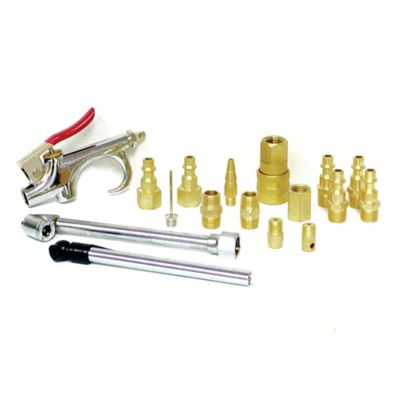
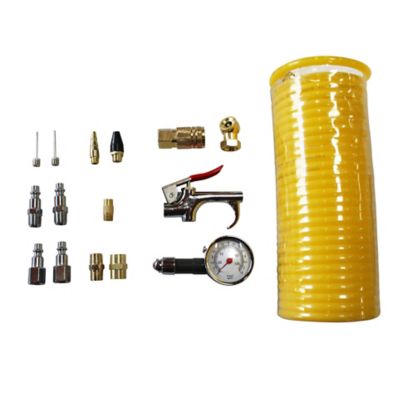
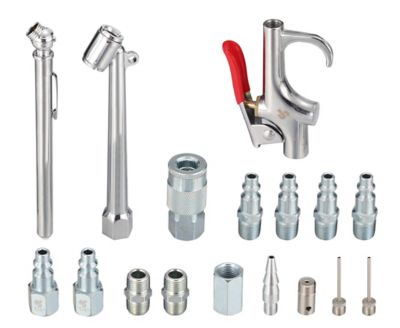
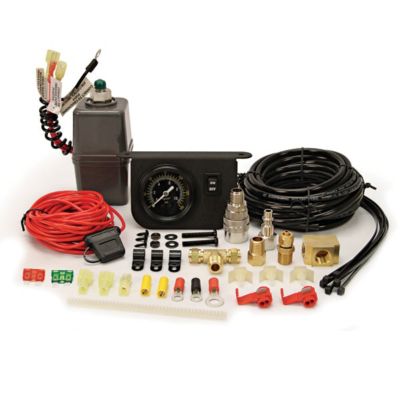
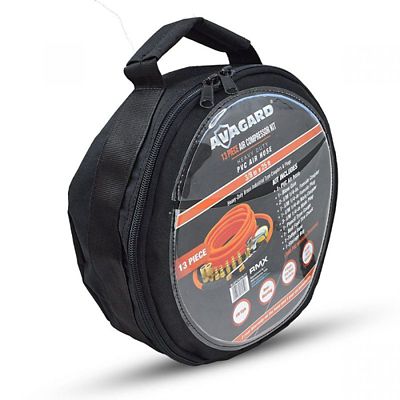
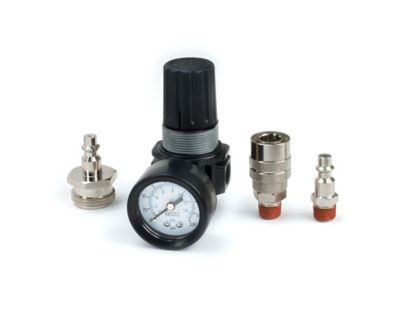
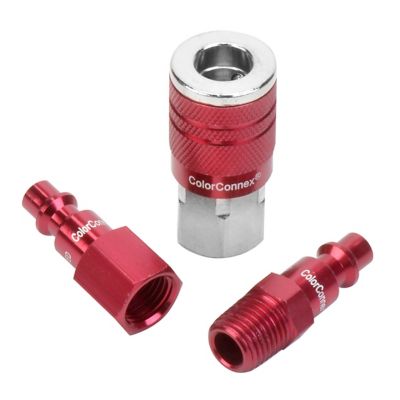
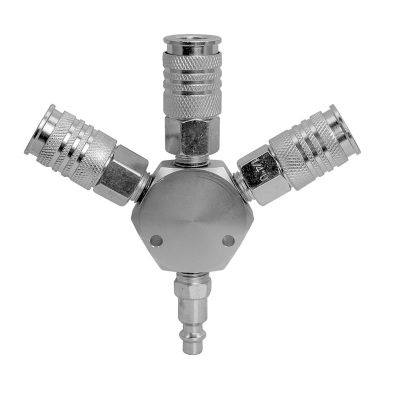
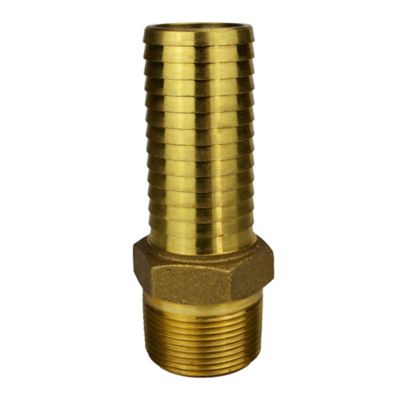
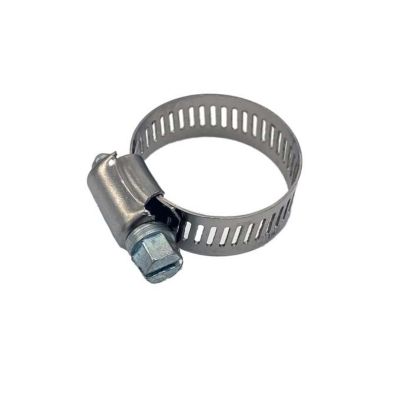
Air fitting kits bring together the small but important parts that connect an air compressor to the tools and hoses that earn their keep around a farm, garage, workshop, or jobsite. A typical kit may include quick-connect couplers, plugs, threaded adapters, unions, elbows, tees, sleeves, and ferrules, giving you a handy way to build or repair an air line without hunting down every fitting one at a time. These pieces are commonly used with impact wrenches, nailers, staplers, blow guns, inflators, spray equipment, and other pneumatic tools. They can also help with routine upkeep, such as replacing a worn coupler on a hose that has seen years of dust and gravel roads or setting up an air line near a workbench, tractor bay, or tire-changing area. Before choosing a kit, look at the connection style, thread size, material, and number of pieces included. Many shop setups use 1/4-inch NPT threads, but the fitting size still needs to match the port on your compressor, hose, tool, or manifold. Thread style matters as well: M-style fittings are a common choice for household and light-shop use, while industrial or I/M-style fittings are made for many standard 1/4-inch industrial connections. V-style or other high-flow fittings can be a better match for equipment that needs more air volume, including certain high-volume, low-pressure spray tools. Matching the plug and coupler profile is essential; fittings that look close may not connect properly, and mixing styles can restrict airflow or leave you with a frustrating setup when the work is waiting.
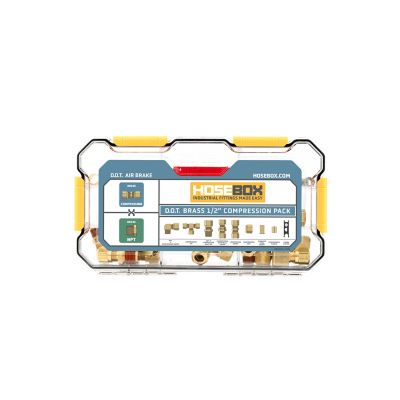
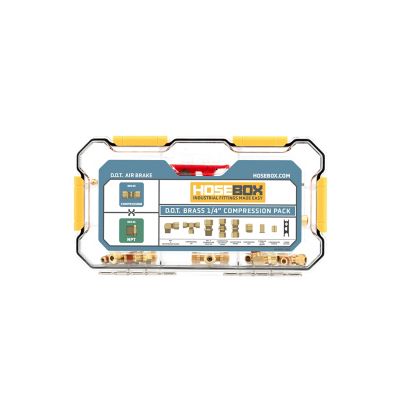
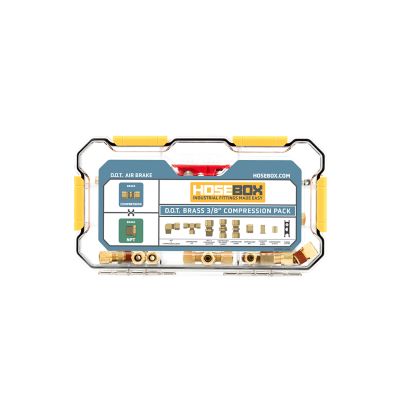
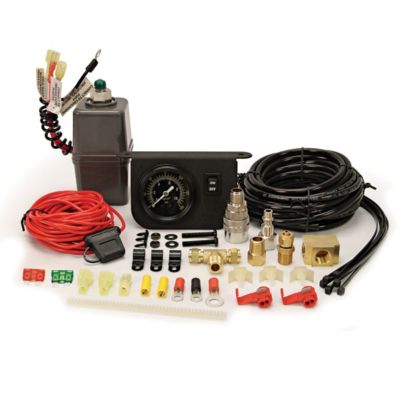
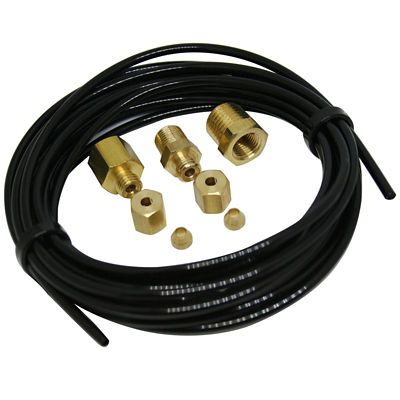
Think about the way you use compressed air before settling on a kit. A small assortment may be all that is needed for occasional tire inflation, cleaning sawdust from a work surface, or running a brad nailer during a weekend repair. A larger assortment makes more sense for a busy shop, a property with several air hoses, or anyone who regularly works on equipment and wants common replacement parts close at hand. If you maintain trailers, trucks, farm machinery, or air-powered suspension and brake components, look for fittings made for the pressure, tubing, and application involved. Air brake and suspension setups often use brass push-to-connect or compression fittings in several sizes, with unions and elbows that help route tubing neatly around frames and other components. These are not interchangeable with every general-purpose shop fitting, so check the equipment instructions and connection specifications before ordering. For a more complete hose setup, browse our selection of
Air Compressor Hose Kits. It can be helpful to keep a few straight connectors, angled fittings, and spare plugs in a labeled drawer, especially during the cooler months when a leaking line or failed connection can bring an outdoor repair to a standstill. A fitting kit also makes a practical gift for a new homeowner, farmhand, hobby mechanic, woodworker, or anyone putting together a first garage workshop. Pairing it with other basic shop supplies gives a handy DIYer the pieces needed to get organized without guessing which individual fitting will be needed next.
A dependable connection starts with careful installation. For male NPT threads, wrap quality thread seal tape in the proper direction or use a suitable pre-applied sealant fitting, taking care not to place excess tape where it could break loose and enter the air passage. Push-to-connect tubing should be cut cleanly and square, not at an angle or with a crushed end. Press the nylon or rubber line completely through the fitting and past the internal O-ring, then give it a gentle pull to confirm it is seated. Compression fittings need the correct tubing size and a snug, even connection rather than excessive force that can damage the fitting or line. After putting an air system together, bring it up to pressure gradually and check every new connection. A spray bottle filled with soapy water makes a simple leak detector: bubbles forming around a joint point to escaping air that needs attention. Turn off and release pressure before making adjustments, and follow the compressor and tool manufacturer’s pressure recommendations. Keep fittings clean, protect open connections from grit and moisture, and replace parts showing damaged threads, cracked bodies, flattened seals, or worn locking sleeves. With the right air fitting kit and a little care during setup, it is easier to keep tools working smoothly, reduce wasted compressor time, and handle everything from a quick tire top-off to a full afternoon of work in the shop.