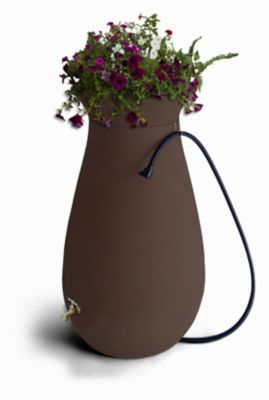
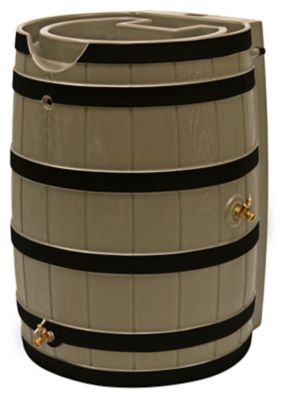
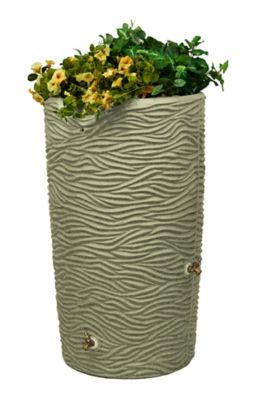
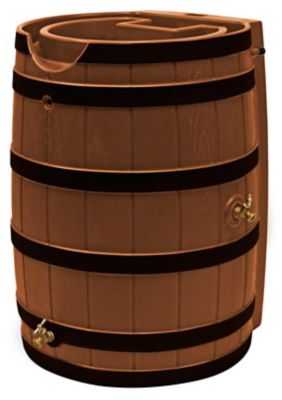
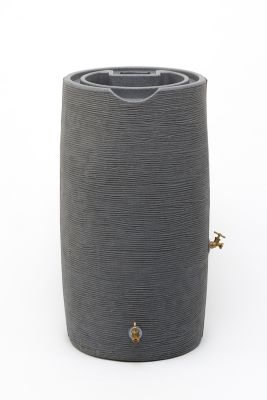
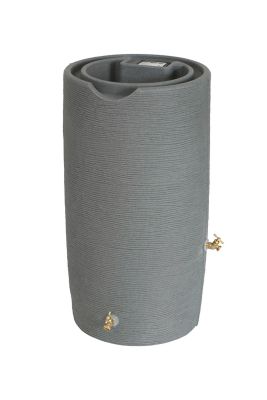
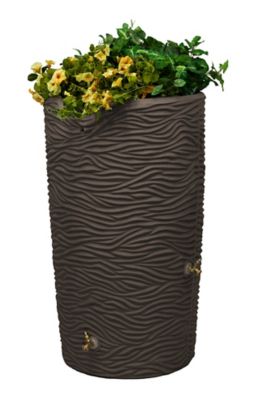
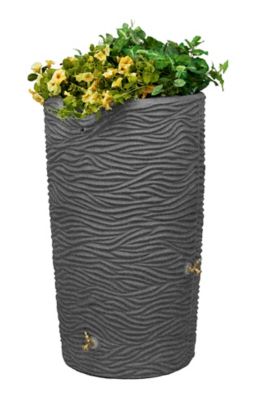
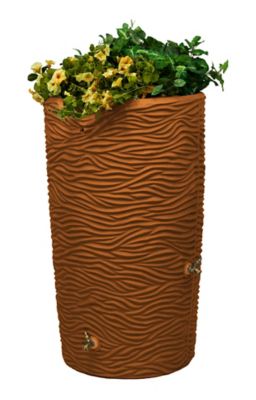
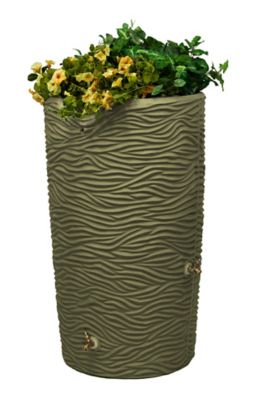
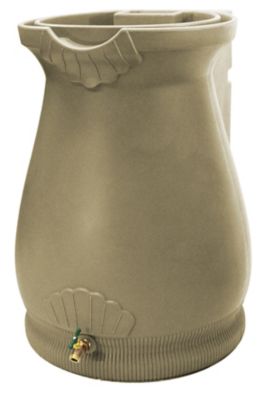
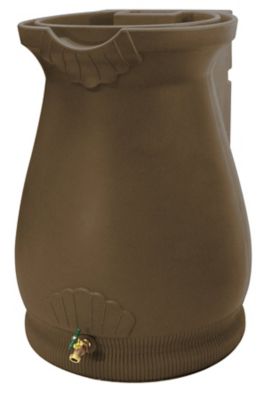
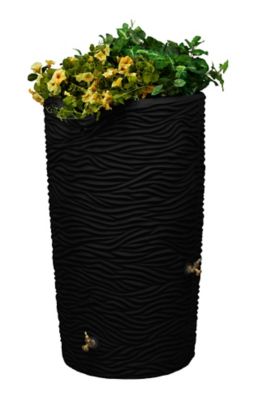
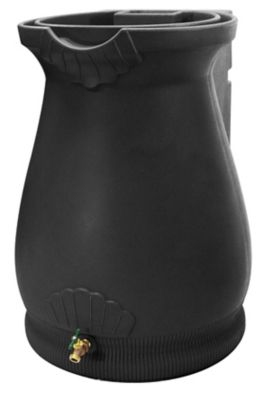
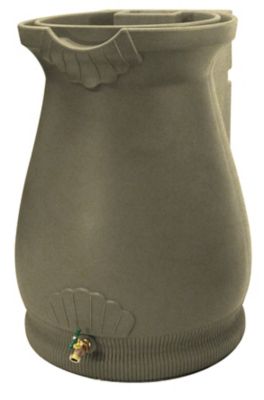
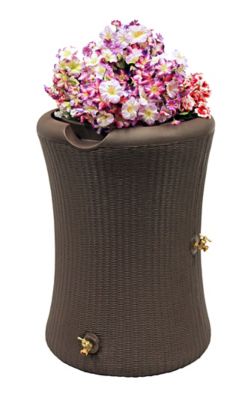
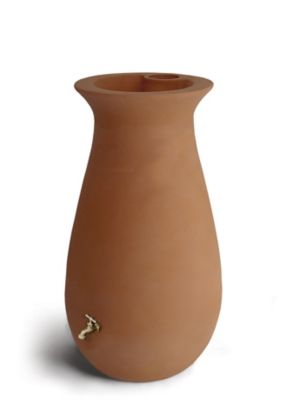
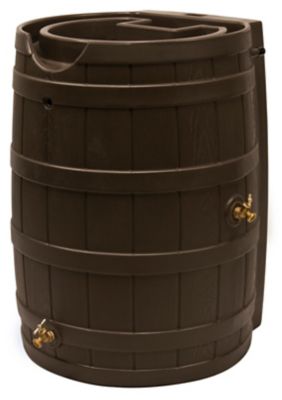
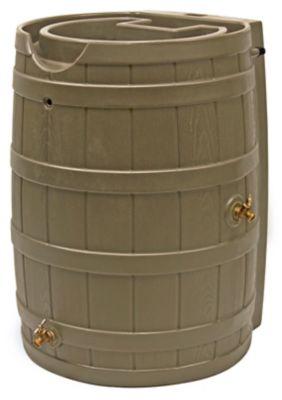
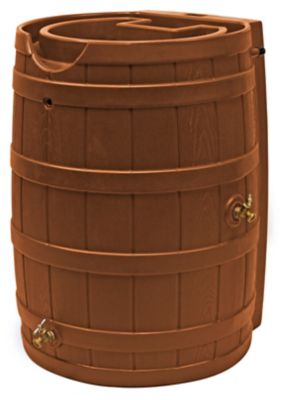
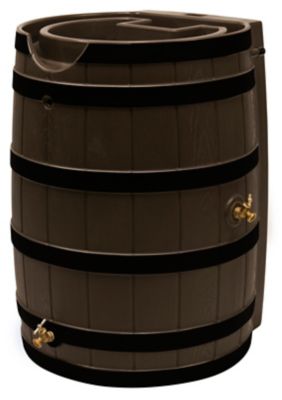
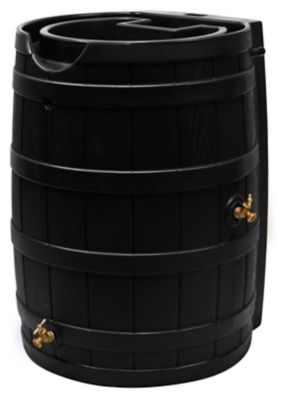
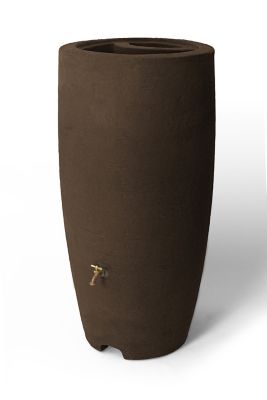
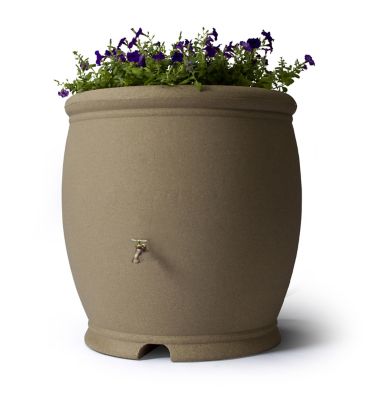
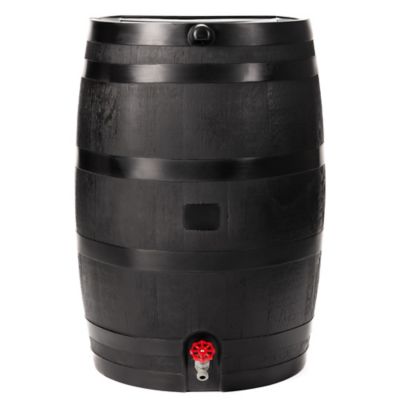
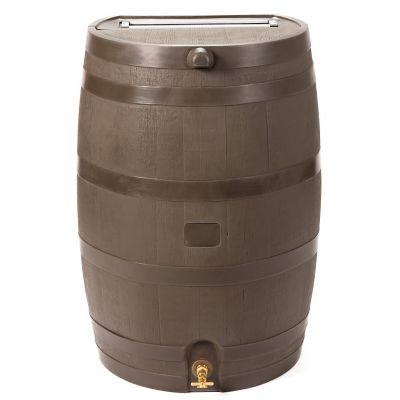
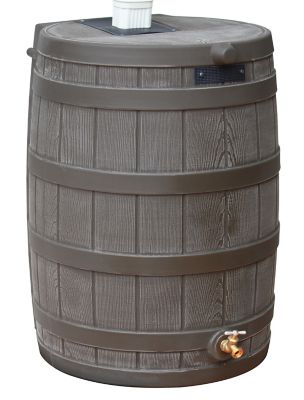
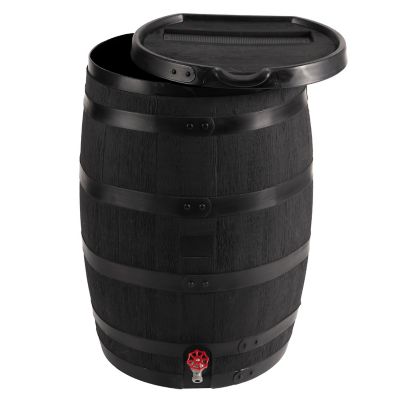
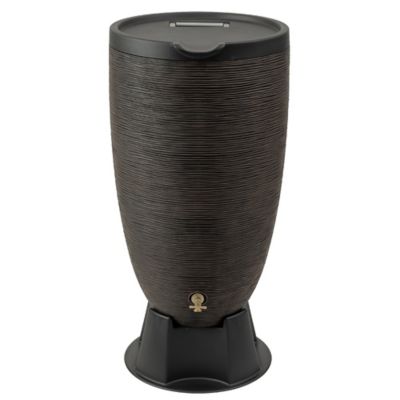
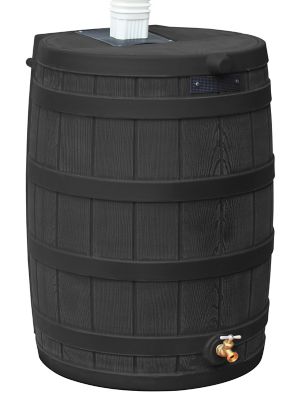
65-gallon rain barrels put roof runoff within reach of flower beds, shrubs, and thirsty container plants without taking up the space of a large storage tank. This capacity suits gardeners with several watering stops around the yard, homeowners tending foundation plantings, and folks who want a separate water supply near a shed or detached garage. A 65-gallon barrel holds about 542 pounds of water when full, before adding the weight of the barrel itself, so its footprint and supporting surface matter as much as its capacity. Firm, level ground and a load-rated base help keep that weight steady; loose soil, leaning blocks, and an ordinary plant stand are poor matches for a filled barrel. The amount collected depends on rainfall and the roof area draining into the downspout. As a useful comparison, one inch of rain falling on 100 square feet of roof produces roughly 62 gallons of runoff before collection losses. That makes overflow handling an important part of even a modest setup. Many barrels in this size range are molded from polyethylene or other outdoor resin, with construction and sun-exposure ratings varying by model. Opaque walls help limit light inside the tank, while molded textures can give the outside a stone, wood-grain, or woven appearance. Flat-back shapes sit closer to walls, while rounded profiles need a little more clearance. Overall height also affects whether a barrel fits beneath an existing downspout and leaves room to reach the inlet. Some designs include a planter-style top, which adds planting space but also calls for attention to drainage and lid access. A secure cover, a screened inlet, and openings that keep children, pets, and wildlife out are practical features worth considering alongside shape and finish. Capacity tells only part of the story; the right fit also leaves room to inspect connections, reach the shutoff, and move comfortably beside the barrel.
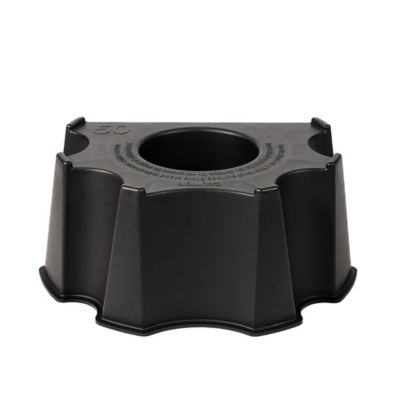
The working details of 65-gallon rain barrels make a noticeable difference when watering chores come around. A low spigot helps draw water from near the bottom, while a higher outlet may leave more room beneath it for a watering can. Dual outlets can provide separate connection points, though their position and purpose vary. Brass and plastic fittings are both common, and the connection style matters when pairing a barrel with a garden hose, short drain hose, or replacement valve. Hose threads and pipe threads are not interchangeable, even when their listed sizes look similar. A broad, easy-to-turn handle can also be easier to manage with wet work gloves than a small, tight knob. Most basic rain barrels deliver water by gravity rather than household pressure, so a hose attached near ground level will not perform like a faucet connected to a pressurized water line. Flow generally slows as the water level drops, and long hoses, uphill runs, and restrictive attachments can reduce it further. Raising a barrel on a properly rated stand can improve clearance and gravity flow, but the support must carry the full load without shifting. At the inlet, downspout compatibility deserves equal attention. Rectangular downspouts commonly measure 2 by 3 inches or 3 by 4 inches, and a diverter must match both the downspout and the barrel connection. Screened openings help intercept leaves and larger debris, while close-fitting mesh helps keep mosquitoes from reaching standing water. An overflow outlet or a compatible diverter provides a path for excess runoff once the barrel fills, helping keep water away from foundations and walkways. Some barrels also have linking ports for connecting additional storage, although fittings, hose sizes, and installation requirements differ. The broader selection of
Rainwater Collection Barrels provides other capacities and configurations for yards where a single 65-gallon container may not match the available space or watering needs.
Care and intended use are just as important as fittings and storage volume. Collected roof runoff is nonpotable unless it receives appropriate treatment and testing; a barrel made with food-contact materials does not make the water safe to drink. Roofing, gutters, bird droppings, and airborne debris can all affect what enters the tank. Landscape watering is a common purpose, while drinking, cooking, bathing, and livestock watering call for a different level of water safety. For edible gardens, local extension guidance can help determine whether roof runoff is appropriate, with attention to roofing materials, contaminants, and keeping untreated water off edible plant surfaces. Around the yard, a barrel near a potting bench can shorten trips with a watering can, and one beside a shed can keep water close to nearby shrubs or flower beds. Access for cleaning helps keep that convenience from turning into a chore. Removable lids or accessible openings make it easier to clear sediment, inspect the inside, and reach fittings without awkward tools. Inlet screens need regular attention because a mat of leaves can send runoff spilling over the top instead of into storage. Gaskets, threaded connections, and spigots also benefit from periodic checks for drips, cracks, and loosened parts. Cleaning methods should follow the manufacturer's directions, including any limits on brushes or cleaning agents. In places with freezing conditions, trapped water can expand and damage the tank or fittings, so draining and disconnecting according to the manufacturer's instructions is an important part of ownership. An empty barrel also needs protection from tipping or blowing away. Local rainwater collection rules, drainage requirements, and neighborhood restrictions may influence placement and connections. For a working yard or a small backyard garden, the most useful 65-gallon rain barrel is one whose shape, access points, and maintenance needs fit the space and the person handling the watering.