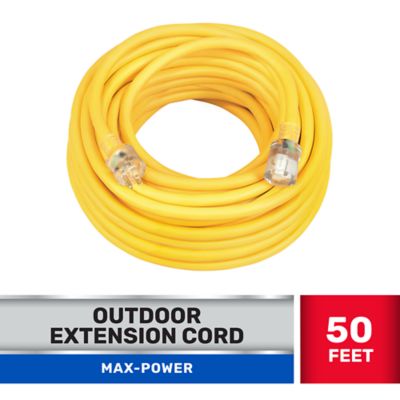
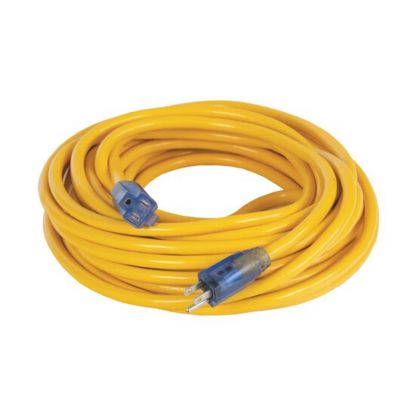
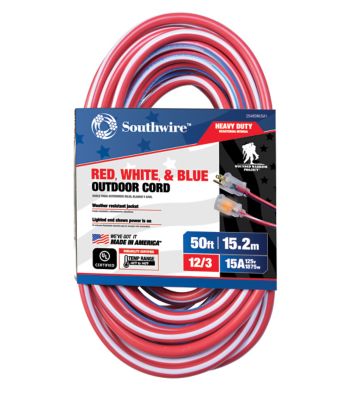
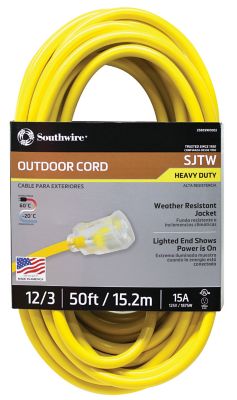
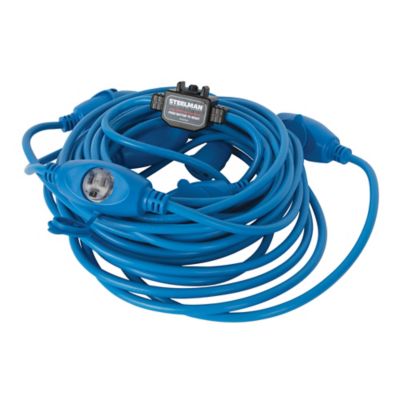
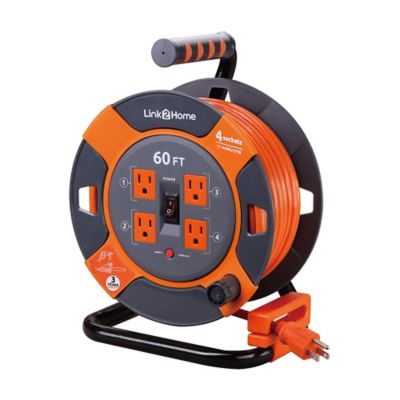
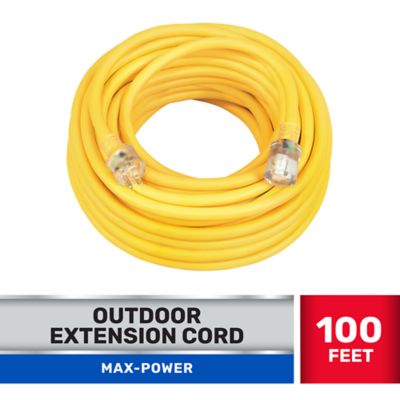
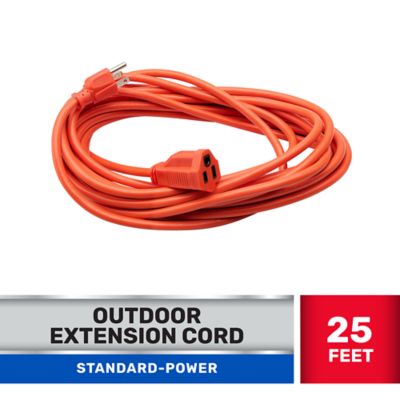
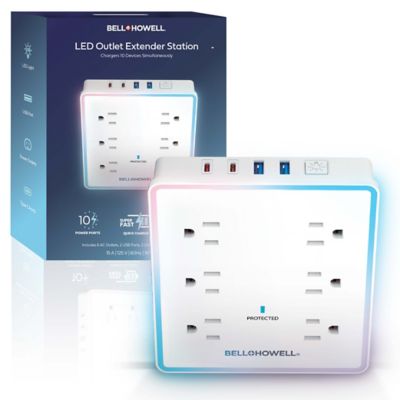
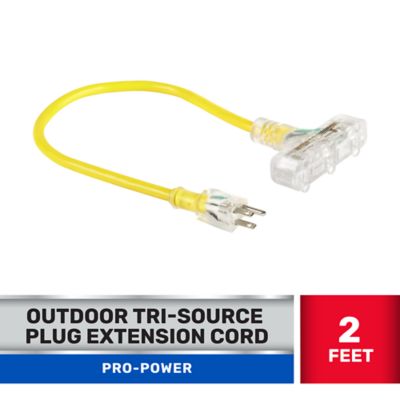
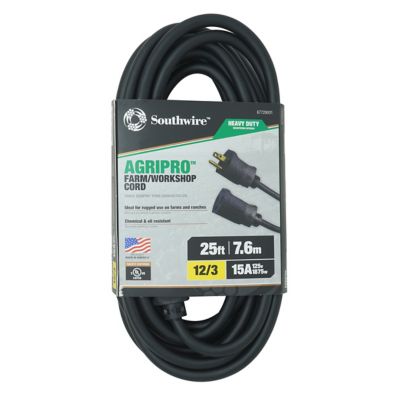
A 50-foot extension cord is a handy bit of reach for work around the house, barn, garage, shop, and yard. It can help bring power to a job without dragging a tool right up against the wall outlet, whether you’re trimming brush along the fence line, using a shop vacuum in the driveway, running a fan in a tack room, or setting up lights around a work area. The right cord depends on what you plan to plug in and where you’ll use it. For outdoor work, look for a cord marked for outdoor use, such as an SJTW-style jacket, which is made to better resist sunlight, moisture, abrasion, and cracking during changing weather. Outdoor-rated does not mean waterproof, though, so keep plugs and connections out of puddles, standing water, snow, and damp grass. A bright yellow, orange, or blue jacket can make the cord easier to spot across a lawn, gravel drive, or busy work area, helping reduce the chance of tripping or driving over it. A lighted end plug is another useful feature because it shows when power is flowing, especially in a dim garage, shed, or porch corner. Look for sturdy molded plugs, flexible insulation, and strain relief near each end. Strain relief helps reduce wear where the cord meets the plug, which is often the first place a cord gets bent, pulled, or stepped on.
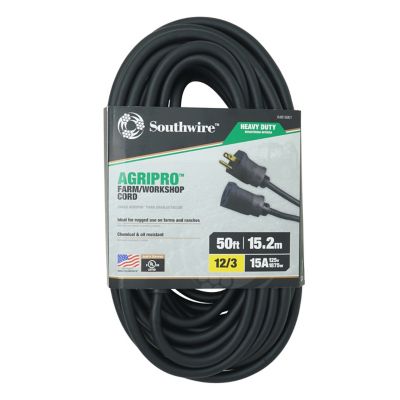
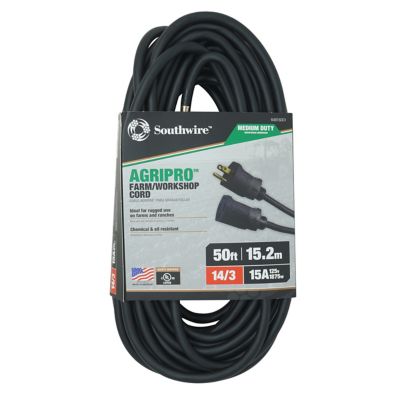
Wire gauge is one of the most important details when comparing 50-foot extension cords. The lower the American Wire Gauge, or AWG, number, the thicker the wire and the more electrical load it can generally handle. A 12-gauge, three-conductor cord is a solid choice for heavier-duty equipment and can support loads up to 15 amps, 125 volts, and 1,875 watts when used within its rating. That size is commonly suited for demanding tools such as circular saws, table saws, air compressors, larger shop vacuums, and other equipment that draws substantial power when starting or running. A 14-gauge cord can be a good middle-ground option for many lawn and workshop tasks, including hedge trimmers, string trimmers, and some lawn mowers, while a 16-gauge cord is typically intended for lighter-duty use such as lamps, fans, small household tools, and seasonal decorations. Always check the amperage and wattage listed on the tool or appliance, then compare it with the cord’s rating. A cord that is too light for the job may heat up, especially when fully stretched out under a heavy load. Never cover an extension cord with rugs, blankets, hay, cardboard, or other materials that can hold in heat, and avoid running it through doorways where it can be pinched. Fully unwind the cord before using equipment that draws significant power, inspect it for cuts or exposed wires, and retire it if the jacket is damaged. Plugging a high-draw tool into a long, undersized cord can also lead to voltage drop, which may make a motor work harder or perform poorly. A properly matched cord helps equipment run as intended and gives you a cleaner, safer setup.
These cords are useful for homeowners, renters, farmers, ranchers, contractors, maintenance crews, gardeners, and anyone who spends time fixing, building, cleaning, or tending things outdoors. During the warmer part of the year, a 50-foot extension cord can reach across a garden or pasture edge for light-duty equipment, while during the cooler months it can help power a work light, battery charger, fan, or tool in a detached garage or outbuilding. It can also be a practical gift for a new homeowner, a college student setting up a first workshop, or a do-it-yourselfer who always seems to come up a few feet short of the nearest outlet. Keep in mind that an extension cord is meant for temporary use, not as a substitute for permanent wiring. Use a grounded three-prong cord with grounded equipment, plug it into a properly installed outlet, and avoid connecting multiple extension cords end to end. For outdoor projects, use a ground-fault circuit interrupter, or GFCI, outlet or portable GFCI protection, particularly anywhere electricity may be near water or damp ground. Keep connections elevated and protected from rain, and store the cord indoors in a dry place after use. Loosely coil it rather than wrapping it tightly around your hand or a sharp post, and avoid sharp bends that can weaken the conductors over time. A 50-foot reach pairs well with many outdoor chores, but it should not be confused with other long-reach essentials; for watering beds, washing equipment, or filling stock tanks, you may also want to compare
25 Foot Garden Hoses. Choosing the proper gauge, rating, jacket, and safety features makes it easier to match a cord to the job and get dependable power where you need it.