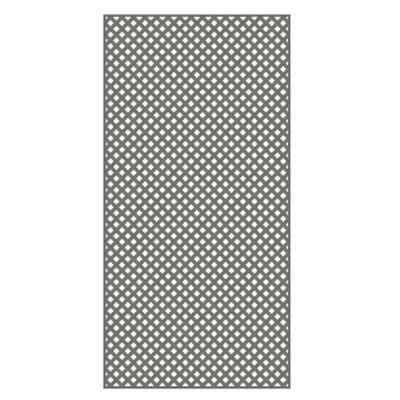
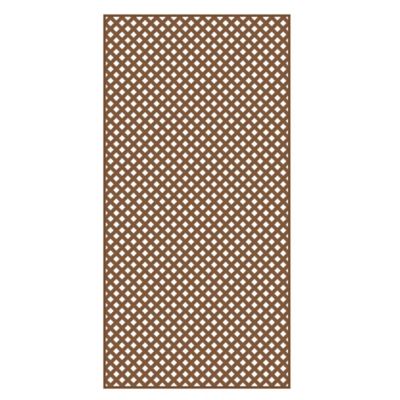
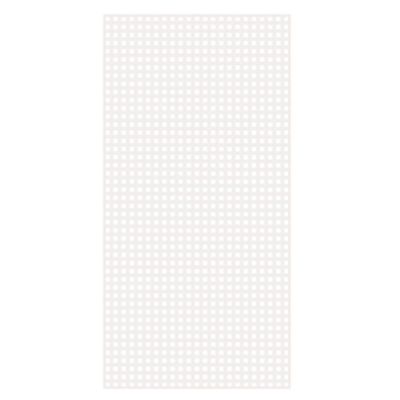
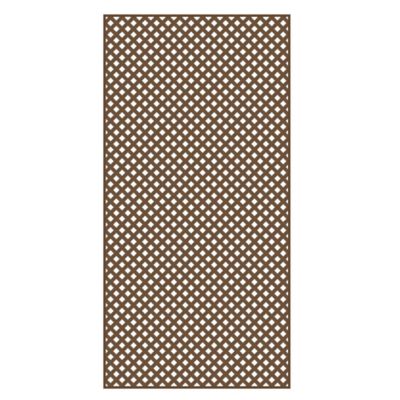
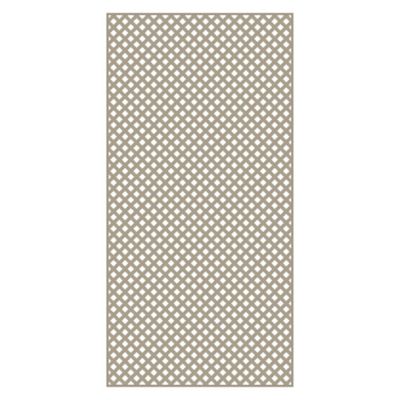
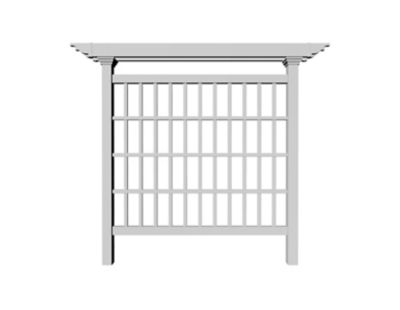
4x8 vinyl lattice panels are open-grid sheets that add a finished look beneath decks, along porches, and around outdoor sitting areas without closing everything off. A nominal 4-by-8-foot panel covers a rectangular area of 32 square feet before cutting, though its actual dimensions and the space needed for framing matter when planning a fit. That broad sheet size works well across long stretches of deck skirting or between posts beside a patio, with fewer seams than a layout built from smaller sections. Vinyl lattice is generally made from PVC, a plastic material that does not rot or splinter like wood and does not need routine painting or staining. Its crisscross or square pattern lets air and some light pass through while softening the view of joists, support posts, and the shaded space beneath a raised porch. Diamond lattice has the familiar look often found around farmhouse porches and garden arbors, while square openings create straight lines that pair well with simple railings and fence sections. Smaller openings offer more visual screening; wider openings keep the space feeling airy and leave more of the surroundings in view. Neither style creates the same barrier as a solid panel, and the amount of privacy changes with the viewing angle, lighting, and distance. White gives a crisp contrast against grass, stone, and darker siding, while brown and clay tones can settle more quietly into a yard with wood fencing or earth-toned buildings. Color names and shades differ between panel lines, so coordinating lattice with existing trim takes a little attention. For homeowners with a porch facing the driveway, a garden beside the shed, or an exposed deck foundation, vinyl lattice can bring those spaces together visually without making the yard feel boxed in. The pattern, color, and opening size all contribute to that balance between a more finished appearance and an open, easygoing outdoor space.
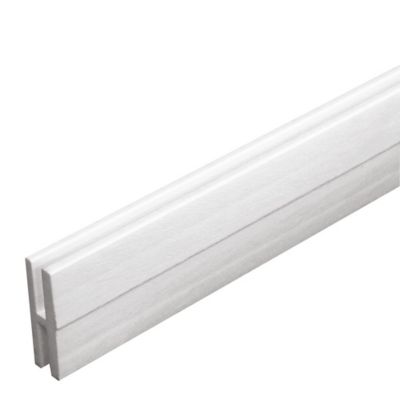
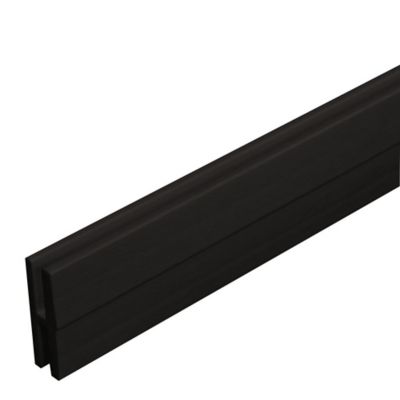
Fit involves more than finding a sheet wide enough to span an opening. A 4x8 vinyl lattice panel is a finishing material, not a structural member, and its frame carries an important part of the job. Panel thickness, stiffness, and the manufacturer's support requirements help determine whether a sheet suits low deck skirting, a taller garden screen, or another outdoor application. A long unsupported span can bow or sag, especially where heat or wind puts extra stress on the material. Framing around the edges, along with any specified intermediate support, helps keep the grid in place. Caps can finish exposed edges, and divider channels can join neighboring sheets, but the channel dimensions need to match the panel thickness. Trim components are not necessarily interchangeable between different panel systems. Vinyl also expands and contracts as temperatures change, so a snug-looking installation still needs the movement allowance specified by the manufacturer. Fastener-hole size, spacing, edge clearance, and screw tension all affect whether the sheet can move without buckling or cracking. Those details become especially relevant on a sunny wall that warms up during the day and cools sharply after sunset. Outdoor-rated fasteners compatible with the supporting frame help limit rust streaks and connection problems. Where the ground slopes away from a porch, each opening may call for a different cut rather than the same rectangle repeated across the whole run. Clearance from soil, leaves, and standing debris makes that lower edge easier to maintain. Access matters, too: a framed opening or removable section can preserve a route to plumbing, wiring, or stored yard equipment beneath a deck. Lattice alone is not a guardrail, a fall-protection barrier, or a secure enclosure for livestock or pets. For projects that call for a defined yard boundary rather than an open-grid finishing layer,
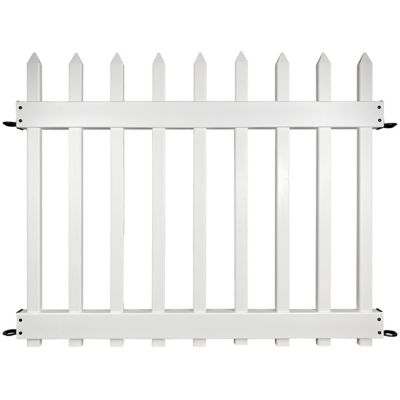
Vinyl Fence Panels represent a different category, with their own post, rail, and installation requirements.
Day-to-day care is one reason vinyl lattice fits busy properties where the chore list already runs from the barn to the back porch. Dust from a gravel drive, grass clippings, and rain-splashed soil generally call for a gentle rinse or washing with mild soap and a soft brush, following the panel maker's care directions. The corners of the grid can collect cobwebs and leaf fragments, particularly beneath a deck or near shrubs, so the openness of the pattern affects cleaning access as well as appearance. Abrasive cleaners and aggressive pressure washing can mark the surface or damage thinner sections. Vinyl resists moisture-related decay and insect feeding, but outdoor performance still depends on the formulation, thickness, support, and exposure. Sunlight can affect color over time, and descriptions of UV protection or fade resistance are worth checking rather than assuming every panel performs the same way. Cold weather can make vinyl more brittle, which matters around a busy walkway where shovels, wheelbarrows, or other equipment might strike the lower edge. Keeping mower discharge and string trimmers away from the panel helps prevent impact marks and chipped edges. For garden settings, lattice offers a backdrop for planting beds and can support some lightweight climbing growth when its specifications allow, but heavy vines and mature woody stems need a structure suited to their weight. Around equipment, an open grid does not automatically provide enough ventilation or service clearance; those requirements come from the equipment manufacturer. Beneath a porch, smaller lattice openings may make stored hoses and empty planters less noticeable, but they do not make the space animal-proof. For a shaded sitting spot, the same pattern can provide a little separation from the driveway while leaving room for a breeze. These practical distinctions help match 4x8 vinyl lattice panels to everyday life on the property: tidying an exposed foundation, giving a porch a finished edge, or adding light screening beside a garden without taking on the regular refinishing that wood often needs.