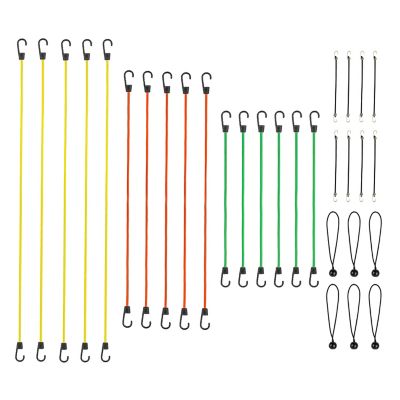
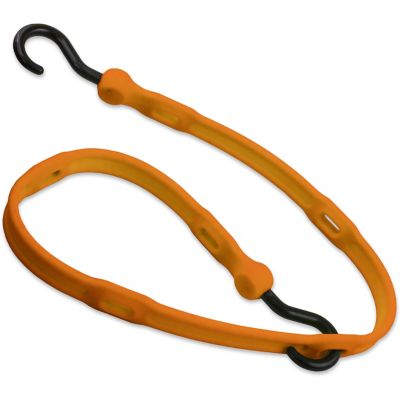
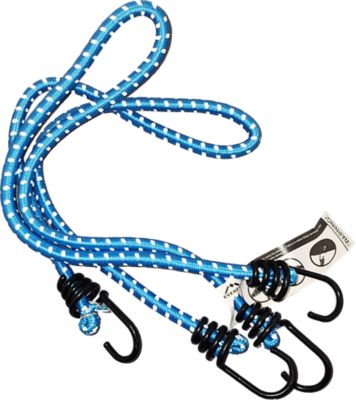
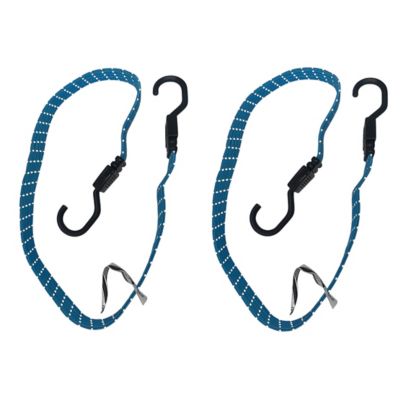
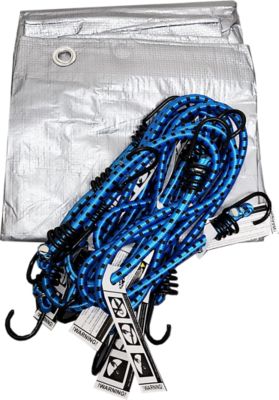
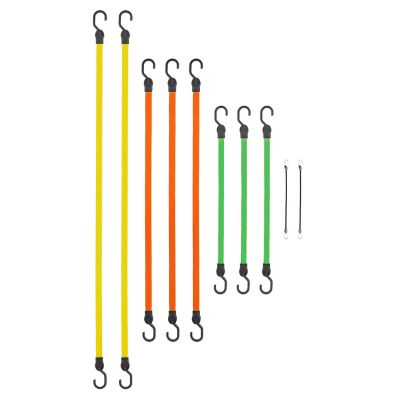
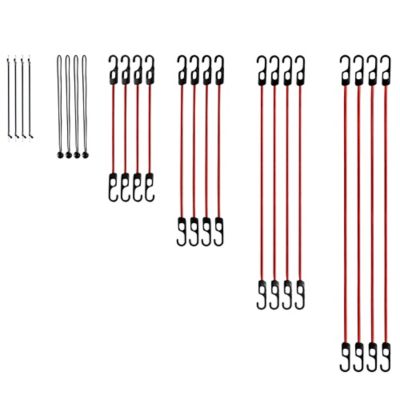
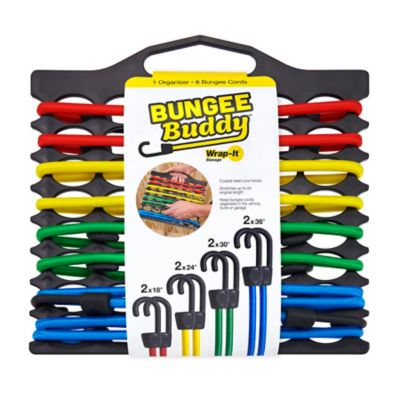
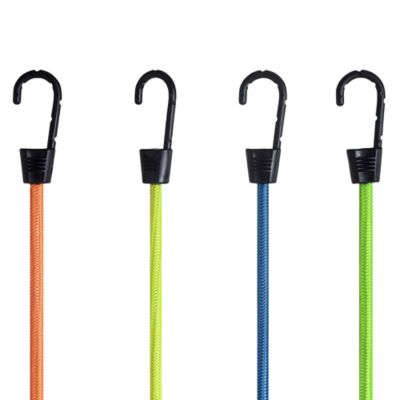
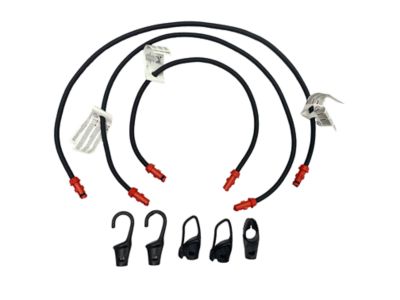
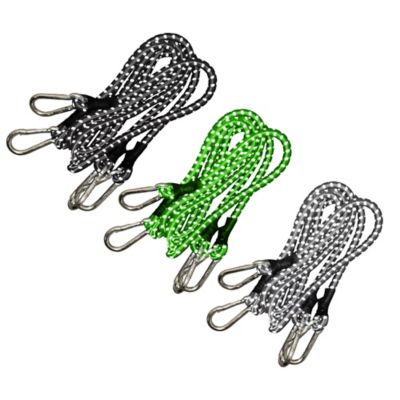
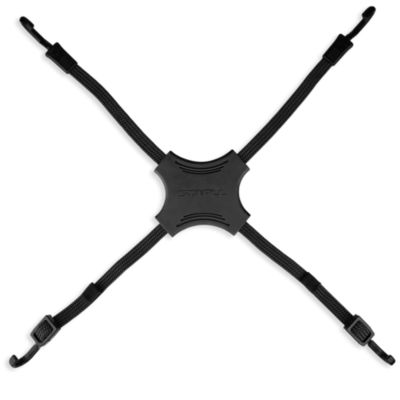
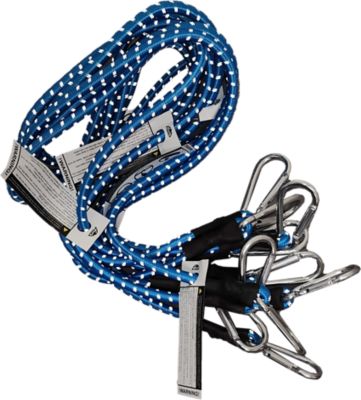
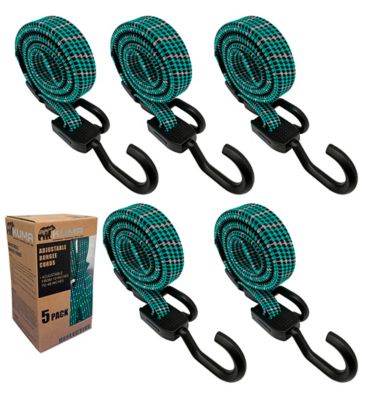
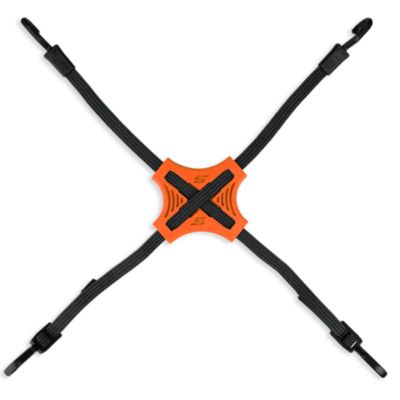
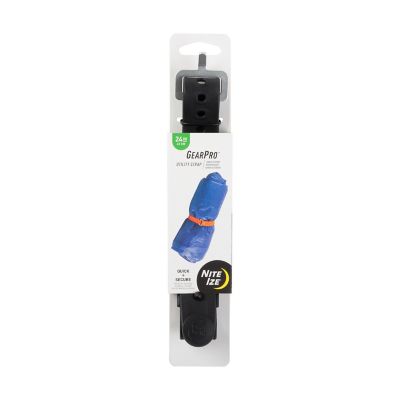
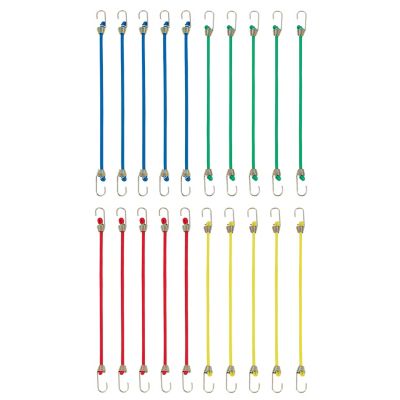
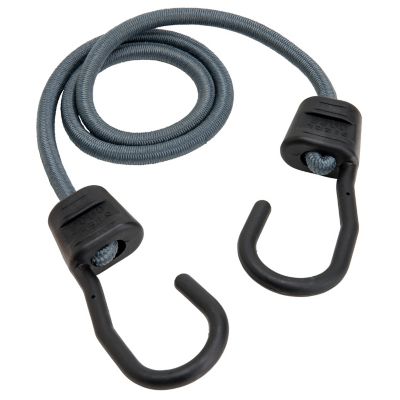
36-inch bungee cords are elastic fastening cords that bring a little give to everyday holding, bundling, and organizing jobs. Their nominal length is 3 feet before stretching, although the listed measurement may include the hooks or refer only to the cord body, depending on the manufacturer. That distinction matters when spanning a cover, reaching between attachment points, or wrapping around a bundle. A cord that looks close enough on the shelf can fit differently once the hook length and attachment angle come into play. This size can be handy around a barn, garage, workshop, or campsite, especially for keeping a rolled tarp together, gathering empty feed sacks into a manageable bundle, or holding a lightweight cover over equipment while it sits parked. The stretch takes up slack and allows some movement without requiring a knot each time. Most conventional bungee cords pair an elastic core with an outer covering and hooks at the ends. Rubber or latex-based cores provide the stretch, while woven coverings help protect the elastic material from everyday rubbing and handling. Polyester and polypropylene are common covering materials, though construction varies. Round cords offer a familiar shape that fits many attachment points, while flat designs spread contact over a wider strip of material. Neither shape alone tells the whole story about strength, stretch, or suitability for a particular task. Cord thickness, core construction, hook design, and the maker’s stated limits all deserve a look. A thicker cord may feel firmer in the hand, but thickness is not a substitute for a stated load rating. For farmers, homeowners, campers, and folks keeping a busy shop in order, the appeal is straightforward: a manageable length, a quick connection, and some flexibility for small jobs that do not call for a rigid fastening. The best fit comes from matching those features to the actual span and the object being held, rather than expecting one cord to handle every job.
The connection at each end is just as important as the elastic section in the middle. Hook openings need enough room to seat fully around a suitable attachment point without balancing on an edge or bearing against the tip. Coated metal hooks can help reduce direct metal contact, but a coating does not guarantee protection against scratches, especially when grit gets trapped between the hook and the surface. Molded plastic hooks offer a different contact surface, and their strength and intended applications depend on their construction. An attachment point also needs to hold up to the pull; a thin plastic lip or a loose screw is not made stronger by adding a cord. On a stationary storage rack, for example, a properly positioned bungee might help keep a folded cover from slipping off its shelf. Around a workbench, it might gather lightweight materials that otherwise sprawl across the floor. These are different demands from holding freight on a road-going trailer. Bungee cords stretch and can let a load shift, so they are not a substitute for appropriately rated straps or other restraints when securing heavy cargo for travel. They also do not belong in lifting, towing, climbing, or any application where failure could injure a person. A 36-inch cord does not have one universal safe stretched length or holding capacity. Those limits depend on the individual design and should come from its labeling. Fit should leave enough tension to do the intended job without pulling the cord to its limit or distorting the hooks. Several cords connected end to end introduce more connection points and are not equivalent to one properly sized fastening. For everyday handling, controlled tension matters: stretched elastic stores energy, and a released hook can snap back quickly. Keeping the pull away from faces and bystanders, wearing eye protection, and easing tension before unhooking are sensible habits, even for a small job beside the shed.
Long service starts with a construction suited to the setting and continues with simple care between jobs. A cord that rubs against a rough board, a sharp trailer edge, or a rusty bracket can develop damage at that contact point even when the rest of it still looks sound. Routing it across smooth surfaces and keeping it clear of cutting edges helps protect the covering and core. Where outdoor exposure is part of the intended application,
Weather Resistant Bungee Cords are another category to consider alongside length, hook style, and the manufacturer’s care information. Resistance to moisture or sunlight does not mean a cord can stay under tension indefinitely without inspection. Frayed coverings, exposed elastic strands, cracks, flattened sections, bent hooks, loose end connections, or a cord that no longer returns toward its resting length are reasons to take it out of service. A damaged cord is not a good candidate for a repair knot and another stretch. Dirt and grit can also hide wear, so wiping cords clean and allowing them to dry before storage makes their condition easier to see. Cleaning methods should match the material and the maker’s directions, particularly after contact with oil, fuel, solvents, or other shop chemicals. A loose coil on a hook or in a divided bin keeps cords easier to sort than a tangled pile beneath the workbench. Storage away from direct sunlight, sharp tools, and chemical containers helps limit unnecessary exposure and accidental damage. Pack count is another practical consideration for anyone comparing 36-inch bungee cords: several matching cords can simplify repeat tasks, while clear length markings make it easier to grab the intended size. Color can help with organization, but it is not a universal code for strength or stretch. Length, material, end fittings, stated limits, and condition remain the details that matter most when putting a cord to work around the place.