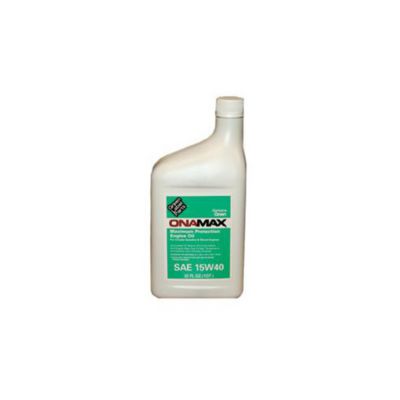
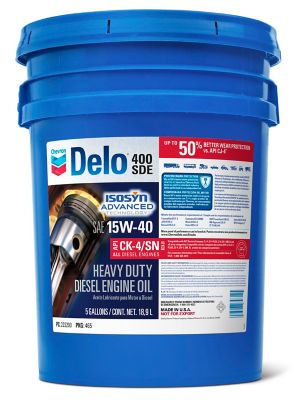
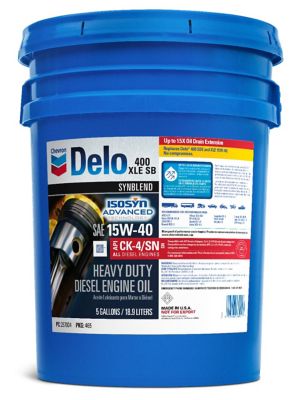
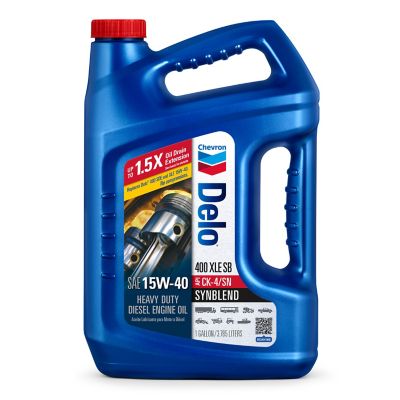
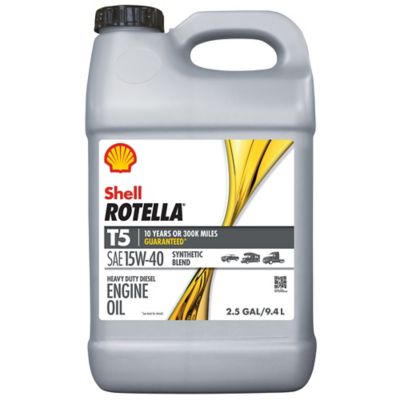
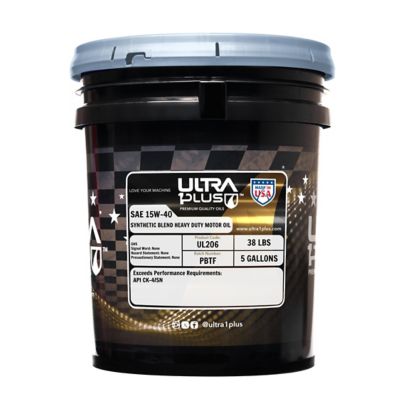
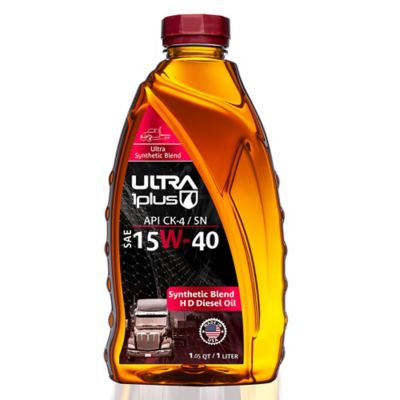
15W-40 engine oils are multigrade lubricants commonly specified for heavy-duty diesel engines in tractors, farm equipment, work trucks, commercial fleets and construction machinery. Some formulations also carry gasoline-engine approvals, but that compatibility needs to appear on the label and match the engine manufacturer’s requirements. The 15W designation describes performance in standardized low-temperature cranking and pumping tests, while the 40 identifies the oil’s viscosity range at 212°F, or 100°C. Those numbers describe a viscosity grade, not an overall performance ranking or a promise that the oil fits every diesel engine. For a tractor pulling a mower through thick grass, a loader moving feed or a truck hauling equipment between jobs, the right engine oil helps maintain a lubricating film between moving parts while carrying heat away from internal surfaces. It also helps keep contaminants suspended until the oil and filter are changed. Bearings, piston rings, valve-train components and turbochargers depend on lubrication that meets the engine’s design requirements, especially when equipment spends long stretches under load. Frequent starts, extended idling, dusty work and steady pulling can each place different demands on the lubricant. A familiar viscosity marking is only part of the fit; the engine’s required service category and manufacturer specifications matter just as much. Two machines parked beside the same barn may need different oils, even when both run on diesel. Newer pickups, older utility tractors and large agricultural machines can have different lubrication requirements, so sharing a fuel tank does not necessarily mean sharing an oil jug. The owner’s manual remains the starting point for matching a 15W-40 engine oil to a particular engine. Where that grade is specified, it offers a multigrade option for equipment that needs both suitable starting performance and the operating-viscosity characteristics of an SAE 40 oil. That balance matters on working equipment, where long hours and changing workloads are part of an ordinary day.
The differences among 15W-40 engine oils go beyond the viscosity printed on the container. Conventional, synthetic blend and full synthetic formulations can share that grade while differing in base oils, additive systems and manufacturer approvals. Base oils provide the foundation of the lubricant, while additives help manage wear, oxidation, deposits, foam and corrosion. Detergents help keep internal surfaces cleaner, and dispersants help hold soot and other contaminants in suspension rather than allowing them to collect into larger deposits. These functions matter in diesel engines, where combustion byproducts can enter the crankcase during normal operation. Formulations designed to resist oxidation help limit oil thickening and deposit formation as the lubricant works through its service interval. Resistance to mechanical shear also matters because moving components can stress viscosity-modifying additives over time. With
synthetic engine oils, the viscosity grade and listed engine approvals still need to match the equipment; a synthetic base oil does not make an unsuitable specification suitable. API service categories provide another important point of comparison. API CK-4 is a heavy-duty diesel category associated with protection against concerns such as oxidation, shear-related viscosity loss and aeration. Older manuals may call for categories such as CJ-4 or CI-4, and any substitution needs to follow the engine manufacturer’s recommendations. API FA-4 is a separate category for certain engines, not an automatic replacement for CK-4. Manufacturer-specific approvals may add requirements beyond the API category, particularly for engines with particular service demands or emissions equipment. Diesel particulate filters, exhaust gas recirculation systems and other emissions components make the correct formulation especially important. Oil meeting the required specification helps support the engine and its emissions system, but engine oil is not a cleaner for a blocked particulate filter. For gasoline equipment, an explicit gasoline service rating is the detail that matters, rather than an assumption based on the words “heavy duty.” The label tells a more useful story than the viscosity alone, especially in a shop that handles equipment from several generations.
Practical considerations matter once the oil’s specifications line up with the engine. Container size, pouring control and storage space all affect how comfortably an oil change fits into a farm shop or equipment shed. A small utility tractor and a large diesel machine can have very different crankcase capacities, and the correct refill amount may depend on whether the filter is replaced. Enough oil for the complete service is more useful than guessing from the engine’s appearance or adding a little extra for good measure. Overfilling can cause problems just as running below the specified level can, making the dipstick and the manufacturer’s checking procedure important parts of routine care. Clean handling counts, too. Dust around a fill opening, grit in a funnel or residue in a transfer container can introduce contamination before fresh oil ever reaches a bearing. Closed containers, clean dispensing equipment and storage away from moisture help keep the lubricant ready for the next service. In a shop maintaining several machines, clear labeling helps prevent engine oil from getting mixed up with hydraulic fluid, transmission lubricant or other fluids that may sit on the same shelf. A tractor’s engine, transmission and hydraulic system do not necessarily take the same lubricant, even when their service points are close together. Maintenance intervals also belong to the equipment, not simply to the oil type. A synthetic formulation does not automatically authorize a longer drain interval, and hard service may call for a different schedule than light operation. Hour-meter readings, mileage, filter requirements and maintenance records help keep servicing consistent across a working fleet. Oil analysis can provide additional information for operations that track lubricant condition, but it does not replace manufacturer requirements. For landowners, livestock operators, equipment crews and drivers who depend on their engines to finish the job, properly matched 15W-40 motor oil is one part of steady upkeep. The goal is straightforward: the specified lubricant, a clean fill and service intervals suited to the machine’s actual work.