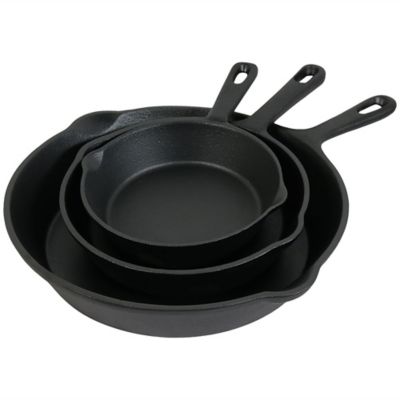
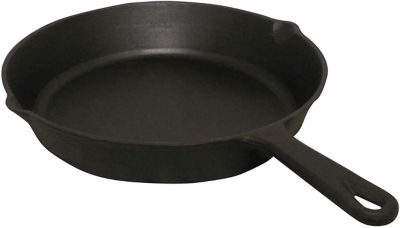
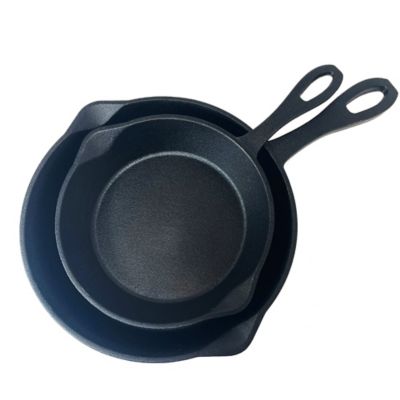
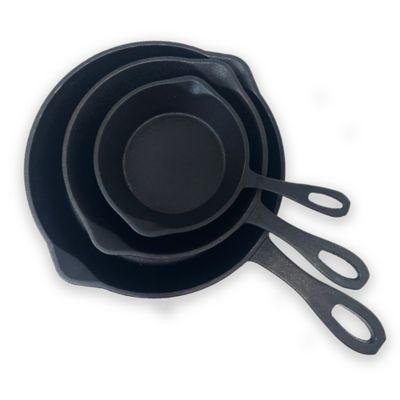
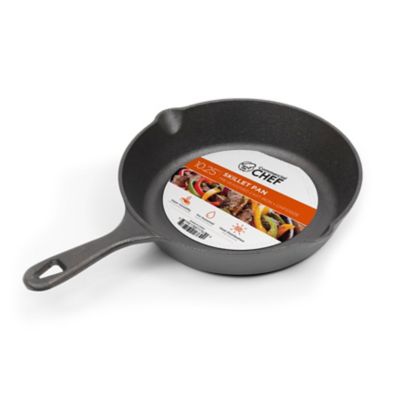
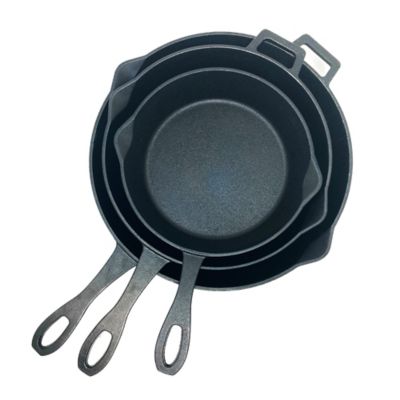
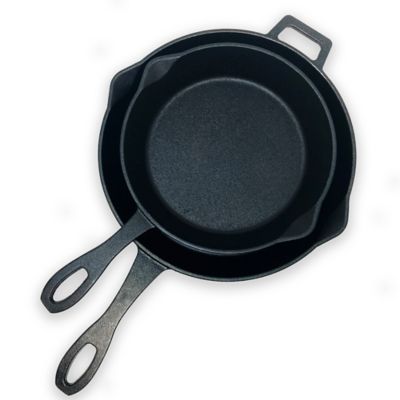
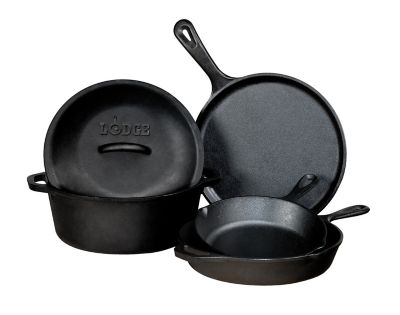
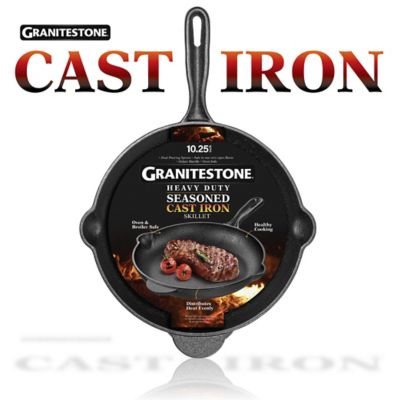
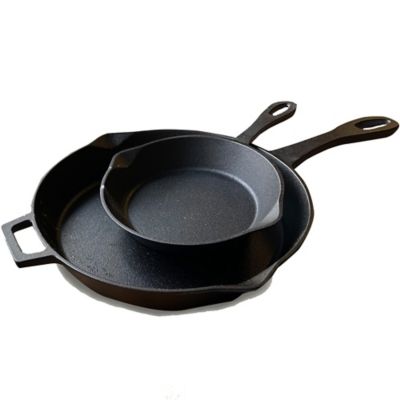
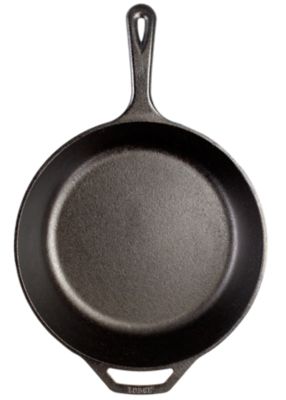
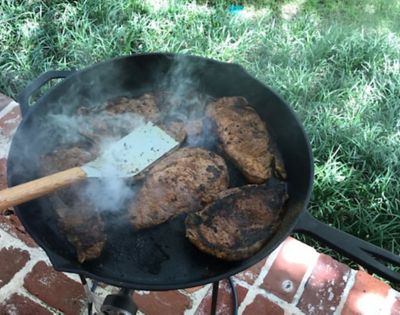
A 10-inch cast iron skillet is a versatile pan for searing meat, sautéing vegetables and baking cornbread, with a size that often suits meals for one or two people. It also works well for side dishes when the main course is cooking elsewhere. That makes it a handy fit for everything from eggs before chores to a pair of pork chops at supper. Cast iron holds heat well, helping a properly heated cooking surface brown food when ingredients hit the pan. A steak can develop a browned crust, potatoes can pick up crisp edges, and cornbread can bake with a firm, golden bottom. The 10-inch measurement generally refers to the skillet’s diameter across the top, not the flat cooking area inside. Sloped sides, wall thickness and the shape of the pan affect how much room there is for food, so the listed cooking-surface dimensions matter alongside the overall size. Two skillets with the same top diameter may hold different amounts or offer different amounts of flat space for browning. For a meal built around meat and vegetables, a 10-inch pan may work best with the ingredients cooked in separate rounds rather than crowded together. Giving food a little breathing room lets moisture escape instead of collecting around it. For baked dishes, depth and capacity matter just as much as diameter, especially when batter rises or a casserole bubbles near the rim. This size also earns its place alongside larger cookware: it can handle onions for burgers, a small batch of biscuits or a skillet dessert without taking over the whole cooking surface. For a smaller household, it can be an everyday pan; for a bigger table, it makes a useful companion for sides and smaller portions. Its manageable footprint appeals to cooks who want cast iron’s heat retention without reaching for a larger, heavier skillet for every meal.
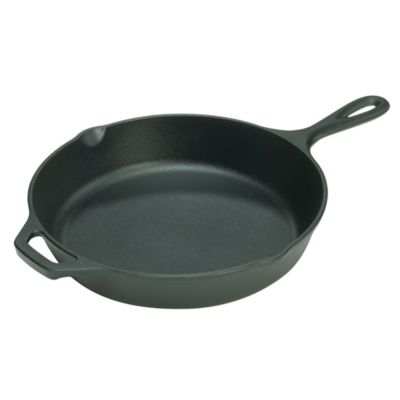
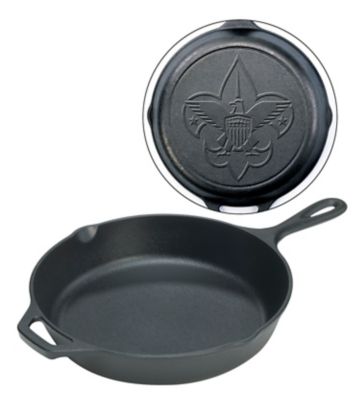
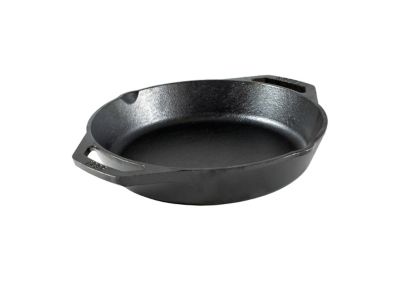
The material, finish and shape of a 10-inch cast iron skillet all influence how it feels in the kitchen. Traditional bare cast iron relies on seasoning, a bonded layer of oil that protects the metal and helps food release with proper cooking technique. A pre-seasoned finish provides a starting point, though it still benefits from sensible care and repeated cooking. Enameled cast iron has a different surface and care routine, so checking the finish helps set the right expectations before choosing a pan. Cast iron takes time to heat through, and gradual preheating helps reduce the difference between hotter and cooler areas. Once hot, it holds that heat well, making steady heat control more important than turning the burner all the way up. The skillet’s base should suit the burner and cooking surface; cast iron generally works with induction, but a flat base, suitable dimensions and the cooktop maker’s guidance still matter. On glass cooking surfaces, lifting rather than sliding a heavy skillet helps protect against scratches. Handle design deserves a close look, too. A longer handle offers leverage, while a helper handle can make a full pan easier to move with two hands. Both can become hot, so there needs to be room for a secure grip with dry oven mitts. Pour spouts can help direct pan juices, although the weight of the skillet still calls for a controlled pour. For meals that move from a burner to the oven,
Oven Safe Cast Iron Skillets offer a related cookware category to consider. Oven limits depend on the entire pan, including its handle, coating and any lid or knob, rather than the iron alone. A matching lid can be helpful for covered cooking, but fit should follow the manufacturer’s dimensions instead of diameter alone. These details make a difference when choosing a skillet that feels comfortable in hand and fits the cooking space.
Care is part of owning a 10-inch cast iron skillet, but it does not need to turn supper cleanup into a project. For seasoned bare iron, the basic needs are prompt cleaning, thorough drying and protection from lingering moisture. Mild dish soap and a nonabrasive brush are generally fine; long soaking, dishwasher cycles and air-drying are not a good match for bare cast iron. Stuck-on bits often loosen with warm water and gentle scraping after the pan has cooled enough to handle safely. A hot skillet should not go straight into cold water, since a sudden temperature change can stress the metal. Once clean and dry, a very thin film of cooking oil can help protect the surface without leaving it sticky. Seasoning can change in appearance with cooking, and a patchy finish does not automatically mean the pan is ruined. Bare spots or light surface rust can often be addressed with cleaning and reseasoning according to the maker’s directions. Long simmers with tomatoes, vinegar or other acidic ingredients may weaken seasoning on bare iron and affect flavor, so the finish and recipe belong in the same decision. Enameled surfaces call for their own cleaning guidance and protection against chips. For storage, a dry shelf and a separator between stacked pans help protect the cooking surface; a wall hook or rack needs to support the skillet’s weight. These everyday considerations make a 10-inch skillet a thoughtful gift for someone setting up a kitchen, learning to cook or building a practical collection of cookware. It suits the cook who likes a browned pork chop, a pan of skillet potatoes or cornbread brought straight to a trivet at the table. With room to cook a modest meal and enough versatility to handle breakfast, supper and baking, this size can earn a regular place within easy reach of the stove.