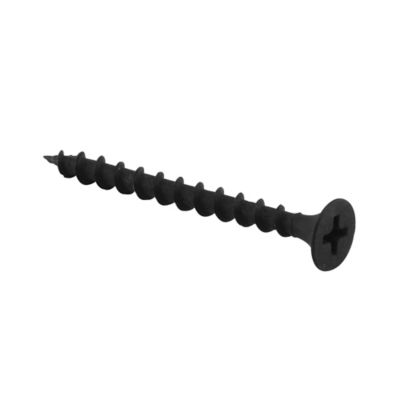
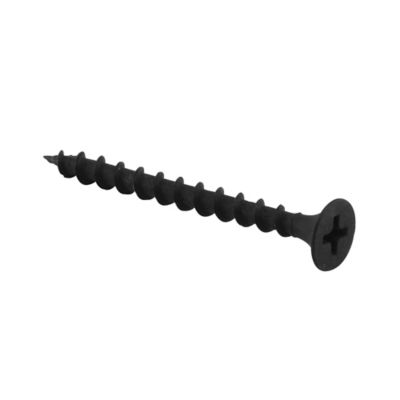
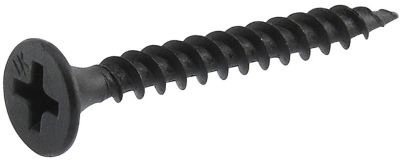
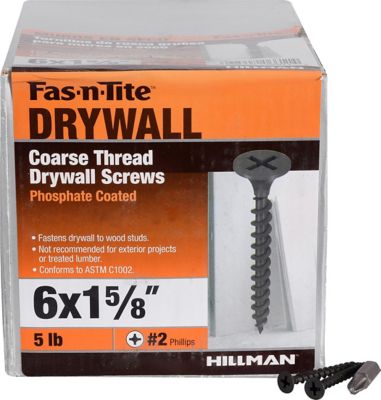
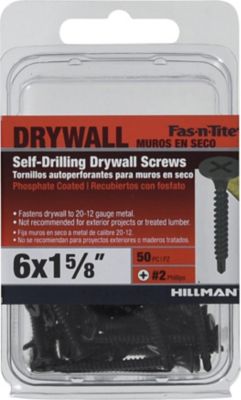
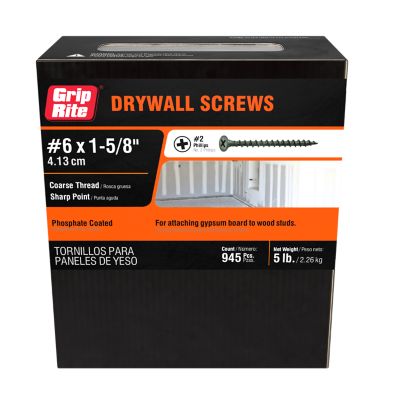
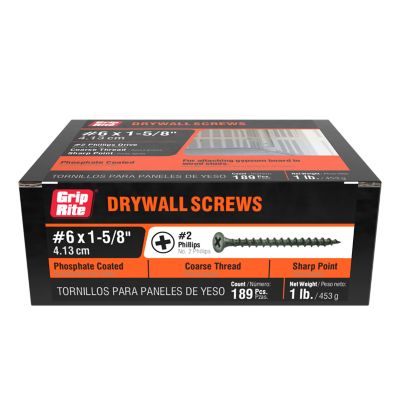
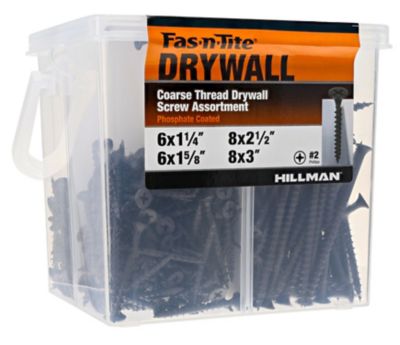
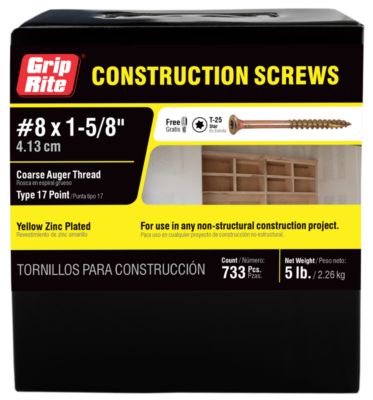
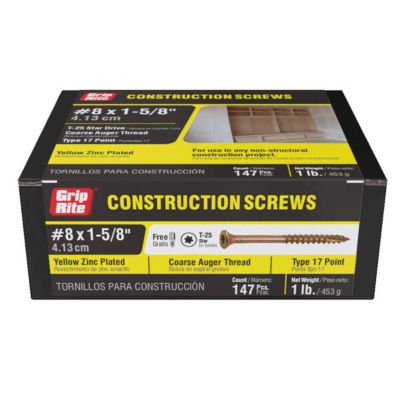
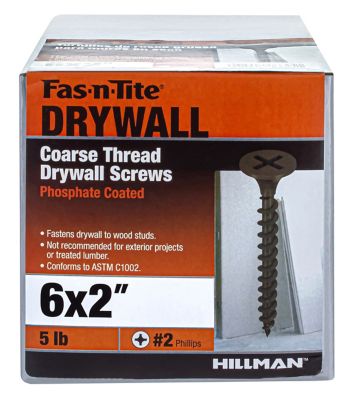
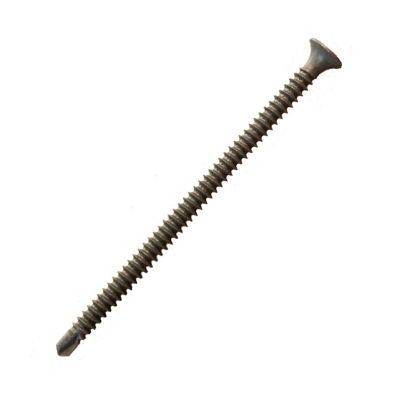
1-5/8-inch drywall screws are fasteners for attaching drywall panels to compatible wood or metal framing. This length is a common choice for single layers of 1/2-inch or 5/8-inch drywall, provided the screw type and framing penetration meet the panel manufacturer’s requirements. Around the house, shop, or farm office, they fit projects such as finishing an interior wall, hanging a ceiling, or replacing a damaged section of wallboard. The right match depends on more than length: thread pattern, point style, shank diameter, and the material behind the drywall all matter. Coarse-thread drywall screws generally suit wood studs and joists, with widely spaced threads that bite into the lumber. Fine-thread drywall screws generally suit light-gauge metal studs, where closer thread spacing helps engage the steel. Point style matters with metal framing, too. Sharp points suit the thin steel specified by the fastener manufacturer, while heavier steel may require a self-drilling point or a different approved fastener. Common diameter designations include #6 and #8; those numbers describe screw size, not length or thread spacing. A box marked 1-5/8 inches still needs the right thread and point for the job. For a single 5/8-inch panel sitting tight against wood framing, that overall length leaves about 1 inch extending beyond the board into the wood. Extra layers, gaps, furring, and other assembly details change that relationship, so length alone does not establish suitability. The same distinction matters when comparing a small wall patch with a room full of new panels: both may call for this screw length, but the backing and board thickness still determine the fit. Remodelers, drywall crews, maintenance hands, and homeowners tackling interior repairs all have reason to keep the intended assembly in mind rather than treating every drywall screw as interchangeable. A finished partition in a workshop and a ceiling in a spare room can look much alike once painted, even though their fastening requirements differ.
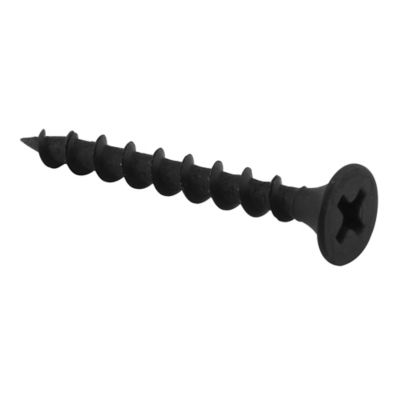
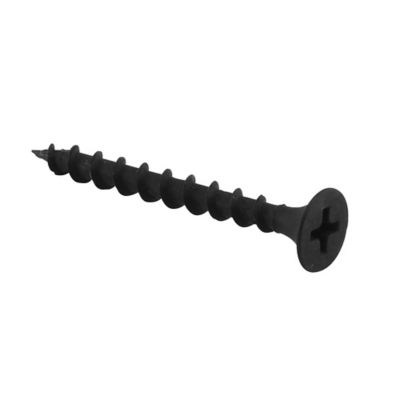
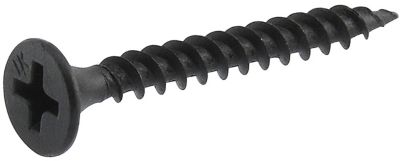
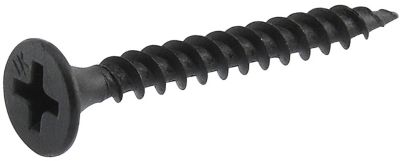
The familiar bugle-shaped head is another defining feature of drywall screws. Its curved underside helps form a shallow recess in the panel surface, allowing joint compound to cover the head while the paper facing remains intact. That balance matters because the paper contributes to the panel’s holding strength. A head left standing proud can interfere with finishing, while one driven too deep can break through the facing and weaken the attachment. The broader category of
Bugle Head Drywall Screws shares this head profile, though length, thread pattern, and other specifications still need to match the application. Many drywall screws have a #2 Phillips recess, making bit fit an important consideration alongside screw size. A snug, unworn bit helps reduce slipping and damage to the recess; a drywall screw gun or compatible depth-setting attachment can help keep the head position consistent. Drive style should always match the package description rather than an assumption based on appearance. Steel is the usual base material, often hardened to help the point penetrate and the threads engage. Black or gray phosphate finishes are common, but finish color alone does not establish corrosion resistance or suitability for damp locations. Standard phosphate-coated drywall screws belong in the interior applications identified by their manufacturer, not in place of exterior-rated, treated-lumber-compatible, or moisture-resistant fasteners. They also are not substitutes for structural screws in framing connections, deck construction, or other load-bearing work. Their job is holding drywall to its supporting framework, not carrying a shelf full of tools or supporting a heavy wall-mounted fixture by themselves. For those loads, the framing, anchors, and attachment hardware need their own consideration. Choosing for the actual task helps keep a straightforward wall-finishing job from turning into a repair later, especially in working spaces where cabinets, storage racks, and equipment may eventually share the wall.
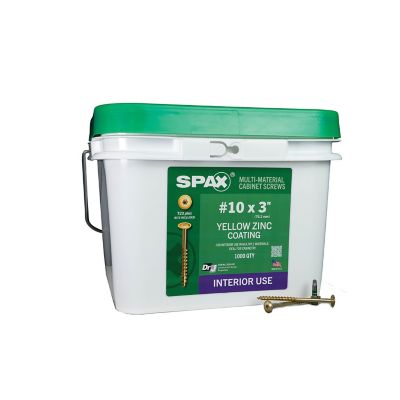
Practical details become more noticeable as the project grows. Loose screws work with ordinary compatible drivers and drywall screw guns, while collated screws require an auto-feed tool that accepts the particular strip format, screw length, and diameter. Those formats serve different work routines; compatibility matters more than how similar the fasteners look in the package. Package counts also help with planning, but there is no single screw count that suits every sheet or room. Panel dimensions, wall versus ceiling placement, framing spacing, edge conditions, and the required fastening schedule all affect the total. A ceiling often has different fastening requirements than a wall, and a fire-rated assembly may specify particular board layers, screw types, lengths, and spacing. The screw length printed on a package does not establish that an entire assembly meets a building requirement. For a repair around an electrical opening or a narrow strip beside a doorway, solid backing and sensible edge placement matter just as much as the fastener itself. Screws need framing or suitable backing to grip; an unsupported board edge does not gain support simply from a longer screw. Existing walls also bring hidden wiring and plumbing into the picture, making awareness of the framing layout and protected utility routes part of responsible fastening. Between jobs, keeping screws dry and in their labeled packaging helps protect the finish and prevents coarse-thread, fine-thread, and different-length fasteners from getting mixed together. Bent screws, damaged recesses, or visible corrosion are reasons to set a fastener aside rather than fight it into the wall. For anyone finishing a utility room, repairing a shop partition, or hanging board in a home addition, well-matched 1-5/8-inch drywall screws help keep the work focused on a firm attachment and a surface ready for finishing. Thread type, head shape, drive fit, and the right length for the complete assembly are the details worth comparing, whether the task fills an afternoon or runs through several rooms.