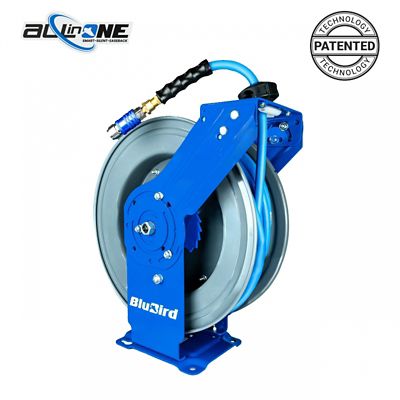
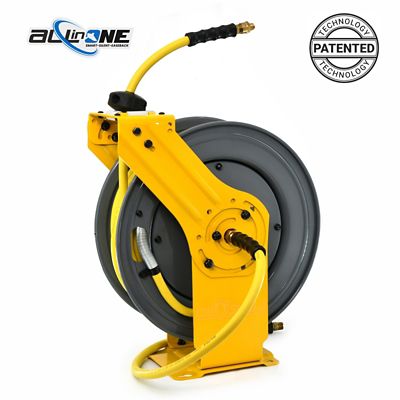
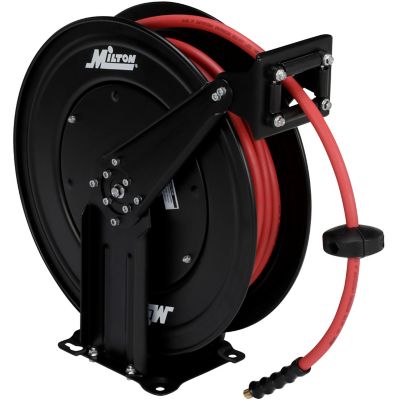
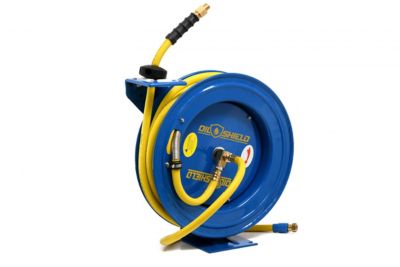
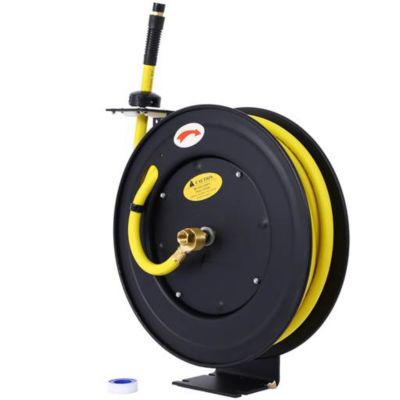
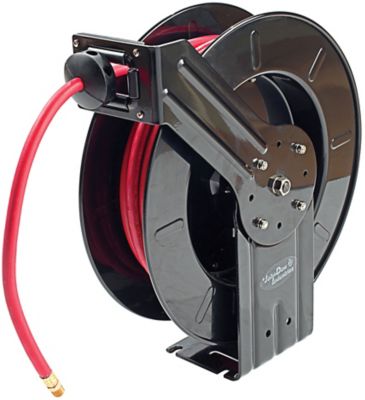
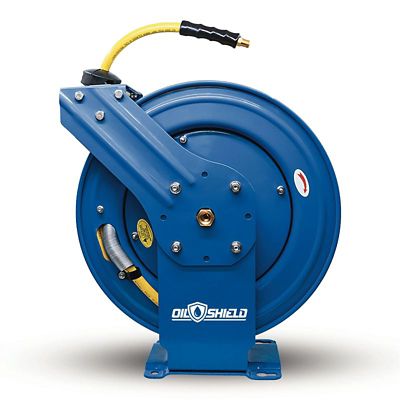
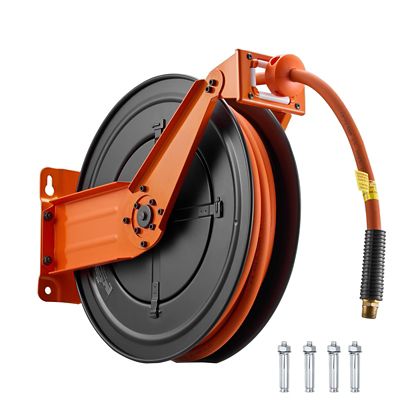
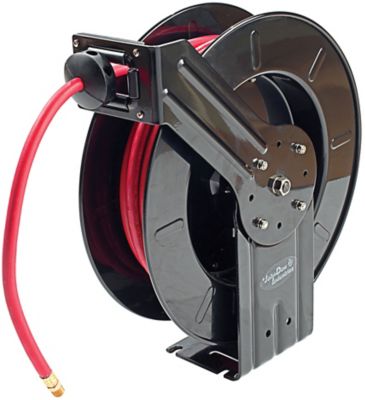
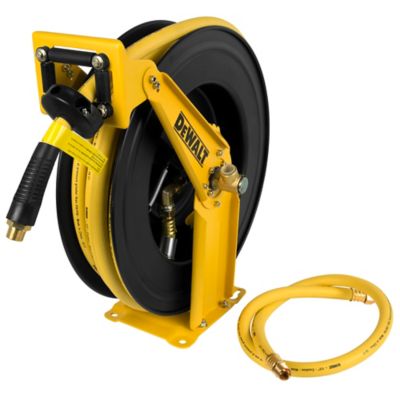
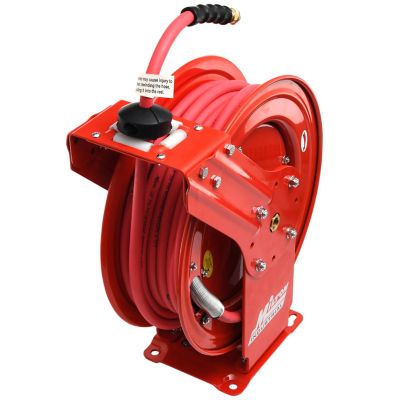
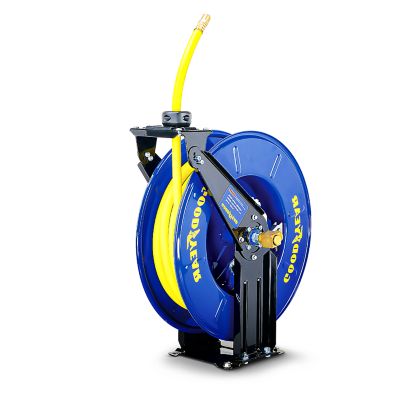
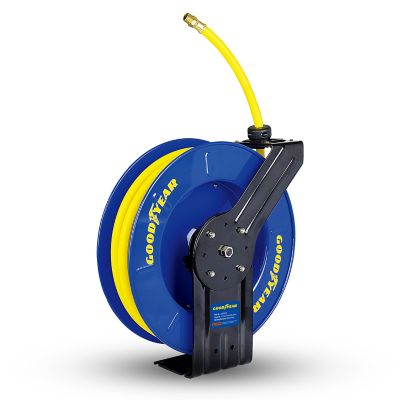
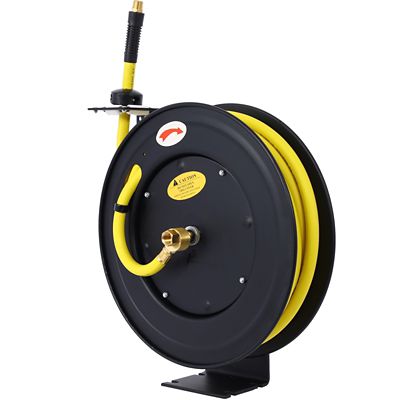
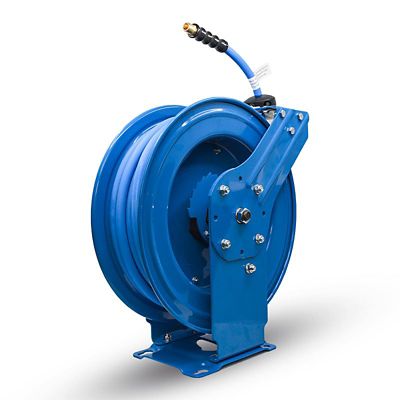
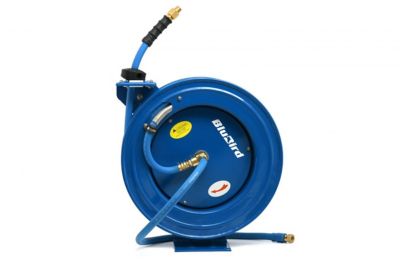
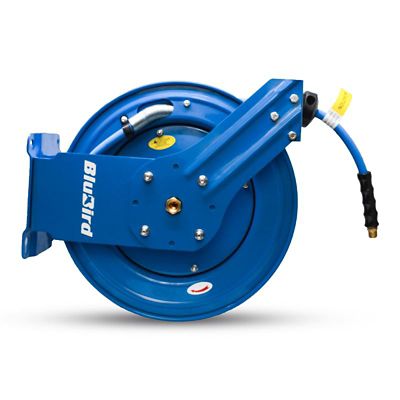
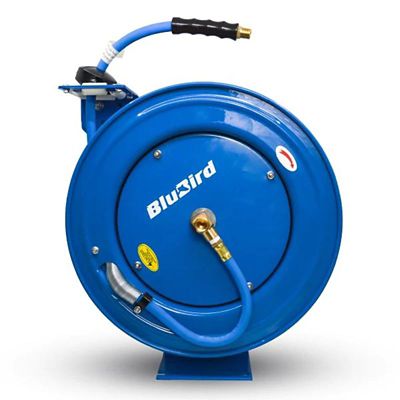
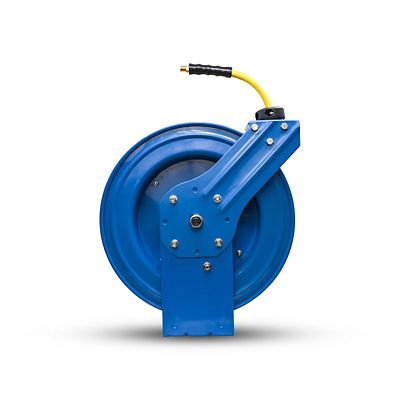
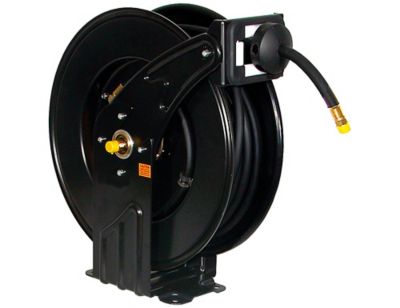
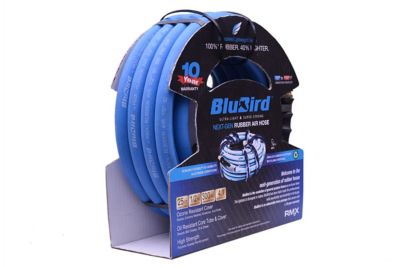
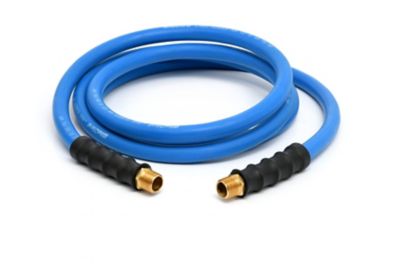
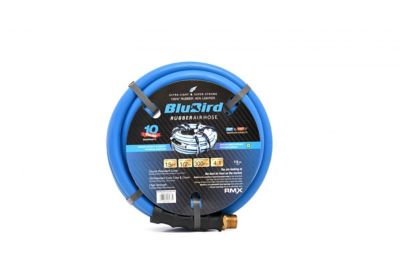
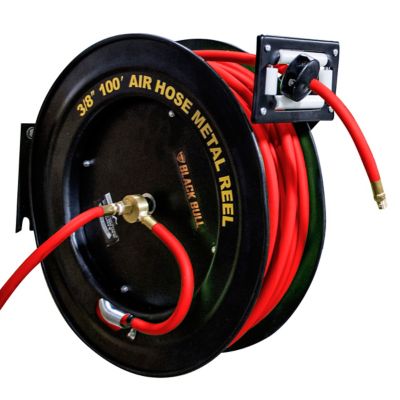
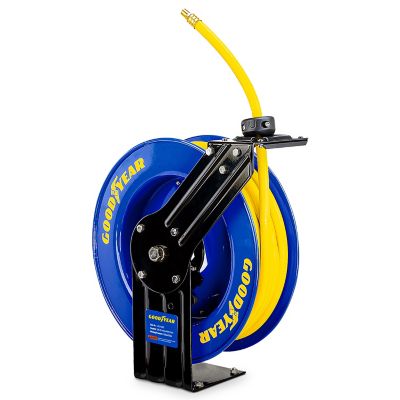
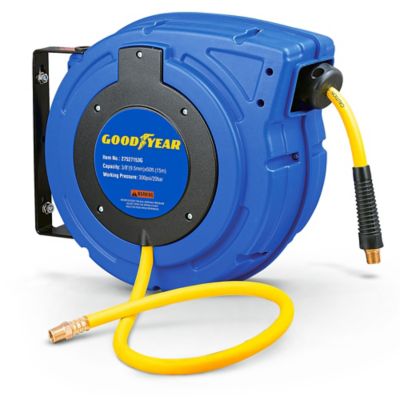
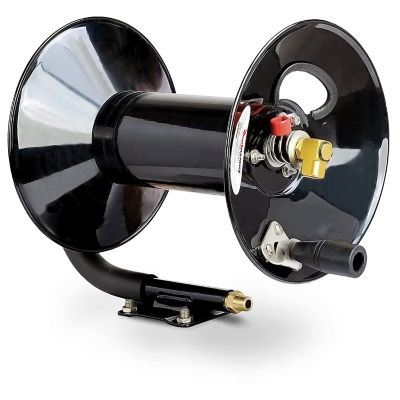
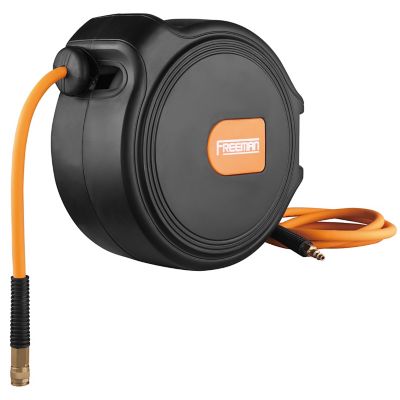
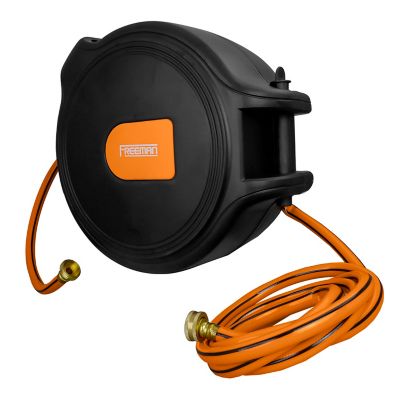
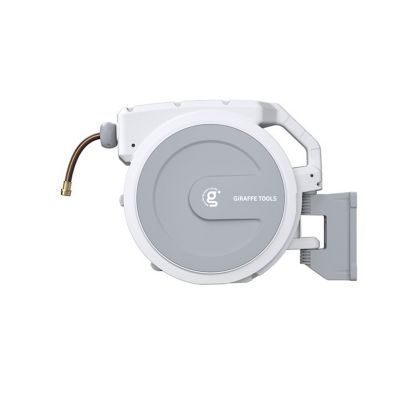
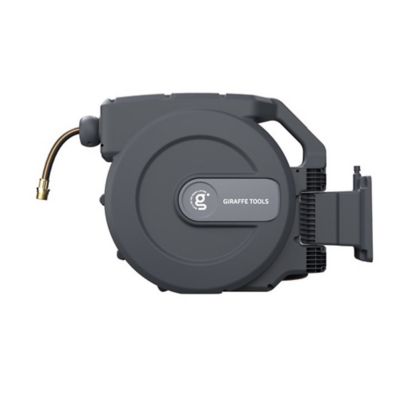
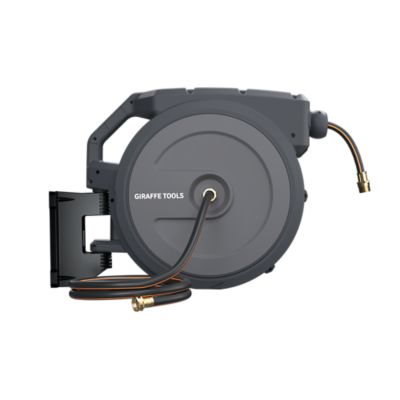
1/2-inch air hose reels hold and manage compressed-air hoses with a nominal 1/2-inch inside diameter. They’re a practical fit for farm repair bays, garages, and workshops where air tools need room to reach without leaving the full hose stretched across the floor. Compared with a smaller-bore hose of the same length, a 1/2-inch air line can reduce airflow restriction, helping support tools that call for a steady supply of air. That matters when an impact wrench is working on stubborn equipment fasteners or a pneumatic grinder is running longer than a quick burst. Hose diameter alone doesn’t determine performance, though. The compressor’s delivered air volume, the tool’s requirements, hose length, and restrictions through fittings all affect what reaches the working end. A larger hose can’t make up for a compressor that falls short of the tool’s air demand. The 1/2-inch designation also doesn’t necessarily describe the reel’s inlet threads or the hose’s end fittings, so those connection sizes deserve separate attention. Reel inlets, swivels, leader hoses, and quick-connect couplers all need to suit the air system. Retractable air hose reels gather the line with a spring-powered rewind mechanism, while manual-crank reels let the operator wind it back by hand. Depending on the design, retractable models may include a locking mechanism that holds the hose at a working length and a guide that helps it feed back onto the drum. Manual reels offer straightforward control over winding and can make sense where hose deployment is less frequent. For either style, the right hose length reaches the far side of the work area without adding a long stretch of unnecessary line. A reel serving one workbench has different reach requirements from one covering a tractor service bay, and extra length adds weight as well as pressure loss. Matching reach, airflow, and rewind style to everyday tasks makes the reel a working part of the shop rather than just a place to hang a hose.
Construction affects how a reel fits into that work area and handles regular operation. Steel frames provide substantial support, and protective finishes help shield exposed metal from corrosion. Aluminum and molded housings offer other combinations of weight, coverage, and handling characteristics. An open-frame reel leaves the drum and hose easy to see, while an enclosed housing covers more of the winding mechanism. Neither layout replaces the need for a clear hose path and a mounting surface that can carry the loaded reel and the pull of the extended line. Wall, ceiling, and bench mounting each change how the hose travels to the job. A wall-mounted reel near the compressor may keep connections close together, but the hose still needs a clear route past benches and equipment. An overhead location can free up wall space, provided the reel is designed for that mounting position and its guide can face the direction of pull. Brackets, mounting patterns, reel dimensions, and room around the drum all influence the fit. A full reel needs more consideration than an empty frame, especially when a long rubber hose adds weight. Hose material matters, too: rubber, PVC, and hybrid blends offer different combinations of flexibility, weight, and resistance to abrasion. Oil resistance and non-marking properties depend on the particular hose construction rather than its material name alone. Around a concrete shop floor, a smooth hose path helps limit scraping at doorway edges and bench corners. A properly positioned roller guide can also reduce rubbing where the line enters the reel. For tighter work areas,
Compact Hose Reels may suit the layout, provided their hose capacity, airflow path, and mounting requirements match the job. Space savings shouldn’t come at the expense of enough working reach or clearance for the handle, swivel, and hose connections. The best-fitting setup leaves room to pull out the line naturally, work around the equipment, and bring the hose back without dragging it across every tool on the bench.
Care and everyday handling have a lot to do with how an air hose reel holds up over time. Hose jackets take wear from concrete, sharp edges, vehicle traffic, and repeated bending near fittings. A line that stays clear of tires, moving equipment, welding sparks, and pinch points has fewer opportunities for damage. Reeling it in with a steady, controlled return helps prevent the coupling from whipping toward the reel or striking nearby equipment. On retractable designs, the hose stop establishes how much line remains outside the guide, leaving the working end within reach when adjusted according to the manufacturer’s directions. On manual designs, even winding helps the hose sit within the drum instead of piling up against one side. Routine attention to loose mounting hardware, worn guides, cracked hose covers, and leaking connections can catch trouble before it interrupts a repair. Hissing around a swivel or fitting deserves attention rather than simply asking the compressor to keep cycling. Any inspection or service that opens an air connection calls for isolating the supply and releasing trapped pressure according to the equipment instructions. The complete setup must also stay within the working-pressure rating of its lowest-rated component, including the hose, reel, fittings, and couplers. A reel’s pressure rating does not mean every attached accessory shares that rating. Serviceable swivels, replaceable hose assemblies, and clear maintenance information can matter for a reel expected to stay in the shop for years, with replacement parts matched to the manufacturer’s specifications. For a mechanic moving between an air ratchet and a tire chuck, or an equipment owner keeping a repair corner ready, easy hose access saves repeated trips back to the compressor. A well-matched 1/2-inch air hose reel brings together the reach, air passage, mounting arrangement, and winding control that the work calls for. It keeps the line close at hand during the job and gives it a proper place when the tools are put away.